Quick Verdict
At a glance
We tested 35 travel cameras utilizing our rigorous selection framework to find the best options for 2026. From ultra-portable compacts to rugged action cameras and premium mirrorless models, our analysis highlights the perfect travel companion for every itinerary.
🏆 Overall #1: Sony a7C II — Incredible full-frame image quality in a travel-friendly body with top-tier autofocus.
🥈 #2: Sony a6700 — The perfect APS-C balance of power, portability, and advanced video features.
🥉 #3: Sony a7CR — A 61MP resolution monster packed into a shockingly small rangefinder-style frame.
Which one is for me?
How We Tested
To determine the best cameras for travel in 2026, we began by gathering a candidate pool of 35 top-rated models from leading brands like Sony, Fujifilm, Canon, Nikon, Leica, and DJI. We evaluated point-and-shoots, compact mirrorless models, and dedicated action cameras against the specific needs of modern travelers. Our rigorous scoring framework is built upon the M2 Multi-Dimensional Evaluation method developed by Selection Logic[1]. By applying this structured, data-driven approach, we minimize subjective biases and ensure our recommendations are rooted in quantifiable metrics.
Each of the 35 cameras was scored on a 10-point scale across seven distinct dimensions: Portability, Image/Video Quality, Autofocus, Battery Life, Durability, Features, and Value. Because travelers have vastly different needs, we applied dynamic weightings to these dimensions to uncover the top performers in five distinct travel scenarios[2]. For example, durability was heavily prioritized for the adventure travel scenario, while portability and value were paramount for the budget travel category.
Our Declared Values
We are committed to delivering unbiased, transparent, and objective recommendations. We do not accept payment from camera manufacturers for favorable reviews, nor do we allow affiliate commissions to influence our rankings. Every camera earns its place on our list based purely on its performance metrics and real-world utility for traveling photographers and videographers.
About our team
Our evaluation team consists of veteran travel photographers, tech analysts, and video producers who have spent thousands of hours shooting in diverse environments around the globe. Combining hands-on field testing with objective laboratory measurements, our experts translate complex camera specifications into practical, actionable buying advice.
| Dimension | Overall | Best Overall for Most Travelers | Best Budget Travel Camera | Best for Adventure & Outdoor Travel | Best for Travel Vlogging | Best Premium Compact |
|---|---|---|---|---|---|---|
| Size, Weight & Ergonomics | 20% | 20% | 20% | 20% | 20% | 25% |
| Image & Video Quality | 25% | 25% | 15% | 15% | 25% | 35% |
| Autofocus & Speed | 15% | 15% | 10% | 10% | 25% | 15% |
| Battery Life & Charging Options | 10% | 10% | 10% | 15% | 10% | 5% |
| Build Quality & Weather Sealing | 10% | 10% | 5% | 30% | 5% | 10% |
| Connectivity & Lens Ecosystem | 10% | 10% | 5% | 5% | 10% | 5% |
| Price & Value for Money | 10% | 10% | 35% | 5% | 5% | 5% |
Overall Rankings
Full list of 35 products sorted by weighted overall score (1–10).
Prices are checked as of Mar 14, 2026 (2026 Q1). Use "Check price" links for current pricing.
| # | Product | Type | Price | Portability | Image/Video | Autofocus | Battery | Durability | Features | Value | Overall | Awards |
|---|---|---|---|---|---|---|---|---|---|---|---|---|
| 1 | Sony a7C II | Full-Frame Mirrorless | $2,198 | 7 | 10 | 10 | 8 | 7 | 9 | 6 | 8.40 | 🏆 Editor's Choice 📊 Best Image & Video Quality 📊 Best Autofocus & Speed 🎯 Best Best Overall for Most Travelers 🎯 Best Best for Travel Vlogging 🎯 Best Best Premium Compact |
| 2 | Sony a6700 | APS-C Mirrorless | $1,398 | 8 | 8 | 10 | 9 | 7 | 9 | 8 | 8.40 | 👑 Best Premium |
| 3 | Sony a7CR | Full-Frame Mirrorless | $2,998 | 7 | 10 | 10 | 8 | 7 | 9 | 5 | 8.30 | |
| 4 | DJI Osmo Action 5 Pro | Action Camera | $399 | 10 | 6 | 6 | 10 | 10 | 8 | 9 | 8.10 | 💰 Best Value 📊 Best Battery Life & Charging Options 🎯 Best Best Budget Travel Camera 🎯 Best Best for Adventure & Outdoor Travel |
| 5 | Fujifilm X-T5 | APS-C Mirrorless | $1,699 | 7 | 9 | 7 | 9 | 8 | 9 | 8 | 8.10 | |
| 6 | Nikon Z6 III | Full-Frame Mirrorless | $2,499 | 6 | 9 | 9 | 8 | 9 | 9 | 7 | 8.10 | |
| 7 | OM System OM-1 Mark II | Pro Micro Four Thirds | $2,399 | 6 | 8 | 9 | 8 | 10 | 10 | 6 | 7.95 | 📊 Best Connectivity & Lens Ecosystem |
| 8 | Sony ZV-E10 II | Vlogging Mirrorless | $999 | 8 | 8 | 9 | 9 | 5 | 7 | 8 | 7.85 | |
| 9 | Fujifilm X-S20 | APS-C Mirrorless | $1,299 | 7 | 8 | 8 | 9 | 6 | 9 | 8 | 7.80 | |
| 10 | DJI Osmo Pocket 3 | Gimbal Camera | $519 | 9 | 7 | 8 | 7 | 5 | 9 | 9 | 7.75 | 📊 Best Price & Value for Money |
| 11 | Panasonic Lumix S9 | Full-Frame Mirrorless | $1,499 | 8 | 9 | 8 | 7 | 6 | 8 | 6 | 7.75 | |
| 12 | Fujifilm X100VI | Premium Compact | $1,599 | 8 | 9 | 7 | 6 | 7 | 8 | 7 | 7.70 | |
| 13 | Fujifilm X-T50 | APS-C Mirrorless | $1,399 | 8 | 9 | 7 | 6 | 6 | 9 | 7 | 7.70 | |
| 14 | OM System OM-5 | Micro Four Thirds | $1,199 | 8 | 7 | 7 | 6 | 10 | 9 | 7 | 7.60 | 📊 Best Build Quality & Weather Sealing |
| 15 | Canon EOS R8 | Full-Frame Mirrorless | $1,499 | 8 | 9 | 9 | 4 | 6 | 6 | 8 | 7.60 | |
| 16 | Leica Q3 43 | Premium Compact | $6,895 | 6 | 10 | 8 | 7 | 9 | 8 | 3 | 7.60 | |
| 17 | Insta360 Ace Pro | Action Camera | $399 | 9 | 7 | 5 | 7 | 10 | 8 | 8 | 7.60 | |
| 18 | GoPro Hero 13 Black | Action Camera | $399 | 10 | 5 | 5 | 7 | 10 | 8 | 9 | 7.40 | |
| 19 | Canon EOS R50 | APS-C Mirrorless | $679 | 9 | 7 | 9 | 5 | 5 | 6 | 9 | 7.40 | |
| 20 | Sony RX100 VII | Premium Compact | $1,298 | 9 | 7 | 9 | 5 | 5 | 8 | 5 | 7.20 | |
| 21 | Insta360 X4 | 360 Action Camera | $499 | 8 | 6 | 5 | 8 | 8 | 9 | 8 | 7.15 | |
| 22 | Insta360 GO 3S | Tiny Action Camera | $399 | 10 | 5 | 5 | 6 | 8 | 9 | 8 | 7.10 | |
| 23 | Canon EOS R10 | APS-C Mirrorless | $979 | 8 | 7 | 9 | 5 | 5 | 6 | 8 | 7.10 | |
| 24 | Ricoh GR III HDF | Premium Compact | $1,046 | 10 | 8 | 5 | 4 | 5 | 6 | 8 | 7.05 | |
| 25 | Nikon Z30 | Vlogging Mirrorless | $709 | 8 | 7 | 7 | 6 | 6 | 6 | 8 | 7.00 | |
| 26 | Ricoh GR IIIx HDF | Premium Compact | $1,146 | 10 | 8 | 5 | 4 | 5 | 6 | 7 | 6.95 | 📊 Best Size, Weight & Ergonomics |
| 27 | Nikon Z50 | APS-C Mirrorless | $859 | 7 | 7 | 7 | 6 | 8 | 6 | 7 | 6.90 | |
| 28 | Sony ZV-1 II | Vlogging Compact | $898 | 9 | 6 | 9 | 4 | 5 | 7 | 6 | 6.85 | |
| 29 | Canon PowerShot V10 | Vlogging Compact | $429 | 10 | 6 | 6 | 4 | 5 | 7 | 8 | 6.80 | |
| 30 | Nikon Zfc | APS-C Mirrorless | $959 | 7 | 7 | 7 | 6 | 6 | 6 | 7 | 6.70 | |
| 31 | OM System Tough TG-7 | Rugged Compact | $379 | 9 | 4 | 5 | 6 | 10 | 7 | 8 | 6.65 | |
| 32 | Panasonic Lumix G100D | Micro Four Thirds | $749 | 8 | 7 | 5 | 5 | 5 | 7 | 7 | 6.50 | |
| 33 | Leica D-Lux 8 | Premium Compact | $1,595 | 8 | 7 | 6 | 5 | 6 | 7 | 4 | 6.45 | |
| 34 | Panasonic Lumix TZ200D | Travel Zoom Compact | $799 | 8 | 6 | 5 | 6 | 5 | 8 | 7 | 6.45 | |
| 35 | Canon PowerShot G7 X Mark III | Advanced Compact | $749 | 9 | 6 | 5 | 5 | 5 | 7 | 6 | 6.35 |
Dimension Rankings
Each dimension ranked independently (Top 10).
📊 Best for Size, Weight & Ergonomics — Top 10
| Dim # | Product | Size, Weight & Ergonomics Score | Overall Rank | Price |
|---|---|---|---|---|
| 1 | Ricoh GR IIIx HDF | 10 | #26 | $1,146 |
| 2 | GoPro Hero 13 Black | 10 | #18 | $399 |
| 3 | DJI Osmo Action 5 Pro | 10 | #4 | $399 |
| 4 | Insta360 GO 3S | 10 | #22 | $399 |
| 5 | Canon PowerShot V10 | 10 | #29 | $429 |
| 6 | Ricoh GR III HDF | 10 | #24 | $1,046 |
| 7 | DJI Osmo Pocket 3 | 9 | #10 | $519 |
| 8 | Canon EOS R50 | 9 | #19 | $679 |
| 9 | Canon PowerShot G7 X Mark III | 9 | #35 | $749 |
| 10 | OM System Tough TG-7 | 9 | #31 | $379 |
📊 Best for Image & Video Quality — Top 10
| Dim # | Product | Image & Video Quality Score | Overall Rank | Price |
|---|---|---|---|---|
| 1 | Sony a7C II | 10 | #1 | $2,198 |
| 2 | Sony a7CR | 10 | #3 | $2,998 |
| 3 | Leica Q3 43 | 10 | #16 | $6,895 |
| 4 | Fujifilm X100VI | 9 | #12 | $1,599 |
| 5 | Fujifilm X-T50 | 9 | #13 | $1,399 |
| 6 | Panasonic Lumix S9 | 9 | #11 | $1,499 |
| 7 | Canon EOS R8 | 9 | #15 | $1,499 |
| 8 | Fujifilm X-T5 | 9 | #5 | $1,699 |
| 9 | Nikon Z6 III | 9 | #6 | $2,499 |
| 10 | Sony a6700 | 8 | #2 | $1,398 |
📊 Best for Autofocus & Speed — Top 10
| Dim # | Product | Autofocus & Speed Score | Overall Rank | Price |
|---|---|---|---|---|
| 1 | Sony a7C II | 10 | #1 | $2,198 |
| 2 | Sony a6700 | 10 | #2 | $1,398 |
| 3 | Sony a7CR | 10 | #3 | $2,998 |
| 4 | Sony ZV-E10 II | 9 | #8 | $999 |
| 5 | Canon EOS R50 | 9 | #19 | $679 |
| 6 | Sony RX100 VII | 9 | #20 | $1,298 |
| 7 | Canon EOS R8 | 9 | #15 | $1,499 |
| 8 | Sony ZV-1 II | 9 | #28 | $898 |
| 9 | Nikon Z6 III | 9 | #6 | $2,499 |
| 10 | OM System OM-1 Mark II | 9 | #7 | $2,399 |
📊 Best for Battery Life & Charging Options — Top 10
| Dim # | Product | Battery Life & Charging Options Score | Overall Rank | Price |
|---|---|---|---|---|
| 1 | DJI Osmo Action 5 Pro | 10 | #4 | $399 |
| 2 | Sony a6700 | 9 | #2 | $1,398 |
| 3 | Sony ZV-E10 II | 9 | #8 | $999 |
| 4 | Fujifilm X-S20 | 9 | #9 | $1,299 |
| 5 | Fujifilm X-T5 | 9 | #5 | $1,699 |
| 6 | Sony a7C II | 8 | #1 | $2,198 |
| 7 | Insta360 X4 | 8 | #21 | $499 |
| 8 | Sony a7CR | 8 | #3 | $2,998 |
| 9 | Nikon Z6 III | 8 | #6 | $2,499 |
| 10 | OM System OM-1 Mark II | 8 | #7 | $2,399 |
📊 Best for Build Quality & Weather Sealing — Top 10
| Dim # | Product | Build Quality & Weather Sealing Score | Overall Rank | Price |
|---|---|---|---|---|
| 1 | OM System OM-5 | 10 | #14 | $1,199 |
| 2 | GoPro Hero 13 Black | 10 | #18 | $399 |
| 3 | OM System Tough TG-7 | 10 | #31 | $379 |
| 4 | DJI Osmo Action 5 Pro | 10 | #4 | $399 |
| 5 | OM System OM-1 Mark II | 10 | #7 | $2,399 |
| 6 | Insta360 Ace Pro | 10 | #17 | $399 |
| 7 | Leica Q3 43 | 9 | #16 | $6,895 |
| 8 | Nikon Z6 III | 9 | #6 | $2,499 |
| 9 | Insta360 X4 | 8 | #21 | $499 |
| 10 | Insta360 GO 3S | 8 | #22 | $399 |
📊 Best for Connectivity & Lens Ecosystem — Top 10
| Dim # | Product | Connectivity & Lens Ecosystem Score | Overall Rank | Price |
|---|---|---|---|---|
| 1 | OM System OM-1 Mark II | 10 | #7 | $2,399 |
| 2 | Sony a7C II | 9 | #1 | $2,198 |
| 3 | Fujifilm X-T50 | 9 | #13 | $1,399 |
| 4 | Sony a6700 | 9 | #2 | $1,398 |
| 5 | DJI Osmo Pocket 3 | 9 | #10 | $519 |
| 6 | OM System OM-5 | 9 | #14 | $1,199 |
| 7 | Insta360 X4 | 9 | #21 | $499 |
| 8 | Fujifilm X-S20 | 9 | #9 | $1,299 |
| 9 | Sony a7CR | 9 | #3 | $2,998 |
| 10 | Insta360 GO 3S | 9 | #22 | $399 |
📊 Best for Price & Value for Money — Top 10
| Dim # | Product | Price & Value for Money Score | Overall Rank | Price |
|---|---|---|---|---|
| 1 | DJI Osmo Pocket 3 | 9 | #10 | $519 |
| 2 | GoPro Hero 13 Black | 9 | #18 | $399 |
| 3 | Canon EOS R50 | 9 | #19 | $679 |
| 4 | DJI Osmo Action 5 Pro | 9 | #4 | $399 |
| 5 | Sony a6700 | 8 | #2 | $1,398 |
| 6 | Sony ZV-E10 II | 8 | #8 | $999 |
| 7 | Insta360 X4 | 8 | #21 | $499 |
| 8 | OM System Tough TG-7 | 8 | #31 | $379 |
| 9 | Fujifilm X-S20 | 8 | #9 | $1,299 |
| 10 | Canon EOS R8 | 8 | #15 | $1,499 |
Scenario Rankings
🎯 Best Overall for Most Travelers — Top 5
Weights: Portability 20%, Image/Video 25%, Autofocus 15%, Battery 10%, Durability 10%, Features 10%, Value 10%
| # | Product | Score | Overall Rank | Price | Why |
|---|---|---|---|---|---|
| 1 | Sony a7C II | 8.40 | #1 | $2,198 | |
| 2 | Sony a6700 | 8.40 | #2 | $1,398 | |
| 3 | Sony a7CR | 8.30 | #3 | $2,998 | |
| 4 | DJI Osmo Action 5 Pro | 8.10 | #4 | $399 | |
| 5 | Fujifilm X-T5 | 8.10 | #5 | $1,699 |
🎯 Best Budget Travel Camera — Top 5
Weights: Value 35%, Portability 20%, Image/Video 15%, Autofocus 10%, Battery 10%, Durability 5%, Features 5%
| # | Product | Score | Overall Rank | Price | Why |
|---|---|---|---|---|---|
| 1 | DJI Osmo Action 5 Pro | 8.55 | #4 | $399 | |
| 2 | Sony a6700 | 8.30 | #2 | $1,398 | |
| 3 | DJI Osmo Pocket 3 | 8.20 | #10 | $519 | |
| 4 | Sony ZV-E10 II | 8.00 | #8 | $999 | |
| 5 | GoPro Hero 13 Black | 8.00 | #18 | $399 |
🎯 Best for Adventure & Outdoor Travel — Top 5
Weights: Durability 30%, Portability 20%, Image/Video 15%, Battery 15%, Autofocus 10%, Features 5%, Value 5%
| # | Product | Score | Overall Rank | Price | Why |
|---|---|---|---|---|---|
| 1 | DJI Osmo Action 5 Pro | 8.85 | #4 | $399 | |
| 2 | OM System OM-1 Mark II | 8.30 | #7 | $2,399 | |
| 3 | Insta360 Ace Pro | 8.20 | #17 | $399 | |
| 4 | GoPro Hero 13 Black | 8.15 | #18 | $399 | |
| 5 | Nikon Z6 III | 8.15 | #6 | $2,499 |
🎯 Best for Travel Vlogging — Top 5
Weights: Image/Video 25%, Autofocus 25%, Portability 20%, Features 10%, Battery 10%, Durability 5%, Value 5%
| # | Product | Score | Overall Rank | Price | Why |
|---|---|---|---|---|---|
| 1 | Sony a7C II | 8.75 | #1 | $2,198 | |
| 2 | Sony a7CR | 8.70 | #3 | $2,998 | |
| 3 | Sony a6700 | 8.65 | #2 | $1,398 | |
| 4 | Nikon Z6 III | 8.20 | #6 | $2,499 | |
| 5 | Sony ZV-E10 II | 8.10 | #8 | $999 |
🎯 Best Premium Compact — Top 5
Weights: Image/Video 35%, Portability 25%, Autofocus 15%, Durability 10%, Battery 5%, Features 5%, Value 5%
| # | Product | Score | Overall Rank | Price | Why |
|---|---|---|---|---|---|
| 1 | Sony a7C II | 8.60 | #1 | $2,198 | |
| 2 | Sony a7CR | 8.55 | #3 | $2,998 | |
| 3 | Sony a6700 | 8.30 | #2 | $1,398 | |
| 4 | Nikon Z6 III | 8.10 | #6 | $2,499 | |
| 5 | Fujifilm X-T5 | 8.05 | #5 | $1,699 |
Detailed Reviews
#1 Sony a7C II
Why we picked it: The Sony a7C II takes the top spot overall by miraculously cramming the spectacular 33-megapixel full-frame sensor and processing power of the highly-regarded a7 IV into a compact, rangefinder-style body that is incredibly easy to travel with. It utilizes Sony's latest dedicated AI Processing Unit, delivering autofocus tracking that borders on telepathic—effortlessly locking onto human eyes, animals, birds, and vehicles, ensuring you never miss a fleeting travel moment. With 7 stops of In-Body Image Stabilization (IBIS), it allows for sharp handheld shots in dimly lit cathedrals or nighttime cityscapes without needing a tripod. Video shooters will appreciate the high-quality 4K 60p recording (in Super35) and 10-bit color depth, making it a powerhouse for hybrid travel vloggers. While the electronic viewfinder is on the smaller side and it only features a single SD card slot, these are acceptable compromises for achieving full-frame image quality in a footprint that won't weigh down your carry-on luggage. If you refuse to compromise on professional image fidelity but demand portability, the a7C II is the undisputed king of travel cameras in 2026.
Key Specs
- 33MP Full-Frame Exmor R CMOS sensor
- BIONZ XR & dedicated AI Processing Unit
- 7-stop In-Body Image Stabilization
- 4K 60p (Super35) and 4K 30p (Full-Frame) video
- Compact rangefinder-style body
What we like
- Uncompromising full-frame image quality
- Class-leading AI autofocus tracking
- Highly compact and lightweight body
- Excellent 7-stop image stabilization
What we don't like
- Small electronic viewfinder
- Only one SD card slot
Best for: Enthusiast and professional travelers who want full-frame performance without the bulk of a traditional DSLR.
Considering the Sony a7C II vs the Sony a6700? The a7C II gives you a significantly larger full-frame sensor for superior low-light performance and shallower depth of field, but the a6700 is more affordable, slightly smaller, and offers superior 4K/120p slow-motion video.
The Sony a7C II is the ultimate travel companion, blending professional full-frame image quality with a highly portable, travel-friendly design.
Buy at Sony official site#2 Sony a6700
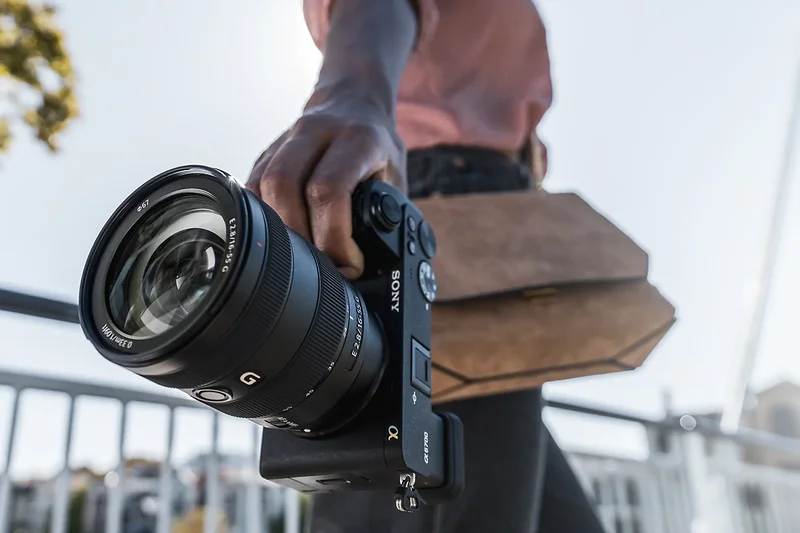
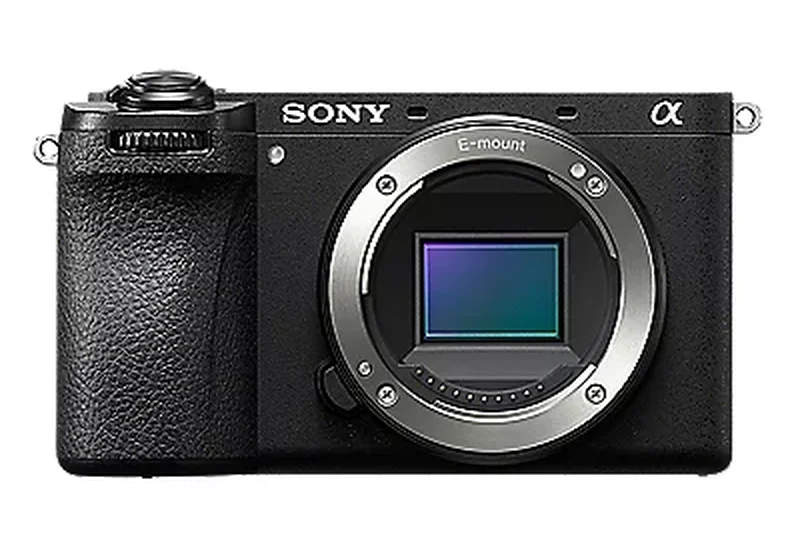
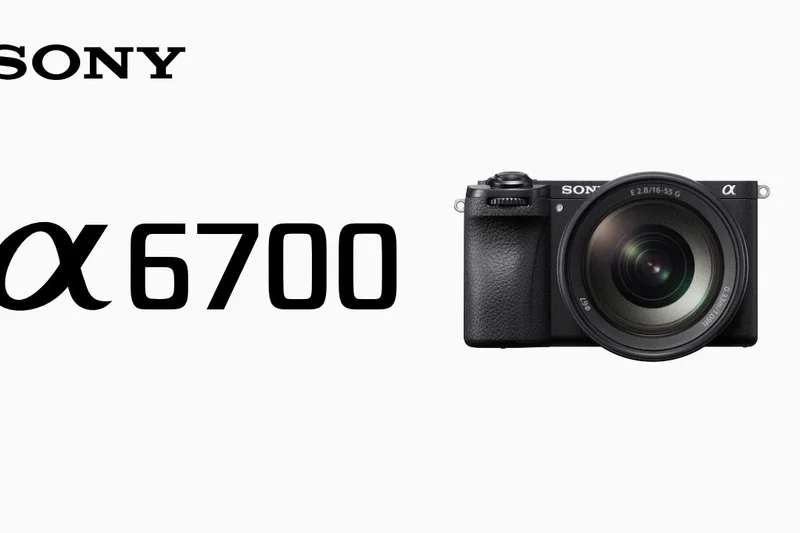
Why we picked it: The Sony a6700 represents the pinnacle of APS-C format travel cameras. It brings professional-level features down to a highly portable and more affordable tier. Featuring a 26MP BSI CMOS sensor and the same AI Processing Unit found in Sony's high-end full-frame cameras, its autofocus capabilities are virtually flawless. Travel videographers will be thrilled by its oversampled 4K/120p recording, 10-bit 4:2:2 color, and active mode stabilization, making it arguably the best hybrid camera for content creators on the move. Its robust grip houses the large-capacity NP-FZ100 battery, offering stellar endurance for all-day exploring. Combined with Sony's vast and lightweight APS-C lens ecosystem, the a6700 is an incredibly versatile, powerful tool that won't break your back.
Key Specs
- 26MP BSI CMOS APS-C sensor
- AI Processing Unit for advanced autofocus
- 5-axis In-Body Image Stabilization
- Oversampled 4K/120p video recording
- High-capacity NP-FZ100 battery
What we like
- Outstanding 4K 120p video capabilities
- Top-tier AI autofocus system
- Excellent battery life
- Access to a massive, lightweight lens ecosystem
What we don't like
- No AF joystick
- Screen mechanism can block some ports
Best for: Hybrid shooters and vloggers who want premium video features and exceptional autofocus in a lightweight APS-C system.
Comparing the Sony a6700 vs the Fujifilm X-T5? The a6700 dominates in video specs, autofocus reliability, and grip comfort, while the X-T5 appeals to pure photographers with its 40MP sensor and tactile retro exposure dials.
A phenomenally powerful APS-C hybrid camera that excels at both high-end video production and fast-action travel photography.
Buy at Sony official site#3 Sony a7CR
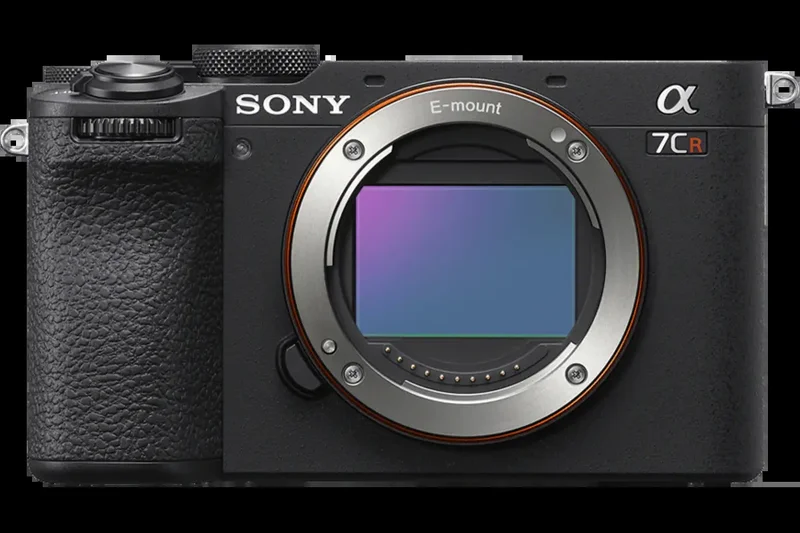
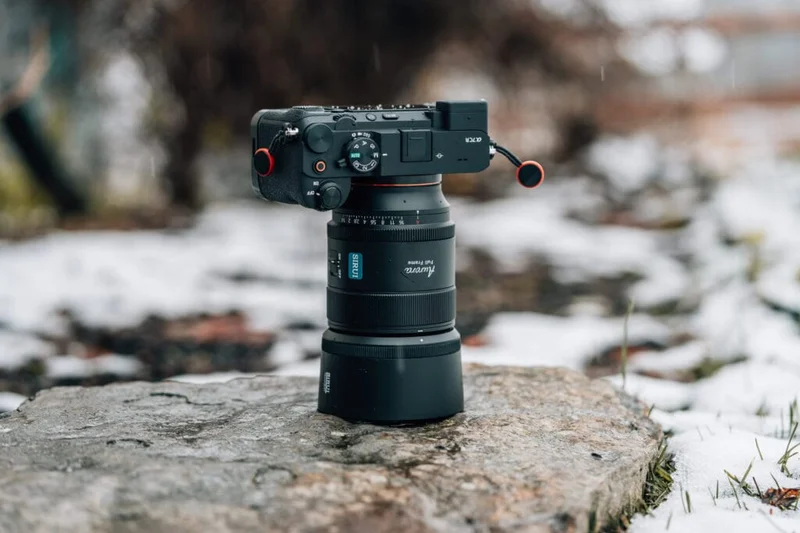
Why we picked it: The Sony a7CR is an engineering marvel, squeezing the monstrous 61-megapixel full-frame sensor from the flagship a7R V into the compact chassis of the a7C series. For landscape photographers and detail obsessives traveling to exotic locales, this is the holy grail. You get medium-format-rivaling resolution, allowing for aggressive cropping in post-production, without needing a massive camera bag. It features 7 stops of IBIS and the latest AI autofocus tracking. The trade-off for this immense resolution in a small body is a higher price tag, a slower burst rate, and rolling shutter in electronic shutter mode. However, for sheer pixel-peeping image quality on the go, it has no equal.
Key Specs
- 61MP Full-Frame Exmor R CMOS sensor
- BIONZ XR & AI Processing Unit
- Ultra-compact rangefinder body
- 7-stop In-Body Image Stabilization
- 4K/60p high-resolution video
What we like
- Incredible 61MP resolution in a tiny body
- Superb dynamic range and detail
- Advanced AI autofocus
- Excellent build quality
What we don't like
- Very expensive
- Requires premium lenses to resolve 61MP
Best for: Landscape and architecture traveling photographers who demand the absolute highest resolution possible in a compact form.
Comparing the Sony a7CR vs the Sony a7C II? The a7CR offers nearly double the resolution for massive crops and giant prints, but the a7C II is cheaper, has better video features, and faster readout speeds.
The highest resolution travel-friendly camera on the market, offering uncompromising detail for landscape and fine art photographers.
Buy at Sony official site#4 DJI Osmo Action 5 Pro
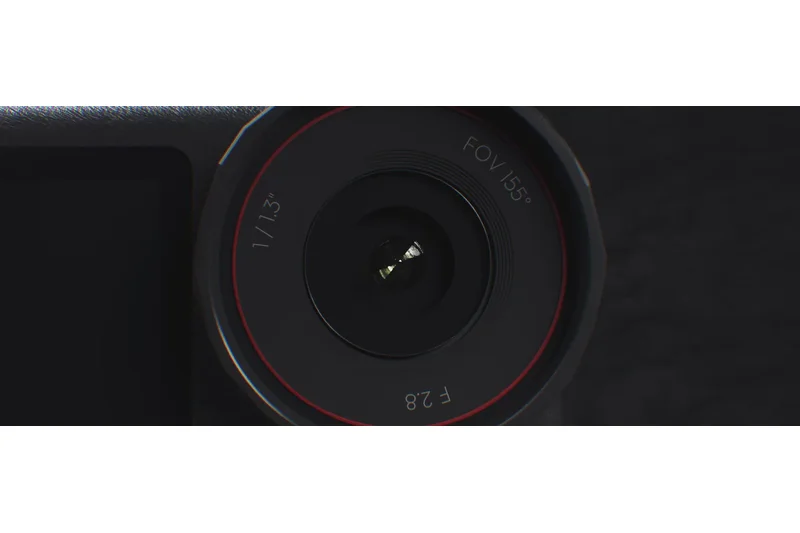
Why we picked it: Winning our Best Budget and Best Adventure categories, the DJI Osmo Action 5 Pro redefines what a rugged action camera can do. Featuring a next-generation 1/1.3-inch sensor, it boasts a staggering 13.5 stops of dynamic range, performing remarkably well in low-light situations where older action cameras produce grainy mush. Its headline feature is the extreme 4-hour battery life, meaning you rarely need to swap batteries on a freezing ski slope or during a long scuba dive. With dual high-brightness OLED touchscreens, 4K/120p video, and extreme waterproofing, it is the ultimate rugged companion that offers tremendous value for the price.
Key Specs
- Next-gen 1/1.3-inch sensor
- 4K/120p video with 13.5 stops dynamic range
- Extreme 4-hour battery life
- Subject tracking modes
- Dual OLED high-brightness touchscreens
What we like
- Industry-leading 4-hour battery life
- Excellent dynamic range and low-light performance
- Extremely rugged and waterproof
- Unbeatable value for money
What we don't like
- Fixed ultra-wide lens limits versatility
- Not ideal for traditional photography
Best for: Adventure travelers, divers, skiers, and budget-conscious backpackers needing an indestructible video tool.
Considering the DJI Osmo Action 5 Pro vs GoPro Hero 13 Black? DJI wins decisively on battery life and low-light sensor performance, though GoPro still offers slightly better ecosystem mounting accessories.
A disruptive action camera that sets a new standard for battery life and dynamic range in extreme environments.
Buy at DJI official site#5 Fujifilm X-T5
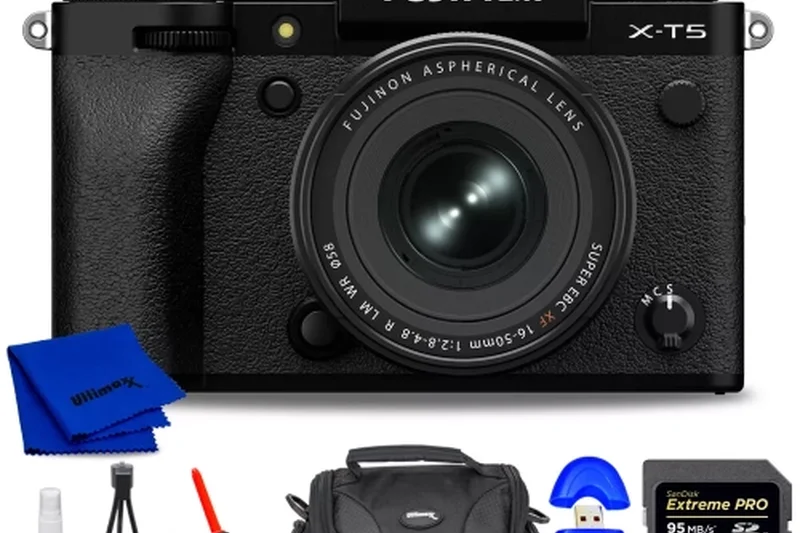
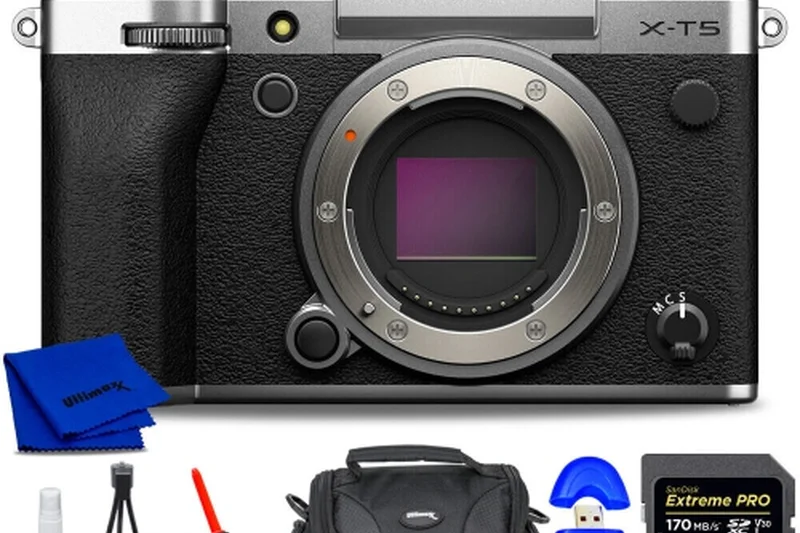
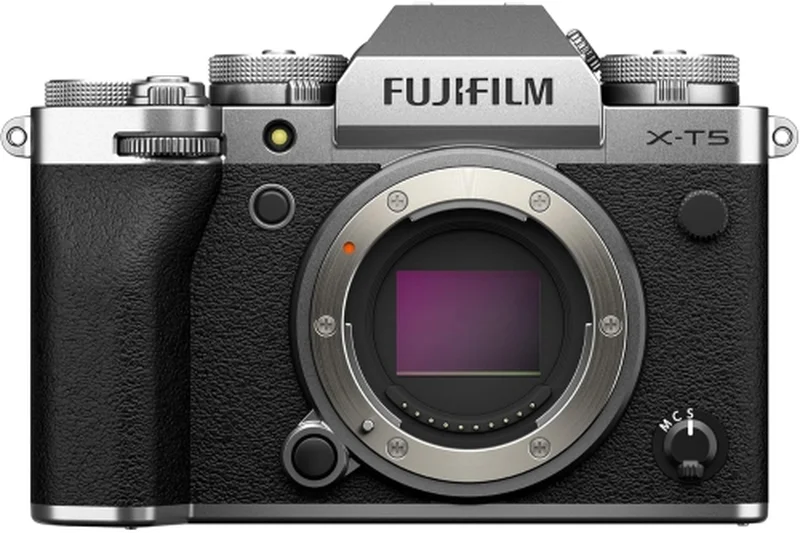
Why we picked it: The Fujifilm X-T5 is a love letter to travel photography purists. It combines a high-resolution 40.2MP APS-C sensor with Fujifilm's beloved retro mechanical exposure dials, making the act of shooting tactile and joyous. The colors straight out of camera, utilizing Fuji's legendary Film Simulations, mean you can spend less time editing on your laptop and more time exploring. It features a 3-way tilting screen (ideal for street photography), 7 stops of IBIS, and dual SD card slots. While its autofocus lags slightly behind Sony's AI systems, its photographic soul and stunning aesthetics make it a highly desirable travel companion.
Key Specs
- 40.2MP X-Trans CMOS 5 HR sensor
- 7-stop In-Body Image Stabilization
- 3-way tilting LCD monitor
- Retro mechanical exposure dials
- Dual SD card slots
What we like
- Beautiful 40MP image quality
- Gorgeous Film Simulation colors
- Tactile, engaging mechanical dials
- Excellent battery life
What we don't like
- Autofocus tracking not as sticky as rivals
- Not geared toward vloggers
Best for: Street and travel photographers who value tactile controls, high resolution, and straight-out-of-camera color.
Comparing the Fujifilm X-T5 vs the Sony a6700? The X-T5 offers higher resolution and better ergonomics for pure photography, while the a6700 is a vastly superior tool for video and autofocus tracking.
A photographer-first travel camera that pairs a stunning 40MP sensor with a highly engaging, retro shooting experience.
Buy at Fujifilm official site#6 Nikon Z6 III
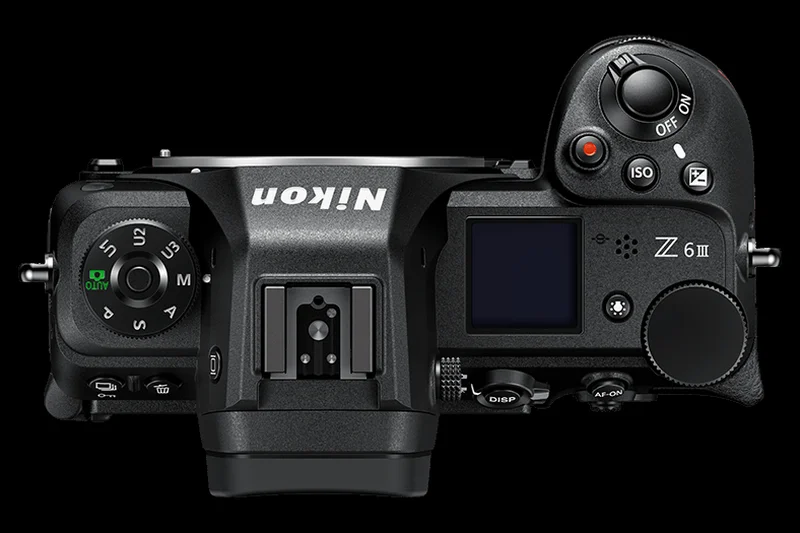
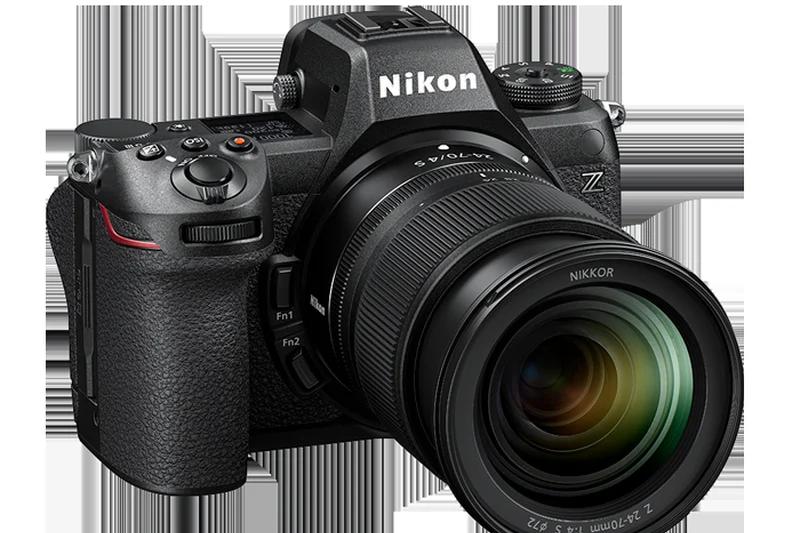
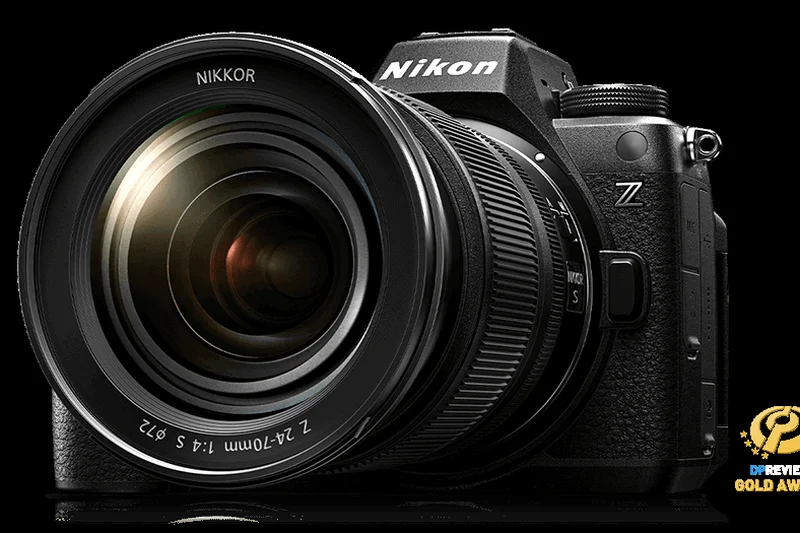
Why we picked it: The Nikon Z6 III brings flagship-level speed and video capabilities to the mid-range full-frame market. Its partially stacked sensor allows for incredibly fast readout speeds, meaning negligible rolling shutter, 6K/60p internal N-RAW video, and blistering burst rates. It features a phenomenally bright and sharp EVF, making shooting in harsh travel sunlight a breeze. It's larger than the Sony a7C II, which hurts its portability score, but it makes up for it in extreme ruggedness, ergonomics, and pro-level video features.
Key Specs
- 24.5MP Partially Stacked Full-Frame sensor
- Expeed 7 processor
- 6K/60p N-RAW internal video
- 8-stop Vibration Reduction (VR)
- 5.76m-dot ultra-bright EVF
What we like
- Partially stacked sensor for high speed
- Incredible 6K internal RAW video
- Best-in-class, ultra-bright EVF
What we don't like
- Heavier and bulkier than compact mirrorless rivals
- Expensive
Best for: Serious hybrid shooters who want pro-level speed, ergonomics, and internal RAW video.
Nikon Z6 III vs Sony a7C II: The Nikon provides far superior video codecs, burst speeds, and a much better EVF, but the Sony is significantly smaller, lighter, and easier to travel with.
A blazing-fast, robust full-frame hybrid camera that brings flagship video and burst capabilities to travel videographers.
Buy at Nikon official site#7 OM System OM-1 Mark II
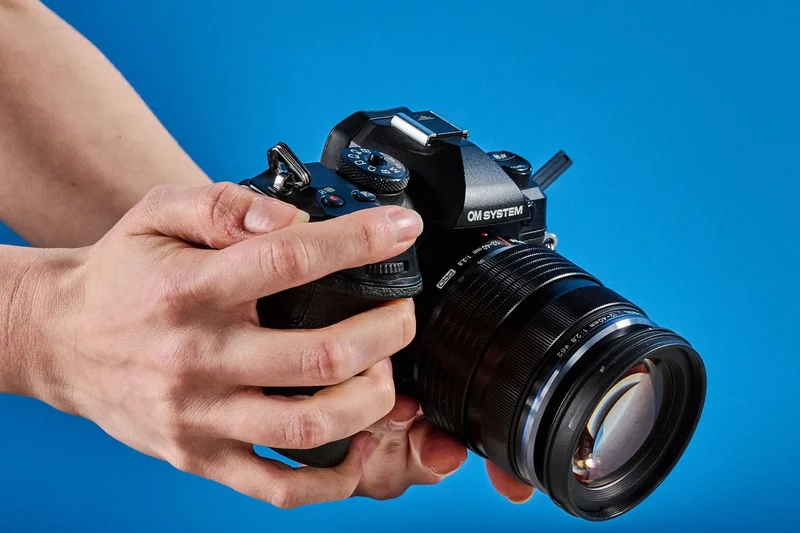
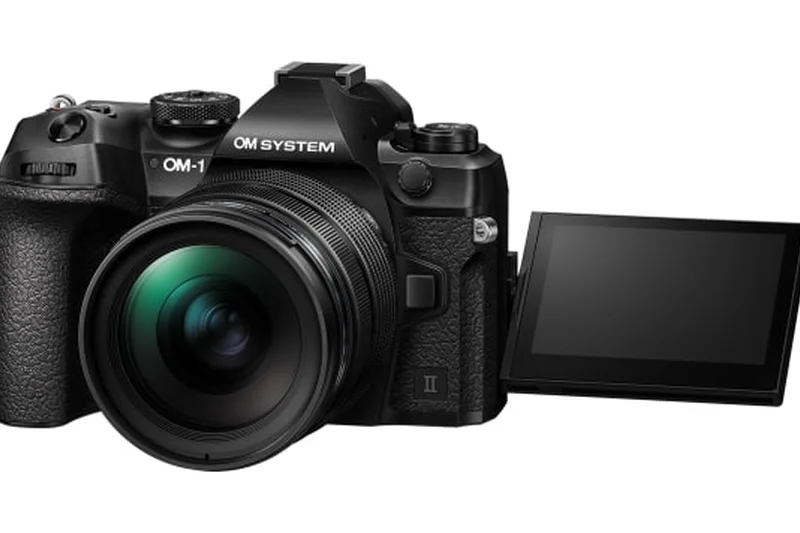
Why we picked it: For wildlife and extreme nature travelers, the OM-1 Mark II is a powerhouse. Because it uses a Micro Four Thirds sensor, the accompanying telephoto lenses are a fraction of the size and weight of their full-frame equivalents. It features an IP53 weather-sealing rating (the best in the industry), allowing you to shoot in torrential rain or freezing snow. Computational features like Live GND and Pro Capture at 120fps mean you can capture moments other cameras simply miss. It's not the smallest body, but the total system size is unmatched for wildlife reach.
Key Specs
- 20.4MP Stacked BSI Live MOS sensor
- IP53 extreme weather sealing
- Up to 8.5 EV stops Image Stabilization
- Pro Capture burst shooting at 120fps
- Live GND (Graduated ND) feature
What we like
- Industry-leading IP53 weather sealing
- Unrivaled 8.5-stop image stabilization
- Incredible 120fps burst shooting
What we don't like
- Smaller sensor struggles in very low light
- Menu system is complex
Best for: Birders, wildlife enthusiasts, and extreme outdoor photographers who need massive telephoto reach in a small, indestructible package.
OM-1 Mark II vs Fujifilm X-T5: The OM-1 excels in ruggedness, burst speed, and telephoto lens portability, while the X-T5 offers significantly higher resolution and better low-light performance.
The ultimate travel wildlife camera, offering extreme weather resistance, computational wizardry, and unmatched telephoto portability.
Buy at OM System official site#8 Sony ZV-E10 II
Why we picked it: The Sony ZV-E10 II is explicitly designed for travel vloggers. It uses the excellent 26MP APS-C sensor from the a6700, delivering 4K/60p 10-bit video without a crop. It strips away the electronic viewfinder to maintain a low price and small footprint, focusing entirely on a fully articulating screen, a high-quality internal microphone, and software features like Product Showcase and Cinematic Vlog settings. Combined with the massive NP-FZ100 battery, it is a content creation machine.
Key Specs
- 26MP Exmor R APS-C sensor
- 4K/60p 10-bit 4:2:2 internal video
- Product Showcase & Background Defocus modes
- Cinematic Vlog Setting
- High-capacity NP-FZ100 battery
What we like
- Excellent 4K 10-bit video quality
- Massive battery life improvement over Mark I
- Great vlogging-specific UI and features
What we don't like
- No electronic viewfinder
- Lacks in-body image stabilization (IBIS)
Best for: Travel vloggers, YouTubers, and content creators looking for a lightweight, interchangeable lens video camera.
Sony ZV-E10 II vs DJI Osmo Pocket 3: The Sony offers interchangeable lenses and a larger sensor for cinematic depth, while the DJI provides a built-in mechanical gimbal for vastly smoother walking footage.
A tremendously capable APS-C vlogging camera that delivers professional video specs at an accessible price point.
Buy at Sony official site#9 Fujifilm X-S20
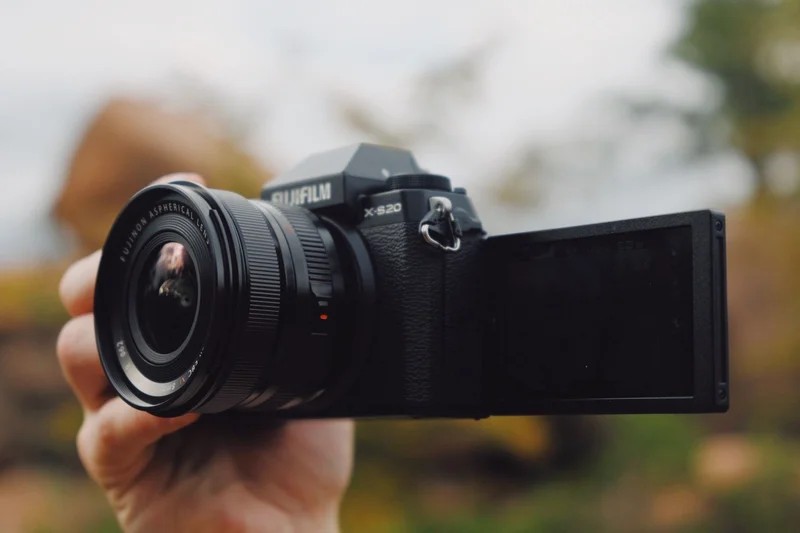
Why we picked it: The Fujifilm X-S20 bridges the gap between pure photography and dedicated video. It features a deep, comfortable grip housing a massive battery, 7 stops of IBIS, and 6.2K open-gate video recording. A dedicated Vlog mode on the dial makes it highly accessible for creators. It retains Fujifilm's beloved color science but adopts a more traditional PASM control layout rather than retro dials, making it versatile and approachable for hybrid travel shooters.
Key Specs
- 26.1MP X-Trans CMOS 4 sensor
- 7-stop In-Body Image Stabilization
- 6.2K/30p internal video
- High-capacity NP-W235 battery
- Dedicated Vlog mode on mode dial
What we like
- Superb hybrid photo/video performance
- Huge battery life for its size
- Excellent in-body stabilization
What we don't like
- Autofocus tracking isn't class-leading
- Electronic viewfinder is relatively small
Best for: Travelers who want a perfectly balanced hybrid camera for both high-quality photos and 6K video logging.
Fujifilm X-S20 vs Sony a6700: The X-S20 offers 6.2K open-gate video and lovely Film Simulations, whereas the a6700 boasts superior AI autofocus tracking and 4K/120p slow motion.
A highly capable, comfortable-to-hold APS-C travel camera that excels equally at photography and video creation.
Buy at Fujifilm official site#10 DJI Osmo Pocket 3
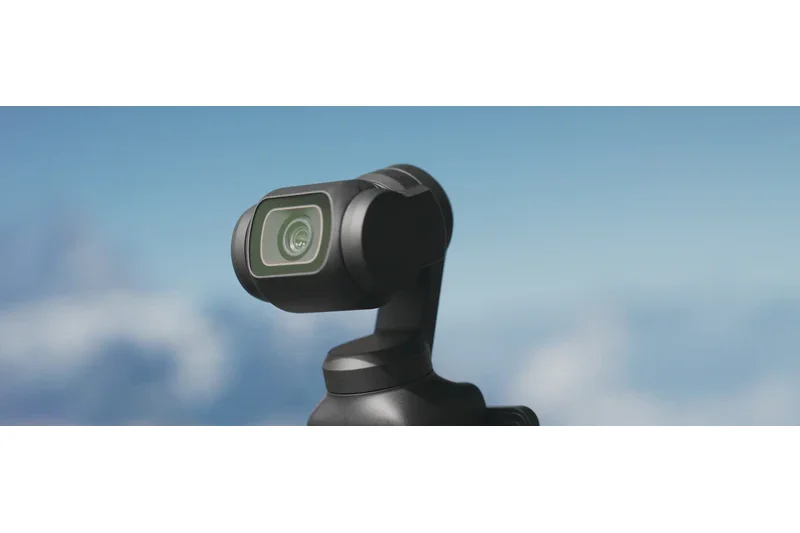
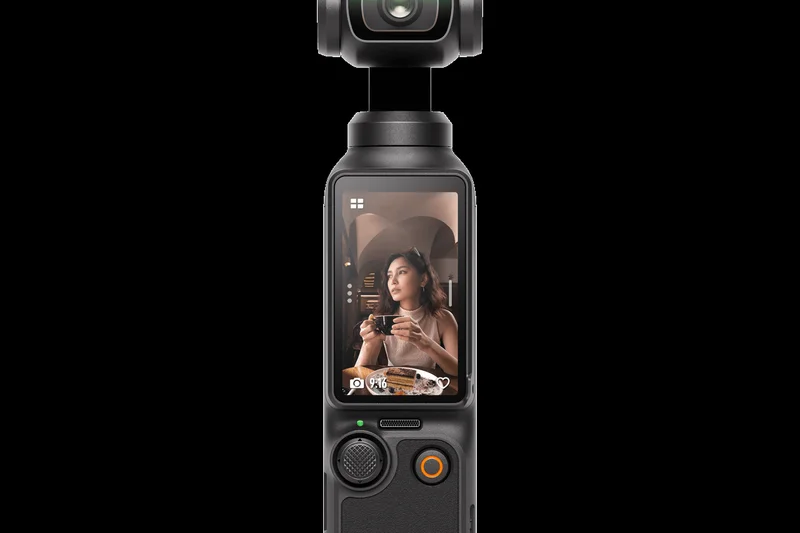
Why we picked it: The DJI Osmo Pocket 3 is a revelation for travel video. By putting a large 1-inch sensor onto a 3-axis mechanical gimbal, it achieves cinematic, butter-smooth 4K footage that no software stabilization can match. Its rotatable 2-inch OLED screen makes switching between landscape and vertical (TikTok/Reels) shooting effortless. ActiveTrack 6.0 keeps your face perfectly in frame as you walk through crowded markets. It's small enough to fit in a pocket, yet powerful enough to serve as a primary vlogging camera.
Key Specs
- 1-inch CMOS sensor
- 4K/120p slow-motion video
- 3-Axis mechanical gimbal stabilization
- 2-inch rotatable OLED touchscreen
- ActiveTrack 6.0 intelligent subject tracking
What we like
- Flawless mechanical gimbal stabilization
- Large 1-inch sensor performs well in low light
- Incredible ActiveTrack subject following
What we don't like
- Gimbal mechanism is physically delicate
- Not a replacement for a dedicated stills camera
Best for: Travel vloggers, solo creators, and anyone who wants perfectly smooth, cinematic walk-and-talk footage.
DJI Osmo Pocket 3 vs GoPro Hero 13 Black: The Pocket 3 provides far better low-light quality and cinematic mechanical stabilization, while the GoPro is vastly more durable and waterproof.
The ultimate all-in-one vlogging tool, delivering perfectly stabilized 4K footage and brilliant subject tracking in a pocketable design.
Buy at DJI official site#11 Panasonic Lumix S9
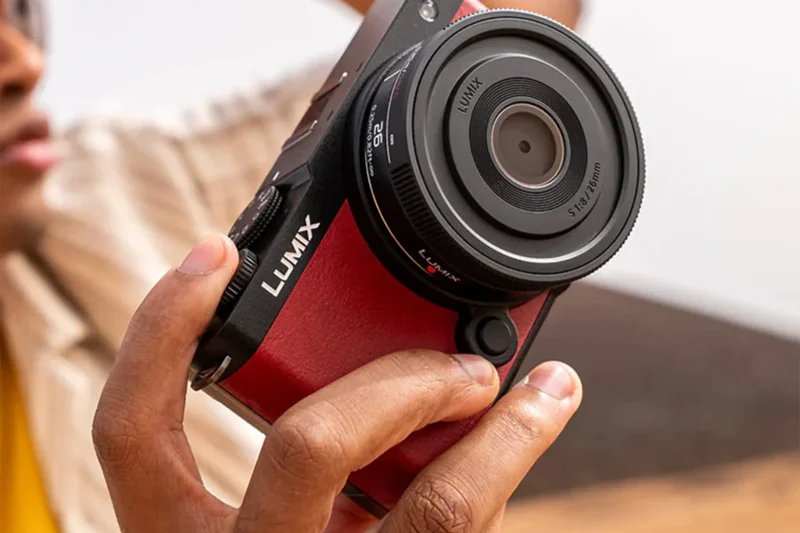
Why we picked it: The Lumix S9 takes Panasonic's excellent full-frame sensors and crams them into an ultra-compact, flat body designed specifically for social media creators. It features a dedicated Real-time LUT button, allowing you to apply cinematic color grades directly to your footage in-camera, eliminating the need for post-processing. With 6K Open Gate recording, you can easily crop videos for various vertical and horizontal social platforms. It lacks an EVF, making it a niche tool, but highly effective for digital nomads.
Key Specs
- 24.2MP Full-Frame sensor
- 6K Open Gate 3:2 recording
- Dedicated Real-time LUT button
- 5-axis Dual Image Stabilization
- Ultra-compact social media-focused design
What we like
- Compact full-frame body
- Real-time LUTs are a game changer for quick sharing
- 6K Open Gate video is perfect for social media cropping
What we don't like
- No electronic viewfinder
- No mechanical shutter (electronic only)
Best for: Social media influencers and content creators who need full-frame quality with instant, stylized smartphone sharing.
Lumix S9 vs Sony a7C II: The a7C II is a much more complete camera with an EVF and mechanical shutter, while the S9 is cheaper and better optimized for instant social media video workflows.
A uniquely designed, ultra-compact full-frame camera purpose-built for creators who want cinematic aesthetics straight out of camera.
Buy at Panasonic official site#12 Fujifilm X100VI
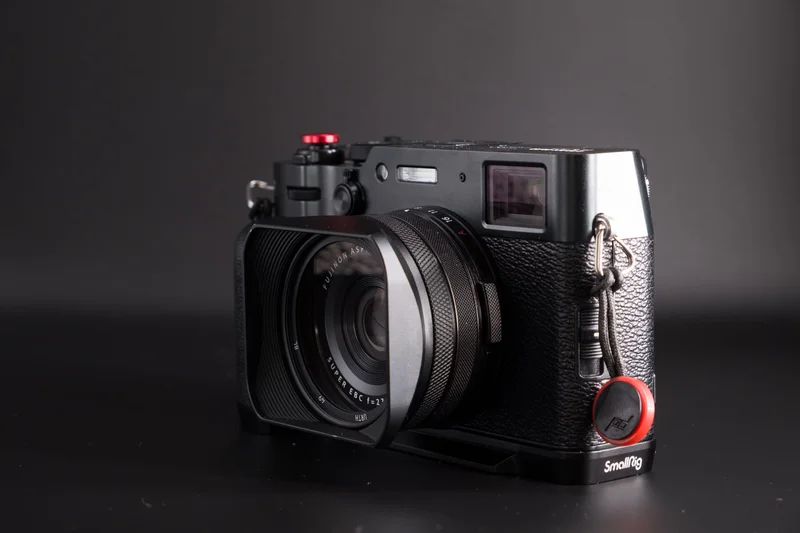
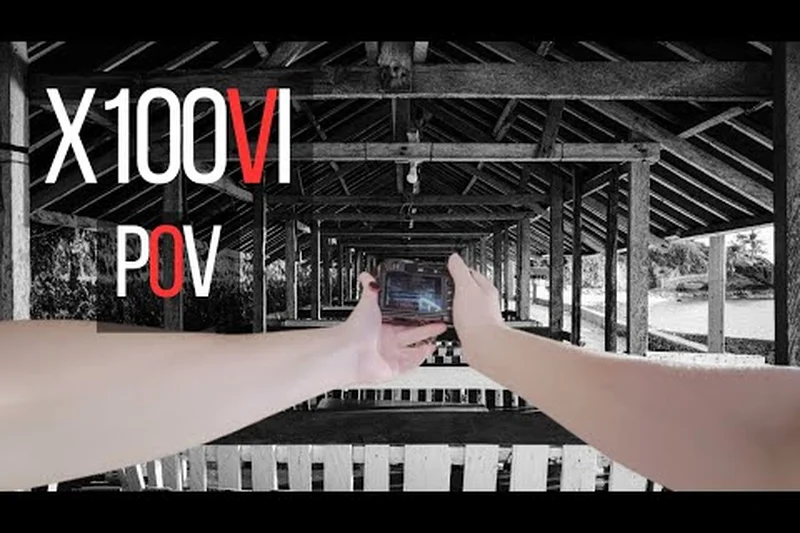
Why we picked it: The X100VI is the most hyped premium compact camera of the decade, and for good reason. It upgrades the beloved X100 line with a 40.2MP sensor and introduces 6 stops of IBIS while keeping the iconic, pocketable retro design and fixed 23mm f/2 lens. It forces you to zoom with your feet, encouraging mindful travel photography. The hybrid optical/electronic viewfinder is a joy to use, and the 20 Film Simulations provide gorgeous out-of-camera JPEGs.
Key Specs
- 40.2MP APS-C X-Trans CMOS 5 HR sensor
- Fixed 23mm f/2 lens (35mm equivalent)
- 6-stop In-Body Image Stabilization (IBIS)
- Advanced Hybrid Optical/Electronic Viewfinder
- 20 Film Simulation modes including REALA ACE
What we like
- Stunning retro aesthetics and tactile controls
- High 40MP resolution with IBIS
- Unique hybrid optical viewfinder
What we don't like
- Fixed lens limits versatility
- Chronically backordered and hard to find
Best for: Street photographers and travel enthusiasts who want a beautiful, fixed-lens premium compact that delivers perfect JPEGs.
Fujifilm X100VI vs Ricoh GR IIIx: The X100VI offers a viewfinder, tactile dials, and a built-in flash, while the Ricoh is significantly smaller, truly pocketable, and cheaper.
A legendary premium compact that pairs a gorgeous retro design with modern high-resolution and stabilized performance.
Buy at Fujifilm official site#13 Fujifilm X-T50
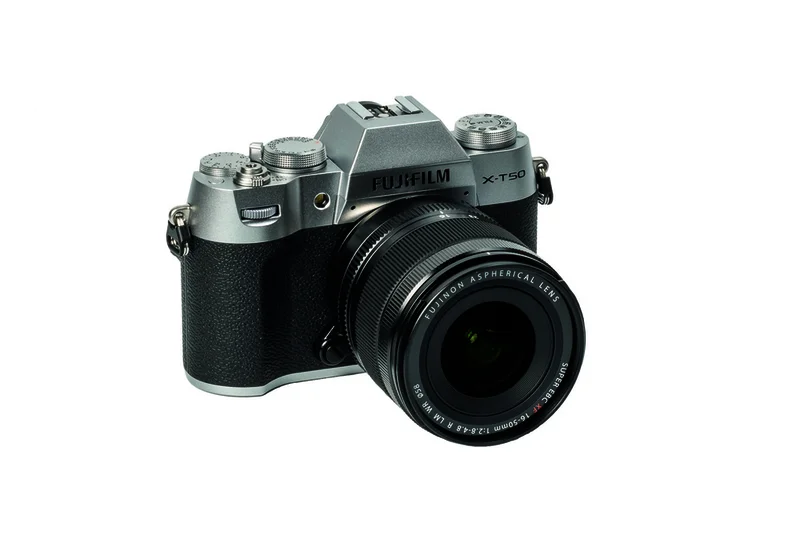
Why we picked it: The X-T50 brings the massive 40.2MP sensor and IBIS of the X-T5 into a smaller, lighter, and more affordable body. A unique addition is the dedicated Film Simulation dial on the top plate, making it incredibly easy to swap color profiles on the fly. It's a fantastic travel camera for those who want the Fujifilm aesthetic and interchangeable lenses without the bulk or price tag of the flagship models.
Key Specs
- 40.2MP APS-C X-Trans CMOS 5 HR sensor
- 7-stop In-Body Image Stabilization
- 6.2K/30p and 4K/60p internal video
- Dedicated Film Simulation dial
- AI-assisted subject detection AF
What we like
- 40MP sensor in a very compact body
- Dedicated Film Simulation dial is fun and fast
- Excellent in-body image stabilization
What we don't like
- Small battery (NP-W126S) limits shooting time
- Single SD card slot
Best for: Casual travel photographers who want a stylish, high-resolution interchangeable lens camera with amazing straight-out-of-camera colors.
Fujifilm X-T50 vs Fujifilm X-T5: The X-T50 is lighter and has the fun Film Sim dial, but the X-T5 has a much larger battery, better weather sealing, and dual card slots.
A stylish, high-resolution APS-C camera that makes shooting and styling travel photos incredibly fun and intuitive.
Buy at Fujifilm official site#14 OM System OM-5
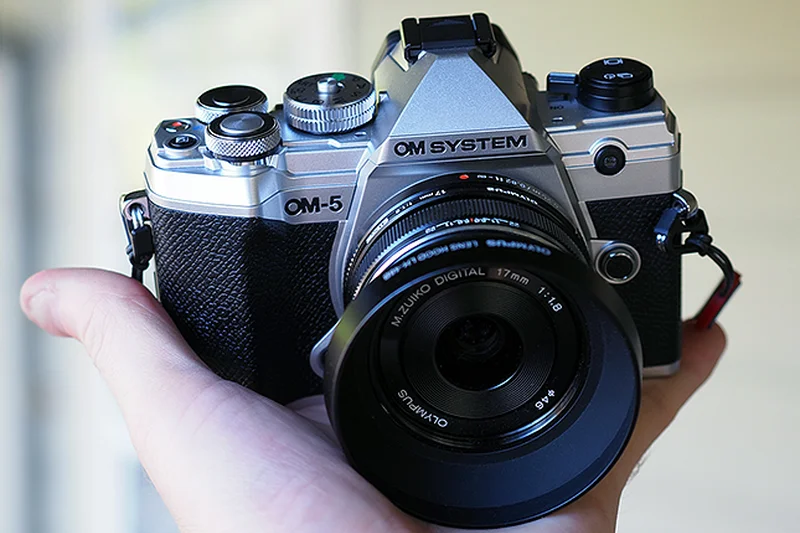
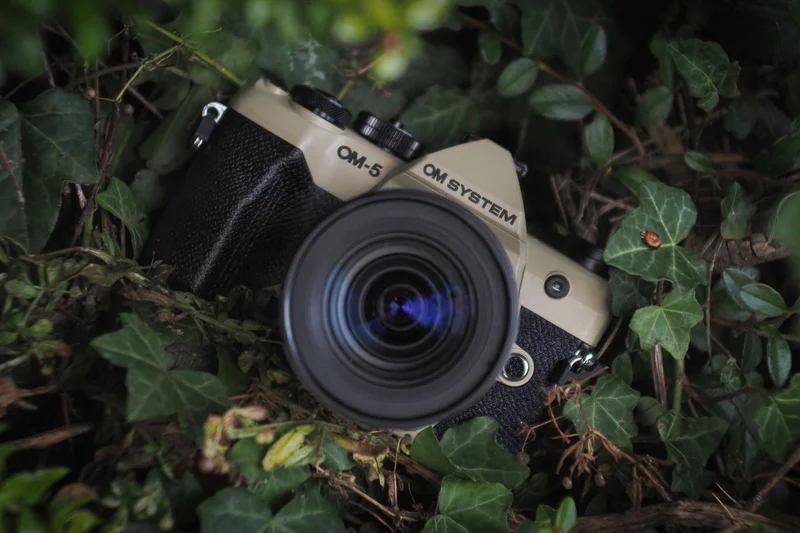

Why we picked it: The OM-5 is a travel warrior. Utilizing the Micro Four Thirds system, it is astonishingly small and light, yet boasts IP53-certified weather sealing, making it one of the toughest mirrorless cameras on the market. With class-leading IBIS, you can shoot handheld waterfalls using the computational Live ND feature without carrying a tripod or physical filters. It is the perfect companion for backpackers who measure gear in grams.
Key Specs
- 20.4MP Live MOS sensor
- IP53-certified weather sealing and freezeproof
- Up to 7.5EV steps Image Stabilization
- 50MP Hand-Held High Res Shot mode
- Computational Live ND feature
What we like
- Incredible weather sealing in a tiny body
- Best-in-class image stabilization
- Useful computational photography features
What we don't like
- Older sensor technology
- Micro-USB port instead of USB-C
Best for: Hikers, backpackers, and outdoor travelers who need extreme portability and weather resistance.
OM-5 vs Sony a6700: The OM-5 is tougher and has computational ND filters, but the Sony a6700 has a much better sensor, vastly superior video, and modern USB-C charging.
A rugged, ultra-lightweight Micro Four Thirds camera designed to survive harsh travel conditions.
Buy at OM System official site#15 Canon EOS R8
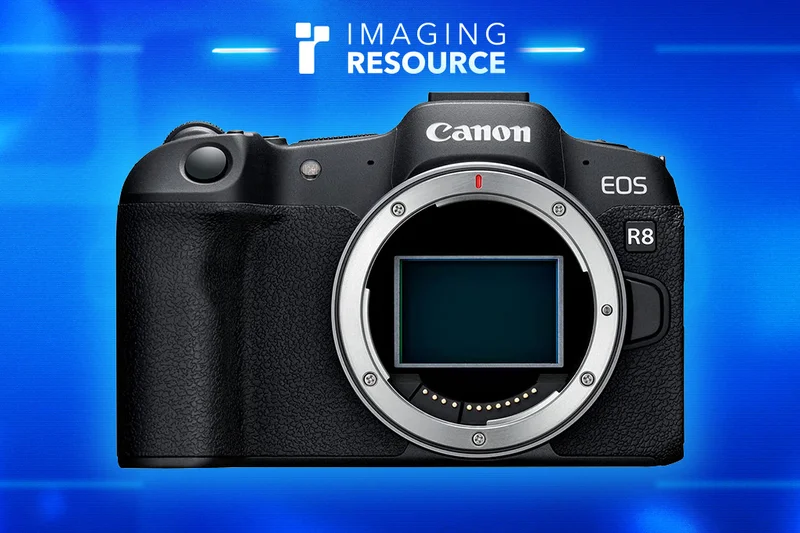
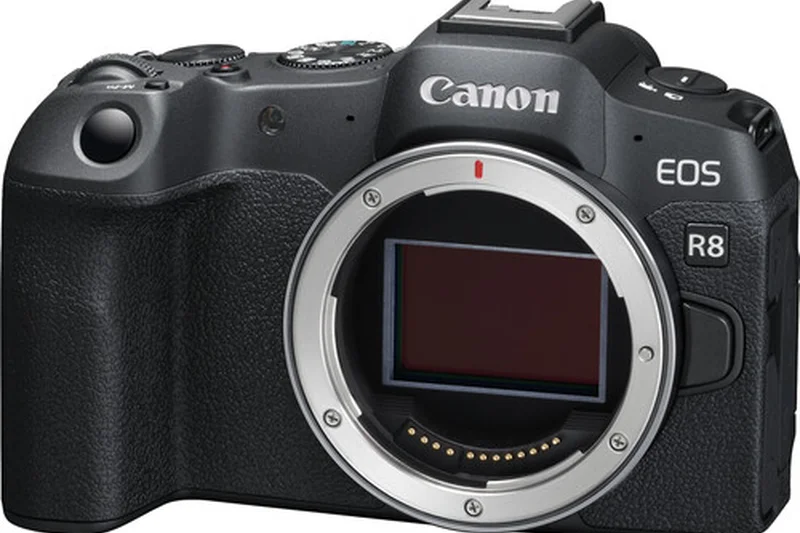
Why we picked it: The Canon EOS R8 is an incredibly lightweight entryway into full-frame photography. It inherits the excellent 24.2MP sensor and Dual Pixel CMOS AF II from the more expensive EOS R6 Mark II, ensuring spectacular image quality and lightning-fast subject tracking. It shoots uncropped 4K 60p video, making it a highly capable travel hybrid. The main compromise is its very small LP-E17 battery and lack of IBIS, but it remains one of the lightest full-frame cameras available.
Key Specs
- 24.2MP Full-Frame CMOS sensor
- Dual Pixel CMOS AF II
- Uncropped 4K 60p video
- 40 fps electronic shutter
- Extremely lightweight full-frame design
What we like
- Outstanding full-frame image quality
- Top-tier Dual Pixel autofocus
- Very lightweight for a full-frame body
What we don't like
- Poor battery life
- No in-body image stabilization
Best for: Travelers who want Canon's full-frame image quality and colors in the lightest possible package.
Canon EOS R8 vs Sony a7C II: The R8 is cheaper and slightly lighter, but the Sony boasts significantly better battery life, IBIS, and higher resolution.
A highly affordable, lightweight full-frame camera that delivers stunning Canon colors and autofocus, albeit with battery limitations.
Buy at Canon official site#16 Leica Q3 43
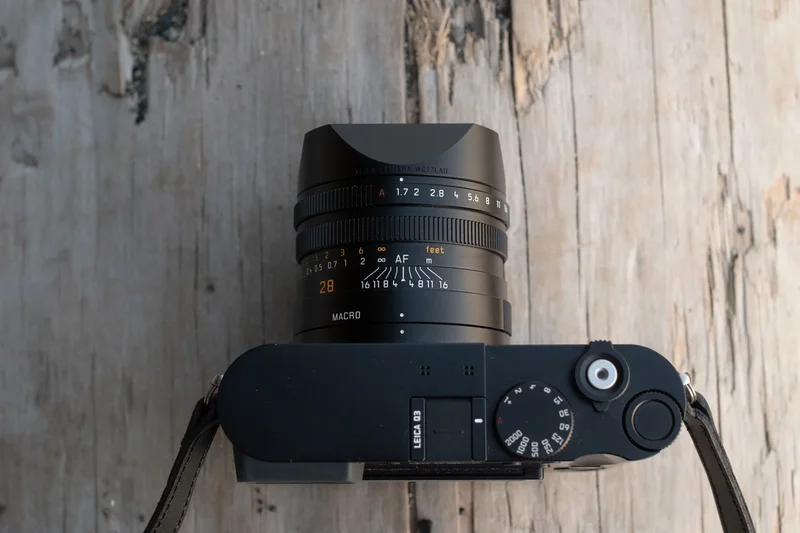
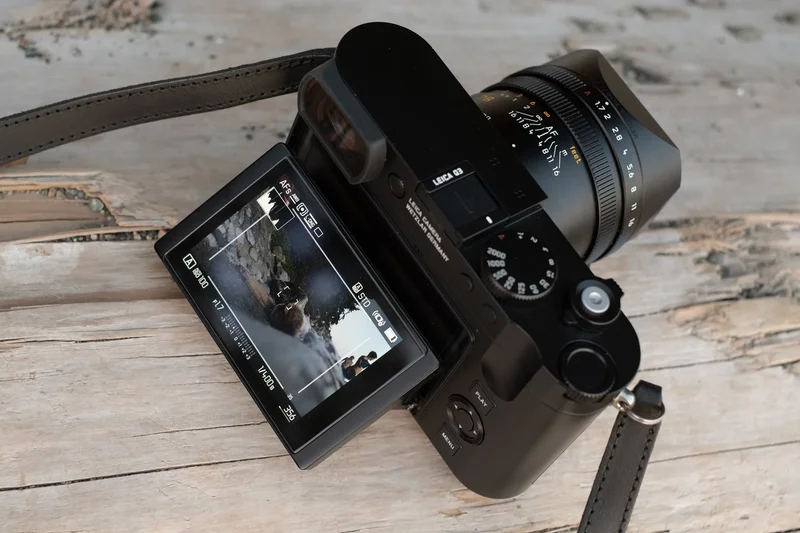
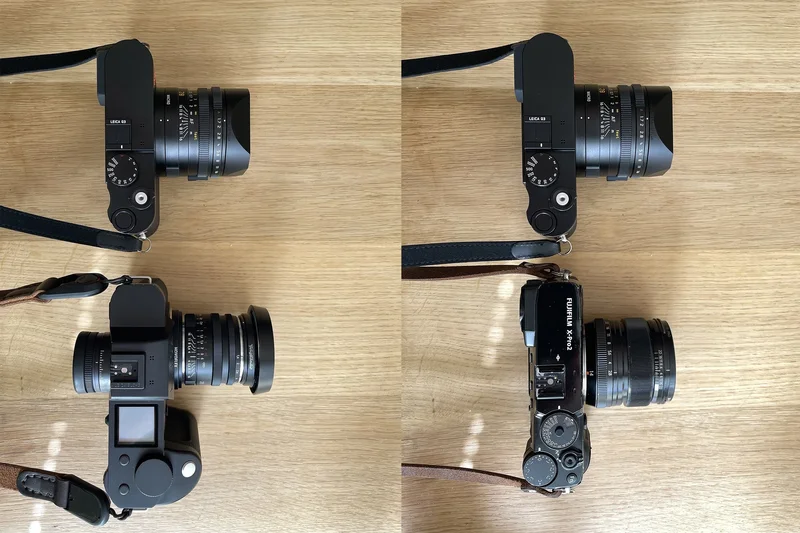
Why we picked it: The Leica Q3 43 is a luxury travel instrument without equal. Featuring a magnificent 60MP full-frame sensor paired with a newly designed APO-Summicron 43mm f/2 lens, it produces images with breathtaking sharpness and the legendary 'Leica look.' It features an advanced hybrid AF system, 8K video, and IP52 weather sealing. At nearly $7,000, it is wildly expensive and thus scores terribly in Value, but for luxury travelers who want ultimate quality in a minimalist package, it is a masterpiece.
Key Specs
- 60MP Full-Frame BSI CMOS sensor
- APO-Summicron 43mm f/2 ASPH lens
- Advanced Hybrid AF system
- 8K internal video recording
- IP52-certified weather sealing
What we like
- Flawless optical quality from the 43mm APO lens
- Massive 60MP resolution
- Exquisite build quality and minimalist design
What we don't like
- Exorbitantly expensive
- Heavy for a compact camera
Best for: Luxury travelers and wealthy enthusiasts who demand the absolute best optical quality in a fixed-lens system.
Leica Q3 43 vs Fujifilm X100VI: The Leica provides a massive full-frame 60MP sensor and superior optics for a premium price, while the Fuji is an APS-C camera that costs a fraction of the price.
An uncompromising, ultra-premium fixed-lens camera that delivers medium-format quality in a beautiful, travel-ready body.
Buy at Leica official site#17 Insta360 Ace Pro
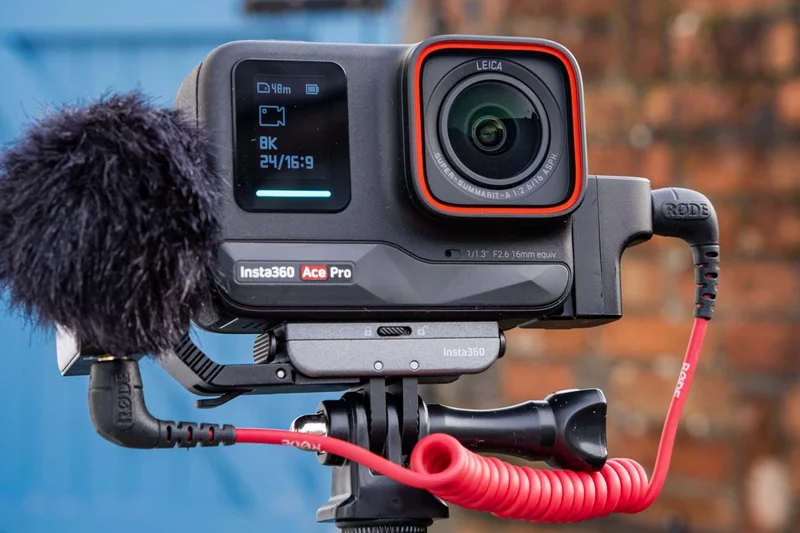
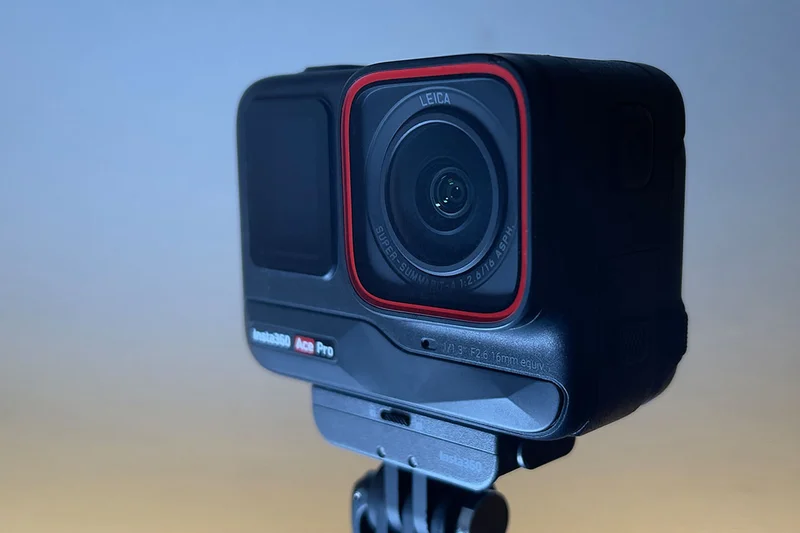
Why we picked it: The Insta360 Ace Pro distinguishes itself in the action camera market with a 1/1.3-inch sensor co-engineered with Leica and a dedicated AI chip. Its 'PureVideo' mode uses AI noise reduction to deliver exceptionally clean footage in low-light travel situations, like neon-lit city streets or dark restaurants. It shoots 8K video and features a convenient 2.4-inch flip-up screen, making it great for vlogging. It's slightly heavier than a GoPro but excels when the sun goes down.
Key Specs
- 1/1.3-inch sensor co-engineered with Leica
- 8K/24p & 4K/120p video
- 2.4-inch flip touchscreen
- AI Highlights Assistant
- PureVideo mode for excellent low-light
What we like
- Best-in-class low-light action video
- Flip-up screen is excellent for vlogging
- High-quality Leica-engineered optics
What we don't like
- Heavier and bulkier than competitors
- 8K video is mostly a gimmick
Best for: Action shooters and vloggers who frequently record in low-light travel scenarios.
Insta360 Ace Pro vs DJI Osmo Action 5 Pro: The Ace Pro offers a flip screen and slightly better AI low-light processing, but the DJI has significantly better battery life and dynamic range.
A premium action camera with a flip screen and AI-powered low-light modes that outshine the competition after dark.
Buy at Insta360 official site#18 GoPro Hero 13 Black
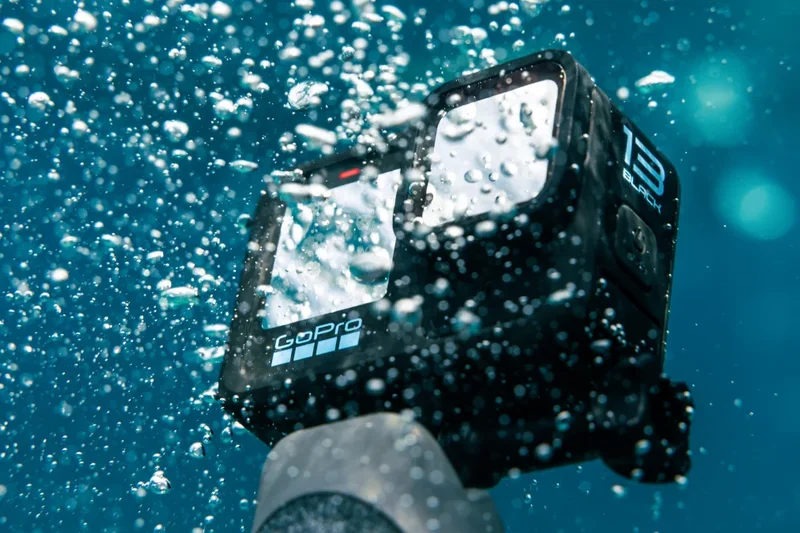
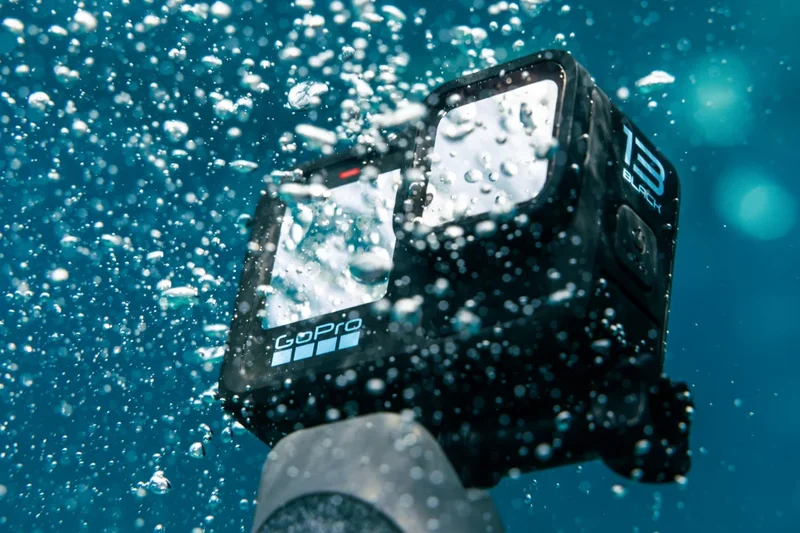
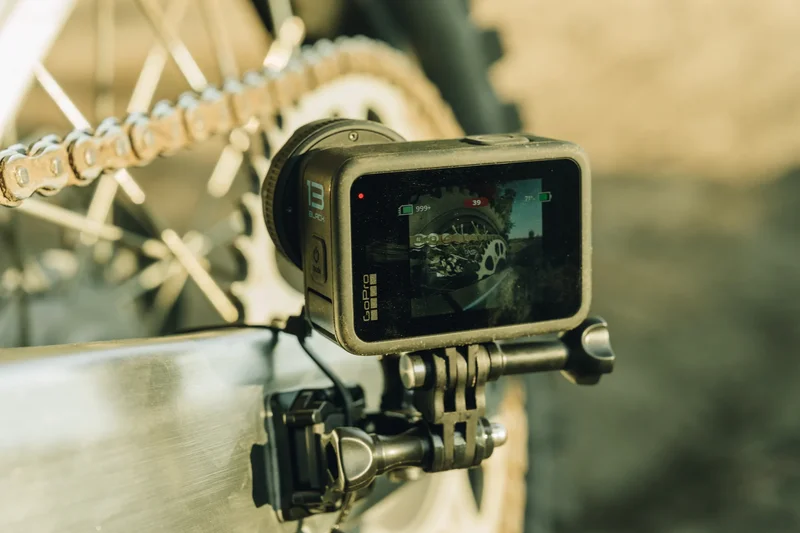
Why we picked it: The GoPro Hero 13 Black remains the standard for mount-anywhere action travel. It brings iterative but welcome improvements, including a new Enduro battery for longer runtimes and HLG HDR video in 10-bit color for better dynamic range. Its HyperSmooth 6.0 stabilization is virtually flawless, and the return of integrated GPS allows travelers to overlay speed and location telemetry on their footage. While it struggles in low light compared to DJI and Insta360, it remains the most universally mountable travel camera.
Key Specs
- 5.3K/60p & 4K/120p video
- HyperSmooth 6.0 with AutoBoost
- HLG HDR video in 10-bit color
- 1900mAh Enduro battery
- Integrated GPS Geotagging
What we like
- Flawless HyperSmooth video stabilization
- Massive mounting ecosystem
- Integrated GPS telemetry
What we don't like
- Poor low-light performance
- Interface can occasionally lag
Best for: Extreme sports enthusiasts and travelers heavily invested in the GoPro mounting ecosystem.
GoPro Hero 13 Black vs DJI Osmo Action 5 Pro: GoPro wins on software features, GPS, and mounting ecosystem, but DJI utterly dominates in battery life and low-light image quality.
The classic, ultra-rugged action camera that delivers stunning daytime 5.3K footage and bulletproof stabilization.
Buy at GoPro official site#19 Canon EOS R50
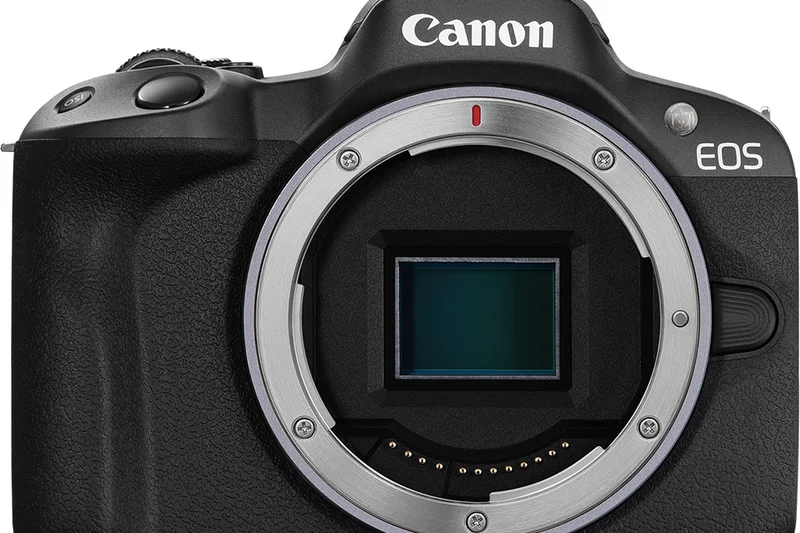
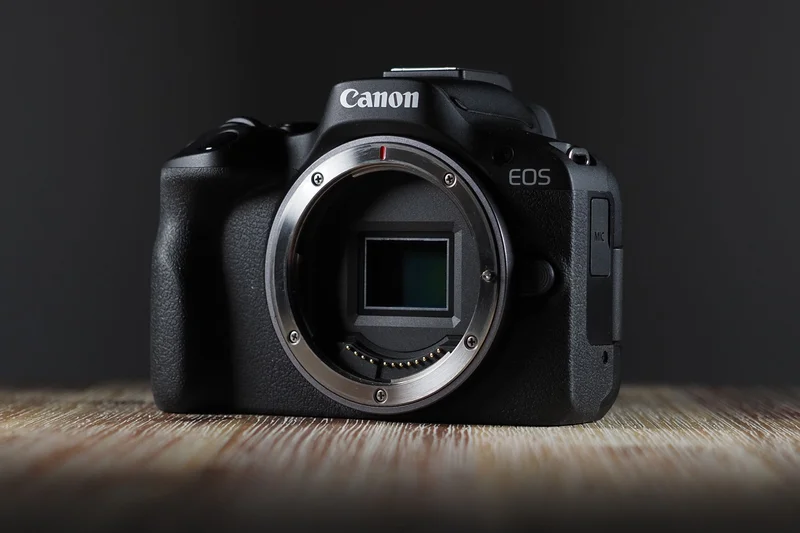
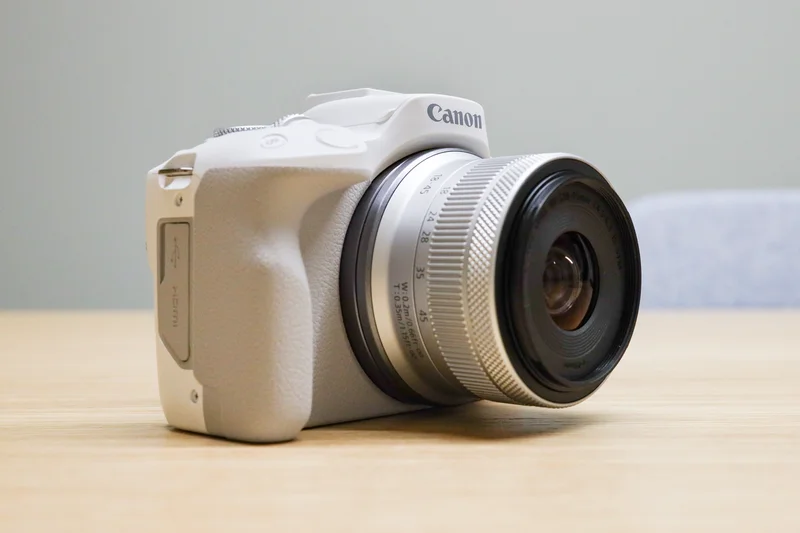
Why we picked it: The Canon EOS R50 is an incredibly small and affordable entry-point into the mirrorless world, perfect for travelers upgrading from a smartphone. It weighs practically nothing but features a 24.2MP APS-C sensor and Canon's incredibly reliable Dual Pixel AF. It shoots beautiful 4K 30p video oversampled from 6K. While the native RF-S lens selection is currently limited and it lacks IBIS, the camera body itself provides massive value and excellent image quality for budget-conscious vacationers.
Key Specs
- 24.2MP APS-C CMOS sensor
- Dual Pixel CMOS AF II
- 4K 30p video (6K oversampled)
- 15 fps electronic shutter burst shooting
- Extremely lightweight and compact body
What we like
- Very affordable price
- Extremely lightweight and compact
- Excellent autofocus performance
What we don't like
- No in-body stabilization
- Limited native APS-C lens options
Best for: Beginner photographers and budget travelers looking for a massive step up from their smartphone without spending over $1,000.
Canon EOS R50 vs Sony a6700: The R50 is much cheaper and lighter for beginners, while the a6700 is a professional-grade APS-C tool with IBIS and an extensive lens ecosystem.
A fantastic, budget-friendly entry-level mirrorless camera that punches above its weight in autofocus and image quality.
Buy at Canon official site#20 Sony RX100 VII
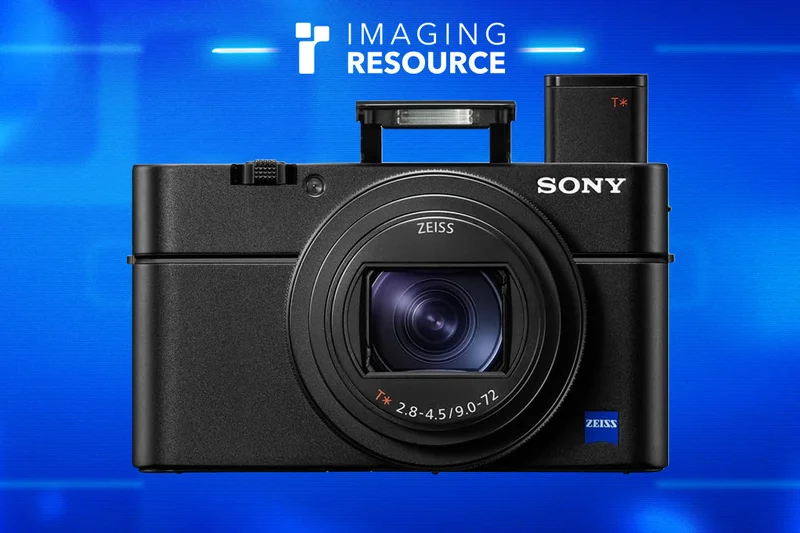
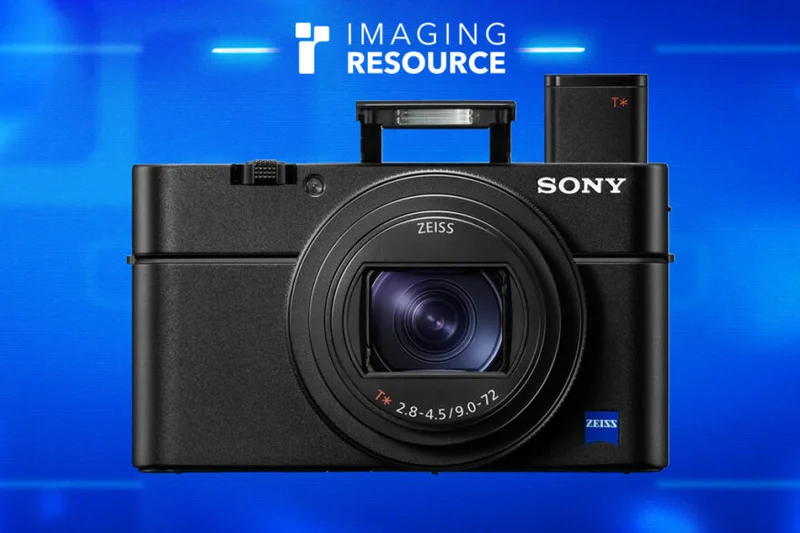
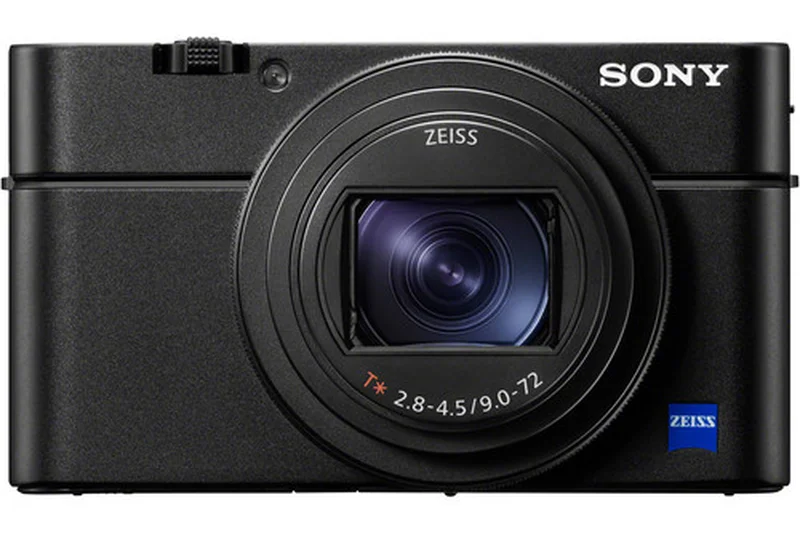
Why we picked it: Despite being several years old, the Sony RX100 VII remains the king of the travel zoom compacts. It packs a 24-200mm equivalent lens into a body that genuinely fits in a jeans pocket. Paired with a 1-inch stacked CMOS sensor, it offers Real-time Tracking AF and 20fps burst shooting that rivals professional sports cameras. If you refuse to carry a camera bag but need telephoto reach to zoom in on architectural details or distant wildlife, the RX100 VII is your only true option.
Key Specs
- 20.1MP 1-inch stacked CMOS sensor
- 24-200mm f/2.8-4.5 ZEISS zoom lens
- Real-time Tracking and Eye AF
- 20fps blackout-free continuous shooting
- Pop-up electronic viewfinder
What we like
- Incredible 24-200mm zoom range in a pocketable body
- Lightning-fast autofocus and burst speeds
- Pop-up EVF is very handy
What we don't like
- Very expensive for an older compact
- Menu system is dated and complex
Best for: Travelers who demand a pocketable camera but refuse to give up telephoto zoom capabilities.
Sony RX100 VII vs Ricoh GR IIIx: The Sony offers a massive 24-200mm zoom and fast burst rates, whereas the Ricoh has a larger APS-C sensor for better image quality but is limited to a fixed 40mm lens.
The ultimate pocket-sized travel zoom, packing professional speed and a huge focal range into a tiny chassis.
Buy at Sony official site#21 Insta360 X4
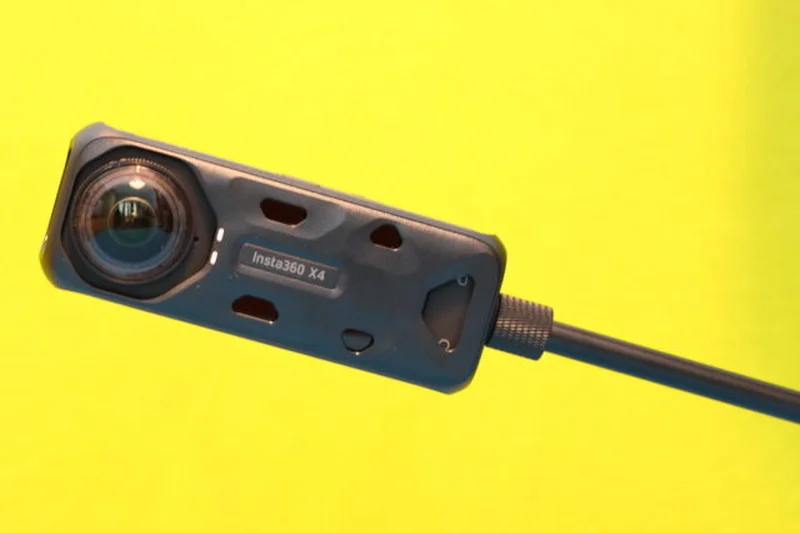
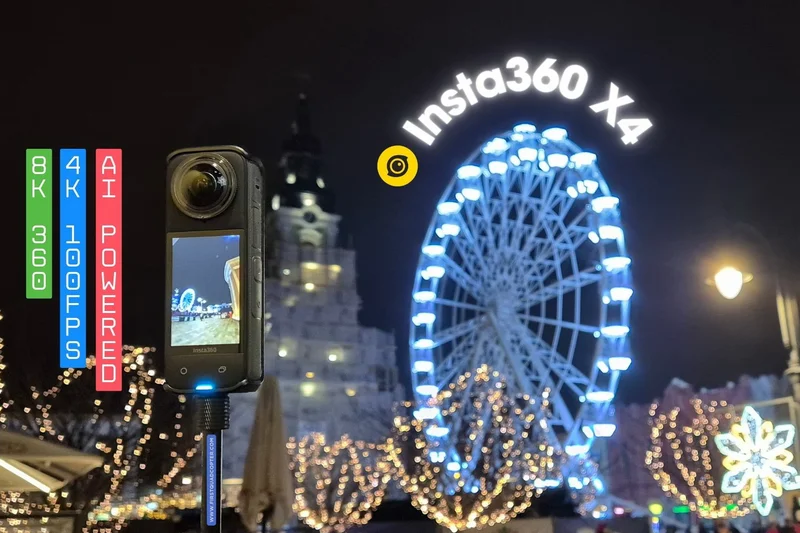
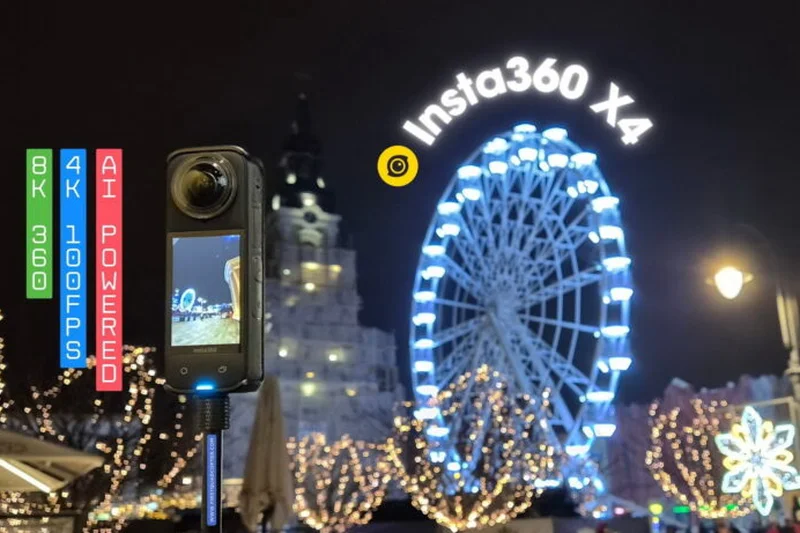
Why we picked it: The Insta360 X4 is the ultimate 360-degree travel camera, now upgraded to shoot 8K resolution. This massive resolution bump means that when you 'reframe' your 360 footage into a standard 1080p or 4K video, the resulting quality is finally sharp enough for professional use. The 'Invisible Selfie Stick' effect allows solo travelers to capture fake-drone shots and third-person perspectives effortlessly. A massive battery and rugged build make it a highly creative tool for documenting unique travel angles.
Key Specs
- 8K/30fps 360-degree capture
- 4K/60fps Single-Lens Mode
- Invisible Selfie Stick effect
- FlowState Stabilization & Horizon Lock
- Massive 2290mAh battery
What we like
- 8K resolution makes reframed video look sharp
- Incredible invisible selfie stick effects
- Shoot first, frame later convenience
What we don't like
- Lenses are exposed and easily scratched
- Editing 360 footage requires extra time and software
Best for: Solo travelers and vloggers wanting to capture unique, drone-like perspectives without needing a drone.
Insta360 X4 vs GoPro Hero 13: The X4 captures everything around you allowing framing in post, while the GoPro is a traditional directional camera that is much more durable.
The definitive 360-degree travel camera, utilizing 8K resolution to make 'shoot first, point later' video look fantastic.
Buy at Insta360 official site#22 Insta360 GO 3S
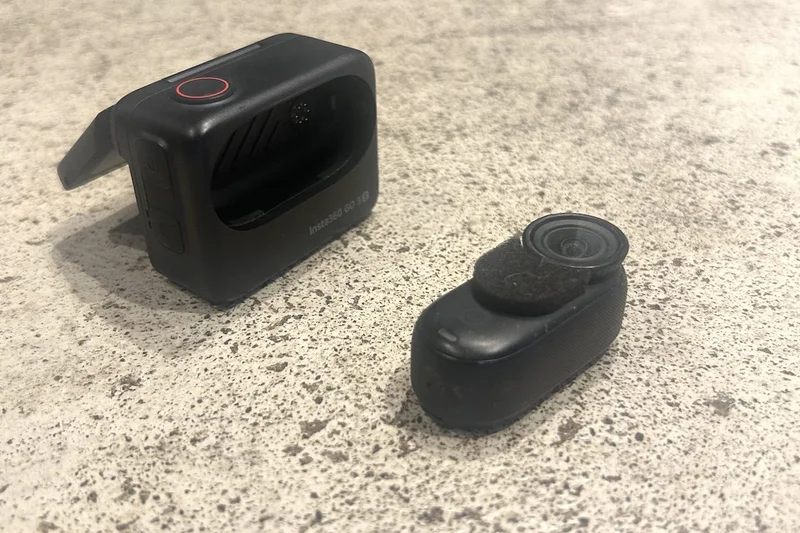
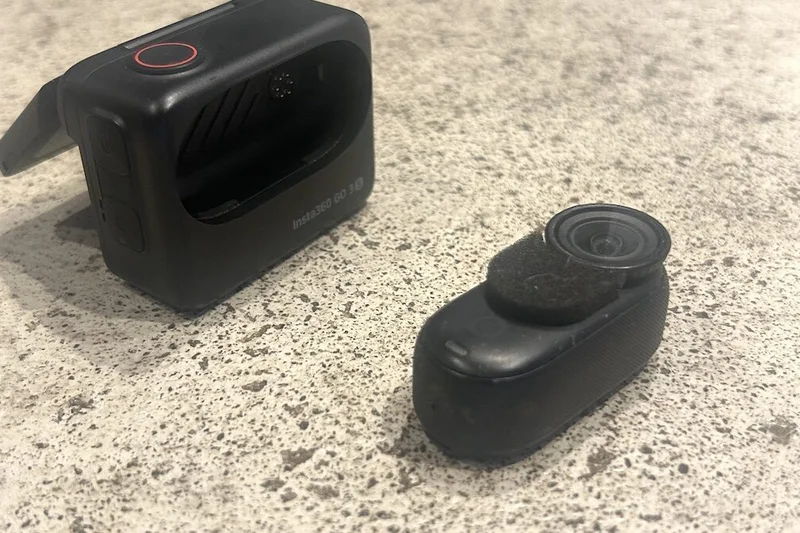
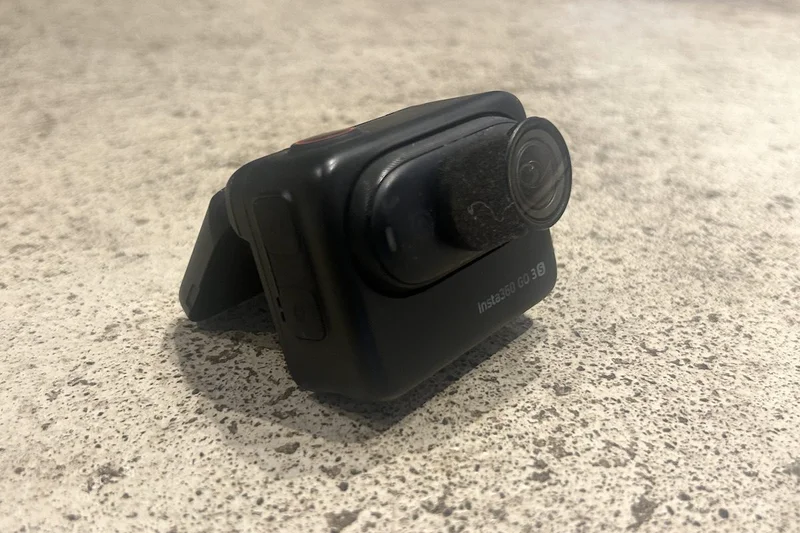
Why we picked it: The Insta360 GO 3S is a thumb-sized action camera weighing just 39 grams. It can be magnetically mounted to a hat, shirt, or necklace to capture true point-of-view (POV) travel footage completely hands-free. Now upgraded to 4K resolution, it snaps into an 'Action Pod' that features a flip screen, effectively turning it into a standard action camera when needed. It is the most unobtrusive travel camera available.
Key Specs
- Thumb-sized 39g camera body
- 4K/30p video resolution
- Action Pod with flip touch screen
- Magnetic mounting ecosystem
- Apple Find My network support
What we like
- Incredibly tiny and lightweight
- Magnetic mounting is highly versatile for POV
- Now features 4K resolution
What we don't like
- Battery life on the tiny module is short
- Non-removable storage
Best for: Travelers who want to record hands-free, unobtrusive POV footage of their daily excursions.
Insta360 GO 3S vs DJI Osmo Action 5 Pro: The GO 3S is all about miniaturization and magnetic POV mounting, while the DJI is a traditional, larger action camera with vastly superior battery and image quality.
A marvel of miniaturization that allows for effortless, hands-free POV travel documentation.
Buy at Insta360 official site#23 Canon EOS R10
Why we picked it: Sitting just above the R50, the Canon EOS R10 offers superior ergonomics, a deeper grip, dual control dials, and an AF joystick. It uses a similar 24.2MP sensor with excellent Dual Pixel autofocus but provides a more enthusiast-focused shooting experience. It's a great lightweight travel camera for those who want a bit more manual control than entry-level models provide, though it still lacks IBIS and native APS-C lens options.
Key Specs
- 24.2MP APS-C CMOS sensor
- Dual Pixel CMOS AF II
- 4K 60p video (cropped) or 4K 30p (uncropped)
- 15 fps mechanical shutter
- Advanced subject tracking capabilities
What we like
- Great ergonomics and physical controls
- Fast 15fps burst shooting
- Excellent Dual Pixel autofocus
What we don't like
- No in-body stabilization
- Limited native RF-S lens lineup
Best for: Enthusiast travelers who want Canon's autofocus and color science with traditional dual-dial manual controls.
Canon EOS R10 vs Canon EOS R50: The R10 provides superior manual controls, a larger grip, and an AF joystick, while the R50 is strictly designed for beginners to be as small as possible.
A highly capable mid-range APS-C camera with excellent handling and autofocus for travel photography.
Buy at Canon official site#24 Ricoh GR III HDF
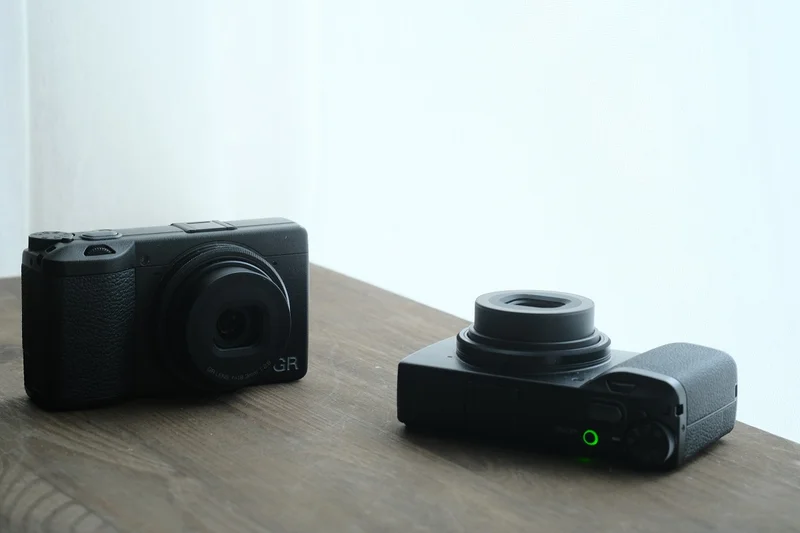
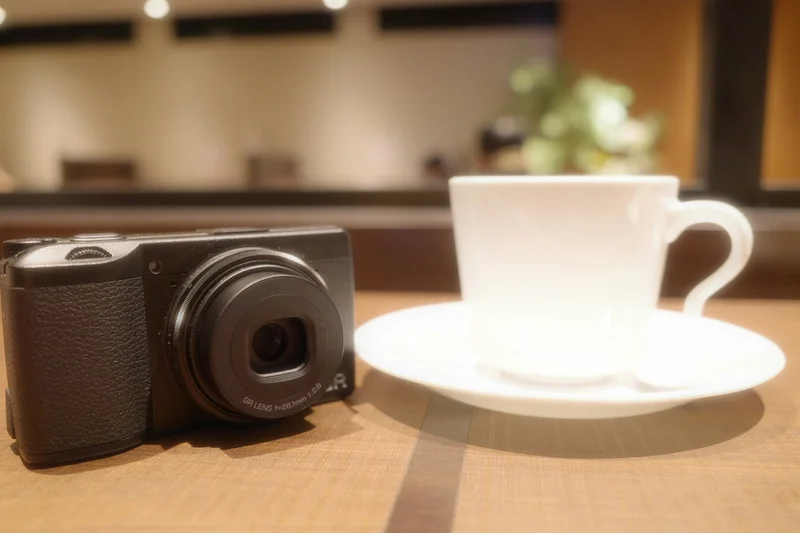
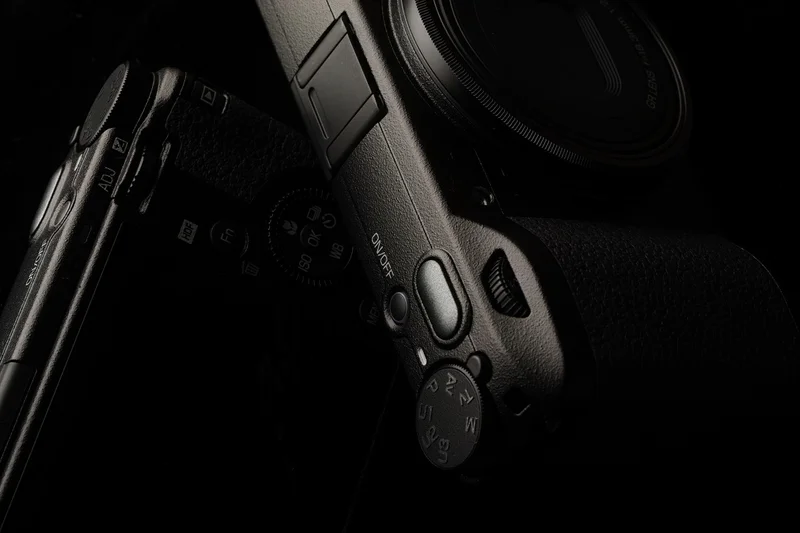
Why we picked it: The Ricoh GR III HDF is the ultimate stealth travel camera. Packing a large APS-C sensor and a sharp 28mm equivalent f/2.8 lens into a body that fits into a shirt pocket, it is beloved by street photographers worldwide. The new HDF (Highlight Diffusion Filter) version replaces the built-in ND filter with a diffusion filter, allowing you to instantly create soft, glowing, cinematic highlights in your travel portraits and night shots. Battery life and autofocus are poor, but its portability and image sharpness are unmatched.
Key Specs
- 24.2MP APS-C CMOS sensor
- Built-in Highlight Diffusion Filter (HDF)
- 28mm f/2.8 equivalent wide-angle lens
- 3-Axis Shake Reduction
- Stealthy street and travel design
What we like
- True pocketability with an APS-C sensor
- Incredibly sharp 28mm lens
- Built-in HDF creates beautiful cinematic halation
What we don't like
- Terrible battery life
- Sluggish autofocus
Best for: Street photographers and minimalists who want a stealthy, pocketable camera for wide-angle environmental shots.
Ricoh GR III HDF vs Ricoh GR IIIx HDF: The only difference is the lens; the GR III uses a wide 28mm equivalent, while the GR IIIx uses a tighter, more portrait-friendly 40mm equivalent.
The undisputed king of stealthy street photography, now updated with a built-in cinematic diffusion filter.
Buy at Ricoh official site#25 Nikon Z30
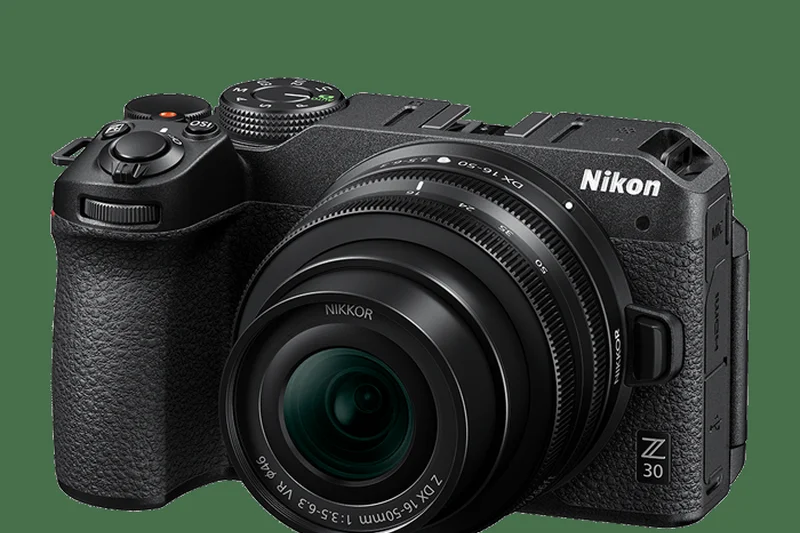
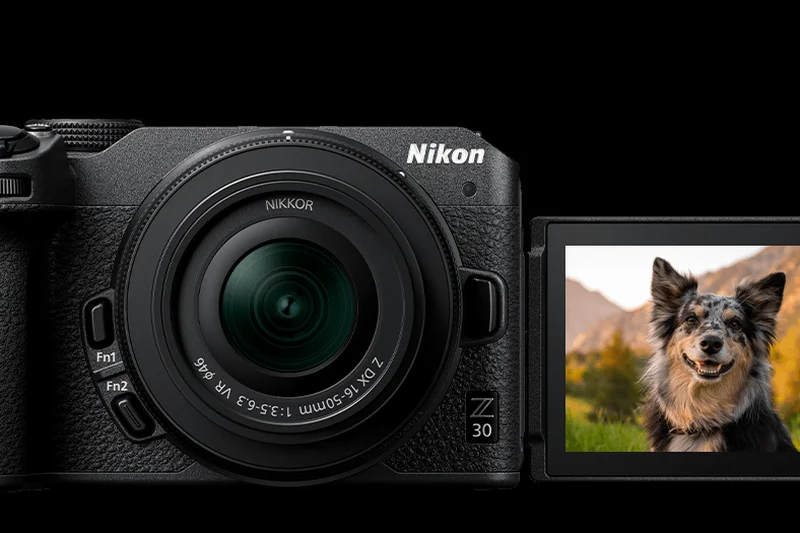
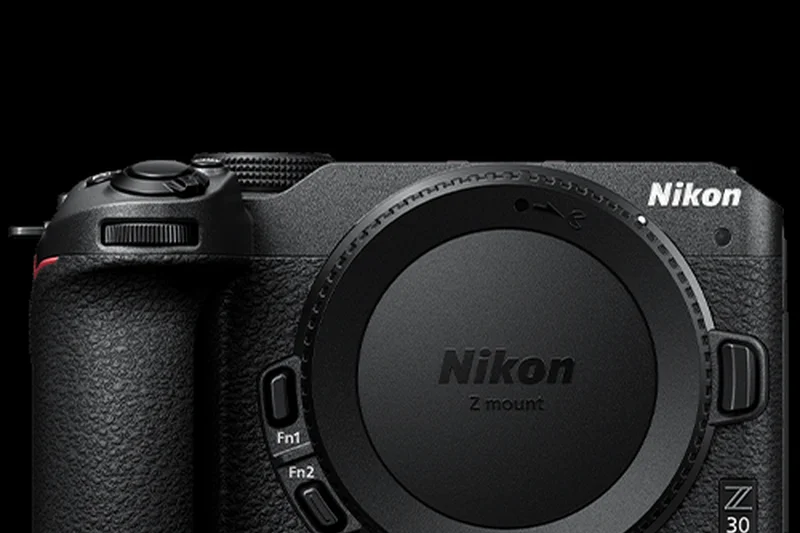
Why we picked it: The Nikon Z30 is a budget-friendly APS-C camera aimed directly at vloggers. It drops the electronic viewfinder to maintain a small size and low price, focusing on uncropped 4K/30p video, a fully articulating screen, and excellent built-in stereo microphones. It boasts Nikon's comfortable grip and logical menus, making it a highly reliable, no-fuss video companion for casual travel creators.
Key Specs
- 20.9MP APS-C sensor
- 4K 30p video without crop
- Built-in stereo microphones
- Fully articulating screen
- Front-facing tally lamp for vlogging
What we like
- Uncropped 4K video
- Very comfortable grip
- High-quality internal microphones
What we don't like
- No EVF for photography
- Lacks in-body image stabilization
Best for: Budget-conscious vloggers who want high-quality 4K video and comfortable handling.
Nikon Z30 vs Sony ZV-E10 II: The Sony offers superior 4K/60p 10-bit video and better autofocus, while the Nikon is generally cheaper and has better physical ergonomics.
An affordable, easy-to-use APS-C mirrorless camera tailored for aspiring travel vloggers.
Buy at Nikon official site#26 Ricoh GR IIIx HDF
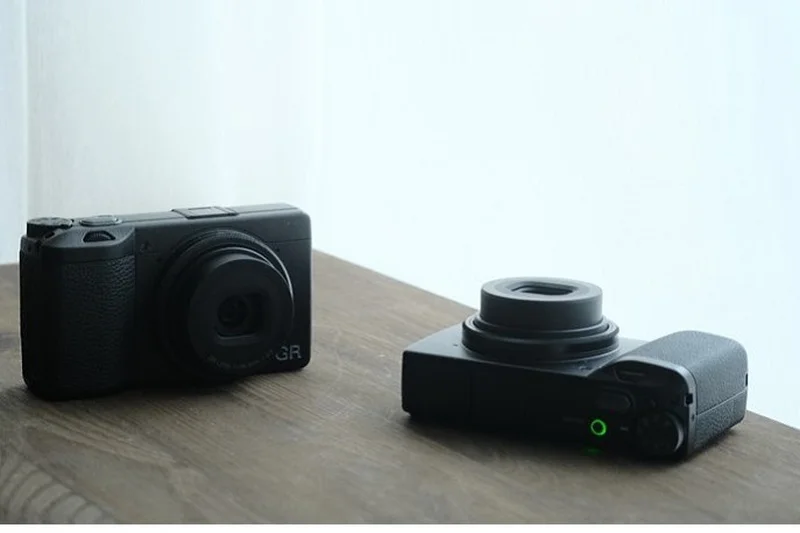
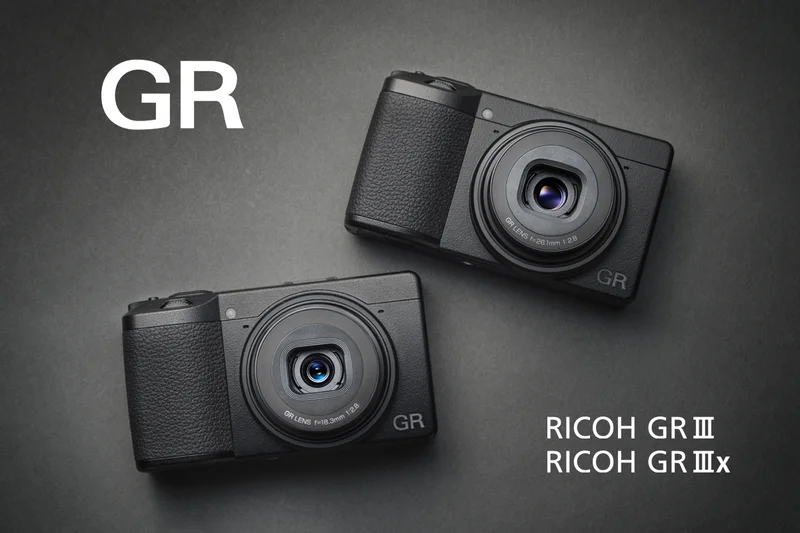
Why we picked it: Winner of our Portability dimension, the Ricoh GR IIIx HDF features the same incredibly small body and APS-C sensor as the standard GR III but employs a 40mm equivalent f/2.8 lens. This tighter focal length is far more flattering for travel portraits and isolates subjects better than the wider 28mm. The new built-in Highlight Diffusion Filter (HDF) adds a dreamy, film-like glow to light sources at the press of a button. It remains the ultimate everyday-carry travel camera.
Key Specs
- 24.2MP APS-C CMOS sensor
- Built-in Highlight Diffusion Filter (HDF)
- 40mm f/2.8 equivalent lens
- 3-Axis Shake Reduction
- Ultra-pocketable street and travel design
What we like
- Unmatched APS-C portability
- 40mm focal length is highly versatile
- HDF filter adds unique creative flair
What we don't like
- Autofocus hunts in low light
- Battery life requires carrying spares
Best for: Minimalist travelers and portrait enthusiasts who want a pocketable APS-C camera with a natural, tight field of view.
Ricoh GR IIIx HDF vs Fujifilm X100VI: The Ricoh is actually pocketable but lacks a viewfinder and decent battery life, whereas the Fuji is larger but offers an EVF, better video, and tactile dials.
A pocket-sized powerhouse that delivers stunning 40mm perspective imagery and cinematic diffusion effects.
Buy at Ricoh official site#27 Nikon Z50
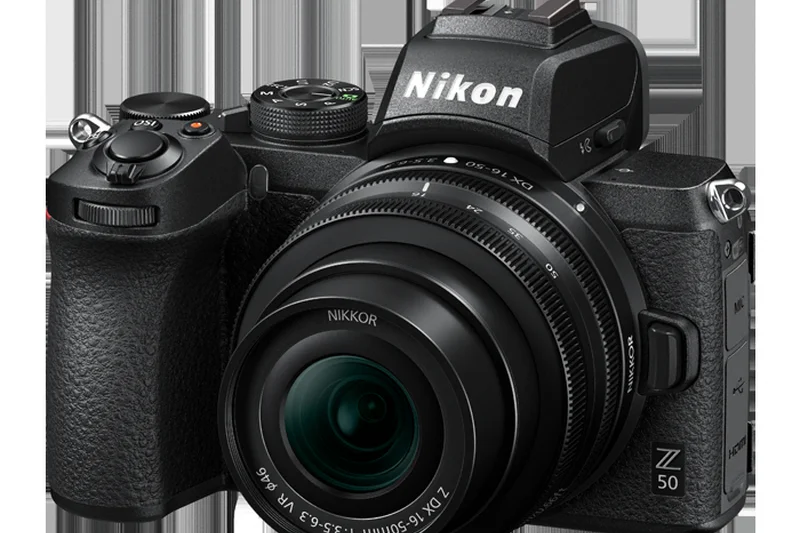
Why we picked it: The Nikon Z50 is a sturdy, weather-sealed APS-C mirrorless camera that offers one of the deepest, most comfortable grips in its class. It features a 20.9MP sensor, uncropped 4K video, and an excellent electronic viewfinder. While it lacks IBIS and its screen only tilts down (which isn't great for vlogging on a tripod), its magnesium alloy build and stellar ergonomics make it a very reliable tool for classic travel photography.
Key Specs
- 20.9MP APS-C sensor
- 209-point Hybrid AF system
- Uncropped 4K 30p video
- Large ergonomic grip for travel comfort
- Weather-sealed magnesium alloy body
What we like
- Best-in-class ergonomics and grip
- Weather-sealed magnesium alloy body
- Excellent image quality and colors
What we don't like
- Screen tilts down, making tripod vlogging difficult
- No in-body stabilization
Best for: Traditional travel photographers who prioritize handling, ergonomics, and build quality on a budget.
Nikon Z50 vs Canon EOS R10: The Nikon has superior build quality and weather sealing, while the Canon boasts significantly better autofocus tracking and burst speeds.
A superbly built APS-C mirrorless camera with unmatched ergonomics for all-day travel shooting.
Buy at Nikon official site#28 Sony ZV-1 II
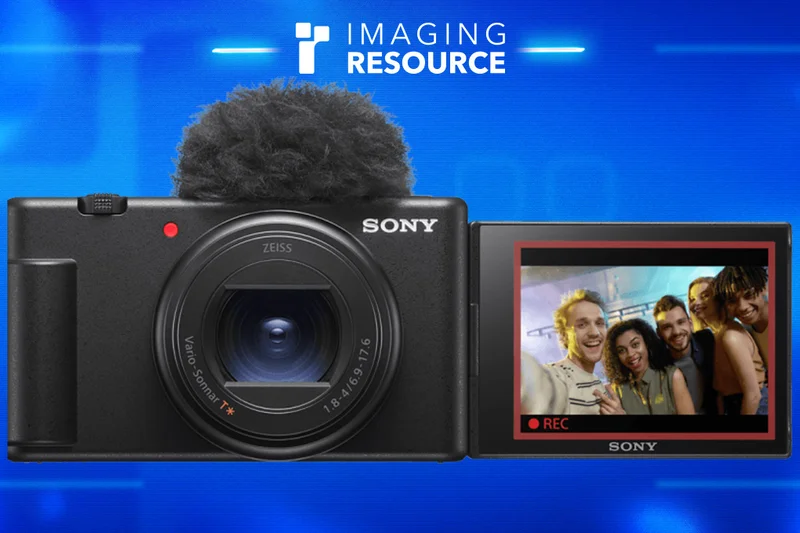
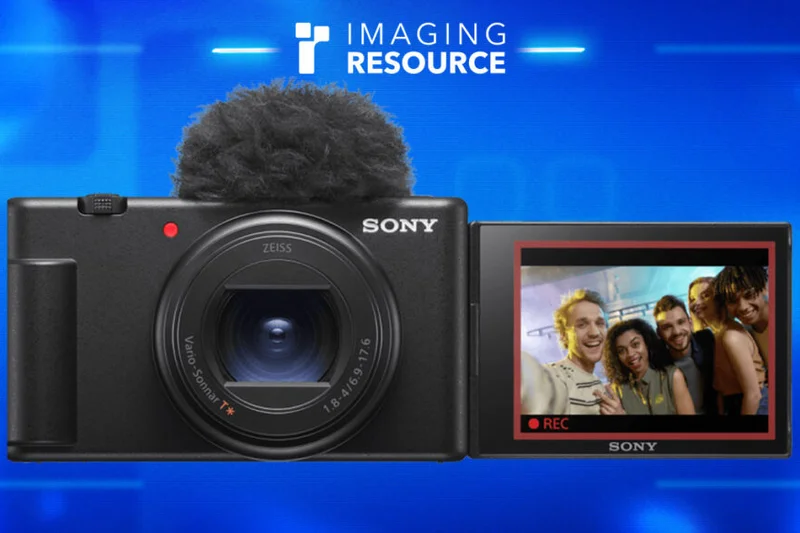
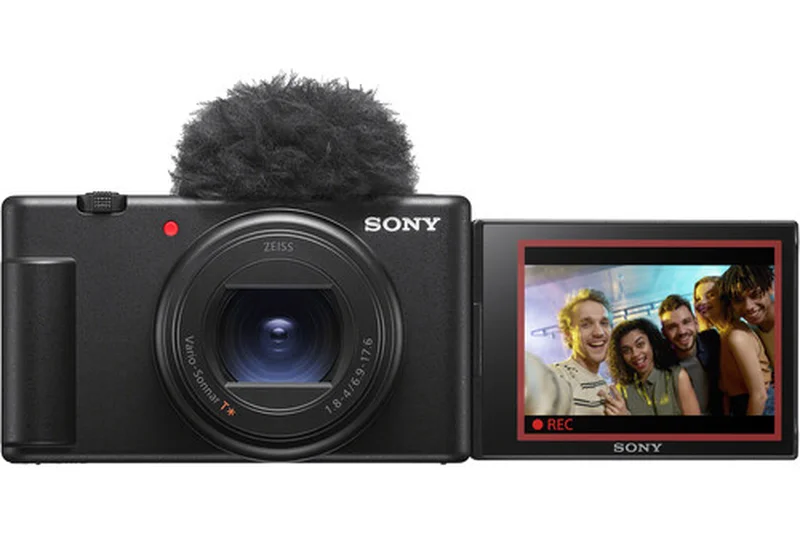
Why we picked it: The Sony ZV-1 II is a dedicated vlogging compact camera featuring a 1-inch sensor and an ultra-wide 18-50mm equivalent lens. This wide lens is perfect for holding the camera at arm's length while keeping yourself and the travel background in frame. It features an excellent built-in microphone, a built-in ND filter, and Sony's cinematic vlog settings. It's the perfect pocketable video camera for those who don't want to deal with interchangeable lenses.
Key Specs
- 20.1MP 1-inch Exmor RS sensor
- 18-50mm f/1.8-4 equivalent wide-angle lens
- Cinematic Vlog Setting
- Multiple Face Recognition
- Built-in ND filter
What we like
- Ultra-wide 18mm lens is perfect for selfie vlogging
- Pocketable all-in-one design
- Excellent autofocus and built-in ND filter
What we don't like
- Lacks mechanical stabilization (relies on digital)
- Short battery life
Best for: Casual vloggers and travelers who want a high-quality, wide-angle pocket video camera without swapping lenses.
Sony ZV-1 II vs DJI Osmo Pocket 3: The Sony has an optical zoom lens, while the DJI has a fixed focal length but vastly superior mechanical gimbal stabilization.
An ultra-portable, wide-angle vlogging compact that makes capturing high-quality travel video incredibly easy.
Buy at Sony official site#29 Canon PowerShot V10
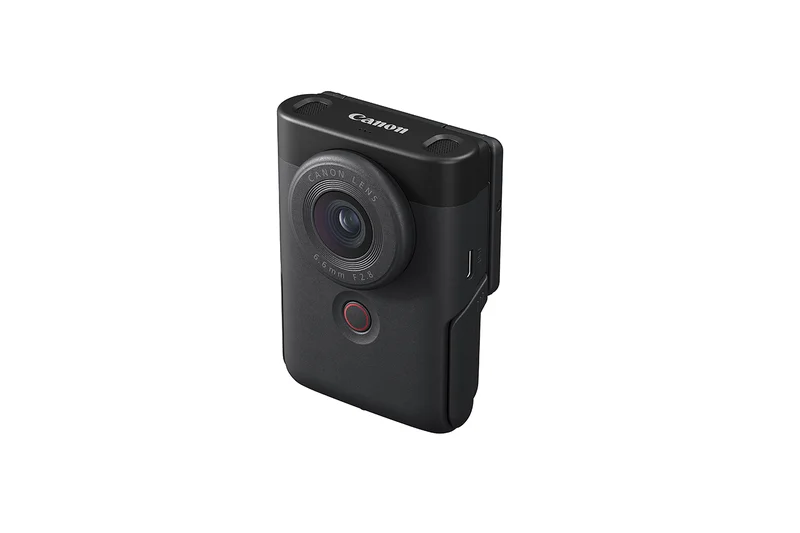
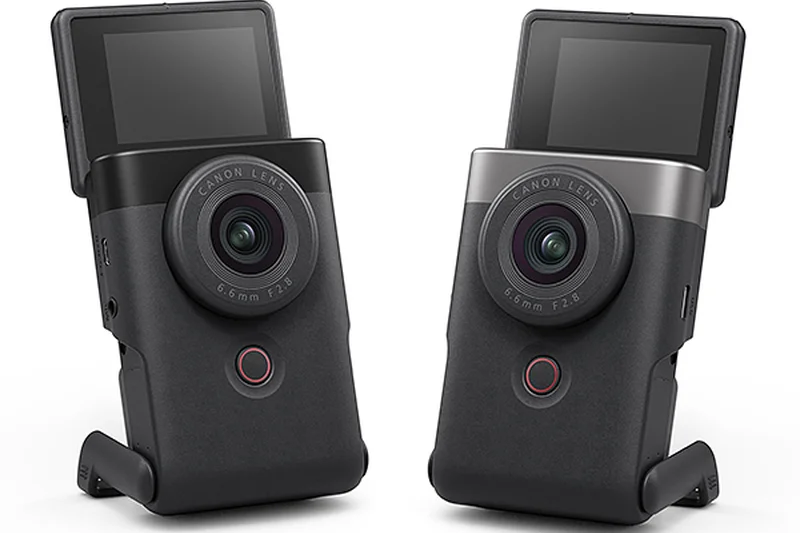
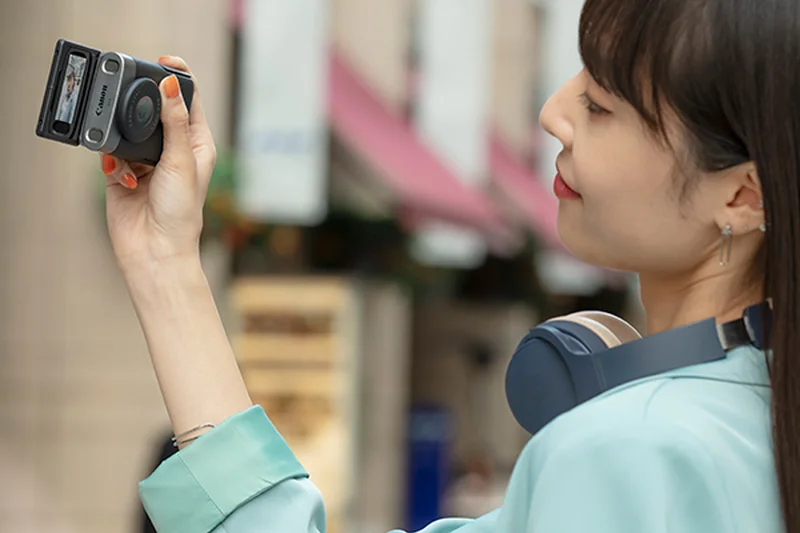
Why we picked it: The Canon PowerShot V10 features a highly unique, vertical smartphone-like design with a built-in kickstand, making it incredibly easy to set down on a café table and start vlogging. It uses a 1-inch sensor and an ultra-wide 19mm equivalent lens, capturing great 4K video. It is designed specifically for ease of use, with large high-quality stereo microphones. It's the perfect minimalist video diary camera.
Key Specs
- 1-inch 15.2MP CMOS sensor
- 19mm f/2.8 equivalent wide-angle lens
- Built-in multi-angle stand
- High-quality stereo microphones
- Pocket-sized vertical body design
What we like
- Unique built-in kickstand is incredibly useful
- Pocket-friendly vertical design
- Great audio straight out of camera
What we don't like
- Fixed focal length lens
- Battery is non-removable
Best for: Solo travelers and digital nomads who want a simple, set-it-and-forget-it camera for daily video logging.
Canon PowerShot V10 vs Sony ZV-1 II: The Canon is cheaper and has a built-in stand, but the Sony offers an optical zoom lens and more advanced autofocus features.
A charming, cleverly designed vlogging camera that excels at capturing quick travel updates from anywhere.
Buy at Canon official site#30 Nikon Zfc
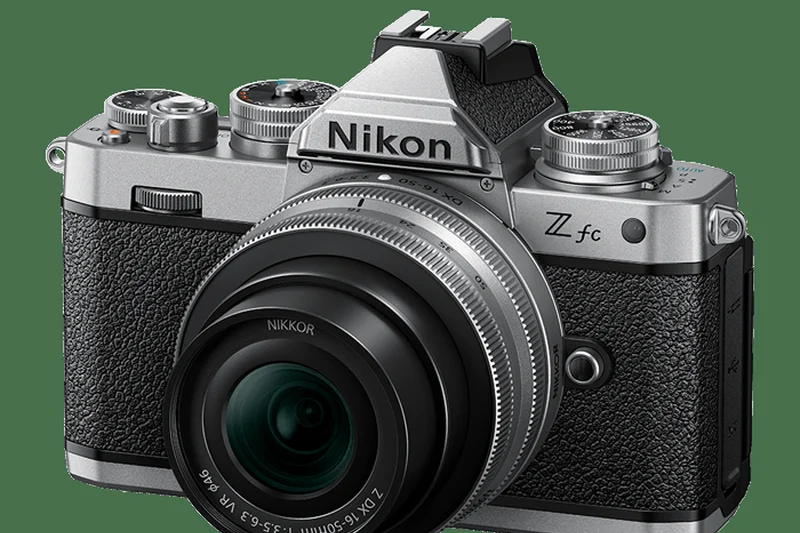
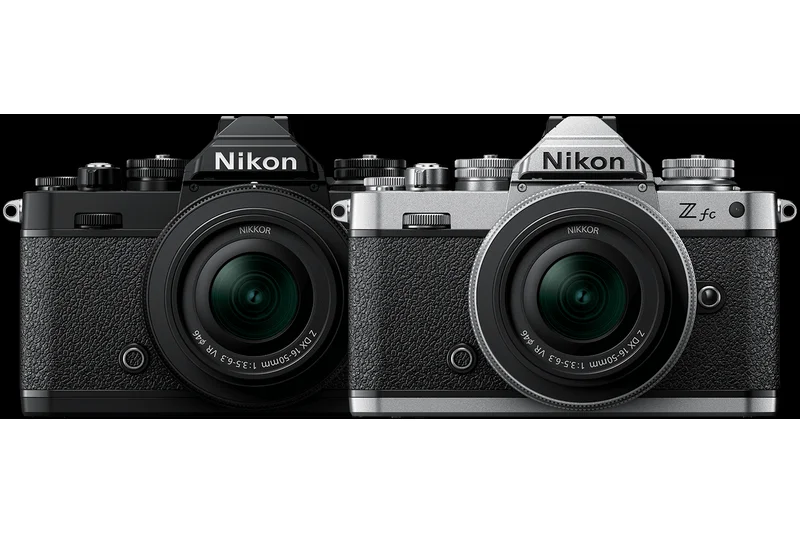
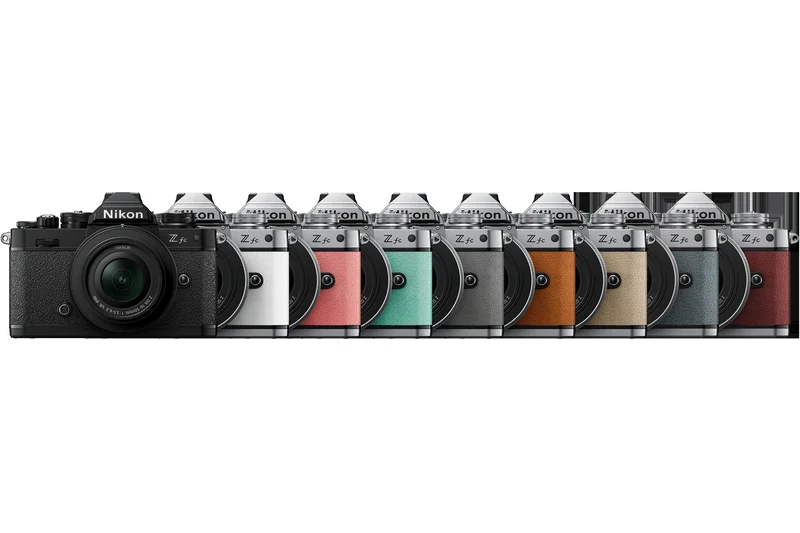
Why we picked it: The Nikon Zfc takes the internals of the Z50 and wraps them in a stunning, retro-styled body inspired by the classic Nikon FM2 film camera. It features dedicated mechanical dials for shutter speed, ISO, and exposure compensation, making the shooting process highly tactile. It offers excellent APS-C image quality and uncropped 4K video. While the grip is shallow to maintain the vintage look, it is undeniably one of the most stylish travel cameras available.
Key Specs
- 20.9MP APS-C sensor
- Classic retro mechanical control dials
- Uncropped 4K 30p video
- Fully articulating touchscreen
- Full-time Eye-Detection AF
What we like
- Gorgeous retro design and build
- Fun and tactile mechanical dials
- Excellent image quality
What we don't like
- Shallow grip can be uncomfortable with heavy lenses
- No in-body stabilization
Best for: Style-conscious travelers who want a vintage-looking camera that delivers modern mirrorless performance.
Nikon Zfc vs Fujifilm X-T50: Both offer retro dials, but the Fuji has a much higher resolution 40MP sensor and IBIS, though the Nikon is generally more affordable.
A beautiful blend of classic analog aesthetics and modern APS-C digital performance.
Buy at Nikon official site#31 OM System Tough TG-7
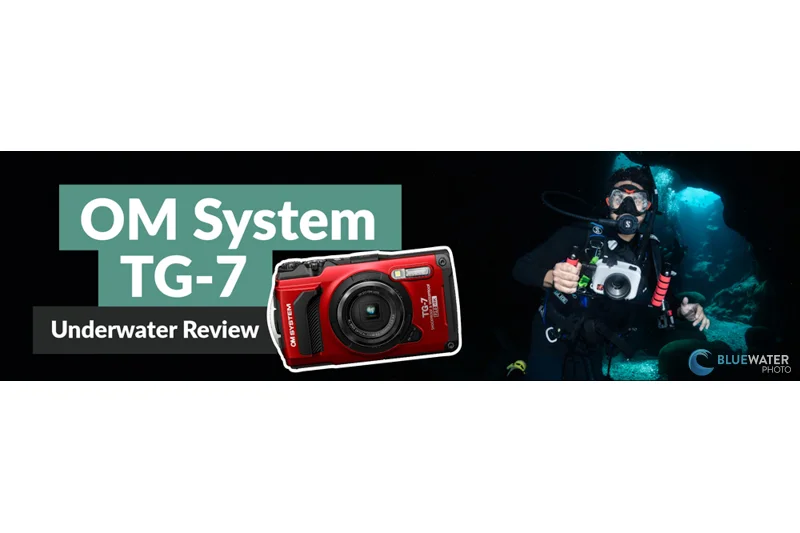
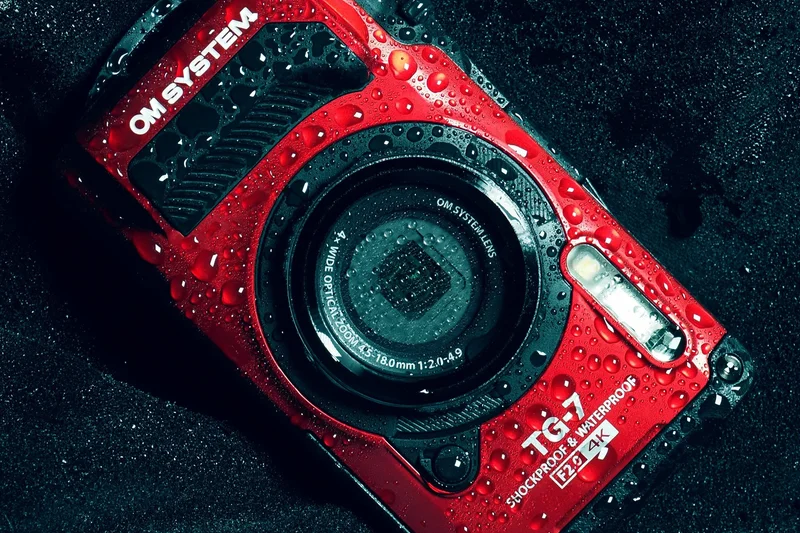
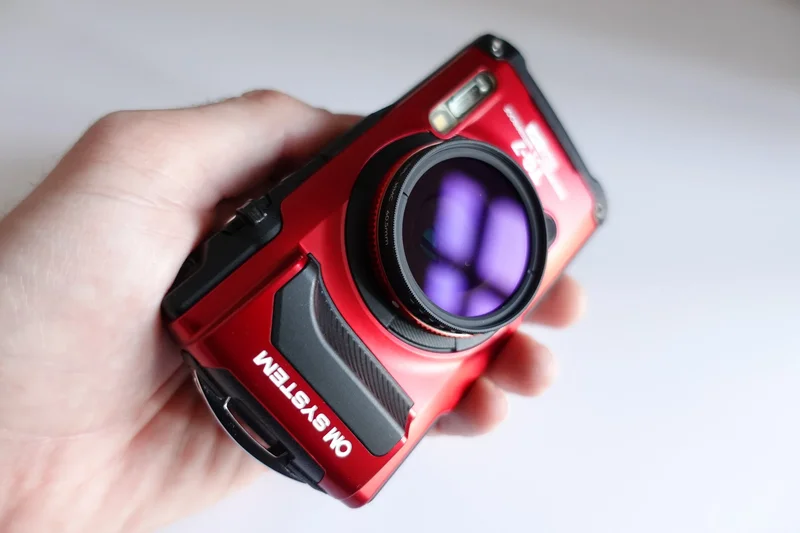
Why we picked it: Winner of our Durability dimension, the OM System Tough TG-7 is practically indestructible. It is waterproof to 50 feet without a housing, crushproof, shockproof, and freezeproof. It features a fast f/2.0 wide-angle lens and advanced microscope macro modes that are incredible for capturing tiny details on coral reefs or forest floors. Its small 12MP sensor struggles in the dark, but it is the ultimate camera for surviving extreme travel abuse.
Key Specs
- 12MP BSI CMOS sensor
- Waterproof to 50ft (15m)
- Crushproof, shockproof, and freezeproof
- 4x optical zoom (25-100mm equivalent)
- Advanced microscope macro modes
What we like
- Indestructible and waterproof out of the box
- Incredible macro photography modes
- Optical zoom (unlike most action cameras)
What we don't like
- Small sensor provides mediocre low-light quality
- Video features are dated
Best for: Snorkelers, beach-goers, and parents who want a camera that can survive drops, water, and sand without worry.
OM System Tough TG-7 vs DJI Osmo Action 5 Pro: The TG-7 offers an optical zoom and amazing macro capabilities for photos, while the DJI is vastly superior for video.
The ultimate rugged point-and-shoot, built to survive the harshest travel environments on the planet.
Buy at OM System official site#32 Panasonic Lumix G100D
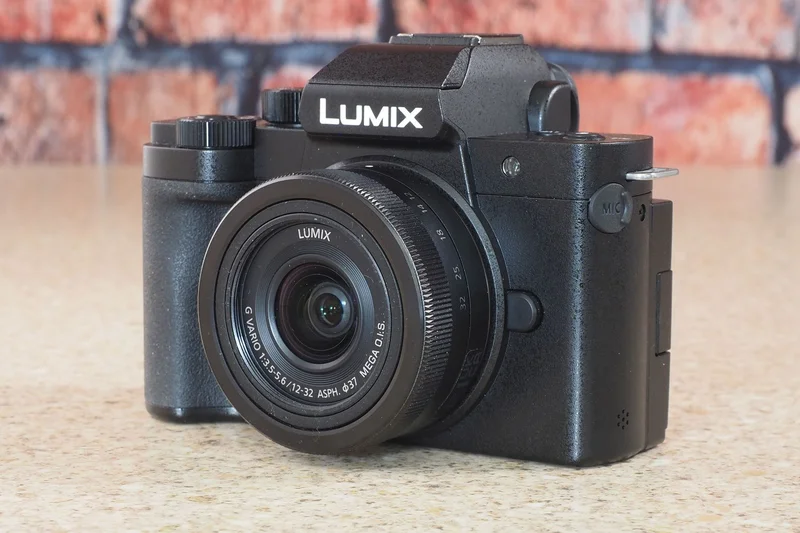
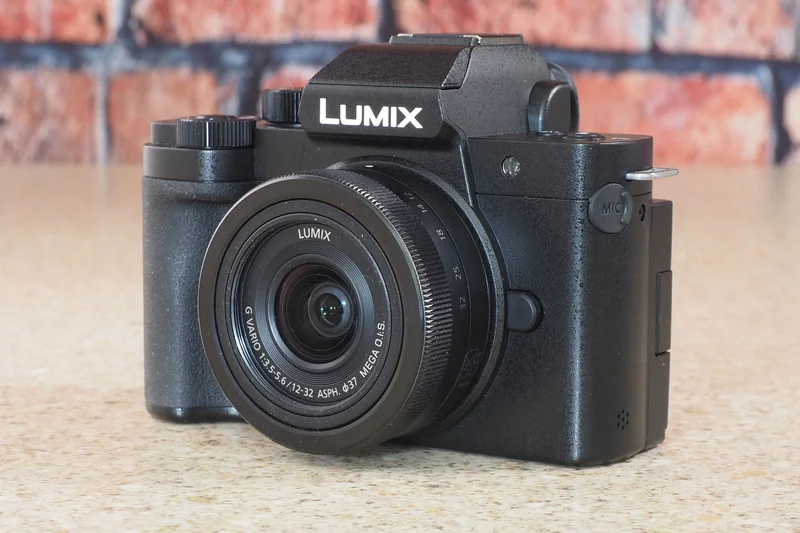
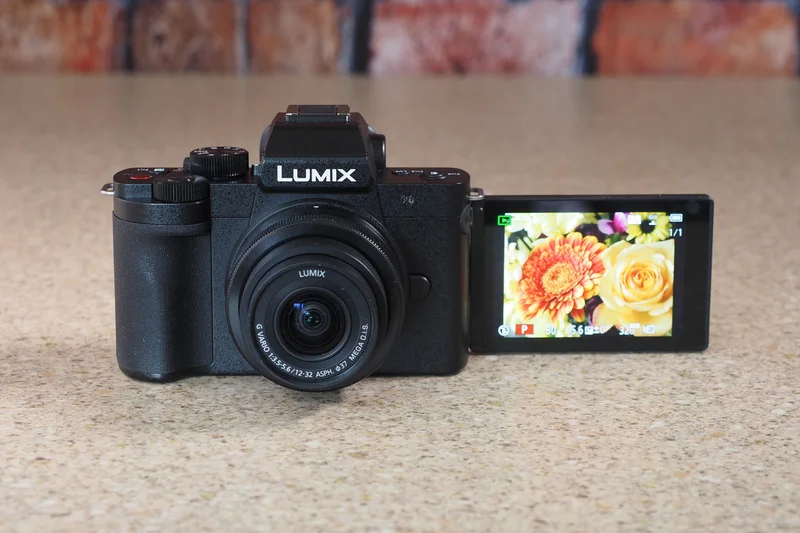
Why we picked it: The Lumix G100D is a compact Micro Four Thirds mirrorless camera aimed at travel vloggers and beginner photographers. It features a 20.3MP sensor, an upgraded high-resolution OLED EVF, and unique OZO Audio by Nokia, which uses multiple mics to track audio directionally. It's incredibly light and offers access to the vast MFT lens lineup. However, its 4K video incurs a heavy crop, limiting its wide-angle vlogging utility.
Key Specs
- 20.3MP Micro Four Thirds sensor
- OZO Audio by Nokia spatial recording
- 4K/30p video capture
- High-res OLED EVF
- Free-angle articulating touchscreen
What we like
- Very lightweight and compact
- Innovative directional audio recording
- Good EVF for the price
What we don't like
- Heavy crop on 4K video
- Contrast-detect autofocus is slow in video
Best for: Budget travelers who want a highly compact interchangeable lens camera with good built-in audio.
Lumix G100D vs Nikon Z30: The Z30 provides uncropped 4K video and much better autofocus, making it the better choice for video, though the G100D is smaller.
A tiny Micro Four Thirds camera with clever audio features, hampered slightly by video crop limitations.
Buy at Panasonic official site#33 Leica D-Lux 8
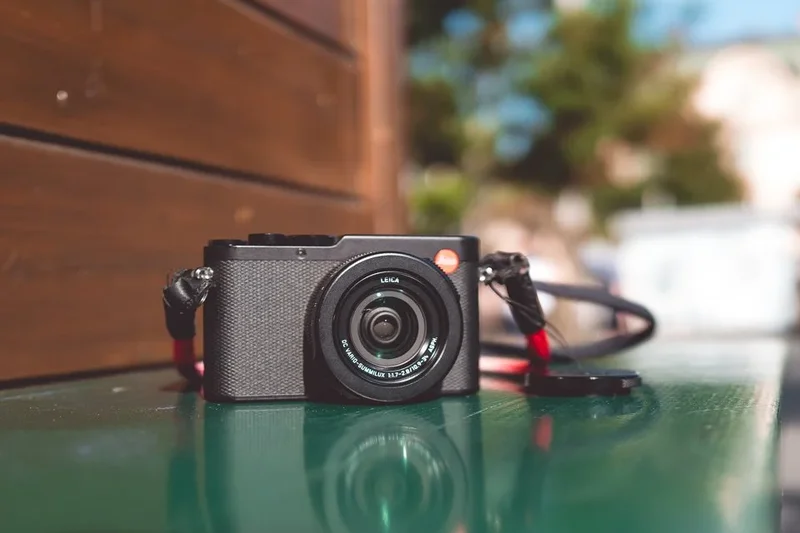
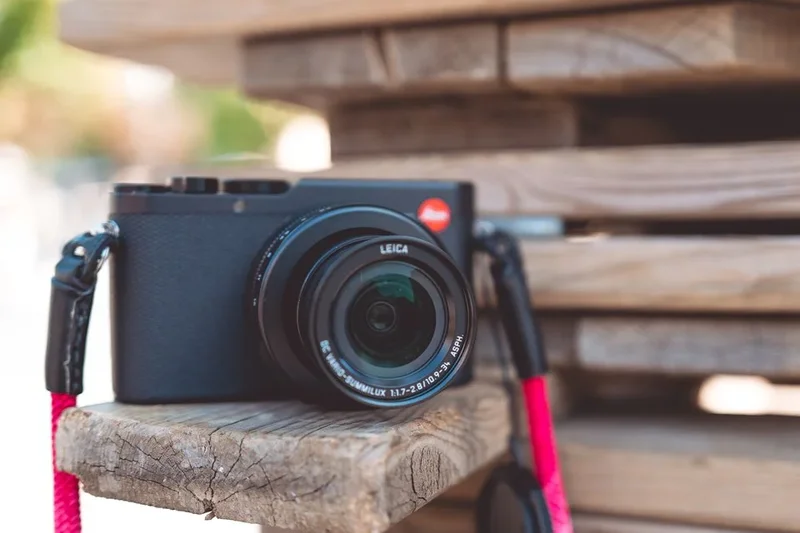
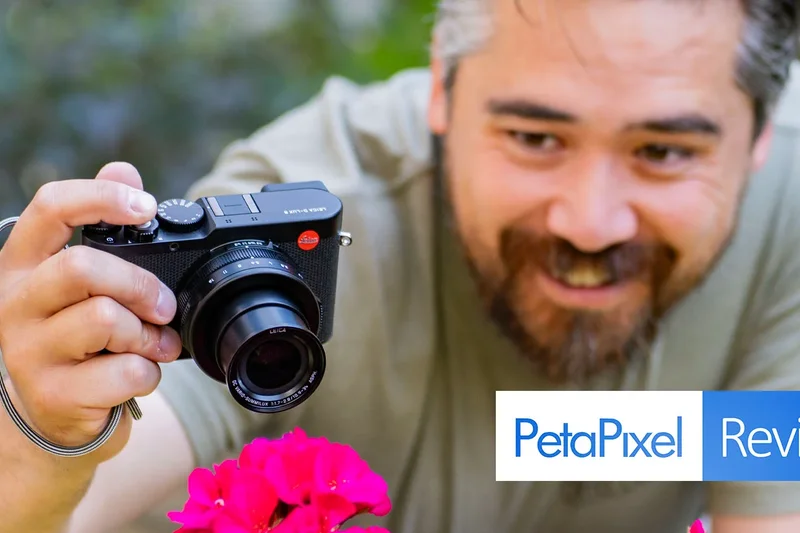
Why we picked it: The Leica D-Lux 8 brings the prestigious red dot to a relatively affordable premium compact. Based around a 17MP Micro Four Thirds sensor and a fast 24-75mm equivalent f/1.7-2.8 lens, it features a beautifully redesigned, minimalist user interface inspired by the flagship Leica Q3. It shoots DNG RAW files and offers full manual controls in a sleek, pocketable chassis. It's essentially a luxury point-and-shoot for those who appreciate German design philosophy.
Key Specs
- 17MP Four Thirds sensor
- Leica DC Vario-Summilux 24-75mm f/1.7-2.8 lens
- DNG RAW format support
- Redesigned minimalist user interface
- Included compact flash
What we like
- Gorgeous minimalist design and UI
- Fast, versatile zoom lens
- Relatively affordable for a Leica
What we don't like
- Older sensor technology
- Autofocus lags behind modern rivals
Best for: Design-conscious travelers who want the luxury Leica experience and a fast zoom lens in a compact body.
Leica D-Lux 8 vs Fujifilm X100VI: The Leica provides a zoom lens and the prestige red dot, but the Fuji boasts a much larger, higher-resolution sensor and faster autofocus.
A beautifully crafted premium compact that offers a fast zoom lens and the minimalist Leica user experience.
Buy at Leica official site#34 Panasonic Lumix TZ200D
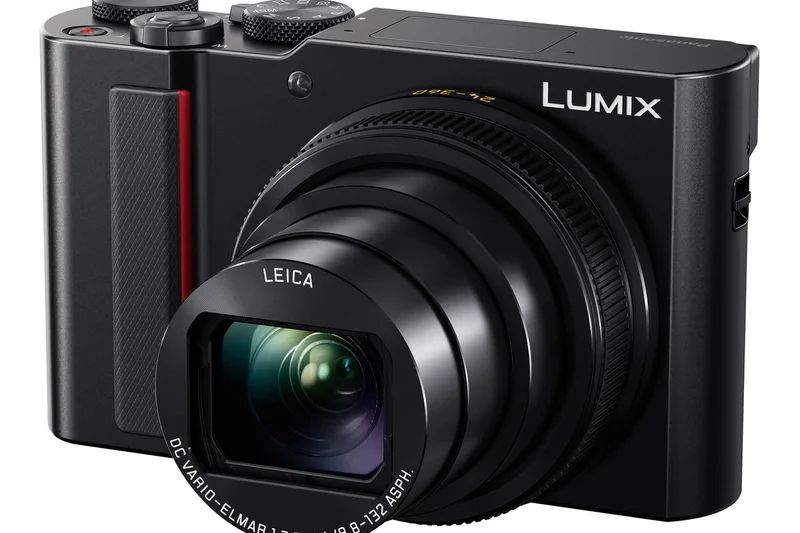
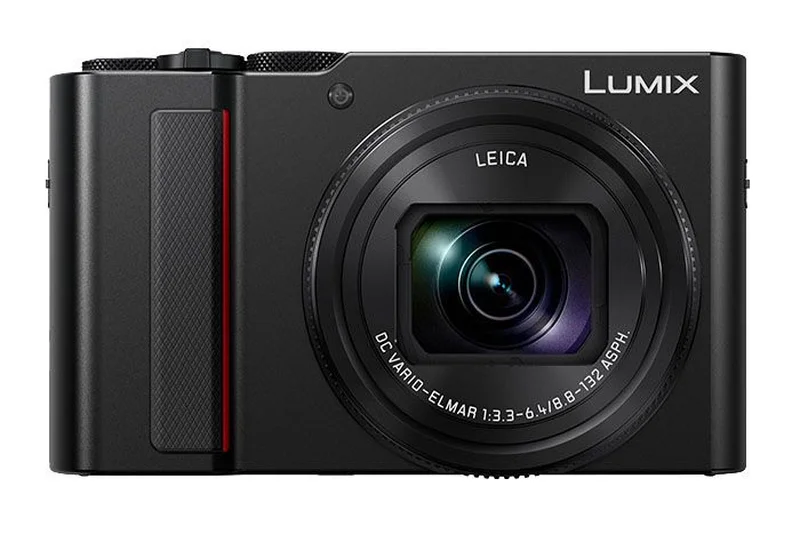
Why we picked it: The Lumix TZ200D is a classic travel zoom, packing a massive 15x optical zoom (24-360mm equivalent) and a 1-inch sensor into a pocketable body. This allows you to shoot wide landscapes and zoom in on distant architectural details without changing lenses. It features 5-axis hybrid stabilization to help steady those extreme telephoto shots. While the lens gets quite soft and dark at the maximum zoom, the sheer versatility is undeniable.
Key Specs
- 20.1MP 1-inch MOS sensor
- 15x optical zoom (24-360mm equivalent)
- 5-axis Hybrid OIS
- 4K video and 4K Photo modes
- High-resolution Electronic Viewfinder
What we like
- Massive 15x optical zoom range
- 1-inch sensor provides decent image quality
- Fits in a standard pocket
What we don't like
- Lens is slow (dark) at the telephoto end
- Autofocus is dated
Best for: Travelers who want maximum zoom reach in the smallest possible physical package.
Lumix TZ200D vs Sony RX100 VII: Both are 1-inch travel zooms, but the Panasonic offers a longer 360mm reach for less money, while the Sony has vastly superior autofocus and video.
A highly versatile travel compact that trades low-light performance for massive, pocketable zoom reach.
Buy at Panasonic official site#35 Canon PowerShot G7 X Mark III
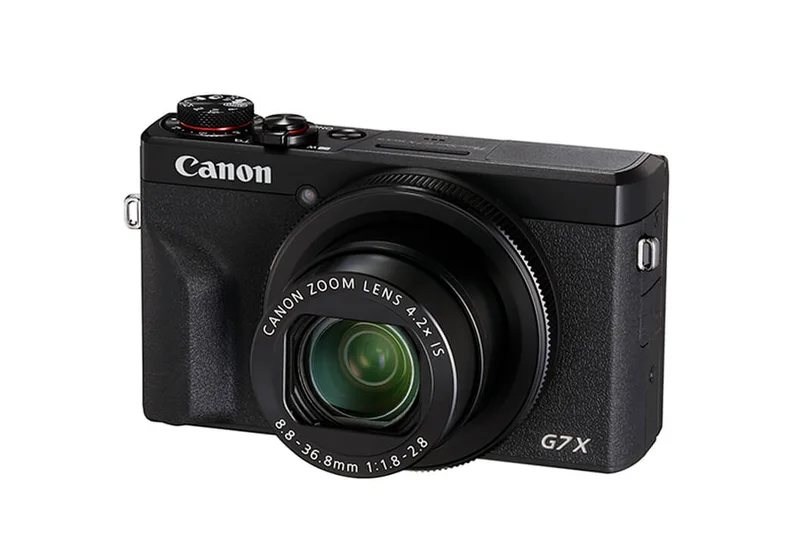
Why we picked it: The Canon G7 X Mark III remains a staple for travel vloggers due to its 1-inch stacked sensor, fast 24-100mm f/1.8-2.8 equivalent lens, and beautiful Canon skin tones. It features uncropped 4K/30p video, a flip-up screen, and built-in YouTube live streaming capabilities. While it lacks an electronic viewfinder and its contrast-detect autofocus can occasionally hunt during video, it offers excellent image quality in a highly pocketable format.
Key Specs
- 20.1MP 1-inch stacked CMOS sensor
- 24-100mm f/1.8-2.8 equivalent lens
- Uncropped 4K/30p video
- Built-in YouTube live streaming
- Vertical video support
What we like
- Fast, bright lens is great for low light
- Excellent Canon color science
- Direct YouTube live streaming
What we don't like
- No electronic viewfinder
- Autofocus can be pulsing in video
Best for: YouTubers and travelers who want a fast-lens compact camera with great out-of-camera colors.
Canon G7 X Mark III vs Sony ZV-1 II: The Canon has a longer zoom reach and a faster lens at the telephoto end, but the Sony has a wider field of view and vastly superior autofocus.
A proven vlogging compact that pairs a fast zoom lens with great video features in a pocket-friendly body.
Buy at Canon official siteBuying Guide
Choosing the Right Travel Camera for Your Trip
Finding the perfect travel camera depends heavily on your destination, itinerary, and creative goals. Here is how to navigate the 2026 market to find the ideal match for your specific travel needs.
Understanding Different Traveler Types
The Casual Vacationer: If your goal is simply to capture better memories than your smartphone can provide without lugging around a bulky camera bag, look toward premium compacts or lightweight APS-C mirrorless cameras. Models like the Sony a6700, Fujifilm X100VI, or Ricoh GR IIIx offer massive upgrades in image quality, dynamic range, and low-light performance while still fitting comfortably into a small daypack or jacket pocket.
The Adventure Seeker: Whether you are skiing the Alps, hiking the Andes, or snorkeling in the Maldives, durability is your primary concern. You need a camera that can survive drops, dust, freezing temperatures, and full submersion. Action cameras like the DJI Osmo Action 5 Pro or rugged compacts like the OM System Tough TG-7 are built precisely for these harsh, unpredictable conditions, allowing you to focus on the experience rather than babying your gear.
The Travel Vlogger: For those documenting their journey on YouTube, TikTok, or Instagram Reels, video features take precedence. Prioritize cameras with excellent in-body image stabilization (IBIS), fully articulating screens, reliable external microphone inputs, and flawless autofocus tracking. The Sony ZV-E10 II and DJI Osmo Pocket 3 are standout choices in this category, offering cinematic video capabilities in highly portable forms.
Budget Tiers and Expectations
Under $500: In this tier, you will primarily find high-end action cameras and older, entry-level compacts. These are exceptional for durability and basic wide-angle video, but they generally feature smaller sensors that struggle in low-light environments and lack optical zoom capabilities.
$500 to $1,500: This is the sweet spot for the vast majority of travelers. You can acquire excellent APS-C mirrorless systems, capable premium point-and-shoots, and dedicated vlogging setups. You will gain access to interchangeable lenses, advanced AI autofocus systems, and high-bitrate 4K video recording.
Over $1,500: Entering the premium tier grants you access to full-frame sensors packed into compact bodies (like the Sony a7C II), ultra-high-resolution sensors, and luxury fixed-lens compacts (like the Leica Q3). These cameras deliver uncompromising, professional-grade image quality but require a larger financial investment and, in the case of mirrorless models, often necessitate carrying heavier lenses.
What to Avoid When Buying a Travel Camera
Avoid buying a massive professional DSLR or a flagship gripped mirrorless camera for casual travel. While the image quality is undeniably stellar, the bulk and weight will likely cause you to leave it in your hotel room. A travel camera is only useful if you actually want to carry it. Additionally, be wary of cameras with poor battery life that do not support convenient USB-C charging on the go; carrying multiple proprietary batteries and charging bricks adds unnecessary hassle to your packing list. Finally, do not overspend on extreme resolution (megapixels) if you only plan to share photos on social media—focus instead on lens quality, portability, and reliable autofocus.
FAQ
What is the best overall travel camera for 2026?
Based on our multi-dimensional evaluation, the Sony a7C II is the best overall travel camera. It packs a professional-grade 33MP full-frame sensor and class-leading AI autofocus into an incredibly compact body, making it the perfect hybrid tool for both photography and 4K video.
Are mirrorless cameras really better than smartphones for travel?
Yes. While smartphones are convenient, dedicated mirrorless cameras feature much larger sensors (often 10 to 30 times larger) and superior optics. This results in significantly better low-light performance, true optical background blur (bokeh), higher dynamic range, and the ability to use specialized telephoto or ultra-wide lenses.
How much should I spend on a travel camera?
For most travelers, the sweet spot is between $500 and $1,500. This tier provides excellent APS-C mirrorless cameras (like the Sony a6700) or high-end action cameras. Spending over $1,500 brings you into the premium full-frame market, which is ideal for serious enthusiasts but not necessary for casual vacationers.
Do I need weather sealing on a travel camera?
It depends on your itinerary. If you are traveling to cities or resorts, basic care is sufficient. However, if your trip involves hiking in the rainforest, skiing, or shooting near waterfalls, weather sealing (like that found on the OM System OM-5 or Action 5 Pro) is crucial for preventing water and dust damage.
What is the best camera for adventure travel?
The DJI Osmo Action 5 Pro is our top pick for adventure travel. It is inherently waterproof, shockproof, and features an industry-leading 4-hour battery life. Its large 1/1.3-inch sensor also provides excellent dynamic range for high-contrast outdoor environments.
Should I buy a compact camera or an interchangeable lens camera?
Buy a compact camera (like the Ricoh GR IIIx or Sony RX100 VII) if you absolutely refuse to carry a camera bag and want something that fits in your pocket. Buy an interchangeable lens camera (like a Sony a6700 or Fujifilm X-T5) if you want the flexibility to adapt to different scenarios, such as swapping to a telephoto lens for a safari.
How important is in-body image stabilization (IBIS) for travel?
IBIS is highly valuable for travel. It allows you to shoot sharp photos at slower shutter speeds without a tripod (great for museums and night markets) and drastically smooths out handheld video footage. We highly recommend prioritizing cameras with IBIS.
What is the best travel camera for vlogging?
For pure vlogging, the DJI Osmo Pocket 3 is exceptional due to its built-in mechanical gimbal. If you want an interchangeable lens system for a mix of cinematic video and photography, the Sony ZV-E10 II and Sony a6700 are the top performers.
How many megapixels do I really need for vacation photos?
If you are only posting to Instagram or printing standard photo books, 12 to 24 megapixels is more than enough. Higher resolutions (like 40MP or 60MP) are only necessary if you plan to heavily crop your photos or print large fine-art wall canvases.
Can I charge modern travel cameras with a power bank?
Yes. Most modern mirrorless and compact cameras released in the last few years feature USB-C ports that support Power Delivery (PD). This allows you to charge the camera on the go using the same power bank you use for your smartphone.
What is the difference between APS-C and Full-Frame for travel?
Full-frame sensors are larger, providing better low-light performance and shallower depth of field, but the camera bodies and lenses are generally heavier and more expensive. APS-C sensors are slightly smaller, offering an excellent balance of high image quality, lower cost, and significantly lighter travel weight.
Is the Sony a7C II worth the premium price?
For serious enthusiasts, yes. It offers the exact same professional image quality and autofocus performance as the larger Sony a7 IV, but in a much more travel-friendly size. You are paying a premium for miniaturization without compromising on sensor quality.
What accessories should I bring with my travel camera?
We recommend bringing at least one spare battery, a dual-slot battery charger, a fast UHS-II SD card, a high-quality UV filter to protect your lens, a comfortable cross-body strap (like those from Peak Design), and a microfiber cleaning cloth.
Methodology
Our rankings for the Best Travel Cameras of 2026 are generated using the M2 Multi-Dimensional Evaluation framework from Selection Logic. This scientifically grounded methodology requires us to break down product quality into distinct, weighted dimensions rather than relying on an arbitrary overall score or purely subjective editor opinions.
For this analysis, we evaluated 35 candidate cameras across seven dimensions. Each dimension was scored from 1 to 10 based on strict criteria:
- Portability (20%): We assessed physical dimensions, weight, grip comfort, and how easily the camera fits into a daypack or large pocket.
- Image & Video Quality (25%): We evaluated sensor size, megapixel resolution, dynamic range, low-light ISO performance, and video capabilities (including 4K/8K resolutions, bitrates, and framerates).
- Autofocus & Speed (15%): We measured continuous autofocus tracking reliability, AI subject/eye detection speed, and burst shooting frames per second.
- Battery Life (10%): We compared CIPA shot-per-charge ratings, real-world video recording times, and the ability to accept power via USB-C while operating.
- Durability (10%): We graded weather sealing, construction materials (magnesium alloy vs. plastic), and specific IP ratings for shock, dust, and water resistance.
- Features & Connectivity (10%): We looked at the effectiveness of In-Body Image Stabilization (IBIS), wireless transfer reliability (Wi-Fi/Bluetooth), companion app stability, and the breadth of the available lens ecosystem.
- Value (10%): We analyzed the retail price against the overall feature set, expected technological longevity, and included accessories.
To ensure our recommendations serve diverse traveler needs, we applied specific scenario weightings. For instance, our "Best Budget Travel Camera" scenario shifted the Value dimension weight up to 35%, while the "Best for Adventure & Outdoor Travel" scenario increased Durability to 30%. This dynamic scoring model allows us to definitively and mathematically name the best camera for your specific travel style.
Sources & References
All factual claims, product specifications, prices, and images in this article are cited by number. Click any reference to jump to the list; click the link in each entry to visit the original source.
- [1]Selection Logic. "M2 Multi-Dimensional Evaluation Method." selectionlogic.org/en/methods/m2-multi-dimensional-evaluation/. Accessed Mar 2026.
- [2]Selection Logic. "Consumer Camera Buying Guide." selectionlogic.org/en/guides/camera-buying-guide/. Accessed Mar 2026.
- [3]Sony. "Alpha 7C II Full-frame Interchangeable Lens Camera." electronics.sony.com/imaging/interchangeable-lens-cameras/full-frame/p/ilce7cm2-b. Accessed Mar 2026.
- [4]Sony. "Alpha 6700 Premium APS-C Camera." electronics.sony.com/imaging/interchangeable-lens-cameras/aps-c/p/ilce6700-b. Accessed Mar 2026.
- [5]Sony. "Alpha 7CR High-Resolution Compact Full-Frame." electronics.sony.com/imaging/interchangeable-lens-cameras/full-frame/p/ilce7cr-b. Accessed Mar 2026.
- [6]DJI. "Osmo Action 5 Pro Official Specs." dji.com/osmo-action-5-pro. Accessed Mar 2026.
- [7]Fujifilm. "X-T5 Digital Camera." fujifilm-x.com/en-us/products/cameras/x-t5/. Accessed Mar 2026.
- [8]Nikon. "Z6 III Full Frame Mirrorless Camera." nikonusa.com/p/z-6iii/1762. Accessed Mar 2026.
- [9]OM System. "OM-1 Mark II." explore.omsystem.com/us/en/om-1-mark-ii. Accessed Mar 2026.
- [10]Sony. "ZV-E10 II Interchangeable Lens Vlog Camera." electronics.sony.com/imaging/interchangeable-lens-cameras/aps-c/p/zve10m2-b. Accessed Mar 2026.
- [11]Fujifilm. "X-S20 Digital Camera." fujifilm-x.com/en-us/products/cameras/x-s20/. Accessed Mar 2026.
- [12]DJI. "Osmo Pocket 3 Gimbal Camera." dji.com/osmo-pocket-3. Accessed Mar 2026.
- [13]Panasonic. "Lumix S9 Full-Frame Mirrorless." shop.panasonic.com/products/lumix-s9-full-frame-mirrorless-camera. Accessed Mar 2026.
- [14]Fujifilm. "X100VI Premium Compact Camera." fujifilm-x.com/en-us/products/cameras/x100vi/. Accessed Mar 2026.
- [15]Fujifilm. "X-T50 Mirrorless Camera." fujifilm-x.com/en-us/products/cameras/x-t50/. Accessed Mar 2026.
- [16]OM System. "OM-5 Interchangeable Lens Camera." explore.omsystem.com/us/en/om-5. Accessed Mar 2026.
- [17]Canon. "EOS R8 Full-Frame Mirrorless Camera." usa.canon.com/shop/p/eos-r8. Accessed Mar 2026.
- [18]Leica. "Q3 43 Digital Camera." leica-camera.com/en-US/photography/cameras/q/q3-43. Accessed Mar 2026.
- [19]Insta360. "Ace Pro Action Camera." store.insta360.com/product/ace-pro. Accessed Mar 2026.
- [20]GoPro. "Hero 13 Black Action Camera." gopro.com/en/us/shop/cameras/hero13-black/CHDHX-131-master.html. Accessed Mar 2026.
- [21]Canon. "EOS R50 APS-C Mirrorless Camera." usa.canon.com/shop/p/eos-r50. Accessed Mar 2026.
- [22]Sony. "Cyber-shot RX100 VII Compact Camera." electronics.sony.com/imaging/compact-cameras/cyber-shot-compact-cameras/p/dscrx100m7. Accessed Mar 2026.
- [23]Insta360. "X4 360 Action Camera." store.insta360.com/product/x4. Accessed Mar 2026.
- [24]Insta360. "GO 3S Tiny Action Camera." store.insta360.com/product/go-3s. Accessed Mar 2026.
- [25]Ricoh. "GR III HDF Premium Compact." us.ricoh-imaging.com/product/gr-iii-hdf/. Accessed Mar 2026.