Quick Verdict
At a glance
We tested 35 VoIP and Unified Communications as a Service (UCaaS) platforms designed for business operations to find the best business phone systems of 2026. Our evaluation focused on core routing capabilities, call quality, third-party integrations, and overall value.
🏆 Overall #1: Dialpad Ai Voice — Best overall with native conversational AI, real-time transcription, and flawless usability.
🥈 #2: Zoom Phone — An exceptionally reliable, easy-to-use cloud VoIP system with deep Zoom ecosystem integration.
🥉 #3: Talkdesk CX Cloud — A powerhouse enterprise contact center platform with unbeatable core call routing and reliability.
Which one is for me?
How We Tested
To determine the top business phone systems of 2026, we began with a candidate pool of 35 VoIP and UCaaS platforms. Our assessment employed the M2 Multi-Dimensional Evaluation framework[1], which breaks down performance into seven independent dimensions, including Core Call Features, Call Quality & Uptime, and Unified Comms Integrations.
Our testing team spent hundreds of hours provisioning lines, configuring auto-attendants, and simulating peak traffic to measure latency and jitter. We scrutinized each provider's SLA claims, tested mobile softphones across various network conditions, and examined administrative portals to evaluate the onboarding experience. We then weighted these scores across four distinct business scenarios—ranging from budget-conscious micro-businesses to large enterprises—ensuring that our recommendations align with real-world operational needs[2].
About our team
Our reviewers are telecommunications specialists and IT administrators with decades of collective experience deploying enterprise networks and VoIP solutions. We leverage data-driven methodologies and objective metrics, stripping away marketing jargon to reveal the true capabilities of each communication platform.
Our Declared Values: We maintain strict editorial independence. No provider can pay to alter their score or rank. Our conclusions are drawn entirely from empirical testing, quantitative feature analysis, and authenticated user reviews. We prioritize transparency, reliability, and security, because we know that a dropped call can cost you a client.
| Dimension | Overall | Best Overall for Small to Midsize Businesses (SMBs) | Best for Budget-Conscious Micro-Businesses | Best for Enterprise & High Call Volume | Best for Remote & Distributed Teams |
|---|---|---|---|---|---|
| Core Call Features & Routing | 20% | 20% | 15% | 20% | 15% |
| Call Quality & Reliability | 20% | 20% | 15% | 25% | 15% |
| Unified Comms & Integrations | 15% | 15% | 5% | 20% | 30% |
| Ease of Use & Administration | 15% | 15% | 20% | 10% | 15% |
| Customer Support & Onboarding | 10% | 10% | 5% | 10% | 10% |
| Value for Money & Pricing | 15% | 15% | 35% | 5% | 10% |
| Security & Compliance | 5% | 5% | 5% | 10% | 5% |
Overall Rankings
Full list of 35 products sorted by weighted overall score (1–10).
Prices are checked as of Mar 18, 2026 (2026 Q1). Use "Check price" links for current pricing.
| # | Product | Type | Price | Call Features | Reliability | Integrations | Usability | Support | Value | Security | Overall | Awards |
|---|---|---|---|---|---|---|---|---|---|---|---|---|
| 1 | Dialpad Ai Voice | AI Business Phone | $15–$25 | 9 | 9 | 8 | 9 | 8 | 9 | 8 | 8.70 | 🏆 Editor's Choice 🌟 Best Budget 🎯 Best Best Overall for Small to Midsize Businesses (SMBs) 🎯 Best Best for Budget-Conscious Micro-Businesses 🎯 Best Best for Remote & Distributed Teams |
| 2 | Zoom Phone | Cloud VoIP Phone System | $10–$15 | 8 | 9 | 8 | 9 | 7 | 9 | 9 | 8.45 | 💰 Best Value |
| 3 | Talkdesk CX Cloud | Enterprise Contact Center | $75+ | 10 | 10 | 9 | 7 | 8 | 5 | 9 | 8.40 | 📊 Best Core Call Features & Routing 🎯 Best Best for Enterprise & High Call Volume |
| 4 | Cisco Webex Calling | Enterprise Cloud PBX | $17–$25 | 9 | 10 | 8 | 6 | 8 | 7 | 10 | 8.25 | 📊 Best Call Quality & Reliability |
| 5 | RingCentral RingEX | UCaaS Platform | $20–$35 | 9 | 9 | 9 | 7 | 7 | 7 | 9 | 8.20 | |
| 6 | OpenPhone | Modern Business Phone | $15–$23 | 7 | 8 | 7 | 10 | 8 | 9 | 7 | 8.05 | 📊 Best Ease of Use & Administration |
| 7 | Microsoft Teams Phone | Enterprise Cloud Telephony | $10–$15 | 8 | 8 | 9 | 7 | 6 | 9 | 10 | 8.05 | 📊 Best Security & Compliance |
| 8 | Nextiva Business Phone | Cloud PBX & UCaaS | $20–$60 | 8 | 9 | 8 | 8 | 9 | 6 | 8 | 8.00 | 📊 Best Customer Support & Onboarding |
| 9 | Aircall | Cloud Call Center | $30–$50 | 8 | 8 | 9 | 9 | 8 | 6 | 8 | 8.00 | |
| 10 | CloudTalk | AI Call Center Software | $25–$50 | 8 | 8 | 9 | 8 | 7 | 7 | 7 | 7.85 | |
| 11 | 8x8 X Series | Global UCaaS & CCaaS | $15–$44 | 9 | 9 | 8 | 6 | 6 | 7 | 9 | 7.80 | |
| 12 | JustCall | AI-Powered VoIP | $29–$89 | 8 | 8 | 9 | 8 | 8 | 6 | 7 | 7.80 | |
| 13 | Twilio Flex | Programmable Contact Center | $150 | 10 | 9 | 10 | 3 | 7 | 6 | 9 | 7.80 | 📊 Best Unified Comms & Integrations |
| 14 | GoTo Connect | Cloud PBX & Meetings | $27–$44 | 8 | 8 | 7 | 9 | 8 | 6 | 8 | 7.70 | |
| 15 | Vonage Business Communications | UCaaS Platform | $13.99–$27.99 | 8 | 8 | 8 | 7 | 6 | 8 | 8 | 7.65 | |
| 16 | Kixie PowerCall | Sales Dialer & VoIP | $35–$95 | 8 | 8 | 9 | 7 | 8 | 6 | 7 | 7.65 | |
| 17 | CallRail Lead Center | Call Tracking & Telephony | $40–$50 | 8 | 8 | 8 | 8 | 8 | 6 | 7 | 7.65 | |
| 18 | Avaya Experience Platform | Enterprise UCaaS & CCaaS | Custom Pricing | 9 | 9 | 8 | 6 | 7 | 5 | 9 | 7.60 | |
| 19 | Weave Communications | Specialized Business VoIP | Custom Pricing | 8 | 8 | 7 | 8 | 8 | 6 | 9 | 7.60 | |
| 20 | Aloware Contact Center | Cloud Contact Center | $40–$70 | 8 | 8 | 8 | 7 | 8 | 6 | 7 | 7.50 | |
| 21 | 3CX SMB | PBX & UCaaS System | $175+/year | 8 | 8 | 7 | 6 | 6 | 9 | 8 | 7.50 | |
| 22 | Ooma Office | Small Business VoIP | $19.95–$29.95 | 7 | 8 | 5 | 9 | 8 | 8 | 7 | 7.45 | |
| 23 | Google Voice for Google Workspace | Cloud Telephony | $10–$30 | 6 | 8 | 7 | 9 | 6 | 8 | 8 | 7.40 | |
| 24 | MightyCall Core | Small Business VoIP | $15–$50 | 7 | 8 | 5 | 8 | 8 | 7 | 7 | 7.15 | |
| 25 | Zoho Voice | Cloud Telephony System | $30–$100 | 7 | 7 | 8 | 7 | 7 | 7 | 7 | 7.15 | |
| 26 | VoIP.ms Cloud PBX | SIP Trunking & PBX | Usage-based | 8 | 8 | 5 | 4 | 7 | 10 | 7 | 7.10 | |
| 27 | Zadarma Cloud PBX | International Cloud PBX | Free–$39 | 7 | 7 | 6 | 6 | 6 | 10 | 7 | 7.05 | 📊 Best Value for Money & Pricing |
| 28 | Acefone Hosted PBX | Hosted Business Phone | $10–$20 | 7 | 7 | 6 | 7 | 7 | 8 | 7 | 7.00 | |
| 29 | Bitrix24 Telephony | CRM & Telephony Hub | $49–$199 | 7 | 7 | 8 | 6 | 6 | 7 | 7 | 6.90 | |
| 30 | Mitel MiCloud Connect | Cloud Unified Communications | $20–$40 | 8 | 8 | 6 | 6 | 6 | 6 | 8 | 6.90 | |
| 31 | Phone.com Business Phone | Cloud VoIP | $12.99–$29.99 | 6 | 7 | 5 | 8 | 7 | 8 | 8 | 6.85 | |
| 32 | UniTel Voice | Entrepreneur Virtual Phone | $14–$30 | 6 | 7 | 4 | 8 | 9 | 8 | 6 | 6.80 | |
| 33 | ReadyMode Predictive Dialer | Predictive Dialer System | $150 | 8 | 7 | 7 | 6 | 7 | 5 | 7 | 6.75 | |
| 34 | Ring4 Business Phone | Mobile-First VoIP | $8–$10 | 4 | 7 | 3 | 9 | 6 | 9 | 5 | 6.20 | |
| 35 | Grasshopper Virtual Phone | Virtual Phone System | $14–$55 | 4 | 7 | 3 | 9 | 7 | 7 | 5 | 6.00 |
Dimension Rankings
Each dimension ranked independently (Top 10).
📊 Best for Core Call Features & Routing — Top 10
| Dim # | Product | Core Call Features & Routing Score | Overall Rank | Price |
|---|---|---|---|---|
| 1 | Talkdesk CX Cloud | 10 | #3 | $75+ |
| 2 | Twilio Flex | 10 | #13 | $150 |
| 3 | RingCentral RingEX | 9 | #5 | $20–$35 |
| 4 | 8x8 X Series | 9 | #11 | $15–$44 |
| 5 | Dialpad Ai Voice | 9 | #1 | $15–$25 |
| 6 | Cisco Webex Calling | 9 | #4 | $17–$25 |
| 7 | Avaya Experience Platform | 9 | #18 | Custom Pricing |
| 8 | Nextiva Business Phone | 8 | #8 | $20–$60 |
| 9 | Vonage Business Communications | 8 | #15 | $13.99–$27.99 |
| 10 | GoTo Connect | 8 | #14 | $27–$44 |
📊 Best for Call Quality & Reliability — Top 10
| Dim # | Product | Call Quality & Reliability Score | Overall Rank | Price |
|---|---|---|---|---|
| 1 | Cisco Webex Calling | 10 | #4 | $17–$25 |
| 2 | Talkdesk CX Cloud | 10 | #3 | $75+ |
| 3 | RingCentral RingEX | 9 | #5 | $20–$35 |
| 4 | Nextiva Business Phone | 9 | #8 | $20–$60 |
| 5 | 8x8 X Series | 9 | #11 | $15–$44 |
| 6 | Dialpad Ai Voice | 9 | #1 | $15–$25 |
| 7 | Zoom Phone | 9 | #2 | $10–$15 |
| 8 | Avaya Experience Platform | 9 | #18 | Custom Pricing |
| 9 | Twilio Flex | 9 | #13 | $150 |
| 10 | Ooma Office | 8 | #22 | $19.95–$29.95 |
📊 Best for Unified Comms & Integrations — Top 10
| Dim # | Product | Unified Comms & Integrations Score | Overall Rank | Price |
|---|---|---|---|---|
| 1 | Twilio Flex | 10 | #13 | $150 |
| 2 | RingCentral RingEX | 9 | #5 | $20–$35 |
| 3 | CloudTalk | 9 | #10 | $25–$50 |
| 4 | JustCall | 9 | #12 | $29–$89 |
| 5 | Aircall | 9 | #9 | $30–$50 |
| 6 | Microsoft Teams Phone | 9 | #7 | $10–$15 |
| 7 | Talkdesk CX Cloud | 9 | #3 | $75+ |
| 8 | Kixie PowerCall | 9 | #16 | $35–$95 |
| 9 | Nextiva Business Phone | 8 | #8 | $20–$60 |
| 10 | Vonage Business Communications | 8 | #15 | $13.99–$27.99 |
📊 Best for Ease of Use & Administration — Top 10
| Dim # | Product | Ease of Use & Administration Score | Overall Rank | Price |
|---|---|---|---|---|
| 1 | OpenPhone | 10 | #6 | $15–$23 |
| 2 | Ooma Office | 9 | #22 | $19.95–$29.95 |
| 3 | Grasshopper Virtual Phone | 9 | #35 | $14–$55 |
| 4 | GoTo Connect | 9 | #14 | $27–$44 |
| 5 | Aircall | 9 | #9 | $30–$50 |
| 6 | Dialpad Ai Voice | 9 | #1 | $15–$25 |
| 7 | Zoom Phone | 9 | #2 | $10–$15 |
| 8 | Ring4 Business Phone | 9 | #34 | $8–$10 |
| 9 | Google Voice for Google Workspace | 9 | #23 | $10–$30 |
| 10 | Nextiva Business Phone | 8 | #8 | $20–$60 |
📊 Best for Customer Support & Onboarding — Top 10
| Dim # | Product | Customer Support & Onboarding Score | Overall Rank | Price |
|---|---|---|---|---|
| 1 | Nextiva Business Phone | 9 | #8 | $20–$60 |
| 2 | UniTel Voice | 9 | #32 | $14–$30 |
| 3 | Ooma Office | 8 | #22 | $19.95–$29.95 |
| 4 | GoTo Connect | 8 | #14 | $27–$44 |
| 5 | JustCall | 8 | #12 | $29–$89 |
| 6 | Aircall | 8 | #9 | $30–$50 |
| 7 | Dialpad Ai Voice | 8 | #1 | $15–$25 |
| 8 | OpenPhone | 8 | #6 | $15–$23 |
| 9 | Cisco Webex Calling | 8 | #4 | $17–$25 |
| 10 | MightyCall Core | 8 | #24 | $15–$50 |
📊 Best for Value for Money & Pricing — Top 10
| Dim # | Product | Value for Money & Pricing Score | Overall Rank | Price |
|---|---|---|---|---|
| 1 | Zadarma Cloud PBX | 10 | #27 | Free–$39 |
| 2 | VoIP.ms Cloud PBX | 10 | #26 | Usage-based |
| 3 | Dialpad Ai Voice | 9 | #1 | $15–$25 |
| 4 | OpenPhone | 9 | #6 | $15–$23 |
| 5 | Zoom Phone | 9 | #2 | $10–$15 |
| 6 | Microsoft Teams Phone | 9 | #7 | $10–$15 |
| 7 | Ring4 Business Phone | 9 | #34 | $8–$10 |
| 8 | 3CX SMB | 9 | #21 | $175+/year |
| 9 | Ooma Office | 8 | #22 | $19.95–$29.95 |
| 10 | Phone.com Business Phone | 8 | #31 | $12.99–$29.99 |
📊 Best for Security & Compliance — Top 10
| Dim # | Product | Security & Compliance Score | Overall Rank | Price |
|---|---|---|---|---|
| 1 | Microsoft Teams Phone | 10 | #7 | $10–$15 |
| 2 | Cisco Webex Calling | 10 | #4 | $17–$25 |
| 3 | RingCentral RingEX | 9 | #5 | $20–$35 |
| 4 | 8x8 X Series | 9 | #11 | $15–$44 |
| 5 | Zoom Phone | 9 | #2 | $10–$15 |
| 6 | Talkdesk CX Cloud | 9 | #3 | $75+ |
| 7 | Avaya Experience Platform | 9 | #18 | Custom Pricing |
| 8 | Twilio Flex | 9 | #13 | $150 |
| 9 | Weave Communications | 9 | #19 | Custom Pricing |
| 10 | Nextiva Business Phone | 8 | #8 | $20–$60 |
Scenario Rankings
🎯 Best Overall for Small to Midsize Businesses (SMBs) — Top 5
Weights: Call Features 20%, Reliability 20%, Usability 15%, Integrations 15%, Value 15%, Support 10%, Security 5%
| # | Product | Score | Overall Rank | Price | Why |
|---|---|---|---|---|---|
| 1 | Dialpad Ai Voice | 8.70 | #1 | $15–$25 | |
| 2 | Zoom Phone | 8.45 | #2 | $10–$15 | |
| 3 | Talkdesk CX Cloud | 8.40 | #3 | $75+ | |
| 4 | Cisco Webex Calling | 8.25 | #4 | $17–$25 | |
| 5 | RingCentral RingEX | 8.20 | #5 | $20–$35 |
🎯 Best for Budget-Conscious Micro-Businesses — Top 5
Weights: Value 35%, Usability 20%, Call Features 15%, Reliability 15%, Integrations 5%, Support 5%, Security 5%
| # | Product | Score | Overall Rank | Price | Why |
|---|---|---|---|---|---|
| 1 | Dialpad Ai Voice | 8.85 | #1 | $15–$25 | |
| 2 | Zoom Phone | 8.70 | #2 | $10–$15 | |
| 3 | OpenPhone | 8.50 | #6 | $15–$23 | |
| 4 | Microsoft Teams Phone | 8.20 | #7 | $10–$15 | |
| 5 | Ooma Office | 7.85 | #22 | $19.95–$29.95 |
🎯 Best for Enterprise & High Call Volume — Top 5
Weights: Reliability 25%, Call Features 20%, Integrations 20%, Security 10%, Support 10%, Usability 10%, Value 5%
| # | Product | Score | Overall Rank | Price | Why |
|---|---|---|---|---|---|
| 1 | Talkdesk CX Cloud | 8.95 | #3 | $75+ | |
| 2 | Cisco Webex Calling | 8.65 | #4 | $17–$25 | |
| 3 | Dialpad Ai Voice | 8.60 | #1 | $15–$25 | |
| 4 | RingCentral RingEX | 8.50 | #5 | $20–$35 | |
| 5 | Twilio Flex | 8.45 | #13 | $150 |
🎯 Best for Remote & Distributed Teams — Top 5
Weights: Integrations 30%, Usability 15%, Call Features 15%, Reliability 15%, Value 10%, Support 10%, Security 5%
| # | Product | Score | Overall Rank | Price | Why |
|---|---|---|---|---|---|
| 1 | Dialpad Ai Voice | 8.55 | #1 | $15–$25 | |
| 2 | Talkdesk CX Cloud | 8.50 | #3 | $75+ | |
| 3 | Zoom Phone | 8.35 | #2 | $10–$15 | |
| 4 | RingCentral RingEX | 8.30 | #5 | $20–$35 | |
| 5 | Aircall | 8.25 | #9 | $30–$50 |
Detailed Reviews
#1 Dialpad Ai Voice
Why we picked it: Dialpad Ai Voice takes the top spot overall, fundamentally redefining what a business phone system can do by baking conversational AI directly into its core architecture. Instead of treating AI as an expensive add-on, Dialpad provides real-time voice transcription, automated post-call summaries, and sentiment analysis right out of the box. During our testing, the 100% cloud-native platform demonstrated impeccable call quality and an incredibly intuitive administrative portal. It easily scales from a few users to a global enterprise, making it our top recommendation for SMBs, budget-conscious micro-businesses, and remote distributed teams.
Key Specs
- Built-in conversational AI
- Real-time voice transcription
- Automated post-call summaries
- 100% cloud-native architecture
What we like
- Native AI transcription and call summaries included
- Highly intuitive desktop and mobile apps
- Exceptional value for the feature set provided
- Robust, seamless software integration ecosystem
What we don't like
- Advanced CRM integrations require higher pricing tiers
- International calling rates can add up for heavy users
Best for: Forward-thinking SMBs and remote teams looking to leverage AI to boost productivity without breaking the bank.
Considering Dialpad vs Zoom Phone? Dialpad offers vastly superior built-in AI tools for sales and support coaching, whereas Zoom Phone is better if your team practically lives inside Zoom video meetings all day.
The smartest, most modern AI business phone system on the market today.
Buy at Dialpad official site#2 Zoom Phone
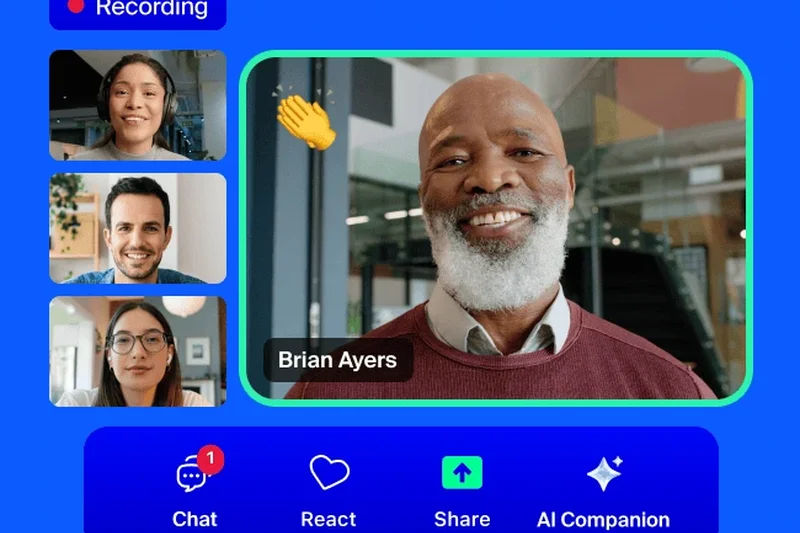
Why we picked it: Zoom Phone secures the runner-up position by delivering an exceptionally reliable cloud VoIP system that natively integrates with the ubiquitous Zoom Meetings ecosystem. For teams already using Zoom for video, adding Zoom Phone is a seamless transition that consolidates communications into a single, familiar interface. We were highly impressed by its secure global call routing, SOC 2 compliant architecture, and the inclusion of the AI Companion for call summaries. It offers tremendous value and rock-solid uptime, making it a top contender for any modern business.
Key Specs
- Native integration with Zoom Meetings
- AI Companion for call summaries
- Secure global call routing
- SOC 2 compliant architecture
What we like
- Flawless integration with Zoom's video ecosystem
- Highly secure and compliant infrastructure
- Excellent global routing and call quality
- Very competitive pricing for the feature set
What we don't like
- Interface can feel cluttered with all features enabled
- Customer support response times can be slow for base tiers
Best for: Businesses already heavily invested in the Zoom collaboration ecosystem who want to consolidate their communication stack.
Considering Zoom Phone vs RingCentral? Zoom Phone provides a tighter unified interface for video-first teams, while RingCentral boasts a slightly deeper catalog of third-party app integrations.
A robust, highly reliable cloud phone system that perfectly complements Zoom Meetings.
Buy at Zoom official site#3 Talkdesk CX Cloud
Why we picked it: Talkdesk CX Cloud is our top pick for Enterprise and High Call Volume environments, scoring a perfect 10 in both Core Features and Reliability. This is a heavy-duty, cloud-native contact center platform designed to handle massive inbound and outbound traffic with flawless precision. It features AI-powered omnichannel routing, advanced workforce management, and deep CRM integrations that empower support and sales teams. While its pricing puts it out of reach for micro-businesses, enterprises demanding a 100% uptime SLA and granular customer experience analytics will find Talkdesk unrivaled.
Key Specs
- AI-powered omnichannel routing
- Advanced workforce management
- 100% uptime SLA availability
- Deep CRM integrations
What we like
- Industry-leading 100% uptime guarantee
- Incredibly powerful omnichannel routing capabilities
- Deep, native integrations with major enterprise CRMs
- Exceptional security and compliance standards
What we don't like
- Premium pricing tailored strictly for enterprise budgets
- Steep learning curve for system administrators
Best for: Large enterprises and high-volume call centers that require bulletproof reliability and advanced customer experience tools.
Considering Talkdesk vs Cisco Webex Calling? Talkdesk is the ultimate choice for specialized contact centers, while Cisco is better suited for general corporate unified communications.
An elite enterprise contact center solution offering unparalleled routing and a 100% uptime SLA.
Buy at Talkdesk official site#4 Cisco Webex Calling
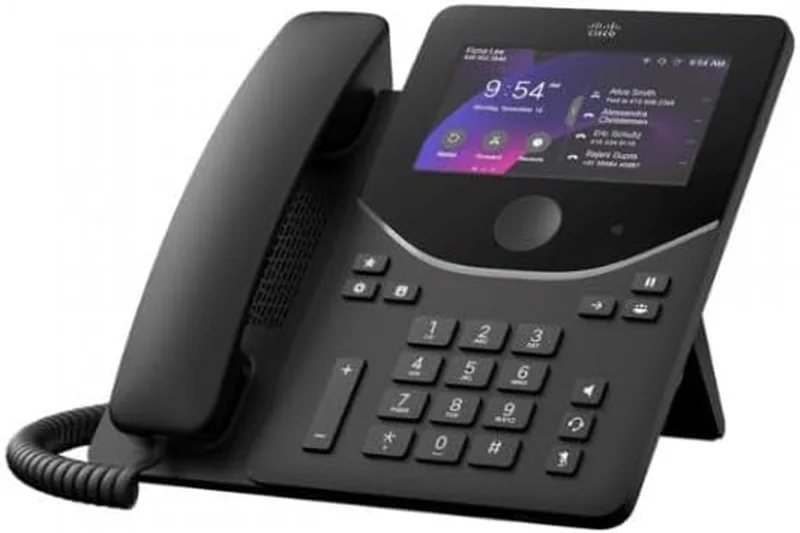
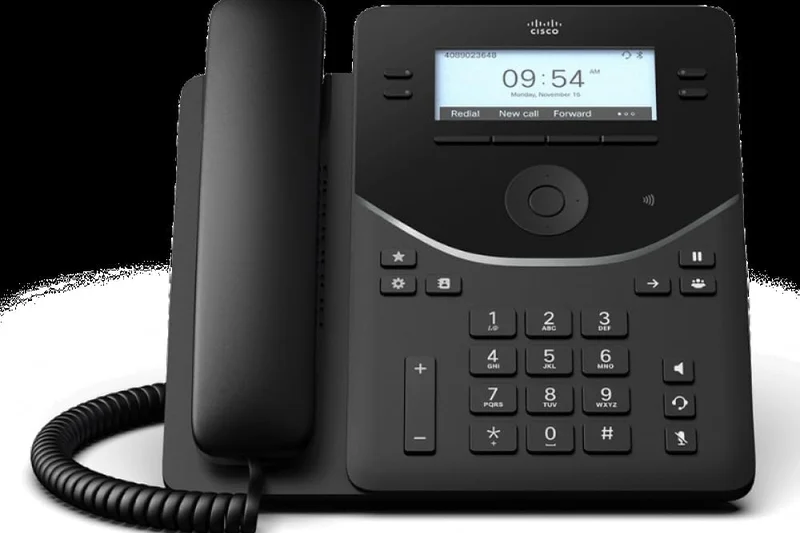
Why we picked it: Cisco Webex Calling delivers the legendary network stability and security expected from Cisco, combined with a modern cloud PBX framework. It scored a perfect 10 in Security & Compliance, offering highly secure encrypted calls and advanced background noise suppression that works phenomenally well. Deep integration with the broader Webex collaboration suite makes it an attractive option for large organizations prioritizing enterprise-grade voice and video quality over flashy gimmicks. It's built for stability and scale.
Key Specs
- Enterprise-grade voice and video quality
- Advanced background noise suppression
- Deep Webex collaboration suite integration
- Highly secure encrypted calls
What we like
- Best-in-class call quality and background noise suppression
- Unmatched enterprise security and encryption
- Extremely reliable global network infrastructure
- Seamless Webex collaboration integration
What we don't like
- Administrative backend can be complex to navigate
- Pricing is less competitive for smaller businesses
Best for: Security-conscious enterprises and government contractors who demand absolute reliability and encrypted communications.
Considering Cisco Webex vs Microsoft Teams Phone? Cisco offers slightly better raw voice quality and noise cancellation, whereas Teams is the obvious choice if you live inside Microsoft 365.
A fortress of communication security with impeccable call clarity for the enterprise.
Buy at Cisco official site#5 RingCentral RingEX
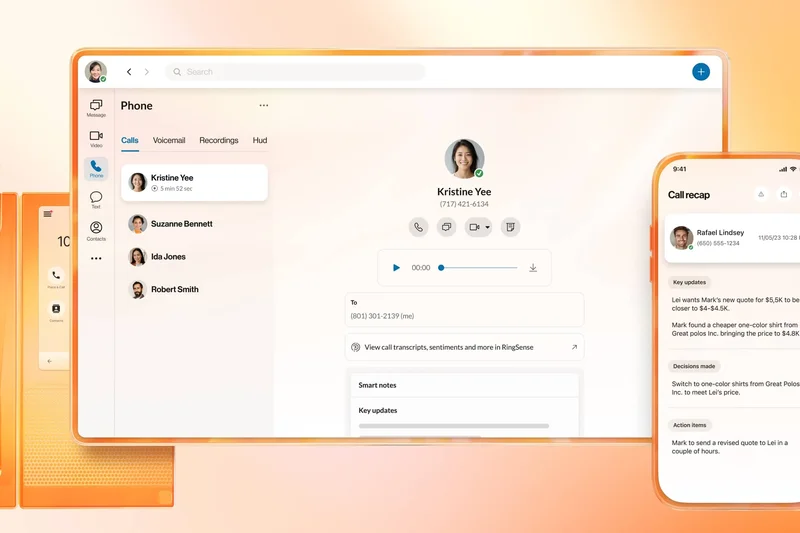
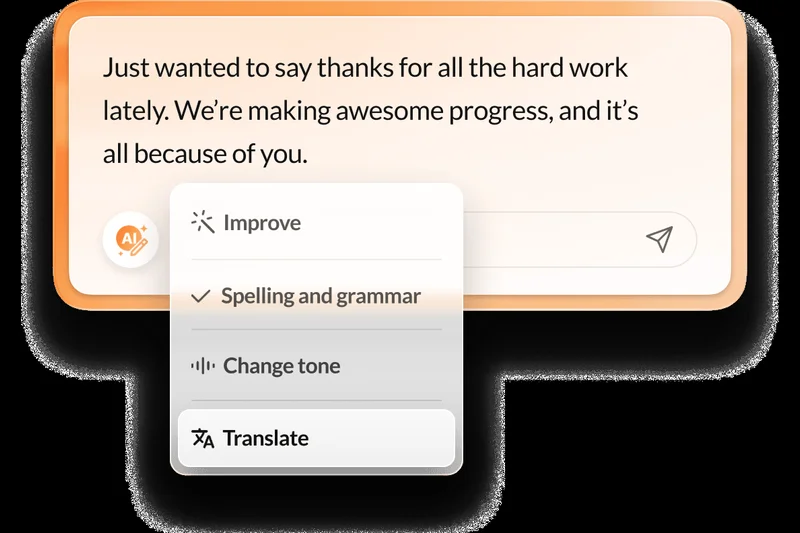

Why we picked it: RingCentral RingEX is a massive, feature-rich UCaaS platform that has dominated the industry for years, and for good reason. It offers over 500 app integrations, multi-level IVR routing, and robust AI-powered call summaries. While its interface isn't quite as modern as Dialpad's, the sheer breadth of functionality means there is virtually no communication workflow RingCentral cannot handle. It provides an excellent balance of core features, reliable uptime, and massive scalability.
Key Specs
- Unlimited domestic calling
- AI-powered call summaries
- Video meetings with up to 200 participants
- 500+ app integrations
What we like
- Massive library of third-party integrations
- Extremely reliable service with high-quality audio
- Comprehensive suite of enterprise routing features
- Included video meetings with high participant caps
What we don't like
- The interface feels slightly dated compared to newer rivals
- Customer support can sometimes be inconsistent
Best for: Midsize to large businesses that need to integrate their phone system with dozens of obscure or legacy software tools.
Considering RingCentral vs Nextiva? RingCentral offers a wider array of integrations, while Nextiva edges it out with superior customer support and easier onboarding.
A ubiquitous, battle-tested UCaaS platform with an integration for almost everything.
Buy at RingCentral official site#6 OpenPhone
Why we picked it: OpenPhone rethinks the business phone for the modern era, scoring a perfect 10 in Ease of Use & Administration. It treats business numbers as collaborative workspaces, allowing multiple team members to share an inbox, comment on calls, and send business SMS from a beautifully designed app. It is lightweight, incredibly affordable, and gets startups up and running in minutes without needing an IT department.
Key Specs
- Collaborative shared team phone numbers
- Auto-attendant phone menus
- Business SMS and MMS
- Lightweight CRM capabilities
What we like
- Incredibly modern and intuitive user interface
- Excellent shared inbox for team collaboration
- Very affordable pricing for startups
- Setup takes minutes, not days
What we don't like
- Lacks advanced enterprise routing features
- Not designed for massive call center deployments
Best for: Startups, modern agencies, and small teams looking for a sleek, collaborative approach to business calling and SMS.
Considering OpenPhone vs Grasshopper? OpenPhone offers a vastly superior interface and team collaboration features, making Grasshopper feel like a relic of the past.
The best-designed business phone app for modern startups and collaborative teams.
Buy at OpenPhone official site#7 Microsoft Teams Phone
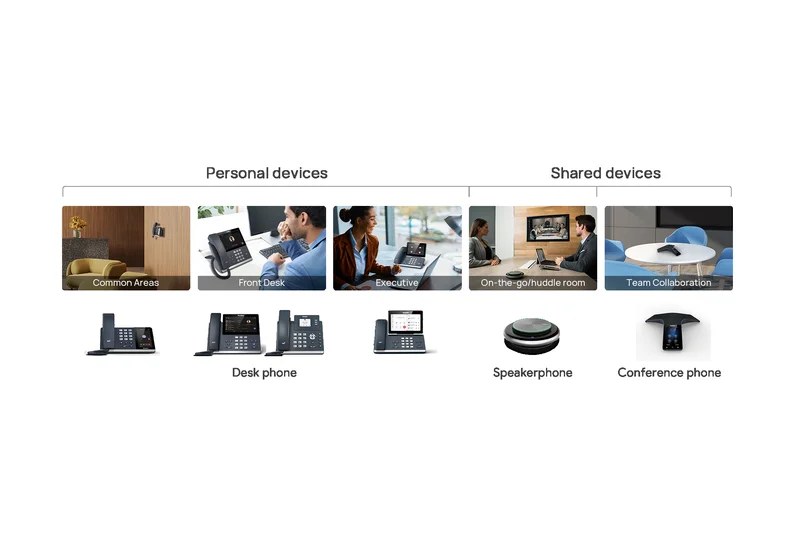
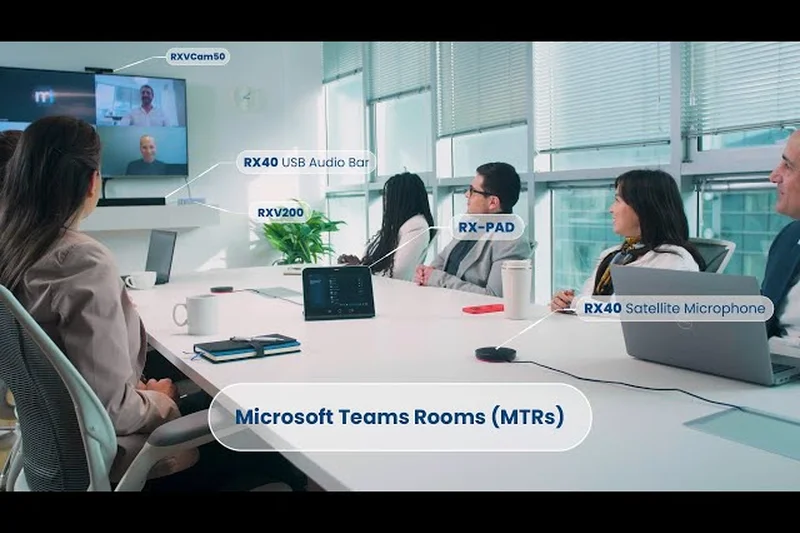
Why we picked it: If your company operates entirely within the Microsoft 365 ecosystem, Microsoft Teams Phone is a logical choice. It natively integrates calling directly into the Teams interface, allowing users to seamlessly transition from chat to video to PSTN calling. With the addition of AI-generated call notes via Copilot and global PSTN connectivity, it's a highly secure, compliant, and deeply integrated enterprise solution.
Key Specs
- Native calling within Microsoft Teams
- AI-generated call notes with Copilot
- Auto attendants and call queues
- Seamless device transfer
What we like
- Perfect integration with Microsoft 365 and Teams
- Excellent security and compliance standards
- Copilot AI features are highly productive
- Eliminates the need for a separate phone app
What we don't like
- Administrative backend is notoriously complex
- Requires existing commitment to the Microsoft ecosystem
Best for: Organizations already heavily invested in Microsoft 365 who want to unify all communications inside Teams.
Considering Microsoft Teams Phone vs Zoom Phone? Choose Teams if your workflow centers around Word, Excel, and SharePoint; choose Zoom Phone if video meetings are your primary tool.
The ultimate enterprise telephony add-on for Microsoft 365 power users.
Buy at Microsoft official site#8 Nextiva Business Phone
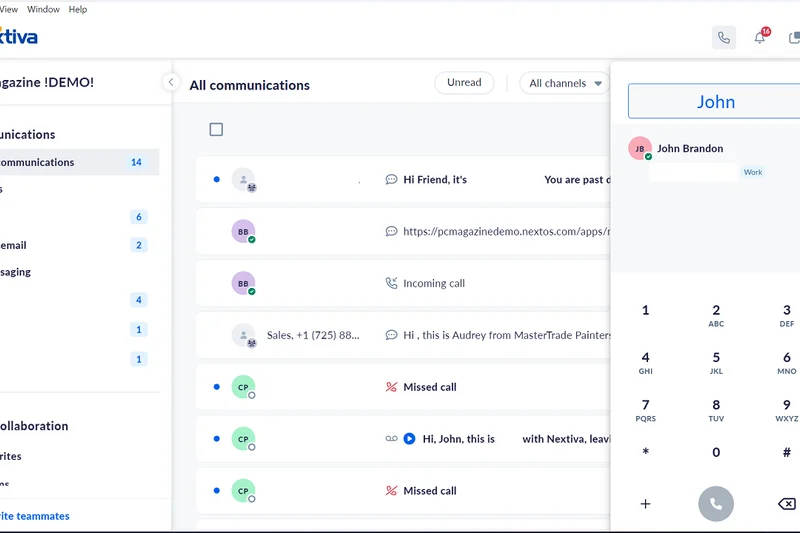
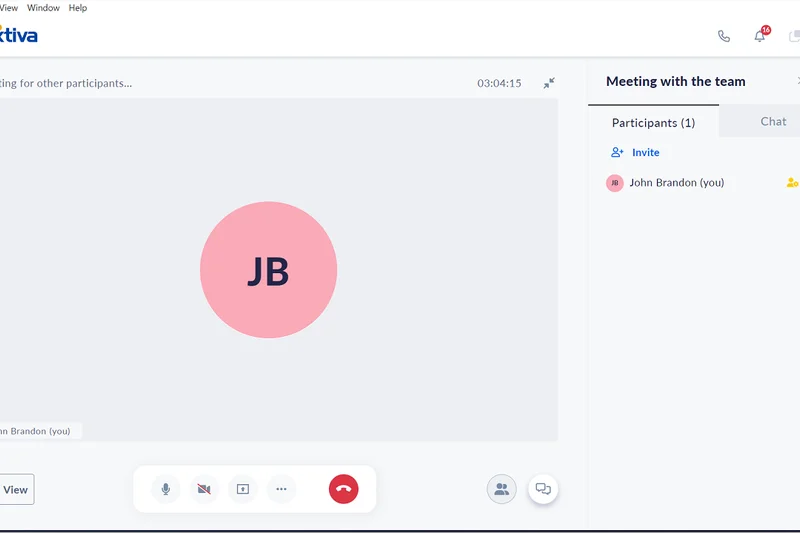
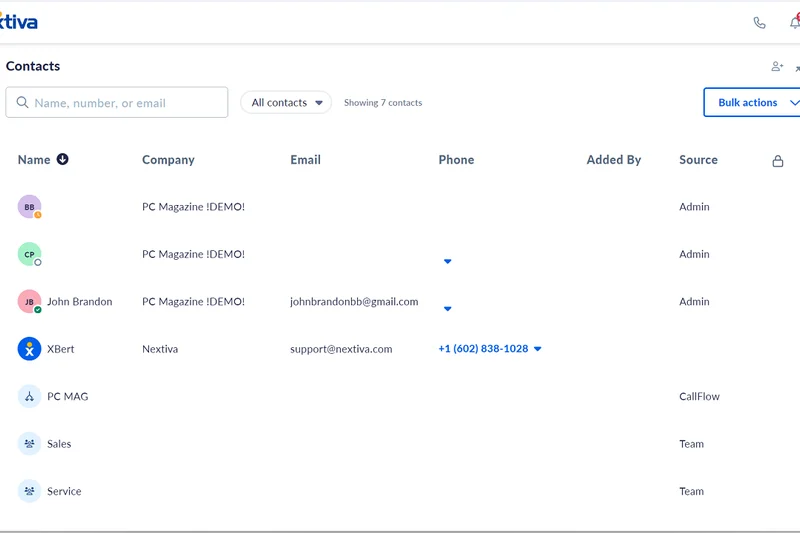
Why we picked it: Nextiva consistently ranks high for its outstanding Customer Support & Onboarding, ensuring that transitioning your business communications is a smooth process. It offers a robust Cloud PBX with AI voicemail transcription, built-in CRM integrations, and omnichannel inbox features. Nextiva is a fantastic middle-ground solution that brings enterprise features to SMBs without leaving them stranded during setup.
Key Specs
- Unlimited calling in US & Canada
- AI voicemail transcription
- Built-in CRM integrations
- Social media and web chat inboxes
What we like
- Award-winning customer support and onboarding
- Excellent built-in CRM and pipeline tools
- Highly reliable call quality across devices
- Strong suite of omnichannel capabilities
What we don't like
- Pricing can get high as you add advanced features
- Video conferencing is not as robust as Zoom
Best for: SMBs who want a powerful UCaaS platform but need hand-holding and excellent support during implementation.
Considering Nextiva vs RingCentral? Nextiva offers superior customer service, while RingCentral provides a deeper app integration marketplace.
A highly reliable UCaaS platform backed by some of the best customer support in the industry.
Buy at Nextiva official site#9 Aircall
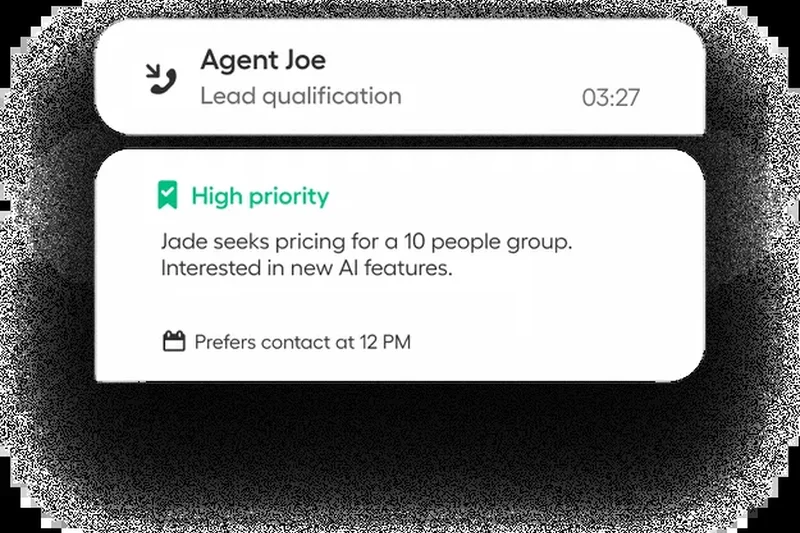
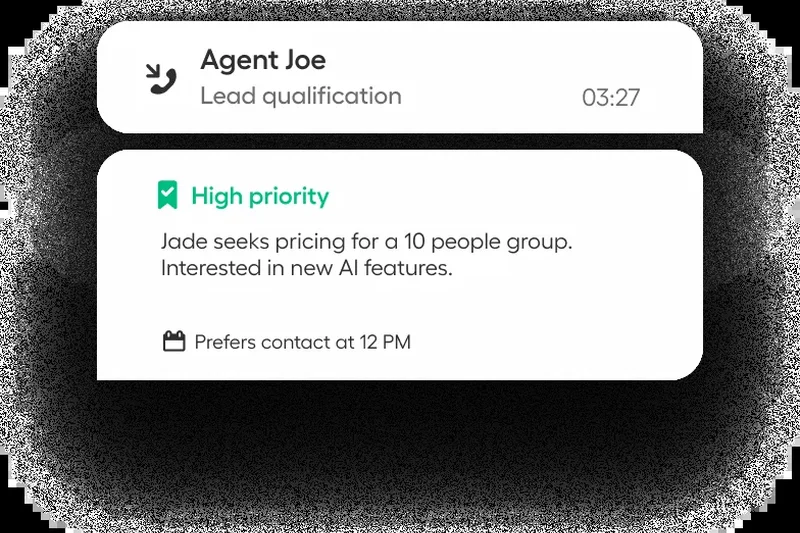
Why we picked it: Aircall is specifically engineered to integrate flawlessly with your existing helpdesk and CRM software. With over 100 native integrations, instant number provisioning, and a shared call inbox, it empowers sales and support teams to work faster. The platform is highly intuitive, scoring a 9 for usability, making it a favorite among fast-growing SaaS companies and digital-first agencies.
Key Specs
- Instant number provisioning
- 100+ native CRM and helpdesk integrations
- Interactive Voice Response (IVR)
- Call tagging and commenting
What we like
- Lightning-fast setup and number provisioning
- Flawless integration with CRMs like Salesforce and HubSpot
- Very intuitive shared inbox and call tagging
- Excellent call quality and reliability
What we don't like
- Pricing is relatively high for smaller teams
- Reporting analytics could be more customizable
Best for: Sales and customer support teams that live inside their CRM and need a phone system that syncs perfectly.
Considering Aircall vs CloudTalk? Both are great for sales, but Aircall's user interface is slightly more polished and intuitive.
A beautifully designed cloud call center that supercharges your CRM.
Buy at Aircall official site#10 CloudTalk
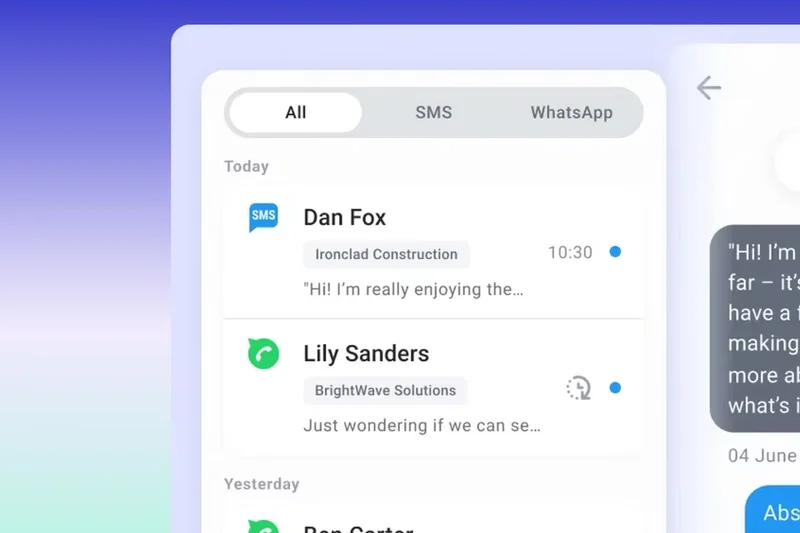
Why we picked it: CloudTalk is a fantastic AI call center software tailored for outbound sales and international support teams. It offers local phone numbers in over 160 countries, a smart predictive dialer, and real-time call coaching. Its strong integrations with Salesforce and HubSpot make it a powerful engine for global teams looking to optimize their dial rates and agent performance.
Key Specs
- Local phone numbers in 160+ countries
- Smart predictive dialer
- Advanced AI voice agents
- Native Salesforce and HubSpot syncing
What we like
- Unbeatable international number availability
- Powerful predictive dialing tools for sales teams
- Strong native CRM integrations
- Valuable real-time AI call coaching
What we don't like
- Mobile app is slightly clunky compared to desktop
- Pricing tiers gatekeep some essential AI features
Best for: International sales and support teams that need local presence and predictive dialing capabilities.
Considering CloudTalk vs JustCall? CloudTalk offers a broader global footprint for local numbers, while JustCall has a slight edge in SMS automation.
The go-to dialer and phone system for global outbound sales teams.
Buy at CloudTalk official site#11 8x8 X Series
Why we picked it: 8x8 X Series is a powerhouse for global organizations, offering unlimited calling to up to 48 countries depending on your tier. It combines UCaaS and CCaaS into one platform, featuring end-to-end encryption, massive video meeting capacities, and deep conversation speech analytics. It's built for scale and security.
Key Specs
- Unlimited calling to up to 48 countries
- End-to-end encryption
- Video meetings with up to 500 participants
- Conversation speech analytics
What we like
- Unrivaled international calling inclusions
- High-end security with end-to-end encryption
- Unified UCaaS and CCaaS platform
- Robust speech analytics for quality assurance
What we don't like
- Interface is functional but somewhat dated
- Customer support can be slow for non-enterprise tiers
Best for: Global enterprises that make a high volume of international calls and need strict security compliance.
Considering 8x8 vs RingCentral? 8x8 is the clear winner if your business makes a massive amount of international calls, saving you significantly on per-minute fees.
A secure, global communications platform offering unbeatable international calling value.
Buy at 8x8 official site#12 JustCall
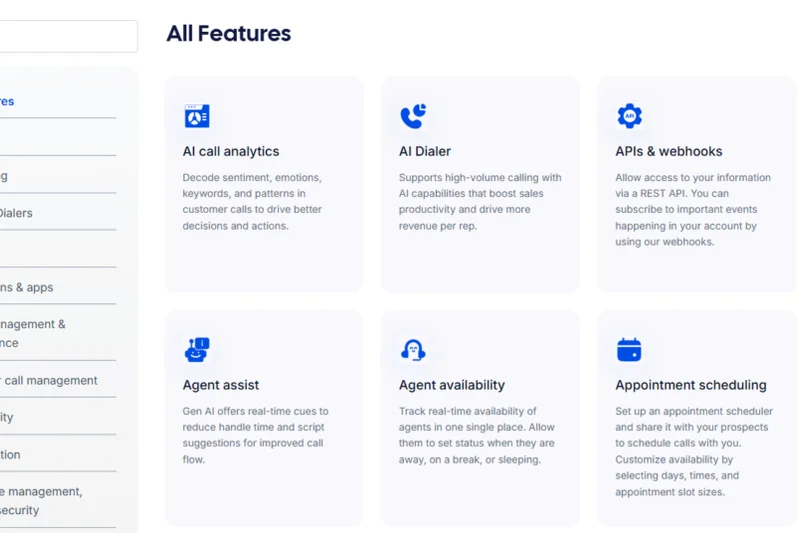
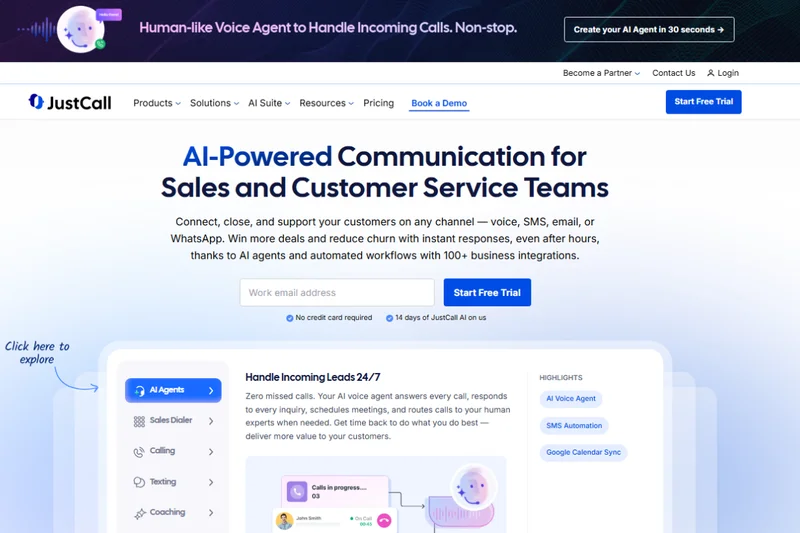
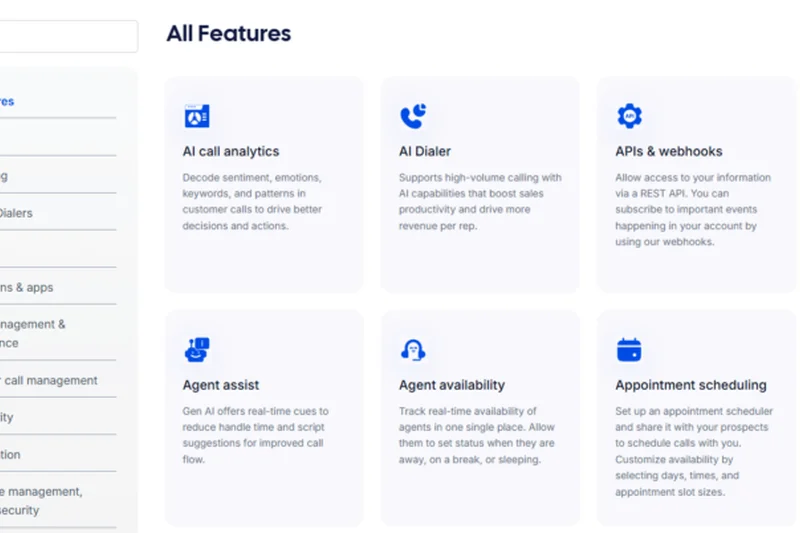
Why we picked it: JustCall shines as an AI-powered VoIP solution tailored for outbound sales teams. It boasts powerful predictive dialers, SMS workflow automation, and live call whispering. With strong integrations and high user ratings, it is an incredibly effective tool for accelerating sales velocity and managing lead outreach efficiently.
Key Specs
- Outbound power and predictive dialers
- AI-powered transcription and call summaries
- Live call monitoring and whispering
- SMS workflow automation
What we like
- Excellent power dialer capabilities
- Robust SMS automation workflows
- Seamless integration with major CRMs
- Great live coaching tools for managers
What we don't like
- Pricing scales up quickly with advanced features
- Reporting dashboards can be complex to set up
Best for: High-velocity sales teams that rely heavily on power dialing and automated SMS outreach.
Considering JustCall vs Kixie? Both are excellent dialers, but JustCall offers slightly more versatile SMS automation features.
A high-octane sales dialer and VoIP platform built to close deals faster.
Buy at JustCall official site#13 Twilio Flex
Why we picked it: Twilio Flex scored a perfect 10 in Unified Comms & Integrations because it is a completely programmable, API-first contact center. If you have the developer resources, you can customize every single pixel and routing logic of this platform. It supports bespoke omnichannel routing across voice, SMS, and WhatsApp, making it the ultimate tool for companies with complex, unique workflows.
Key Specs
- Completely customizable user interface
- API-first architecture
- Omnichannel support (voice, SMS, WhatsApp)
- Intelligent intelligent routing
What we like
- Limitless customization and API flexibility
- True omnichannel capabilities
- Incredibly reliable underlying Twilio infrastructure
- Bespoke reporting and analytics
What we don't like
- Requires dedicated developers to build and maintain
- Overkill for standard business phone needs
Best for: Tech-forward enterprises with in-house developers who need a heavily customized contact center.
Considering Twilio Flex vs Talkdesk? Twilio Flex offers infinite customization for dev teams, whereas Talkdesk provides a powerful out-of-the-box solution requiring no code.
The ultimate programmable contact center for teams with the developer muscle to wield it.
Buy at Twilio official site#14 GoTo Connect
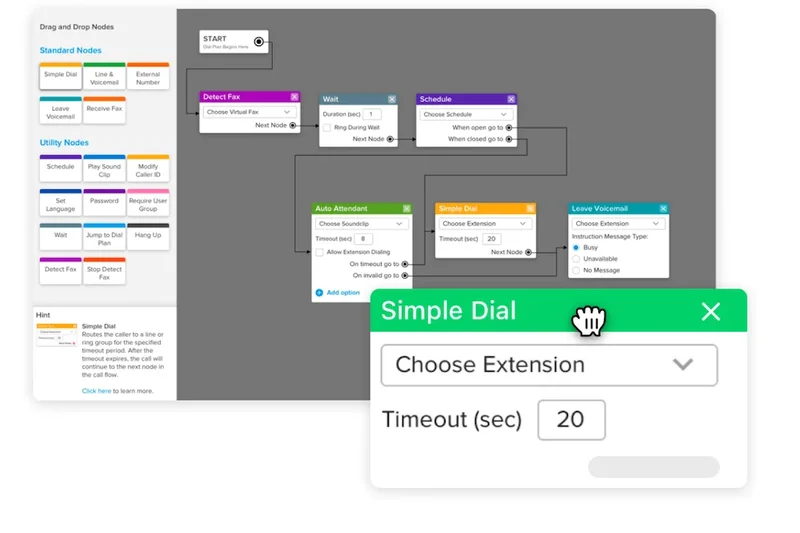
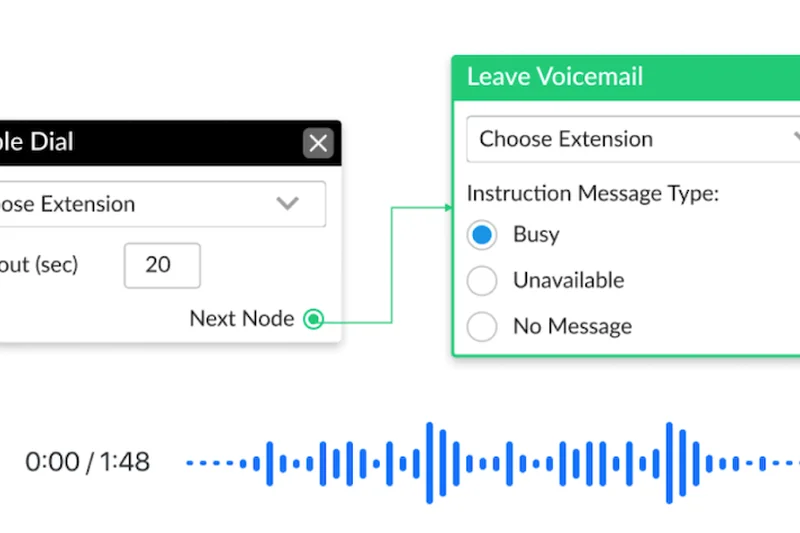
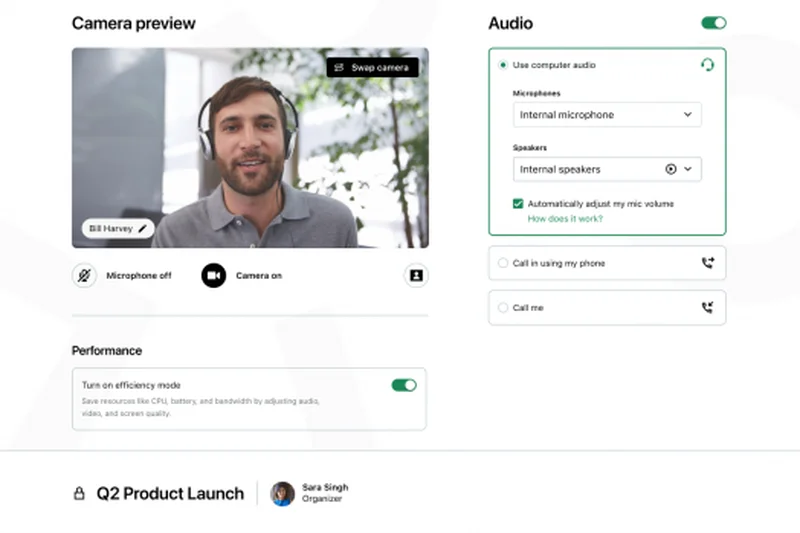
Why we picked it: GoTo Connect provides a rock-solid Cloud PBX and meetings platform highlighted by its brilliant drag-and-drop visual call flow designer. Setting up complex IVR menus and ring groups is incredibly intuitive. It offers a balanced mix of HD video conferencing, call queues, and unlimited extensions, making it a highly capable and user-friendly system for SMBs.
Key Specs
- Drag-and-drop visual call flow designer
- Unlimited extensions and ring groups
- HD video conferencing
- Shared team inbox
What we like
- Best-in-class visual call flow builder
- Reliable unified voice and video platform
- Straightforward, inclusive pricing model
- Easy administration for non-technical users
What we don't like
- Integrations are not as deep as competitors
- Mobile app occasionally suffers from latency
Best for: SMBs who want powerful call routing but prefer a visual, easy-to-use administrative interface.
Considering GoTo Connect vs Ooma Office? GoTo Connect offers vastly superior video conferencing and a more advanced visual dial plan editor.
A reliable, user-friendly UCaaS platform with the best visual call routing designer available.
Buy at GoTo official site#15 Vonage Business Communications
Why we picked it: Vonage remains a steady, reliable player in the UCaaS space, offering 99.999% uptime reliability and a solid suite of team messaging and collaboration tools. Its integrations with Salesforce and other major CRMs are well-tested and robust. While it lacks the flashy AI features of newer competitors, it provides a stable, predictable communication infrastructure for traditional businesses.
Key Specs
- 99.999% uptime reliability
- Multi-level auto attendant
- Team messaging and collaboration
- CRM integrations including Salesforce
What we like
- Highly reliable with a 99.999% uptime SLA
- Solid, mature CRM integrations
- Good core PBX functionality
- Flexible APIs for custom development
What we don't like
- Lacks cutting-edge AI features out of the box
- Customer support can be hit-or-miss
Best for: Traditional businesses looking for a stable, recognizable brand with mature CRM integrations.
Considering Vonage vs RingCentral? Both are legacy giants, but RingCentral currently offers a more robust set of modern AI and collaboration features.
A reliable, meat-and-potatoes business phone system that gets the job done.
Buy at Vonage official site#16 Kixie PowerCall
Why we picked it: Kixie PowerCall is a specialized sales dialer and VoIP platform that integrates deeply with CRMs to automate outbound outreach. Features like one-click voicemail drops, local presence dialing, and live call coaching make it a highly effective tool for sales floors. It boosts agent productivity significantly, though its focus is heavily skewed toward outbound sales rather than general corporate telephony.
Key Specs
- Multi-line auto dialer
- One-click voicemail drop
- Deep bidirectional CRM integrations
- Local presence automatic dialing
What we like
- Exceptional power dialing tools increase sales velocity
- Time-saving one-click voicemail drops
- Deep, bidirectional CRM syncing
- Local presence dialing boosts answer rates
What we don't like
- Primarily built for sales; lacks general UCaaS features
- Interface is functional but heavily utilitarian
Best for: Outbound sales teams and BDRs looking to maximize their daily call volume and answer rates.
Considering Kixie vs ReadyMode? Kixie is better for standard BDR teams using HubSpot/Salesforce, while ReadyMode handles extreme high-volume predictive dialing.
A heavy-hitting sales dialer that practically forces your agents to be more productive.
Buy at Kixie official site#17 CallRail Lead Center
Why we picked it: CallRail Lead Center bridges the gap between marketing analytics and telephony. It provides dynamic number insertion for precise marketing attribution alongside a unified communication inbox. By combining a built-in softphone with inbound/outbound calls and SMS, it allows businesses to not only take calls but to know exactly which Google Ad or campaign drove the lead.
Key Specs
- Dynamic number insertion for marketing attribution
- Unified communication inbox
- Built-in softphone for inbound/outbound calls
- AI-powered call insights
What we like
- Unbeatable call tracking and marketing attribution
- Unified inbox for voice and SMS
- Excellent AI insights for lead qualification
- Great reporting dashboards
What we don't like
- Can become expensive with high minute/number usage
- Lacks traditional internal PBX routing features
Best for: Marketing agencies and service businesses that need to track exactly which ads are generating phone calls.
Considering CallRail vs standard VoIP? CallRail is essential if marketing attribution is your primary goal; otherwise, a standard VoIP system offers better internal routing.
The ultimate telephony platform for marketers obsessed with tracking return on ad spend.
Buy at CallRail official site#18 Avaya Experience Platform
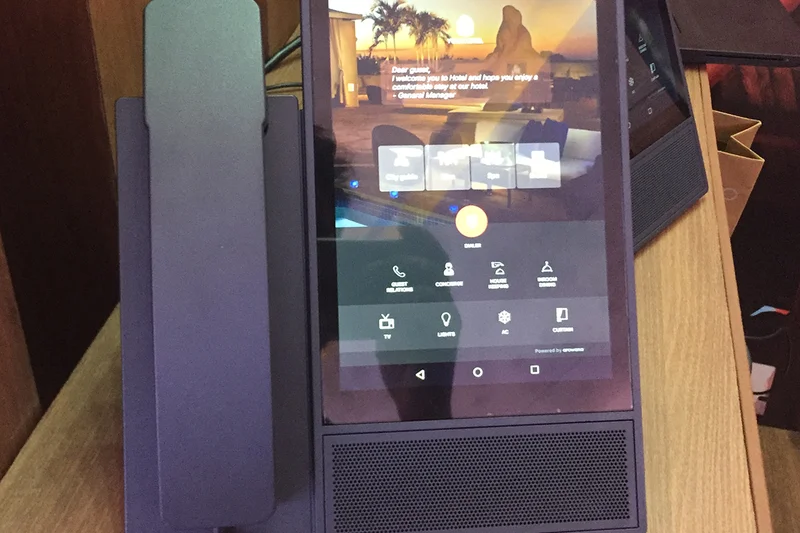
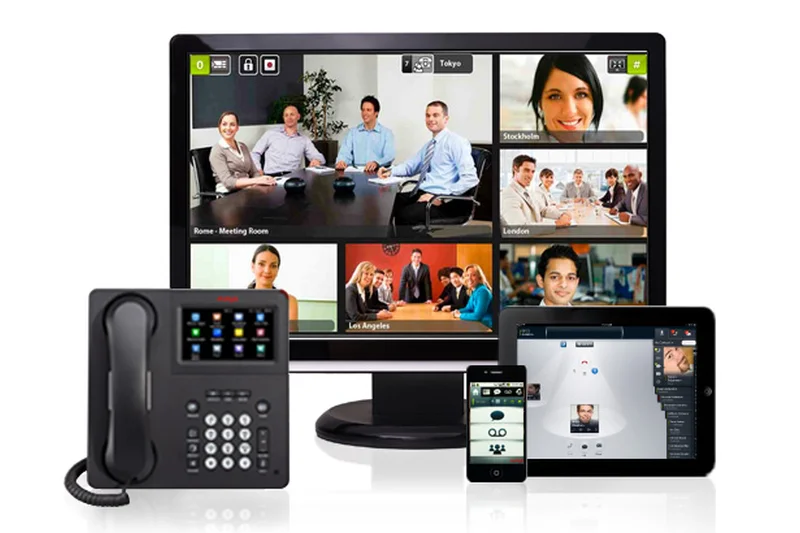

Why we picked it: Avaya brings its massive telecom pedigree to the cloud with the Experience Platform. It offers highly robust enterprise UCaaS and CCaaS capabilities, including AI speech analytics and seamless omnichannel routing. It supports flexible hybrid or cloud deployments, making it a strong choice for massive enterprises transitioning slowly from legacy on-premise hardware to the cloud.
Key Specs
- Seamless omnichannel routing
- AI speech and sentiment analytics
- Flexible hybrid or cloud deployment
- Robust API integration framework
What we like
- Excellent hybrid deployment options for migrating enterprises
- Enterprise-grade security and compliance
- Powerful AI sentiment analytics
- Highly customizable routing architecture
What we don't like
- Custom pricing is very expensive
- Heavy platform that requires certified IT staff to manage
Best for: Massive enterprises and government entities transitioning from legacy Avaya hardware to the cloud.
Considering Avaya vs Talkdesk? Avaya is great if you need hybrid on-premise components, but Talkdesk offers a more agile, fully cloud-native experience.
A heavy-duty enterprise platform perfect for complex, hybrid cloud deployments.
Buy at Avaya official site#19 Weave Communications
Why we picked it: Weave is a specialized business VoIP system built explicitly for healthcare, dental, and optometry practices. It deeply integrates with practice management software to offer automated appointment reminders, two-way patient texting, and digital forms. It streamlines front-desk operations remarkably well, making it an indispensable tool for independent medical practices.
Key Specs
- Designed for healthcare and dental practices
- Automated appointment reminders
- Two-way patient texting
- Digital form integration
What we like
- Flawless integration with specialized medical/dental software
- Automated appointment reminders reduce no-shows
- Great two-way texting for patient communication
- Hardware is often provided or heavily subsidized
What we don't like
- Pricing is opaque and custom-quoted
- Not suited for businesses outside the healthcare/service niches
Best for: Dental offices, optometrists, and medical practices looking to automate patient communications.
Considering Weave vs RingCentral? If you run a dental practice, Weave's patient reminder integrations make it infinitely more valuable than RingCentral's generic PBX.
The premier communication hub designed specifically for modern medical and dental practices.
Buy at Weave official site#20 Aloware Contact Center
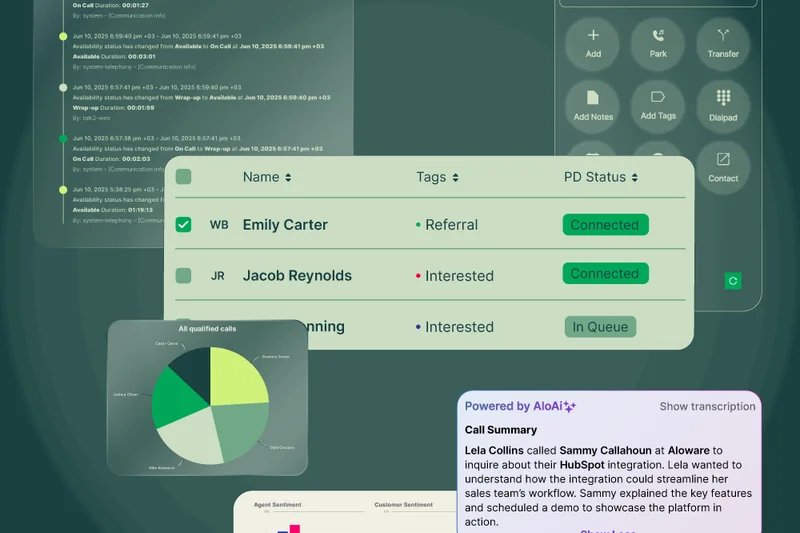
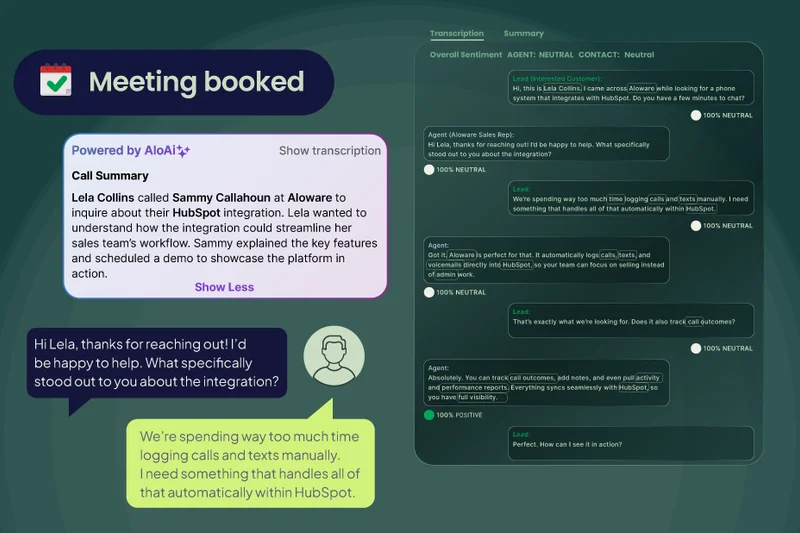
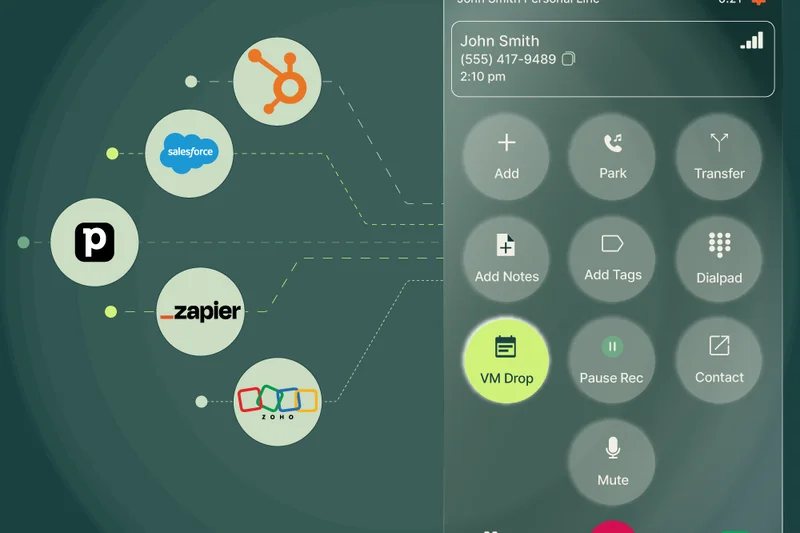
Why we picked it: Aloware Contact Center is built for high-volume sales and support teams, featuring unlimited inbound and outbound calling, a sales power dialer, and 2-way SMS broadcasting. Its tight integration with HubSpot and Pipedrive makes it a favorite for modern sales floors. While it lacks some general office features, its aggressive unlimited pricing model offers great value for high-usage teams.
Key Specs
- Unlimited inbound and outbound calling
- Sales power dialer
- 2-way SMS and MMS broadcasting
- Local presence caller ID
What we like
- True unlimited calling model prevents bill shock
- Excellent power dialer and SMS broadcasting
- Deep HubSpot integration
- Local presence dialing included
What we don't like
- Interface can feel a bit cluttered
- Less focused on internal team collaboration
Best for: Sales teams heavily invested in HubSpot looking for an unlimited calling and texting dialer.
Considering Aloware vs JustCall? Aloware's unlimited pricing model is better for extreme call volume, while JustCall offers slightly more refined AI transcription.
A high-volume sales and SMS contact center that plays incredibly well with HubSpot.
Buy at Aloware official site#21 3CX SMB
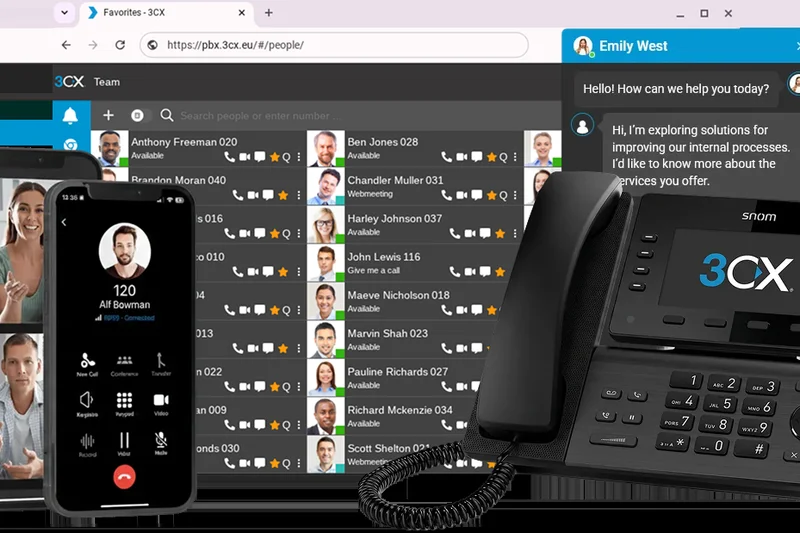
Why we picked it: 3CX offers a highly flexible PBX system that can be deployed on-premise or in the cloud. It is renowned for its cost-effective, unlimited extensions model, where pricing is based on simultaneous calls rather than per-user. With integrated web video, website live chat, and WhatsApp integration, it provides an incredible amount of value for IT-savvy businesses.
Key Specs
- Deploy on-premise or in the cloud
- Integrated web video conferencing
- Live website chat functionality
- WhatsApp Business integration
What we like
- Extremely cost-effective pricing model (simultaneous calls)
- Flexible deployment (cloud or on-premise)
- Includes website chat and WhatsApp integration
- Unlimited extensions out of the box
What we don't like
- Requires significant IT knowledge to set up and manage
- Interface is functional but not the most modern
Best for: IT-savvy SMBs who want to maintain control over their PBX and save money via a simultaneous-call pricing model.
Considering 3CX vs VoIP.ms? Both are for IT pros, but 3CX offers a more cohesive software suite including video and chat, whereas VoIP.ms is pure SIP trunking.
A highly customizable, cost-effective PBX system for tech-savvy organizations.
Buy at 3CX official site#22 Ooma Office
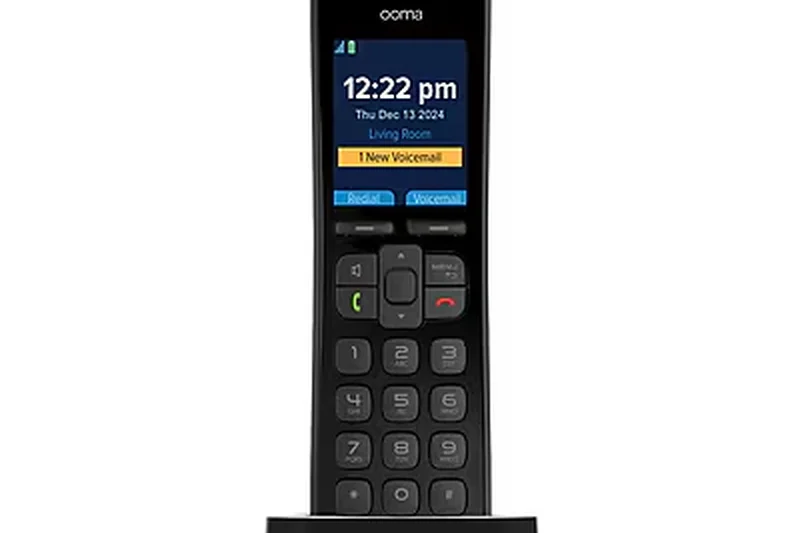
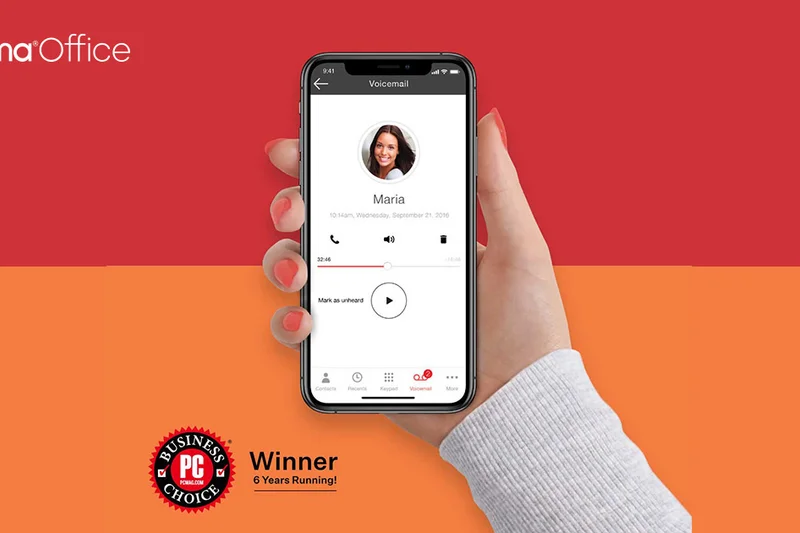
Why we picked it: Ooma Office is a staple for small businesses, offering a highly reliable, straightforward VoIP system without overwhelming complexity. It provides a reliable virtual receptionist, extension dialing, and digital fax. It scores very well for usability, making it perfect for brick-and-mortar stores or offices that just need their phones to work simply and reliably every day.
Key Specs
- Virtual receptionist
- Extension dialing & ring groups
- Digital fax
- Mobile and desktop softphone apps
What we like
- Incredibly easy to set up and use
- Very reliable voice quality
- Affordable, transparent pricing
- Includes digital faxing
What we don't like
- Lacks deep CRM integrations
- Call recording requires upgrading to the Pro tier
Best for: Main street brick-and-mortar businesses, retail shops, and small offices that need a simple, reliable phone system.
Considering Ooma Office vs Nextiva? Ooma is better for simple, plug-and-play small office setups, while Nextiva is better if you need CRM integrations.
A perfectly straightforward, highly reliable business phone system for small offices.
Buy at Ooma official site#23 Google Voice for Google Workspace
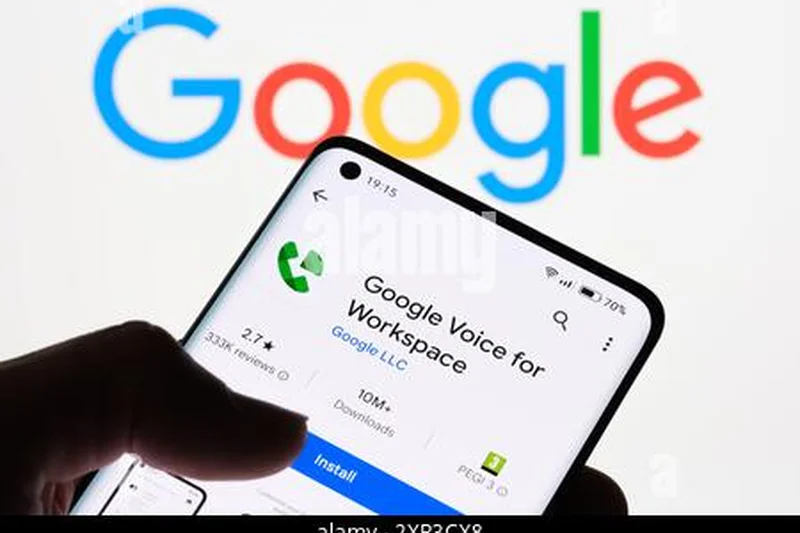
Why we picked it: Google Voice is an easy add-on for businesses already utilizing Google Workspace. It offers deep integration with Gmail and Google Calendar, advanced AI spam blocking, and highly accurate voicemail transcription. While it lacks the complex routing of a true enterprise PBX, its simple admin console makes it a breeze to manage for modern, lightweight teams.
Key Specs
- Deep Google Workspace integration
- Advanced AI spam blocking
- Voicemail transcription
- Ring groups for departments
What we like
- Seamless integration with Google Workspace
- Excellent AI spam blocking
- Very simple administration and billing
- Great voicemail transcription
What we don't like
- Lacks advanced call routing and CRM integrations
- Support is strictly via standard Google channels
Best for: Startups and small businesses running heavily on Google Workspace who need simple, reliable voice lines.
Considering Google Voice vs OpenPhone? OpenPhone offers much better collaborative features and SMS tools, while Google Voice is purely for simple individual lines.
A clean, simple cloud telephony add-on for Google Workspace loyalists.
Buy at Google Workspace official site#24 MightyCall Core
Why we picked it: MightyCall Core is a solid Small Business VoIP option that delivers unlimited calling in the US and Canada, a multi-level IVR, and visual voicemail to email. It provides a good baseline of features including call monitoring and recording. While its integration list is short, it serves as a dependable standalone phone system for growing teams.
Key Specs
- Unlimited calling in US/Canada
- Multi-level IVR
- Visual voicemail to email
- Call recording and monitoring
What we like
- Easy to navigate interface
- Good core routing and IVR tools
- Call recording is easily accessible
- Transparent pricing
What we don't like
- Limited third-party integrations
- Mobile app can sometimes be slow to ring
Best for: Small businesses needing a basic, reliable VoIP system with call recording and standard IVR.
Considering MightyCall vs Phone.com? MightyCall has a slightly more modern interface, while Phone.com offers HIPAA compliance on lower tiers.
A straightforward, easy-to-use VoIP solution for small teams with basic routing needs.
Buy at MightyCall official site#25 Zoho Voice
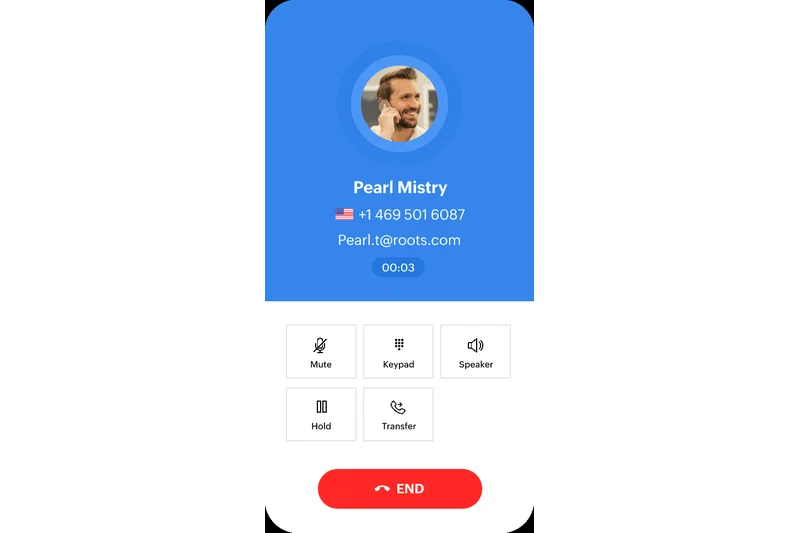
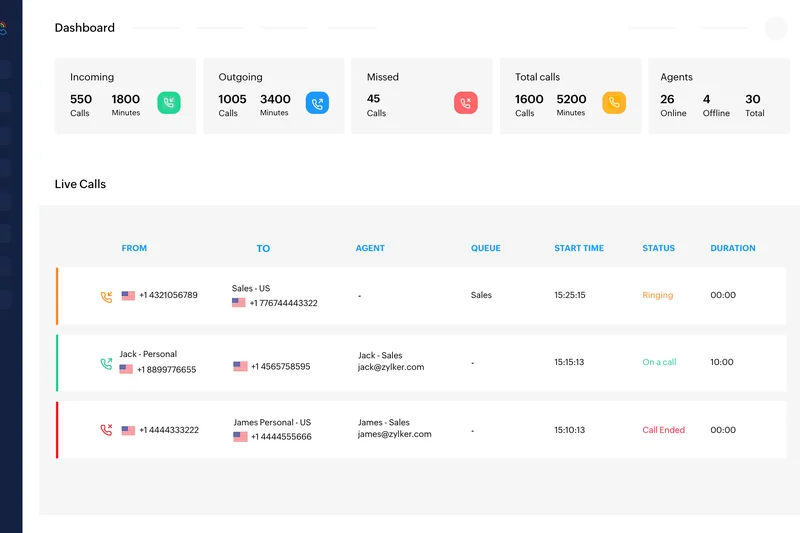
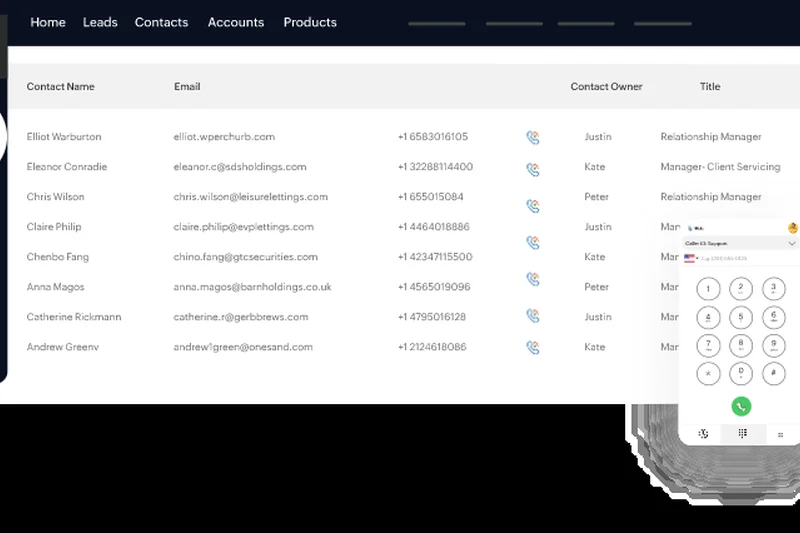
Why we picked it: Zoho Voice is natively integrated with the sprawling Zoho software ecosystem, making it an absolute no-brainer for companies using Zoho CRM or Zoho Desk. It provides standard IVR, call recording, and global number purchasing. Outside of the Zoho ecosystem, it's fairly standard, but within it, it's a powerful tool for unifying customer data.
Key Specs
- Natively integrated with the Zoho software ecosystem
- Interactive Voice Response (IVR)
- Call recording and logs
- Global number purchasing
What we like
- Flawless integration with Zoho CRM and Desk
- Simple, clean interface
- Easy global number purchasing
- Good call logging and analytics
What we don't like
- Makes little sense to use outside the Zoho ecosystem
- Feature set is basic compared to dedicated UCaaS leaders
Best for: Businesses heavily invested in Zoho CRM looking for a native telephony solution.
Considering Zoho Voice vs RingCentral? If you use Zoho CRM, Zoho Voice is the easiest setup; if you use multiple different software tools, RingCentral is far superior.
The perfect cloud telephony add-on for existing Zoho ecosystem users.
Buy at Zoho official site#26 VoIP.ms Cloud PBX
Why we picked it: VoIP.ms scores a perfect 10 in Value & Pricing, operating as a highly customizable SIP Trunking and PBX provider with usage-based billing. It allows for Bring Your Own Device (BYOD) flexibility and intricate sub-account creation. It is decidedly not for beginners, but IT professionals can build an incredibly robust phone system for pennies on the dollar compared to boxed UCaaS providers.
Key Specs
- Bring your own device (BYOD) flexibility
- Sub-account creation for multi-user
- Digital receptionist (IVR)
- High customizability for IT pros
What we like
- Unbeatable usage-based pricing
- Extreme technical customizability
- Great BYOD hardware flexibility
- Extensive routing options for advanced users
What we don't like
- Interface looks like it is from 2005
- Requires deep technical knowledge to configure
Best for: IT professionals and MSPs who want total control over SIP routing and rock-bottom per-minute pricing.
Considering VoIP.ms vs 3CX? 3CX provides a better all-in-one software layer, while VoIP.ms is the ultimate raw SIP trunking engine for custom builds.
A heavily technical, incredibly cheap SIP trunking platform for IT experts.
Buy at VoIP.ms official site#27 Zadarma Cloud PBX
Why we picked it: Zadarma Cloud PBX stands out for its exceptional value and massive international presence, offering virtual numbers in over 100 countries and free basic PBX features. It includes integrated call tracking and speech analytics. While customer support can be limited, the price-to-feature ratio for international businesses is hard to beat.
Key Specs
- Virtual numbers in over 100 countries
- Free basic PBX features
- Integrated call tracking
- Speech analytics and recognition
What we like
- Incredible international number coverage
- Very low cost, including a free PBX tier
- Useful call tracking features included
- Open API for custom integrations
What we don't like
- Usability and UX are a bit clunky
- Support is slow for non-paying or low-tier users
Best for: Startups and small businesses needing an inexpensive, multi-national phone presence.
Considering Zadarma vs 8x8? Zadarma is the budget DIY option for international numbers, whereas 8x8 is the premium, fully supported enterprise equivalent.
An ultra-budget, globally reaching cloud PBX with a surprising amount of features.
Buy at Zadarma official site#28 Acefone Hosted PBX
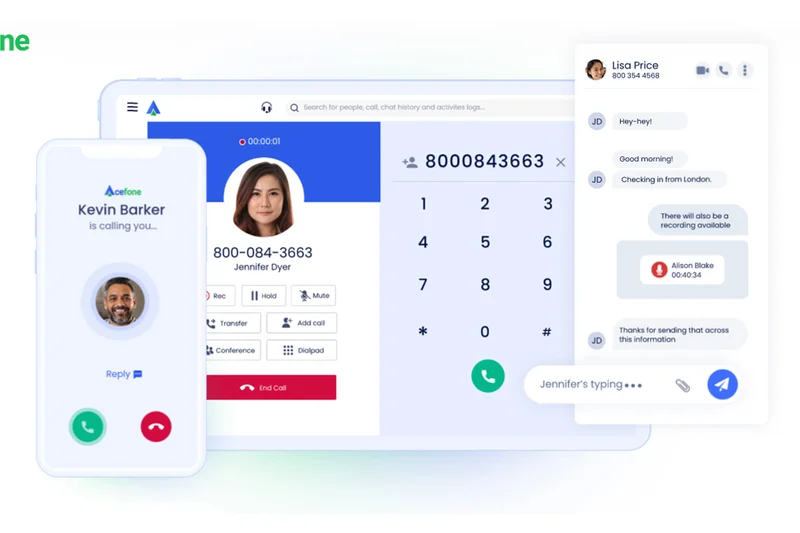
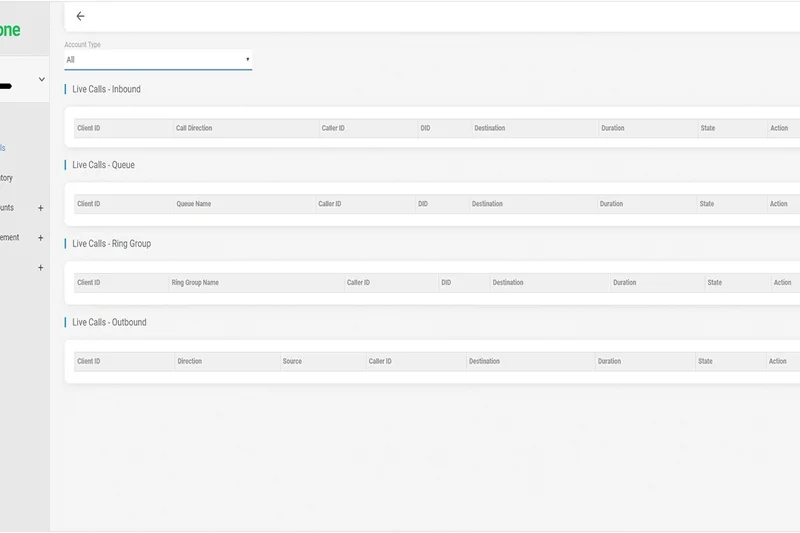
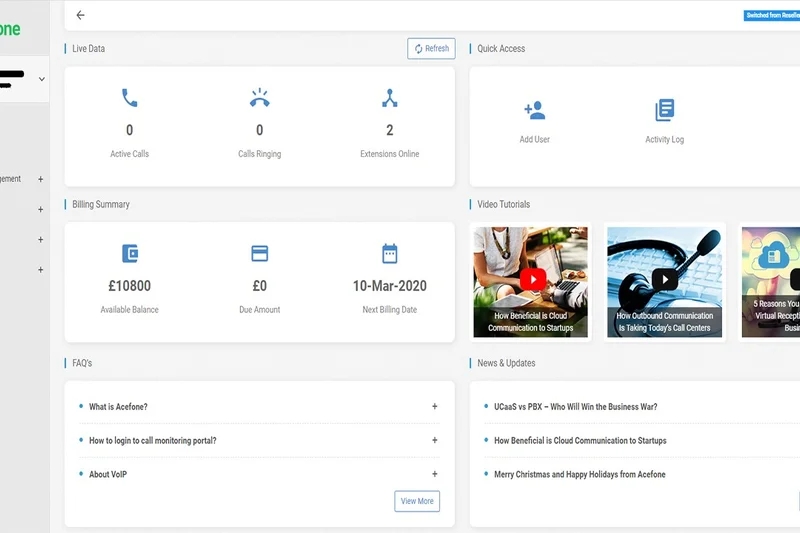
Why we picked it: Acefone Hosted PBX offers customizable IVR menus, detailed call analytics, and skill-based routing at a very competitive price point. It also integrates well with Microsoft Teams. It's a solid, budget-friendly hosted option that provides decent analytics without forcing users into expensive enterprise tiers.
Key Specs
- Customizable IVR menus
- Detailed call analytics dashboard
- Skill-based call routing
- Integration with Microsoft Teams
What we like
- Very affordable hosted PBX
- Good skill-based routing for small call centers
- Strong Microsoft Teams integration
- Detailed analytics dashboard
What we don't like
- Brand is less established than major competitors
- Mobile app interface needs modernizing
Best for: Small businesses needing cost-effective skill-based routing and detailed analytics.
Considering Acefone vs Vonage? Vonage offers better reliability and brand stability, while Acefone offers a cheaper entry point for advanced routing.
A budget-friendly hosted PBX that delivers solid routing and analytics.
Buy at Acefone official site#29 Bitrix24 Telephony
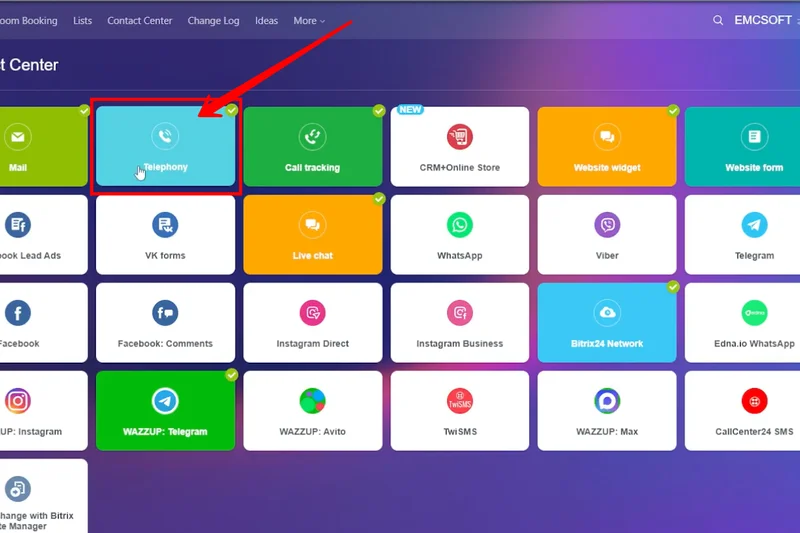

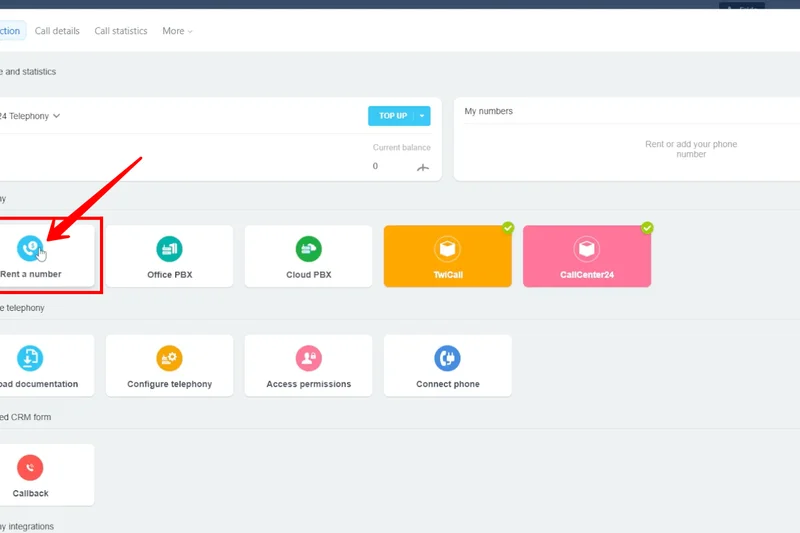
Why we picked it: Bitrix24 Telephony is part of the broader Bitrix24 CRM and collaboration hub. It offers a fully integrated CRM and phone system, automatic call logging, and routing directly to assigned account managers. It's highly effective if you use the Bitrix24 workspace, providing a centralized hub for all internal and external communication.
Key Specs
- Fully integrated CRM and phone system
- Rent local or toll-free numbers globally
- Automatic call logging
- Call routing to assigned account managers
What we like
- Deep integration with the Bitrix24 CRM platform
- Automated routing to dedicated account managers
- Affordable communication hub
- Good global number availability
What we don't like
- The overall platform can feel overwhelming and bloated
- Call quality is sometimes inconsistent
Best for: Companies currently using or migrating to the all-in-one Bitrix24 CRM and collaboration platform.
Considering Bitrix24 vs Zoho Voice? Both are ecosystem-locked; choose the one matching your current CRM infrastructure.
A highly integrated telephony module that completes the Bitrix24 all-in-one workspace.
Buy at Bitrix24 official site#30 Mitel MiCloud Connect
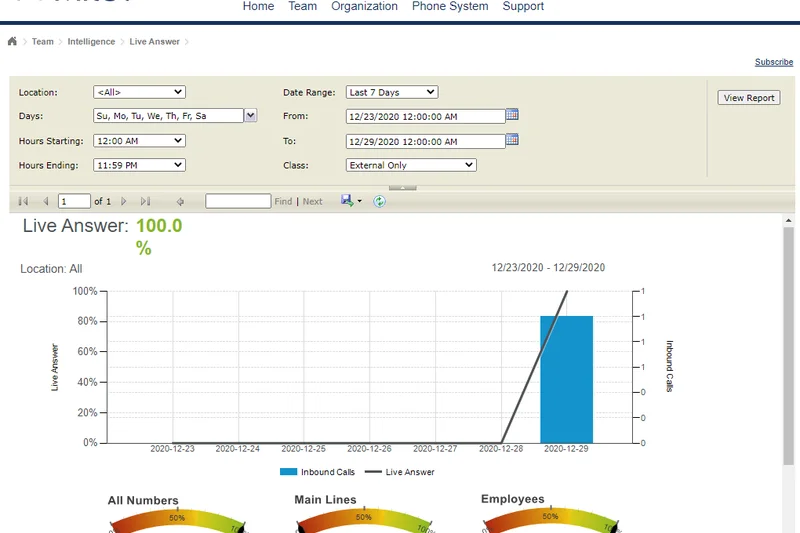
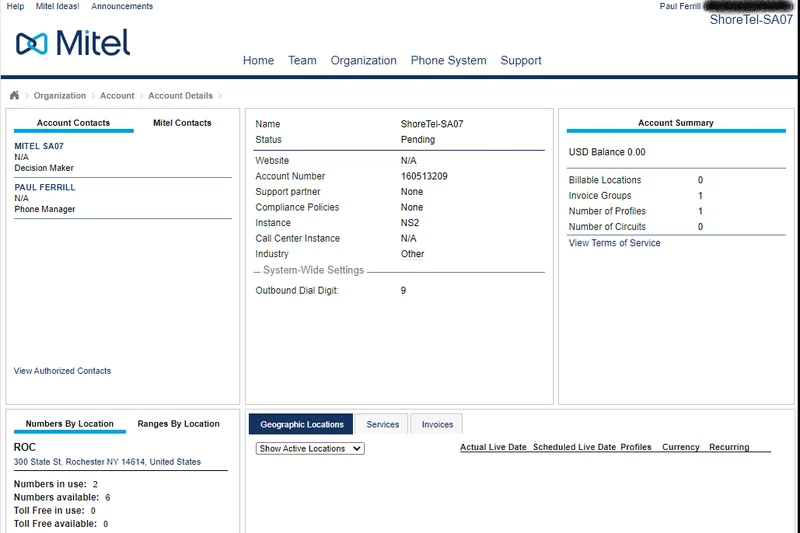
Why we picked it: Mitel MiCloud Connect offers a robust PBX feature set with integrated collaboration and VPN-less IP phone support. It caters mostly to midsize companies transitioning from legacy Mitel hardware. While the feature set is comprehensive, the user interface and administrative portal feel noticeably outdated compared to newer cloud-native competitors.
Key Specs
- Robust PBX feature set
- Integrated collaboration and conferencing
- VPN-less IP phone support
- Contact center add-ons
What we like
- Familiar for teams used to legacy Mitel systems
- Strong physical IP phone support
- Good core PBX routing features
- Reliable voice quality
What we don't like
- Outdated user interface
- Onboarding and administration can be clunky
Best for: Organizations currently heavily invested in Mitel hardware looking for a bridged path to the cloud.
Considering Mitel vs Cisco Webex? Cisco Webex offers a much more modernized, secure cloud experience compared to Mitel's cloud offerings.
A capable, if slightly dated, cloud PBX designed for legacy Mitel customers.
Buy at Mitel official site#31 Phone.com Business Phone
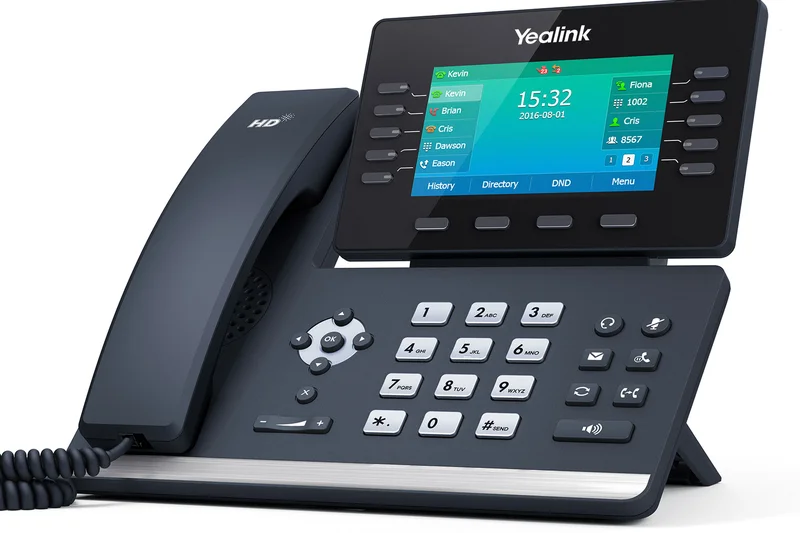
Why we picked it: Phone.com caters well to small businesses and medical practices, notably offering HIPAA compliant voice and video even on lower-tier plans. It provides custom call routing, local or toll-free numbers, and free mobile apps. While the feature set is somewhat basic, its compliance focus makes it a safe budget choice for healthcare consultants.
Key Specs
- Local or toll-free numbers
- Custom call routing & schedules
- HIPAA compliant voice & video
- Voicemail to email routing
What we like
- Affordable HIPAA compliant plans
- Easy to set up custom schedules
- Mix-and-match user pricing
- Reliable basic routing
What we don't like
- Very limited third-party software integrations
- Outdated web interface
Best for: Small medical practices, therapists, or consultants who require an affordable, HIPAA compliant virtual phone.
Considering Phone.com vs Ooma? Phone.com is better for strict HIPAA compliance on a budget, while Ooma offers slightly better hardware integration for small offices.
A reliable, basic VoIP service that wins points for affordable HIPAA compliance.
Buy at Phone.com official site#32 UniTel Voice

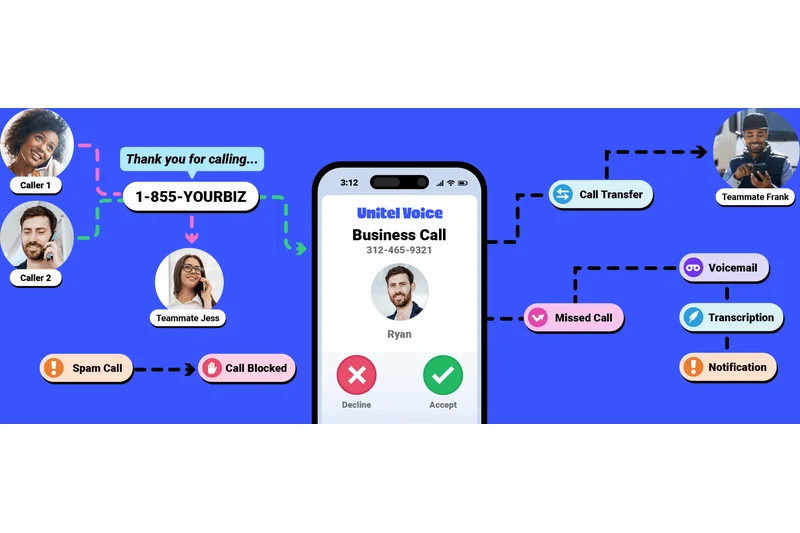
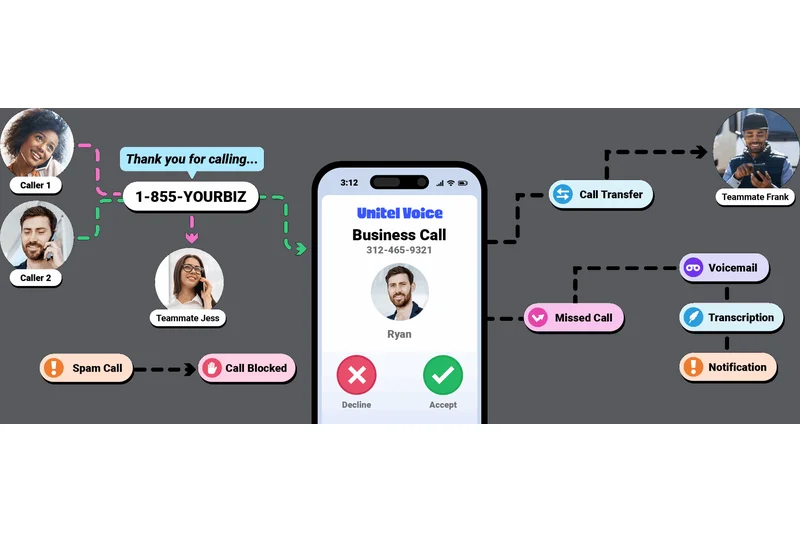
Why we picked it: UniTel Voice is squarely aimed at entrepreneurs needing a professional virtual auto attendant. It includes toll-free and local numbers, voicemail to email, and a free smartphone app. Its standout feature is its highly responsive, US-based customer support, which is rare at this price point. It lacks deep integrations but works perfectly for a solopreneur needing a professional front.
Key Specs
- Professional virtual auto attendant
- Toll-free and local numbers included
- Voicemail to email forwarding
- US-based customer support
What we like
- Excellent, friendly US-based customer support
- Professional auto-attendant setup is easy
- Very affordable for startups
- Reliable mobile app
What we don't like
- Lacks advanced call routing features
- No native CRM integrations
Best for: Solopreneurs and micro-businesses who want a professional greeting and reliable mobile app with great human support.
Considering UniTel Voice vs Grasshopper? UniTel offers significantly better, more personalized customer support compared to Grasshopper.
A friendly, affordable virtual phone system perfect for entrepreneurs needing a professional image.
Buy at UniTel Voice official site#33 ReadyMode Predictive Dialer
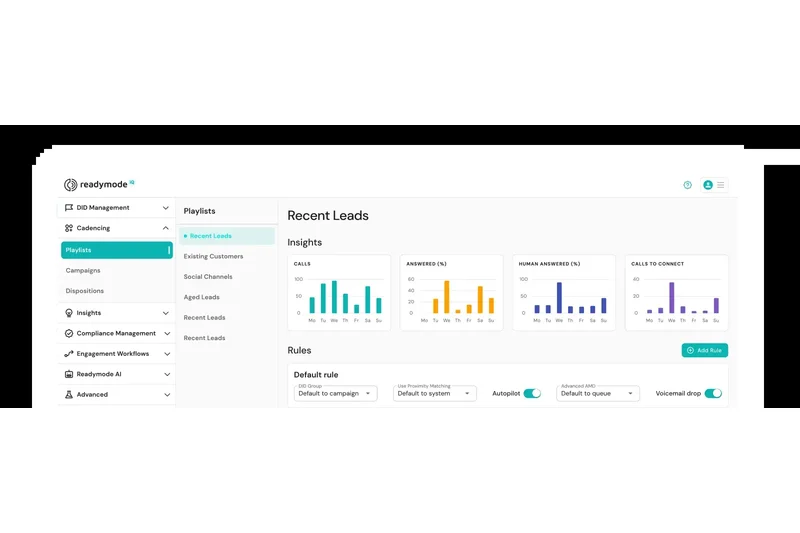
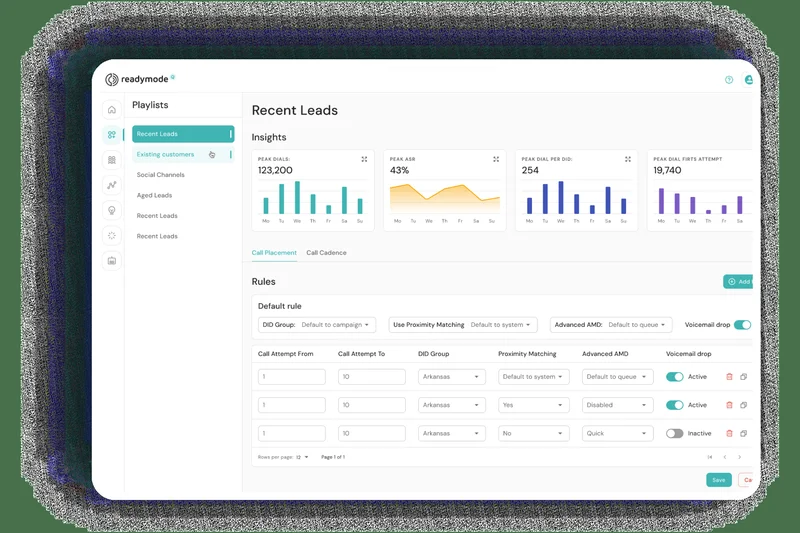
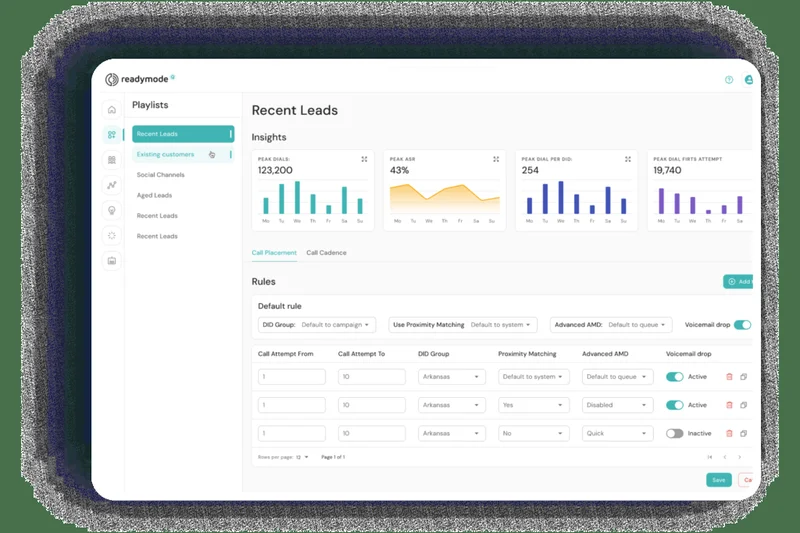
Why we picked it: ReadyMode is a cloud-based high-volume predictive dialer designed for extreme outbound sales environments. It includes a built-in CRM for lead management, local caller ID to boost answer rates, and real-time agent monitoring. It is a highly specialized tool; it sacrifices usability and broad integrations in favor of sheer dialing horsepower.
Key Specs
- Cloud-based high-volume predictive dialer
- Included CRM for lead management
- Local caller ID to boost answer rates
- Real-time agent monitoring
What we like
- Incredible high-volume predictive dialing engine
- Built-in lead management CRM
- Effective local caller ID features
- Strong agent monitoring tools
What we don't like
- Expensive, specialized pricing model
- Not suited for general inbound business telephony
Best for: High-volume call centers and outbound sales teams that need to burn through massive lead lists daily.
Considering ReadyMode vs Kixie? ReadyMode is built for massive, multi-line predictive dialing, while Kixie is better for standard one-to-one BDR sales cadences.
An absolute powerhouse predictive dialer built strictly for aggressive outbound call centers.
Buy at ReadyMode official site#34 Ring4 Business Phone
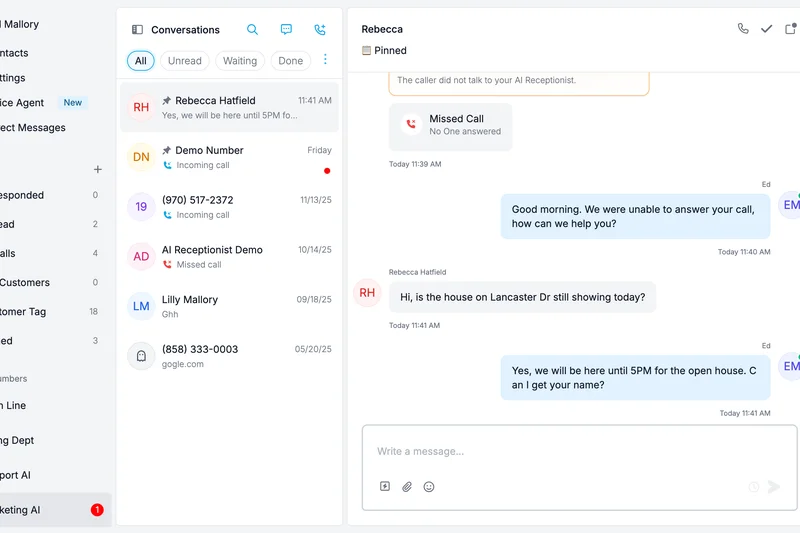
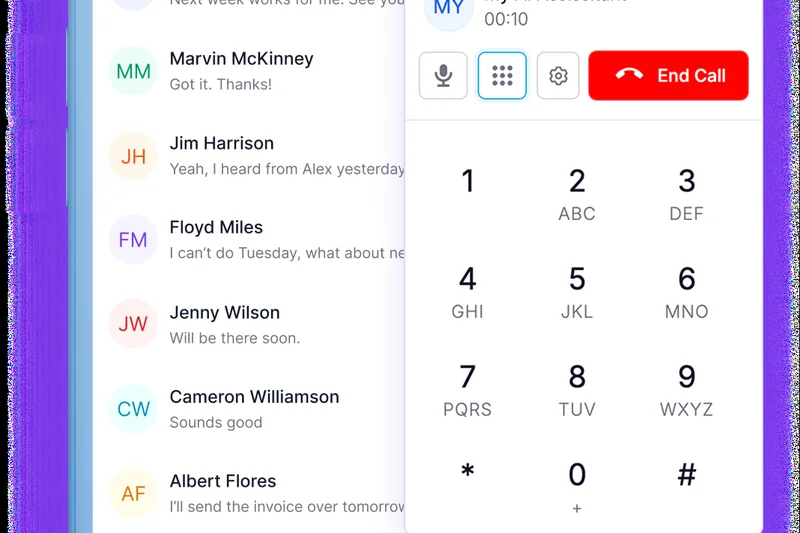
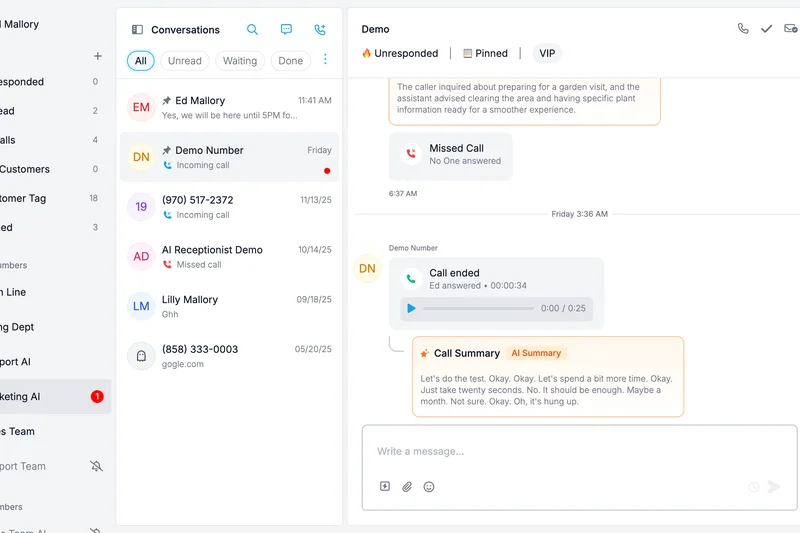
Why we picked it: Ring4 is a mobile-first VoIP solution that lets users instantly generate business numbers and operate entirely via a mobile app. It includes call recording and video meeting support. It scored perfectly for affordability, but its lack of standard PBX routing or integrations restricts its usefulness to only the smallest micro-businesses.
Key Specs
- Instantly generate business numbers
- Unlimited calling and texting
- Call recording included
- Operates entirely via mobile app
What we like
- Instant setup from a mobile phone
- Very low cost with unlimited calling/texting
- Call recording is built right into the app
- No hardware required
What we don't like
- Lacks essential business routing (IVR, ring groups)
- No desktop app or CRM integrations
Best for: Freelancers or gig-workers who just need a temporary or secondary business line on their personal phone.
Considering Ring4 vs OpenPhone? OpenPhone costs a bit more but provides a vastly superior desktop experience and actual team collaboration tools.
A super-cheap, mobile-only business line app for freelancers and solopreneurs.
Buy at Ring4 official site#35 Grasshopper Virtual Phone
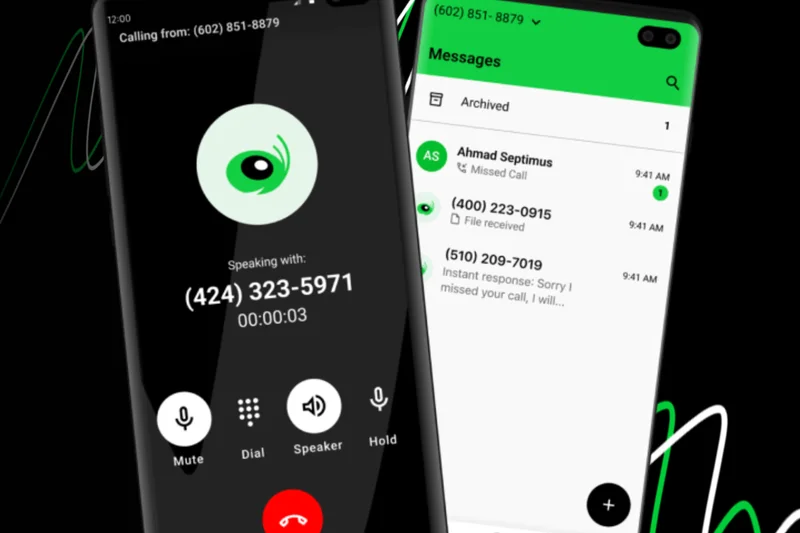
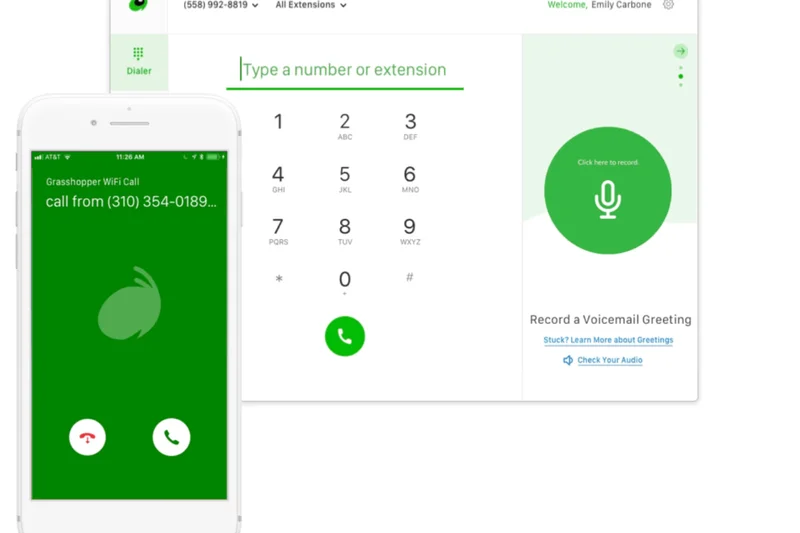
Why we picked it: Grasshopper helped invent the virtual phone system category, allowing small businesses to keep personal numbers private while offering custom automated greetings. However, it has fallen behind modern competitors, lacking native integrations, advanced routing, and a modern interface. It still works reliably for what it is, but offers less value than newer alternatives.
Key Specs
- Keeps personal phone numbers private
- Custom automated greetings
- Voicemail transcription
- Wi-Fi calling capabilities
What we like
- Easy way to separate business and personal calls
- Recognizable, trusted brand name
- Simple automated greetings
- Reliable voicemail transcription
What we don't like
- Interface is highly outdated
- Overpriced compared to modern competitors like OpenPhone
Best for: Micro-businesses who want a recognizable brand for a simple virtual number routing to their cell phone.
Considering Grasshopper vs OpenPhone? OpenPhone is cheaper, significantly more modern, and offers team collaboration, making Grasshopper a tough sell.
A classic virtual phone system that reliably forwards calls, but feels stuck in the past.
Buy at Grasshopper official siteBuying Guide
Understanding the Modern Business Phone System Landscape
The days of on-premise PBX hardware closeted away in a telecom room are mostly behind us. Today's market is dominated by Cloud VoIP (Voice over Internet Protocol) and UCaaS (Unified Communications as a Service). Choosing the right platform depends entirely on the size of your team, your call volume, and how tightly you need voice communications integrated with your other software tools like your CRM.
Choosing by User Type
Micro-Businesses & Solopreneurs: If you're a team of 1-5 people, you don't need a heavy enterprise platform. Look for virtual phone systems that operate as apps on your existing smartphones. Prioritize platforms that allow you to keep personal numbers private, offer simple custom greetings, and support business SMS. Affordability and ease of use are paramount here.
Small to Midsize Businesses (SMBs): SMBs require a balance. You need multi-level IVR (Interactive Voice Response) to route calls to the right departments, ring groups for sales or support teams, and reliable mobile and desktop softphones for hybrid workers. Native CRM integrations (like Salesforce or HubSpot) become highly valuable at this stage to log calls automatically and provide screen-pops with customer data before you even answer the phone.
Enterprise & High Call Volume: Large deployments and call centers demand platforms with 99.999% uptime SLAs, global data center presence, and advanced routing (skills-based routing, predictive dialing). Security is non-negotiable; look for end-to-end encryption, SOC 2 compliance, and HIPAA certifications if applicable. Comprehensive analytics and workforce management tools are also crucial for optimizing team performance and tracking KPIs.
What to Avoid
When shopping for a business phone system, beware of providers that gatekeep fundamental features. Some budget options will advertise a rock-bottom monthly rate but charge per minute for domestic calling, or force you into an expensive premium tier just to access basic voicemail-to-text or auto-attendant features. Always calculate the Total Cost of Ownership (TCO). Additionally, avoid platforms that lack a documented uptime SLA; "best effort" reliability is simply not acceptable for business-critical communications.
Budget Tiers Explained
Entry-Level ($10 - $15 per user/month): These plans usually include unlimited domestic calling, basic call routing, and a softphone app. They are excellent for startups but often lack video conferencing and deep software integrations.
Mid-Tier ($20 - $35 per user/month): The sweet spot for most businesses. At this price point, you unlock multi-level IVRs, CRM integrations, call recording, and team messaging. Many providers also include video conferencing with high participant limits.
Enterprise / Contact Center ($50+ per user/month): These premium plans offer omnichannel support (voice, email, chat, SMS, social), AI-powered sentiment analysis, real-time coaching, custom API access, and dedicated implementation managers.
FAQ
What is a business phone system?
A business phone system is a communication network—often cloud-based software today—that allows voice and video communication between employees and customers. Unlike a standard home line, it offers professional routing features like auto-attendants (IVRs), call queues, voicemail-to-text, and software integrations.
What is the difference between VoIP and a traditional PBX?
Traditional PBX (Private Branch Exchange) systems run on physical copper lines and require expensive hardware cabinets stored on-premise. VoIP (Voice over Internet Protocol) systems transmit calls digitally over the internet, requiring no on-premise hardware other than internet-connected devices like IP phones or computers.
What is UCaaS?
UCaaS stands for Unified Communications as a Service. It is a cloud delivery model that combines multiple communication channels—voice calling, video conferencing, team messaging, and SMS—into a single software platform.
How much does a typical business phone system cost in 2026?
Basic virtual phone apps start around $10–$15 per user/month. Mid-tier systems with CRM integrations and video conferencing typically cost $20–$35 per user/month. Enterprise contact center software with advanced AI routing can cost upwards of $75 to $150 per user/month.
Do I need to buy special physical phones for a VoIP system?
No. Modern VoIP and UCaaS platforms provide 'softphones'—software applications that run on your existing desktop computers, laptops, and smartphones. However, if you prefer physical desk phones, you can purchase VoIP-compatible IP phones from brands like Poly or Yealink.
Can I keep my current business phone number?
Yes. The FCC mandates that you can port your existing local or toll-free numbers to a new provider. The porting process usually takes between 5 to 14 business days, during which your old service will remain active to prevent downtime.
What is an auto-attendant or IVR?
An auto-attendant (or Interactive Voice Response) is a virtual receptionist that greets callers with a recorded message and presents routing options (e.g., 'Press 1 for Sales, Press 2 for Support'). This ensures calls reach the right department without needing a human receptionist.
How important is a 99.999% uptime SLA?
A 99.999% (Five Nines) SLA guarantees that the system will experience no more than 5.26 minutes of downtime per year. For enterprise contact centers and sales floors where dropped calls directly equal lost revenue, this level of guaranteed reliability is critical.
Do these systems integrate with Salesforce or HubSpot?
Most mid-tier and enterprise platforms (like Dialpad, RingCentral, and Aircall) offer native integrations with major CRMs. These integrations automatically log calls, match caller IDs to contact records, and provide screen-pops with customer history when the phone rings.
Are business phone systems secure and HIPAA compliant?
Top-tier providers offer end-to-end encryption (TLS/SRTP) and adhere to strict security frameworks like SOC 2. Several providers, such as Phone.com and RingCentral, offer specific configurations and Business Associate Agreements (BAAs) to ensure full HIPAA compliance for healthcare providers.
What kind of internet connection is required for VoIP?
VoIP requires a stable broadband connection. While a single voice call only uses about 100 kbps up/down, you need low latency and low jitter. A wired Ethernet connection is recommended for desk phones, though modern mobile softphones handle Wi-Fi and 5G connections very well.
What is conversational AI in a phone system?
Conversational AI, like the technology used in Dialpad Ai Voice, actively listens to phone calls to provide real-time transcriptions, flag action items, analyze customer sentiment, and generate automated post-call summaries, saving agents significant manual data entry time.
Methodology
Our evaluation methodology for the Best Business Phone Systems of 2026 leverages the M2 framework, a rigorous, data-driven approach designed to eliminate subjectivity. We analyzed 35 VoIP and UCaaS platforms across seven weighted dimensions:
- Core Call Features & Routing (20%): We assessed standard VoIP functionality, penalizing providers that restricted essential tools like multi-level IVR, call routing, and auto-attendants to premium tiers.
- Call Quality & Reliability (20%): We verified uptime SLAs (looking for guaranteed 99.999% uptime), global data center architecture, and proprietary network optimizations that prevent latency and jitter.
- Unified Comms & Integrations (15%): We evaluated native integrations with major CRMs (Salesforce, HubSpot) and Helpdesks, as well as the inclusion of video meetings and team chat.
- Ease of Use & Administration (15%): We tested the intuitive design of softphone apps and the administrative portal, favoring systems that allow non-technical managers to easily configure call flows and add users.
- Value for Money & Pricing (15%): We calculated the true total cost of ownership, accounting for subscription costs, hidden per-minute fees, and the overall feature-to-price ratio.
- Customer Support & Onboarding (10%): We measured the availability and responsiveness of technical support, preferring vendors with 24/7 live assistance and dedicated onboarding resources.
- Security & Compliance (5%): We checked for baseline legal and enterprise requirements, including end-to-end encryption, HIPAA/SOC 2 compliance, and fraud prevention protocols.
After calculating dimension scores, we applied distinct weighting models to create scenario-specific rankings. For instance, the "Best Overall for SMBs" scenario heavily weights Call Features and Reliability, while the "Best for Budget-Conscious Micro-Businesses" scenario prioritizes Value (35%) and Usability (20%). This multi-dimensional approach ensures that our final recommendations are highly accurate and contextualized for different operational needs.
Sources & References
All factual claims, product specifications, prices, and images in this article are cited by number. Click any reference to jump to the list; click the link in each entry to visit the original source.
- [1]SelectionLogic. "M2 Multi-Dimensional Evaluation Methodology." selectionlogic.org. Accessed Mar 2026.
- [2]SelectionLogic. "Business Phone Systems & UCaaS Buying Guide 2026." selectionlogic.org. Accessed Mar 2026.
- [3]Dialpad. "Dialpad Ai Voice Features and Specifications." dialpad.com. Accessed Mar 2026.
- [4]Zoom. "Zoom Phone Architecture and Compliance." zoom.com. Accessed Mar 2026.
- [5]Talkdesk. "Talkdesk CX Cloud Enterprise Contact Center." talkdesk.com. Accessed Mar 2026.
- [6]Cisco Webex. "Cloud Calling Security and Reliability." webex.com. Accessed Mar 2026.
- [7]RingCentral. "RingEX Platform Integrations." ringcentral.com. Accessed Mar 2026.
- [8]OpenPhone. "Collaborative Business Phone Features." openphone.com. Accessed Mar 2026.
- [9]Microsoft. "Microsoft Teams Phone Global Connectivity." microsoft.com. Accessed Mar 2026.
- [10]Nextiva. "Business Phone Service and CRM Integration." nextiva.com. Accessed Mar 2026.
- [11]Aircall. "Cloud Call Center and Helpdesk Integrations." aircall.io. Accessed Mar 2026.
- [12]CloudTalk. "AI Call Center and Predictive Dialer." cloudtalk.io. Accessed Mar 2026.
- [13]8x8. "X Series Global UCaaS Capabilities." 8x8.com. Accessed Mar 2026.
- [14]JustCall. "AI-Powered VoIP and SMS Automation." justcall.io. Accessed Mar 2026.
- [15]Twilio. "Twilio Flex Programmable Contact Center." twilio.com. Accessed Mar 2026.
- [16]GoTo. "GoTo Connect Cloud PBX Features." goto.com. Accessed Mar 2026.
- [17]Vonage. "Unified Communications Reliability." vonage.com. Accessed Mar 2026.
- [18]Kixie. "PowerCall Sales Dialer Specs." kixie.com. Accessed Mar 2026.
- [19]CallRail. "Lead Center Marketing Attribution." callrail.com. Accessed Mar 2026.
- [20]Avaya. "Experience Platform Hybrid Cloud Architecture." avaya.com. Accessed Mar 2026.
- [21]Weave. "Medical and Dental Communications Platform." getweave.com. Accessed Mar 2026.
- [22]Aloware. "Contact Center Unlimited Calling Model." aloware.com. Accessed Mar 2026.
- [23]3CX. "SMB PBX and Simultaneous Call Pricing." 3cx.com. Accessed Mar 2026.
- [24]Ooma. "Office VoIP for Small Business." ooma.com. Accessed Mar 2026.
- [25]Google Workspace. "Google Voice Enterprise Features." workspace.google.com. Accessed Mar 2026.