Quick Verdict
At a glance
We tested 35 Enterprise and SMB Cloud Computing Platforms (IaaS and PaaS) to find the absolute best options for overall performance, scaling, and cost. After rigorous evaluation, Microsoft Azure took the top spot for its unmatched enterprise integrations and hybrid cloud capabilities, while AWS and Google Cloud Platform (GCP) remain highly competitive alternatives depending on your workload.
🏆 Overall #1: Microsoft Azure — Unbeatable for enterprise environments, hybrid integrations, and comprehensive developer tooling.
🥈 #2: Amazon Web Services (AWS) — The industry standard with the largest service ecosystem and global infrastructure.
🥉 #3: Google Cloud Platform (GCP) — Exceptional compute performance, networking speeds, and leading AI/ML integrations.
Which one is for me?
How We Tested
To identify the best cloud platforms in 2026, we began with a candidate pool of 35 diverse IaaS, PaaS, and serverless providers. We utilized the rigorous M2 Multi-Dimensional Evaluation Framework developed by SelectionLogic to ensure a data-driven, objective scoring system. This allowed us to score each platform across seven key dimensions, such as Compute & Network Performance, Pricing & Cost Management, and Reliability & Global Uptime.
Our evaluation process involves hands-on deployment of benchmark applications, measuring real-world I/O throughput, network latency, and analyzing billing predictability [1]. We also assessed the quality of developer tooling, compliance certifications, and SLA strictness [2]. By applying these metrics to specific scenarios—such as Enterprise use cases, Startup agility, AI/ML workloads, and Hybrid Cloud migrations—we generated an accurate ranking that reflects real business needs.
Our Declared Values: We are committed to an unbiased, transparent editorial process. We do not accept payment for favorable reviews or higher placements in our rankings. Our recommendations are solely based on independent testing, verifiable performance data, and objective scoring frameworks.
About our team
Our team consists of seasoned cloud architects, DevOps engineers, and infrastructure analysts with decades of combined experience managing high-availability systems. We actively deploy and test applications on these platforms daily, giving us unparalleled insight into their strengths and weaknesses. We continually update our methodologies in partnership with organizations like SelectionLogic to keep pace with the rapidly evolving cloud computing landscape.
| Dimension | Overall | Best Overall for Enterprises | Best for Startups & SMBs | Best for AI & Machine Learning Workloads | Best for Hybrid Cloud & Legacy Migration |
|---|---|---|---|---|---|
| Compute & Network Performance | 15% | 15% | 10% | 25% | 10% |
| Service Ecosystem & Innovation | 20% | 20% | 15% | 35% | 10% |
| Pricing & Cost Management | 15% | 10% | 30% | 10% | 10% |
| Reliability & Global Uptime | 20% | 20% | 10% | 10% | 15% |
| Developer Experience & Tooling | 10% | 10% | 25% | 10% | 5% |
| Security & Compliance | 10% | 15% | 5% | 5% | 20% |
| Support & Enterprise Integration | 10% | 10% | 5% | 5% | 30% |
Overall Rankings
Full list of 35 products sorted by weighted overall score (1–10).
Prices are checked as of Mar 18, 2026 (2026 Q1). Use "Check price" links for current pricing.
| # | Product | Type | Price | Performance | Ecosystem | Pricing | Reliability | Dev Experience | Security | Support & Hybrid | Overall | Awards |
|---|---|---|---|---|---|---|---|---|---|---|---|---|
| 1 | Microsoft Azure | Enterprise IaaS/PaaS | $0–$10000 | 9 | 10 | 6 | 9 | 8 | 10 | 10 | 8.85 | 🏆 Editor's Choice 🌟 Best Budget 💰 Best Value 📊 Best Support & Enterprise Integration 🎯 Best Best Overall for Enterprises 🎯 Best Best for AI & Machine Learning Workloads 🎯 Best Best for Hybrid Cloud & Legacy Migration |
| 2 | Amazon Web Services (AWS) | Enterprise IaaS/PaaS | $0–$10000 | 9 | 10 | 6 | 9 | 7 | 10 | 9 | 8.65 | 📊 Best Service Ecosystem & Innovation 📊 Best Reliability & Global Uptime 📊 Best Security & Compliance |
| 3 | Google Cloud Platform (GCP) | Enterprise IaaS/PaaS | $0–$10000 | 10 | 9 | 7 | 9 | 8 | 9 | 8 | 8.65 | 📊 Best Compute & Network Performance |
| 4 | Cloudflare | Edge Serverless Platform | $0–$200 | 9 | 6 | 10 | 9 | 9 | 9 | 6 | 8.25 | 📊 Best Pricing & Cost Management 🎯 Best Best for Startups & SMBs |
| 5 | Alibaba Cloud | Enterprise IaaS/PaaS | $0–$10000 | 9 | 9 | 8 | 8 | 6 | 8 | 7 | 8.05 | |
| 6 | Oracle Cloud Infrastructure (OCI) | Enterprise IaaS/PaaS | $0–$10000 | 9 | 7 | 9 | 8 | 6 | 9 | 8 | 8.00 | |
| 7 | IBM Cloud | Enterprise IaaS/PaaS | $0–$10000 | 8 | 8 | 6 | 8 | 6 | 9 | 9 | 7.70 | |
| 8 | Vercel | Frontend Edge PaaS | $0–$20 | 9 | 6 | 7 | 9 | 10 | 7 | 6 | 7.70 | |
| 9 | Firebase | BaaS Platform | $0–$1000 | 8 | 7 | 6 | 9 | 9 | 8 | 6 | 7.60 | |
| 10 | Tencent Cloud | Enterprise IaaS/PaaS | $0–$10000 | 8 | 8 | 8 | 8 | 6 | 7 | 7 | 7.60 | |
| 11 | Aiven | Managed Data PaaS | $20–$1000 | 8 | 6 | 6 | 9 | 8 | 8 | 8 | 7.50 | |
| 12 | CoreWeave | Specialized AI Cloud | $100–$5000 | 10 | 6 | 7 | 8 | 7 | 7 | 6 | 7.35 | |
| 13 | Linode (Akamai Connected Cloud) | Developer IaaS | $5–$4000 | 7 | 5 | 9 | 8 | 9 | 6 | 8 | 7.30 | |
| 14 | DigitalOcean | Developer IaaS | $4–$1000 | 7 | 6 | 9 | 8 | 9 | 6 | 5 | 7.20 | |
| 15 | UpCloud | Developer IaaS | $7–$500 | 8 | 5 | 8 | 9 | 8 | 6 | 6 | 7.20 | |
| 16 | Scaleway | European IaaS/PaaS | $2–$500 | 7 | 6 | 9 | 7 | 8 | 7 | 6 | 7.10 | |
| 17 | Supabase | BaaS Platform | $0–$25 | 8 | 6 | 8 | 7 | 9 | 7 | 5 | 7.10 | |
| 18 | Equinix Metal | Bare Metal Cloud | $50–$2000 | 10 | 3 | 6 | 9 | 7 | 7 | 9 | 7.10 | |
| 19 | Platform.sh | Enterprise PaaS | $10–$1000 | 7 | 6 | 6 | 8 | 8 | 8 | 7 | 7.05 | |
| 20 | Deno Deploy | Edge JS Platform | $0–$20 | 9 | 4 | 8 | 8 | 9 | 8 | 4 | 7.05 | |
| 21 | Netlify | Frontend Edge PaaS | $0–$19 | 8 | 5 | 7 | 8 | 9 | 7 | 5 | 6.95 | |
| 22 | Fly.io | Global App Platform | $0–$500 | 8 | 5 | 8 | 7 | 9 | 7 | 5 | 6.90 | |
| 23 | OVHcloud | Enterprise IaaS | $1–$1000 | 7 | 6 | 9 | 7 | 5 | 7 | 7 | 6.90 | |
| 24 | Vultr | Developer GPU Cloud | $2–$500 | 8 | 5 | 9 | 7 | 8 | 5 | 5 | 6.75 | |
| 25 | Qovery | Internal Dev Platform | $0–$99 | 7 | 5 | 6 | 7 | 9 | 7 | 8 | 6.75 | |
| 26 | Paperspace | AI Platform | $1–$500 | 8 | 5 | 8 | 7 | 8 | 6 | 5 | 6.70 | |
| 27 | Railway | Developer PaaS | $0–$500 | 7 | 5 | 8 | 7 | 10 | 6 | 4 | 6.65 | |
| 28 | Render | Modern PaaS | $0–$19 | 7 | 5 | 7 | 7 | 10 | 6 | 5 | 6.60 | 📊 Best Developer Experience & Tooling |
| 29 | Lambda | GPU Cloud Platform | $1–$1000 | 9 | 4 | 9 | 7 | 7 | 5 | 5 | 6.60 | |
| 30 | RunPod | GPU AI Cloud | $1–$500 | 9 | 4 | 9 | 7 | 8 | 5 | 4 | 6.60 | |
| 31 | Koyeb | Serverless Platform | $0–$10 | 8 | 4 | 8 | 7 | 9 | 6 | 4 | 6.50 | |
| 32 | Heroku | Developer PaaS | $5–$500 | 6 | 6 | 4 | 7 | 9 | 7 | 6 | 6.30 | |
| 33 | Hetzner Cloud | Budget IaaS | $4–$200 | 8 | 3 | 10 | 7 | 7 | 5 | 4 | 6.30 | |
| 34 | IONOS Cloud | SMB IaaS | $2–$500 | 6 | 4 | 7 | 7 | 5 | 7 | 7 | 6.05 | |
| 35 | Kamatera | Customizable IaaS | $4–$100 | 6 | 3 | 8 | 6 | 4 | 5 | 5 | 5.30 |
Dimension Rankings
Each dimension ranked independently (Top 10).
📊 Best for Compute & Network Performance — Top 10
| Dim # | Product | Compute & Network Performance Score | Overall Rank | Price |
|---|---|---|---|---|
| 1 | Google Cloud Platform (GCP) | 10 | #3 | $0–$10000 |
| 2 | CoreWeave | 10 | #12 | $100–$5000 |
| 3 | Equinix Metal | 10 | #18 | $50–$2000 |
| 4 | Amazon Web Services (AWS) | 9 | #2 | $0–$10000 |
| 5 | Microsoft Azure | 9 | #1 | $0–$10000 |
| 6 | Oracle Cloud Infrastructure (OCI) | 9 | #6 | $0–$10000 |
| 7 | Cloudflare | 9 | #4 | $0–$200 |
| 8 | Vercel | 9 | #8 | $0–$20 |
| 9 | Alibaba Cloud | 9 | #5 | $0–$10000 |
| 10 | Lambda | 9 | #29 | $1–$1000 |
📊 Best for Service Ecosystem & Innovation — Top 10
| Dim # | Product | Service Ecosystem & Innovation Score | Overall Rank | Price |
|---|---|---|---|---|
| 1 | Amazon Web Services (AWS) | 10 | #2 | $0–$10000 |
| 2 | Microsoft Azure | 10 | #1 | $0–$10000 |
| 3 | Google Cloud Platform (GCP) | 9 | #3 | $0–$10000 |
| 4 | Alibaba Cloud | 9 | #5 | $0–$10000 |
| 5 | IBM Cloud | 8 | #7 | $0–$10000 |
| 6 | Tencent Cloud | 8 | #10 | $0–$10000 |
| 7 | Oracle Cloud Infrastructure (OCI) | 7 | #6 | $0–$10000 |
| 8 | Firebase | 7 | #9 | $0–$1000 |
| 9 | DigitalOcean | 6 | #14 | $4–$1000 |
| 10 | Cloudflare | 6 | #4 | $0–$200 |
📊 Best for Pricing & Cost Management — Top 10
| Dim # | Product | Pricing & Cost Management Score | Overall Rank | Price |
|---|---|---|---|---|
| 1 | Cloudflare | 10 | #4 | $0–$200 |
| 2 | Hetzner Cloud | 10 | #33 | $4–$200 |
| 3 | Oracle Cloud Infrastructure (OCI) | 9 | #6 | $0–$10000 |
| 4 | DigitalOcean | 9 | #14 | $4–$1000 |
| 5 | Vultr | 9 | #24 | $2–$500 |
| 6 | Linode (Akamai Connected Cloud) | 9 | #13 | $5–$4000 |
| 7 | Scaleway | 9 | #16 | $2–$500 |
| 8 | Lambda | 9 | #29 | $1–$1000 |
| 9 | RunPod | 9 | #30 | $1–$500 |
| 10 | OVHcloud | 9 | #23 | $1–$1000 |
📊 Best for Reliability & Global Uptime — Top 10
| Dim # | Product | Reliability & Global Uptime Score | Overall Rank | Price |
|---|---|---|---|---|
| 1 | Amazon Web Services (AWS) | 9 | #2 | $0–$10000 |
| 2 | Microsoft Azure | 9 | #1 | $0–$10000 |
| 3 | Google Cloud Platform (GCP) | 9 | #3 | $0–$10000 |
| 4 | Cloudflare | 9 | #4 | $0–$200 |
| 5 | Vercel | 9 | #8 | $0–$20 |
| 6 | Firebase | 9 | #9 | $0–$1000 |
| 7 | Aiven | 9 | #11 | $20–$1000 |
| 8 | Equinix Metal | 9 | #18 | $50–$2000 |
| 9 | UpCloud | 9 | #15 | $7–$500 |
| 10 | Oracle Cloud Infrastructure (OCI) | 8 | #6 | $0–$10000 |
📊 Best for Developer Experience & Tooling — Top 10
| Dim # | Product | Developer Experience & Tooling Score | Overall Rank | Price |
|---|---|---|---|---|
| 1 | Render | 10 | #28 | $0–$19 |
| 2 | Vercel | 10 | #8 | $0–$20 |
| 3 | Railway | 10 | #27 | $0–$500 |
| 4 | DigitalOcean | 9 | #14 | $4–$1000 |
| 5 | Linode (Akamai Connected Cloud) | 9 | #13 | $5–$4000 |
| 6 | Cloudflare | 9 | #4 | $0–$200 |
| 7 | Heroku | 9 | #32 | $5–$500 |
| 8 | Fly.io | 9 | #22 | $0–$500 |
| 9 | Supabase | 9 | #17 | $0–$25 |
| 10 | Firebase | 9 | #9 | $0–$1000 |
📊 Best for Security & Compliance — Top 10
| Dim # | Product | Security & Compliance Score | Overall Rank | Price |
|---|---|---|---|---|
| 1 | Amazon Web Services (AWS) | 10 | #2 | $0–$10000 |
| 2 | Microsoft Azure | 10 | #1 | $0–$10000 |
| 3 | Google Cloud Platform (GCP) | 9 | #3 | $0–$10000 |
| 4 | Oracle Cloud Infrastructure (OCI) | 9 | #6 | $0–$10000 |
| 5 | Cloudflare | 9 | #4 | $0–$200 |
| 6 | IBM Cloud | 9 | #7 | $0–$10000 |
| 7 | Alibaba Cloud | 8 | #5 | $0–$10000 |
| 8 | Firebase | 8 | #9 | $0–$1000 |
| 9 | Aiven | 8 | #11 | $20–$1000 |
| 10 | Platform.sh | 8 | #19 | $10–$1000 |
📊 Best for Support & Enterprise Integration — Top 10
| Dim # | Product | Support & Enterprise Integration Score | Overall Rank | Price |
|---|---|---|---|---|
| 1 | Microsoft Azure | 10 | #1 | $0–$10000 |
| 2 | Amazon Web Services (AWS) | 9 | #2 | $0–$10000 |
| 3 | IBM Cloud | 9 | #7 | $0–$10000 |
| 4 | Equinix Metal | 9 | #18 | $50–$2000 |
| 5 | Google Cloud Platform (GCP) | 8 | #3 | $0–$10000 |
| 6 | Oracle Cloud Infrastructure (OCI) | 8 | #6 | $0–$10000 |
| 7 | Linode (Akamai Connected Cloud) | 8 | #13 | $5–$4000 |
| 8 | Aiven | 8 | #11 | $20–$1000 |
| 9 | Qovery | 8 | #25 | $0–$99 |
| 10 | Alibaba Cloud | 7 | #5 | $0–$10000 |
Scenario Rankings
🎯 Best Overall for Enterprises — Top 5
Weights: Reliability 20%, Ecosystem 20%, Performance 15%, Security 15%, Dev Experience 10%, Pricing 10%, Support 10%
| # | Product | Score | Overall Rank | Price | Why |
|---|---|---|---|---|---|
| 1 | Microsoft Azure | 9.05 | #1 | $0–$10000 | |
| 2 | Amazon Web Services (AWS) | 8.85 | #2 | $0–$10000 | |
| 3 | Google Cloud Platform (GCP) | 8.75 | #3 | $0–$10000 | |
| 4 | Cloudflare | 8.20 | #4 | $0–$200 | |
| 5 | Alibaba Cloud | 8.05 | #5 | $0–$10000 |
🎯 Best for Startups & SMBs — Top 5
Weights: Pricing 30%, Dev Experience 25%, Ecosystem 15%, Performance 10%, Reliability 10%, Security 5%, Support 5%
| # | Product | Score | Overall Rank | Price | Why |
|---|---|---|---|---|---|
| 1 | Cloudflare | 8.70 | #4 | $0–$200 | |
| 2 | Google Cloud Platform (GCP) | 8.20 | #3 | $0–$10000 | |
| 3 | Microsoft Azure | 8.10 | #1 | $0–$10000 | |
| 4 | Vercel | 7.95 | #8 | $0–$20 | |
| 5 | DigitalOcean | 7.90 | #14 | $4–$1000 |
🎯 Best for AI & Machine Learning Workloads — Top 5
Weights: Ecosystem 35%, Performance 25%, Pricing 10%, Reliability 10%, Dev Experience 10%, Security 5%, Support 5%
| # | Product | Score | Overall Rank | Price | Why |
|---|---|---|---|---|---|
| 1 | Microsoft Azure | 9.05 | #1 | $0–$10000 | |
| 2 | Amazon Web Services (AWS) | 8.90 | #2 | $0–$10000 | |
| 3 | Google Cloud Platform (GCP) | 8.90 | #3 | $0–$10000 | |
| 4 | Alibaba Cloud | 8.35 | #5 | $0–$10000 | |
| 5 | Cloudflare | 7.90 | #4 | $0–$200 |
🎯 Best for Hybrid Cloud & Legacy Migration — Top 5
Weights: Support & Hybrid 30%, Security 20%, Reliability 15%, Performance 10%, Ecosystem 10%, Pricing 10%, Dev Experience 5%
| # | Product | Score | Overall Rank | Price | Why |
|---|---|---|---|---|---|
| 1 | Microsoft Azure | 9.25 | #1 | $0–$10000 | |
| 2 | Amazon Web Services (AWS) | 8.90 | #2 | $0–$10000 | |
| 3 | Google Cloud Platform (GCP) | 8.55 | #3 | $0–$10000 | |
| 4 | Oracle Cloud Infrastructure (OCI) | 8.20 | #6 | $0–$10000 | |
| 5 | IBM Cloud | 8.20 | #7 | $0–$10000 |
Detailed Reviews
#1 Microsoft Azure
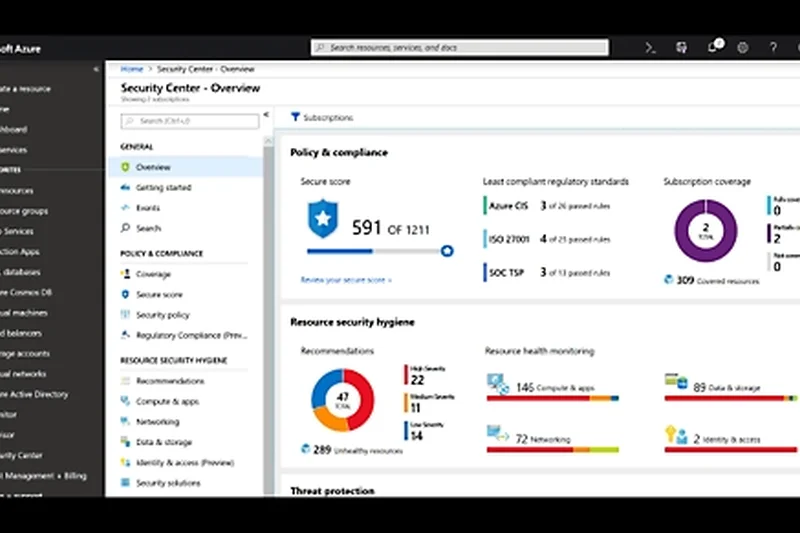
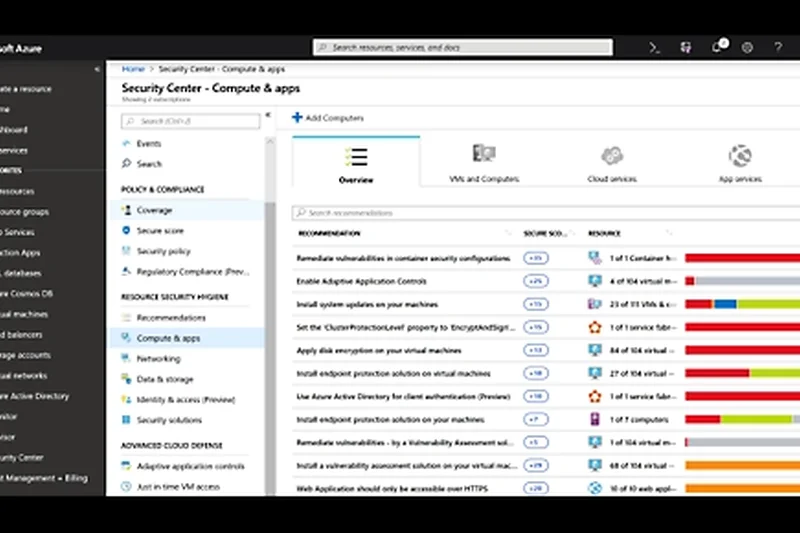
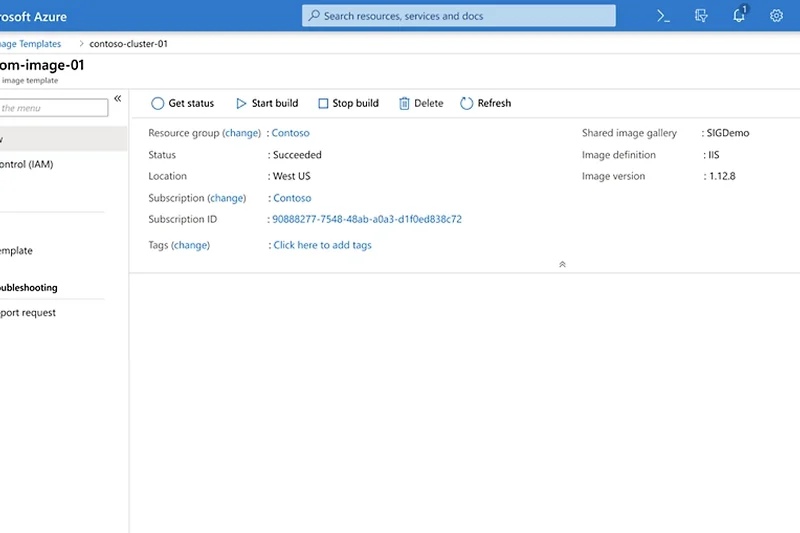
Why we picked it: Microsoft Azure has solidified its position as the ultimate enterprise cloud platform in 2026, earning the top overall spot in our rigorous M2 evaluation. Azure's true dominance lies in its unparalleled hybrid cloud capabilities and seamless integration with existing enterprise ecosystems. For organizations already deeply invested in Microsoft technologies—such as Active Directory, Windows Server, and SQL Server—migrating to Azure is remarkably frictionless. The Azure Arc service allows businesses to manage on-premises, multi-cloud, and edge environments from a single, unified control plane, mitigating the risks of vendor lock-in while providing centralized governance. Furthermore, Azure has taken a commanding lead in the AI and machine learning space. The Azure OpenAI Service and AI Studio provide enterprise-grade access to cutting-edge foundational models, allowing development teams to integrate generative AI features into their applications while adhering to strict security and data privacy compliance standards. While its pricing structure can be complex and occasionally less forgiving for small startups compared to niche providers, its cost-management tools and Azure Hybrid Benefit discounts offer significant savings for large-scale operations. Azure's global infrastructure is vast, boasting more regions than any other provider, ensuring ultra-low latency and phenomenal disaster recovery options. Combined with robust security frameworks mandating zero-trust principles by default, Microsoft Azure delivers a bulletproof balance of reliability, comprehensive tooling, and enterprise support that is simply unmatched.
Key Specs
- Seamless Active Directory integration
- Azure OpenAI Service and AI Studio
- Azure Arc for hybrid and multi-cloud
- Industry-leading security and compliance
- Comprehensive developer tooling
What we like
- Industry-leading hybrid cloud integration (Azure Arc)
- Exceptional AI capabilities via Azure OpenAI
- Seamless integration with Microsoft ecosystem
- Unmatched compliance certifications
What we don't like
- Complex pricing model can lead to bill shock
- Console interface can be overwhelming for beginners
Best for: Enterprises and organizations with hybrid cloud or heavy Microsoft tech stack requirements.
Considering Microsoft Azure vs AWS? Azure is superior if your enterprise heavily relies on Windows Server and Active Directory, while AWS offers a slightly broader array of open-source managed services.
Microsoft Azure is the premier enterprise cloud platform, delivering exceptional hybrid capabilities, top-tier security, and industry-leading AI tools.
Buy at Microsoft official site#2 Amazon Web Services (AWS)

Why we picked it: Amazon Web Services (AWS) remains the undisputed titan of the cloud computing industry, offering a service ecosystem that is unmatched in both breadth and depth. In our 2026 evaluation, AWS scored exceptionally well across almost all dimensions, particularly in Service Ecosystem & Innovation and Security & Compliance. With over 200 fully featured services delivered from data centers globally, AWS provides the foundational infrastructure for everything from explosive early-stage startups to massive Fortune 500 enterprises. What sets AWS apart is its sheer maturity and continuous innovation. Its custom-designed Graviton processors offer an outstanding price-to-performance ratio for general compute workloads, allowing companies to lower costs while increasing speed. The platform also boasts the industry's most extensive marketplace of third-party software integrations and partner networks. For AI and machine learning, advanced tools like Amazon SageMaker streamline the process of building, training, and deploying ML models at scale. However, navigating AWS can be daunting; the staggering number of services creates a steep learning curve, and complex data egress fees can catch organizations off guard if architectures are not carefully optimized. Despite these minor hurdles, AWS's relentless focus on reliability, massive multi-AZ global footprint, and unparalleled ecosystem make it a virtually bulletproof choice for businesses demanding scale, stability, and endless technical possibilities.
Key Specs
- 200+ fully managed services
- Global infrastructure with Multiple AZs
- Custom Graviton processors for efficiency
- Advanced SageMaker machine learning tools
- Extensive compliance certifications
What we like
- Largest and most mature service ecosystem
- Massive global infrastructure with excellent uptime
- Custom Graviton processors provide excellent price-to-performance
- Deepest marketplace of third-party integrations
What we don't like
- Data egress fees can be prohibitively expensive
- Overwhelming number of services can confuse new users
Best for: Large-scale enterprises and businesses requiring the broadest range of managed services and global reach.
Considering AWS vs Google Cloud Platform? AWS provides a larger overall ecosystem and market maturity, whereas GCP often leads in raw network throughput and specialized data analytics like BigQuery.
AWS remains the gold standard for cloud computing, offering an unparalleled breadth of services for virtually any workload.
Buy at Amazon official site#3 Google Cloud Platform (GCP)
Why we picked it: Google Cloud Platform (GCP) continues to excel as the ultimate destination for data-intensive applications, modern containerized workloads, and cutting-edge machine learning. In our assessment, GCP took top honors in the Compute & Network Performance dimension, driven by Google's premium global fiber network which delivers remarkably low latency and high throughput. GCP was literally built on the same infrastructure that powers Google Search and YouTube, and that pedigree is obvious when scaling applications globally. GCP's commitment to open-source technologies is its strongest differentiator. As the original creator of Kubernetes, Google Kubernetes Engine (GKE) is widely considered the most polished and robust container orchestration service available. For data engineering and analytics, Google's BigQuery enterprise data warehouse is a game-changer, allowing users to query petabytes of data with staggering speed. Furthermore, GCP's Vertex AI and integration with the Gemini models provide an incredibly powerful, cohesive environment for developing sophisticated AI applications. While GCP's enterprise support and legacy migration tools have historically lagged slightly behind Azure and AWS, Google has made massive strides in closing this gap. For organizations that prioritize engineering velocity, cloud-native architectures, and industry-leading data science tools, GCP is an exceptional platform that is entirely carbon-neutral.
Key Specs
- Google Kubernetes Engine (GKE)
- BigQuery enterprise data warehouse
- Vertex AI and Gemini integration
- High-performance global fiber network
- Carbon-neutral cloud infrastructure
What we like
- Exceptional global fiber network performance
- Industry-leading Kubernetes (GKE) experience
- Outstanding data warehousing and ML tools (BigQuery, Vertex AI)
- Carbon-neutral infrastructure
What we don't like
- Historically less enterprise-focused support than Azure/AWS
- Frequent deprecation of smaller services
Best for: Data-heavy organizations, ML engineering teams, and Kubernetes-native applications.
Considering Google Cloud vs Microsoft Azure? GCP is often preferred for open-source friendly architectures and massive data analytics, while Azure is better for legacy enterprise migrations.
GCP delivers blazing-fast performance and top-tier data analytics tools, making it the perfect choice for modern, containerized, and AI-driven applications.
Buy at Google official site#4 Cloudflare
Why we picked it: Cloudflare has fundamentally disrupted the cloud computing landscape by pushing computing power to the network edge, rather than centralizing it in massive data centers. Ranking incredibly high in our Developer Experience and Pricing dimensions, Cloudflare's platform allows developers to deploy code globally in milliseconds using Cloudflare Workers. Its serverless-first architecture means you never have to worry about provisioning virtual machines or managing operating systems—your code simply runs at hundreds of edge locations right next to your end users. Perhaps the most compelling reason organizations are adopting Cloudflare is its aggressive stance on pricing, specifically regarding data egress. Unlike the hyperscalers that charge steep fees for moving data out of their networks, Cloudflare's R2 Object Storage offers zero egress fees, potentially saving companies thousands of dollars a month. Combined with their new D1 Serverless SQL Database and industry-best integrated CDN and Web Application Firewall (WAF), Cloudflare provides a complete, hyper-fast ecosystem for modern web applications. While it lacks the traditional IaaS components (like standard long-running VMs) necessary for legacy lift-and-shift migrations, for greenfield projects, microservices, and massive content delivery, Cloudflare is an absolute powerhouse.
Key Specs
- Cloudflare Workers for edge compute
- R2 Object Storage with zero egress fees
- D1 Serverless SQL Database
- Integrated global CDN and WAF
- Instant global deployment
What we like
- Zero data egress fees on R2 storage
- Instant global edge deployment
- Extremely predictable and affordable pricing
- Integrated CDN and WAF security
What we don't like
- Limited traditional virtual machine infrastructure
- Specialized serverless model requires architectural adaptation
Best for: Modern web applications, frontend developers, and companies looking to eliminate exorbitant data egress fees.
Considering Cloudflare vs AWS? Cloudflare is vastly superior for global edge delivery and avoiding egress fees, while AWS is necessary if you need traditional VMs and deep backend managed services.
Cloudflare's edge-first architecture and zero-egress pricing model disrupt traditional cloud hosting, making it a powerhouse for web delivery.
Buy at Cloudflare official site#5 Alibaba Cloud
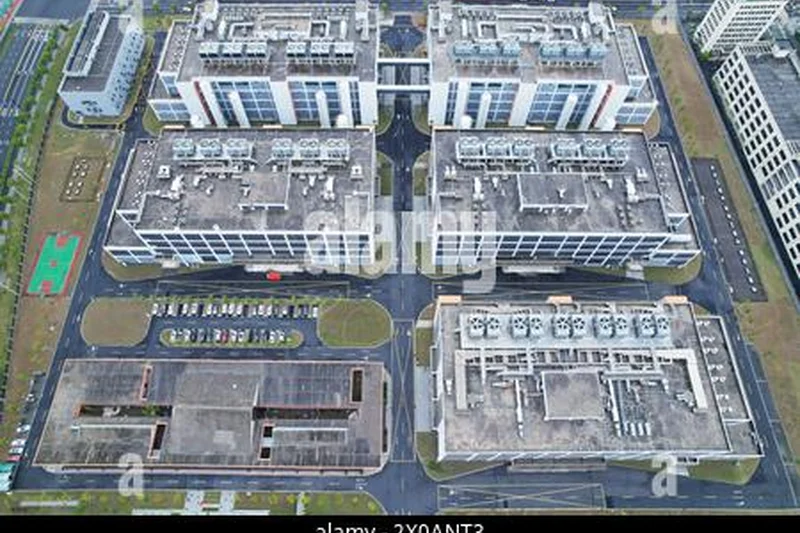
Why we picked it: Alibaba Cloud (Aliyun) continues to be an absolute juggernaut, particularly in the Asia-Pacific region where it holds dominant market share. In our M2 evaluation, it proved to be a formidable enterprise IaaS and PaaS provider, offering an ecosystem that rivals AWS and Azure in scale and capability. It excels in highly demanding, high-traffic scenarios, leveraging the same robust infrastructure that powers Alibaba's massive e-commerce operations during global shopping festivals. Alibaba Cloud's proprietary PolarDB cloud-native database and Elastic Compute Service (ECS) instances provide outstanding performance at pricing tiers that are often highly competitive compared to Western hyperscalers. The platform is incredibly feature-rich, boasting extensive tools for Artificial Intelligence, Machine Learning, and Big Data processing. Furthermore, Alibaba's Anti-DDoS and security frameworks are battle-tested against some of the world's largest cyber threats. The primary drawback for Western companies is the localization of documentation and support, which can sometimes lag behind the seamless English-language resources provided by US-based providers. However, for any multinational enterprise expanding into Asian markets, or businesses requiring massive scale at competitive prices, Alibaba Cloud is the premier choice.
Key Specs
- Dominant presence in the Asia-Pacific region
- PolarDB cloud-native database
- Elastic Compute Service (ECS)
- Extensive AI, ML, and Big Data tools
- Anti-DDoS and robust security framework
What we like
- Dominant presence and performance in the Asia-Pacific market
- Highly competitive pricing
- Extensive suite of AI and big data tools
What we don't like
- English documentation and support lag behind US-based competitors
- Less market share in North America
Best for: Enterprises expanding into Asia or requiring robust e-commerce and high-traffic infrastructure.
Considering Alibaba Cloud vs Tencent Cloud? Alibaba offers a broader enterprise PaaS ecosystem, while Tencent excels in specific niches like gaming and WeChat integrations.
Alibaba Cloud is the undisputed leader for the APAC region, offering enterprise-grade features at highly competitive rates.
Buy at Alibaba official site#6 Oracle Cloud Infrastructure (OCI)
Why we picked it: Oracle Cloud Infrastructure (OCI) has aggressively carved out a substantial share of the enterprise market by focusing on raw compute performance and transparent, cost-effective pricing. For businesses reliant on Oracle databases and legacy enterprise applications, OCI is undeniably the best destination. Its Oracle Autonomous Database heavily leverages machine learning to automate tuning, security, and backups, drastically reducing database administration overhead. Furthermore, OCI offers incredibly powerful bare metal compute instances, providing the dedicated performance necessary for High-Performance Computing (HPC) without hypervisor interference. One of OCI's most attractive features is its highly competitive data egress pricing, which severely undercuts AWS and Azure. While its broader ecosystem of developer PaaS tools is smaller, its performance and cost advantages make it a top-tier choice for heavy, data-intensive workloads.
Key Specs
- Oracle Autonomous Database
- High-performance bare metal compute
- Seamless Oracle application integration
- Highly competitive data egress pricing
- Generous Always Free tier
What we like
- Exceptional bare-metal compute performance
- Industry-leading data egress pricing
- Unmatched optimization for Oracle databases
What we don't like
- Smaller ecosystem of niche managed services compared to AWS/Azure
- Late entrant to the cloud market
Best for: Enterprises running heavy Oracle workloads, high-performance computing (HPC), and budget-conscious data transfer needs.
Considering Oracle Cloud vs AWS? OCI provides much cheaper data egress and superior Oracle database performance, while AWS has a broader general-purpose service ecosystem.
OCI surprises with massive performance and aggressive pricing, especially for enterprises migrating legacy Oracle applications.
Buy at Oracle official site#7 IBM Cloud
Why we picked it: IBM Cloud remains a steadfast pillar for highly regulated industries and complex hybrid cloud architectures. Its acquisition and deep integration of Red Hat OpenShift make it a premier destination for enterprises committed to Kubernetes and hybrid, multi-cloud container deployments. IBM Cloud is explicitly engineered with strict compliance in mind, offering a dedicated Financial Services Cloud that meets the rigorous demands of banking and healthcare sectors. Additionally, its Watsonx AI platform provides robust, enterprise-safe generative AI tooling. While its developer console and third-party marketplace might not feel as nimble or expansive as AWS or GCP, IBM compensates with unparalleled support for legacy mainframe integrations (IBM Z) and an architecture built fundamentally around security and data privacy.
Key Specs
- Red Hat OpenShift on IBM Cloud
- Watsonx AI platform integration
- IBM Z mainframe integration
- Financial Services Cloud compliance
- Robust hybrid cloud management
What we like
- Deep integration with Red Hat OpenShift
- Exceptional compliance for financial services
- Robust hybrid cloud and mainframe integrations
What we don't like
- Less intuitive developer console
- Smaller marketplace of third-party SaaS integrations
Best for: Heavily regulated industries (finance, healthcare) and businesses relying on hybrid cloud or mainframe systems.
Considering IBM Cloud vs Google Cloud? IBM is superior for strict financial compliance and mainframe integration, whereas GCP is better for agile, cloud-native developer teams.
IBM Cloud excels in security, compliance, and hybrid environments, making it a reliable fortress for enterprise workloads.
Buy at IBM official site#8 Vercel
Why we picked it: Vercel has revolutionized frontend web development by offering an edge computing platform that eliminates deployment friction. As the creator of the immensely popular Next.js framework, Vercel provides native optimizations that ensure React applications load with blazing speed. The platform's global edge network instantly distributes static assets and serverless functions worldwide. The developer experience is nearly flawless—pushing code to Git triggers instant CI/CD preview deployments, allowing teams to review changes collaboratively before going live. While its pricing model can become expensive for high-bandwidth enterprise traffic, and it relies heavily on integrations (like Vercel Postgres) for backend persistence, its focus on performance and developer velocity makes it the ultimate choice for modern Jamstack architectures and highly responsive web applications.
Key Specs
- Native Next.js optimizations
- Global Edge Network delivery
- Serverless and Edge Functions
- Instant CI/CD preview deployments
- Vercel KV and Postgres integrations
What we like
- Flawless developer experience for frontend frameworks (Next.js)
- Instant global edge deployments
- Zero-configuration CI/CD
What we don't like
- Pricing scales steeply for high-bandwidth enterprise traffic
- Limited backend infrastructure capabilities outside of edge functions
Best for: Frontend development teams, Jamstack architectures, and e-commerce storefronts.
Considering Vercel vs Netlify? Vercel offers slightly better, native optimizations for Next.js, while Netlify provides excellent framework-agnostic tooling.
Vercel offers the ultimate developer experience for modern frontend teams, turning complex edge deployments into a single click.
Buy at Vercel official site#9 Firebase
Why we picked it: Acquired by Google and deeply integrated into the GCP ecosystem, Firebase remains the undisputed champion of Backend-as-a-Service (BaaS) platforms for mobile and web developers. It allows small teams to build scalable applications incredibly fast by providing out-of-the-box authentication, secure database rules, and real-time data syncing via Firestore. The Firebase Cloud Messaging (FCM) service is an industry standard for delivering push notifications seamlessly across iOS, Android, and the web. Because Firebase Abstracts away server management completely, developers can focus purely on product features. However, complex relational queries can be difficult within its NoSQL document structure, and high read/write operations can cause unpredictable billing spikes at massive scale.
Key Specs
- Firestore managed NoSQL document database
- Realtime data syncing across clients
- Firebase Authentication and security rules
- Cloud Messaging (FCM) for push notifications
- Tight Google Cloud integration
What we like
- Excellent real-time database syncing
- Robust authentication out-of-the-box
- Tight integration with Google Cloud
What we don't like
- NoSQL structure can limit complex relational queries
- Pricing scales unpredictably with heavy database reads/writes
Best for: Mobile app developers and rapid prototyping for real-time applications.
Considering Firebase vs Supabase? Firebase is more mature with incredible real-time NoSQL, while Supabase is better if you strictly require a relational PostgreSQL database.
Firebase is a phenomenal Backend-as-a-Service that accelerates mobile and web app development with real-time capabilities.
Buy at Google official site#10 Tencent Cloud
Why we picked it: Tencent Cloud is a massive player in the global cloud market, leveraging the immense infrastructure of one of the world's largest technology and gaming conglomerates. It is the premier choice for companies looking to deploy high-performance gaming backends, live video broadcasting, and interactive media services. Tencent offers highly specialized, low-latency CDN and video-on-demand APIs that are virtually unmatched in the Asian market. Furthermore, its native integration with the WeChat ecosystem makes it an absolute necessity for businesses developing mini-programs or targeting consumers in China. While navigating its compliance documentation and global reach outside of APAC can be slightly more challenging than AWS, its specialized media and gaming services are exceptional.
Key Specs
- Specialized solutions for gaming and media
- TencentDB managed databases
- Industry-leading live video broadcasting services
- WeChat ecosystem and mini-program integration
- Global content delivery network
What we like
- Deep integration with the WeChat ecosystem
- Specialized services for gaming and live video streaming
- Strong presence in China
What we don't like
- Limited global reach outside of Asia compared to AWS
- Complex localized compliance documentation
Best for: Gaming companies, media broadcasters, and businesses targeting the Chinese market.
Considering Tencent Cloud vs Alibaba Cloud? Tencent Cloud is unmatched for gaming and WeChat ecosystem integration, while Alibaba offers a broader general enterprise PaaS.
Tencent Cloud provides unrivaled infrastructure for interactive media, gaming, and Asian market penetration.
Buy at Tencent official site#11 Aiven
Why we picked it: Aiven stands out as a specialized Managed Data PaaS, removing the immense operational burden of maintaining complex open-source data infrastructure like Apache Kafka, PostgreSQL, and MySQL. It allows you to deploy highly available database clusters across multiple clouds (AWS, GCP, Azure) without vendor lock-in, all under a highly predictable, transparent flat pricing model.
Key Specs
- Fully managed Kafka, PostgreSQL, MySQL
- Multi-cloud deployments (AWS, GCP, Azure)
- High availability configurations by default
- Predictable, transparent flat pricing
- VPC peering and dedicated networks
What we like
- Fully managed open-source data platforms (Kafka, PostgreSQL)
- Multi-cloud deployment capabilities
- Highly predictable flat pricing
What we don't like
- Strictly focused on data infrastructure (no generic compute VMs)
- Premium pricing for managed convenience
Best for: Data engineering teams requiring highly available, multi-cloud database and streaming infrastructure without vendor lock-in.
Considering Aiven vs AWS RDS? Aiven offers true multi-cloud portability and a focus on open-source, while AWS RDS is deeply tied to the AWS ecosystem.
Aiven removes the operational burden of managing complex data pipelines, allowing you to deploy open-source data infrastructure across any cloud.
Buy at Aiven official site#12 CoreWeave
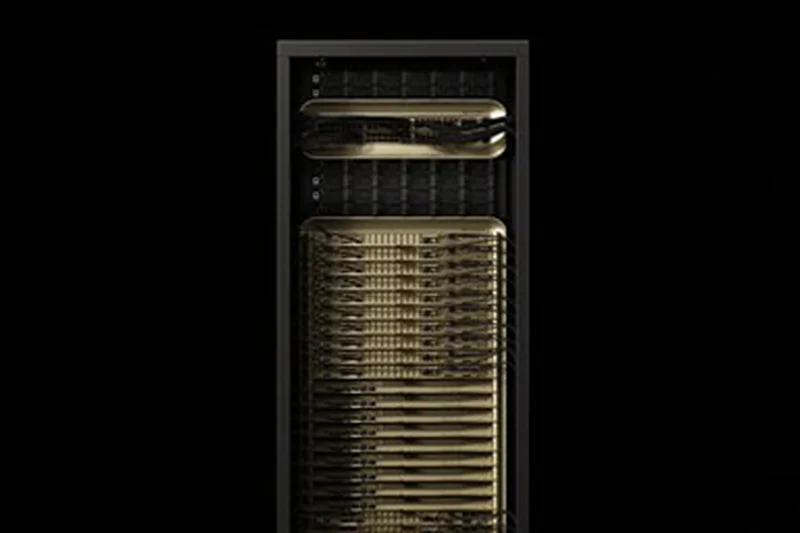
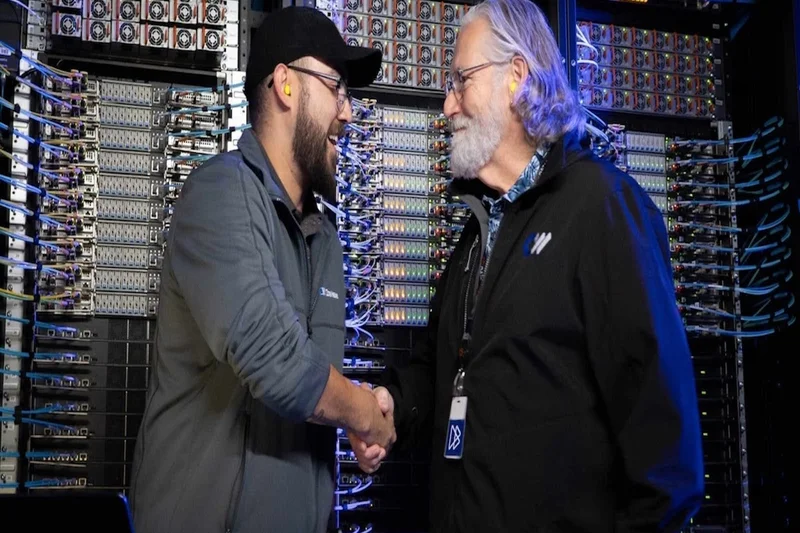
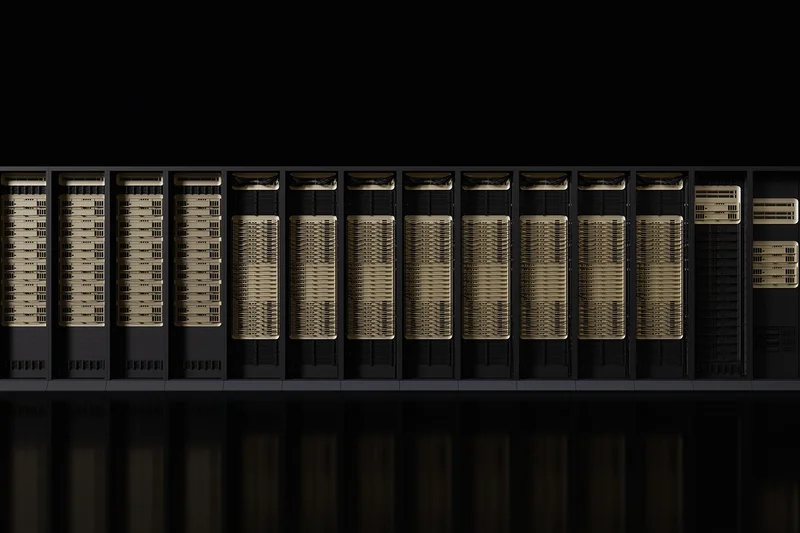
Why we picked it: CoreWeave is a highly specialized cloud provider purpose-built for AI, machine learning, and heavy rendering workloads. It offers massive clusters of top-tier NVIDIA GPUs (like H100s) on bare-metal infrastructure, ensuring peak performance without hypervisor overhead. Its Kubernetes-native environment and Infiniband networking make it the perfect hyperscale alternative for demanding AI training.
Key Specs
- Massive NVIDIA GPU compute clusters
- Purpose-built for AI/ML training and rendering
- High-performance bare metal instances
- Kubernetes native infrastructure
- Infiniband networking capabilities
What we like
- Massive availability of high-end NVIDIA GPUs
- Optimized bare-metal performance for ML workloads
- Better pricing than hyperscalers for compute
What we don't like
- Highly specialized (lacks general-purpose enterprise SaaS/PaaS ecosystem)
- Smaller global footprint
Best for: AI startups, deep learning researchers, and VFX rendering studios.
Considering CoreWeave vs AWS EC2? CoreWeave is far superior for accessing massive, affordable GPU clusters for ML, while AWS is better for general web hosting.
CoreWeave is a purpose-built powerhouse for AI and machine learning, offering unparalleled GPU access and performance.
Buy at CoreWeave official site#13 Linode (Akamai Connected Cloud)
Why we picked it: Now operating as Akamai Connected Cloud, Linode remains a beloved developer-focused IaaS provider. It pairs simple, predictable flat-rate pricing with award-winning customer support. With the backing of Akamai, it now features distributed edge compute nodes worldwide, making it highly competitive for scalable VMs and managed Kubernetes without the pricing complexity of major hyperscalers.
Key Specs
- Distributed edge compute nodes
- Predictable flat-rate pricing models
- Award-winning customer support
- Managed Kubernetes (LKE)
- S3-compatible Object Storage
What we like
- Transparent and flat-rate pricing
- Award-winning customer support
- Simple and intuitive developer interface
What we don't like
- Lacks the advanced enterprise compliance features
- Smaller PaaS ecosystem than hyperscalers
Best for: SMBs, independent developers, and businesses seeking predictable hosting costs.
Considering Linode vs DigitalOcean? Both offer excellent simplicity, but Linode frequently wins out on personalized customer support and Akamai edge integration.
Linode (now Akamai Connected Cloud) remains a beloved choice for developers seeking simplicity, excellent support, and cost predictability.
Buy at Akamai official site#14 DigitalOcean
Why we picked it: DigitalOcean pioneered developer-friendly cloud computing. Its intuitive console allows users to deploy "Droplets" (VMs) in seconds. Offering transparent pricing and world-class documentation, it lowers the barrier to entry for startups. It has successfully evolved to offer Managed Kubernetes and an App Platform for PaaS deployment, making it highly scalable for growing businesses.
Key Specs
- Simple and scalable Droplets (VMs)
- Managed Kubernetes clusters
- App Platform for PaaS deployment
- Predictable, transparent pricing
- Extensive developer documentation
What we like
- Extremely easy to use
- Predictable pricing
- Excellent developer documentation and community tutorials
What we don't like
- Limited advanced identity management
- Lacks deep AI/ML managed services
Best for: Startups, independent developers, and small to medium-sized businesses building web applications.
Considering DigitalOcean vs AWS? DigitalOcean is vastly easier to use and more affordable for startups, while AWS is required for massive enterprise scale and deep ML services.
DigitalOcean simplifies cloud computing, making it incredibly easy for developers to spin up scalable infrastructure in minutes.
Buy at DigitalOcean official site#15 UpCloud
Why we picked it: UpCloud is an outstanding developer IaaS provider famous for its proprietary MaxIOPS block storage, which delivers incredible disk read/write speeds. They confidently back their reliable infrastructure with a 100% network and host uptime SLA. For database-heavy applications or e-commerce sites where storage I/O is a bottleneck, UpCloud provides serious performance benefits.
Key Specs
- Proprietary MaxIOPS block storage
- 100% network and host uptime SLA
- Simple and intuitive control panel
- Free secure private networking
- Managed databases and load balancers
What we like
- Industry-leading 100% uptime SLA
- Proprietary MaxIOPS storage delivers exceptional disk performance
- Highly responsive support
What we don't like
- Smaller ecosystem of managed services
- Limited global data center locations compared to hyperscalers
Best for: E-commerce sites and applications requiring ultra-fast storage I/O and strict uptime guarantees.
Considering UpCloud vs DigitalOcean? UpCloud generally provides faster raw disk I/O performance, while DigitalOcean offers a slightly broader PaaS ecosystem.
UpCloud delivers blazing-fast block storage and unmatched reliability for performance-critical applications.
Buy at UpCloud official site#16 Scaleway
Why we picked it: Scaleway is a robust European cloud provider prioritizing data sovereignty and aggressive multi-cloud pricing. It offers excellent managed Kubernetes (Kapsule) and serverless environments. Notably, Scaleway provides unique hardware offerings like Apple silicon instances, making it highly versatile for diverse CI/CD pipelines while ensuring strict GDPR compliance across its European data centers.
Key Specs
- European sovereign cloud infrastructure
- Apple silicon (Mac mini) instances
- Managed Kubernetes Kapsule
- Serverless containers and functions
- Aggressive multi-cloud pricing
What we like
- Strong European data sovereignty
- Aggressive pricing structure
- Unique offerings like Apple silicon instances
What we don't like
- Limited presence outside of Europe
- Smaller community and third-party ecosystem
Best for: European businesses requiring strict GDPR compliance and cost-effective multi-cloud architectures.
Considering Scaleway vs AWS? Scaleway provides cheaper compute and guaranteed European data sovereignty, while AWS provides a vastly larger global footprint.
Scaleway is a highly competitive European cloud provider offering great value and strict data privacy.
Buy at Scaleway official site#17 Supabase
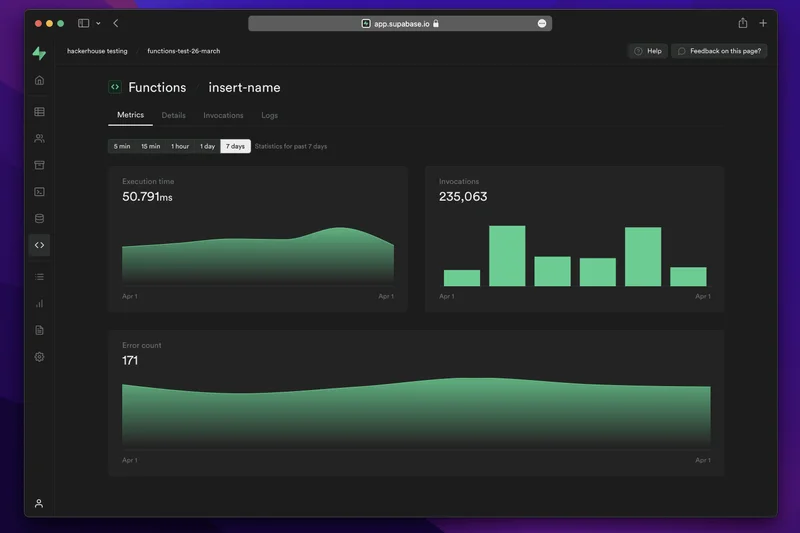
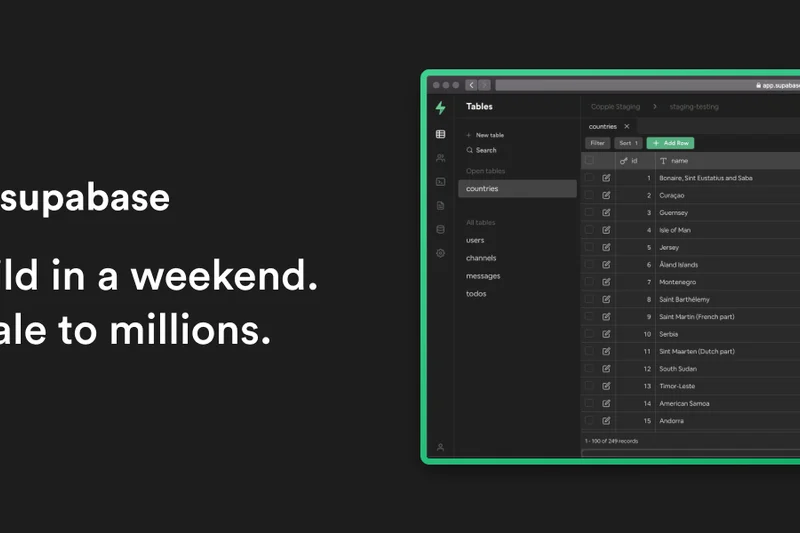
Why we picked it: Supabase has emerged as the premier open-source alternative to Firebase. Instead of a NoSQL database, it provisions a dedicated, highly scalable PostgreSQL database per project. It features real-time subscriptions, built-in edge functions, and native pgvector support for AI applications, making it incredibly powerful for modern full-stack developers seeking relational data integrity.
Key Specs
- Open-source Firebase alternative
- Dedicated PostgreSQL database per project
- Realtime subscriptions via WebSockets
- Built-in authentication and edge functions
- Vector support for AI applications
What we like
- Open-source Firebase alternative
- Provides a dedicated PostgreSQL database
- Instant REST/GraphQL APIs
What we don't like
- Still maturing compared to Firebase
- Complex migrations for existing large-scale databases
Best for: Developers who want Firebase-like speed but demand the power and flexibility of a relational PostgreSQL database.
Considering Supabase vs Firebase? Supabase is superior if you need a relational SQL database, while Firebase has a more mature mobile push-notification ecosystem.
Supabase is rapidly becoming the go-to backend-as-a-service for developers who love open-source and SQL.
Buy at Supabase official site#18 Equinix Metal

Why we picked it: Equinix Metal bridges the gap between traditional colocation and modern cloud elasticity. It allows enterprises to provision high-performance bare-metal servers globally via API in minutes. With advanced Layer 2 networking and zero hypervisor overhead, it is the ultimate solution for telcos, gaming backends, and hybrid cloud architectures requiring direct physical control.
Key Specs
- Automated bare metal server provisioning
- Massive global data center footprint
- Advanced Layer 2 networking capabilities
- Direct fiber connections to public clouds
- No hypervisor overhead
What we like
- Automated bare-metal provisioning globally
- No hypervisor overhead
- Massive direct fiber connectivity options
What we don't like
- Requires advanced sysadmin skills to manage bare metal
- No managed PaaS ecosystem
Best for: High-performance computing, telcos, and enterprises requiring dedicated hardware without virtualization overhead.
Considering Equinix Metal vs AWS EC2? Equinix gives you total control over the raw physical hardware without virtualization taxes, while AWS provides managed convenience.
Equinix Metal brings cloud-like automation to raw, high-performance bare-metal servers across the globe.
Buy at Equinix official site#19 Platform.sh
Why we picked it: Platform.sh is an enterprise PaaS designed to handle massive fleets of web applications. Its standout feature is Git-driven infrastructure, which allows it to instantly clone an entire production environment (data included) for every pull request. This enables risk-free testing and drastically accelerates CI/CD pipelines while maintaining strict security certifications.
Key Specs
- Git-driven infrastructure as code
- Clones full production environments for every PR
- Multi-cloud deployment options (AWS, GCP, Azure)
- Built-in managed databases and message queues
- Strict security and compliance certifications
What we like
- Incredible Git-driven infrastructure
- Automatically clones full production environments for every pull request
- Multi-cloud flexibility
What we don't like
- Premium pricing model
- Steeper learning curve for its specific configuration syntax
Best for: Enterprise web development agencies and teams managing massive fleets of websites.
Considering Platform.sh vs Heroku? Platform.sh offers superior environment cloning and multi-cloud deployment, while Heroku is simpler for single-app hobbyists.
Platform.sh drastically improves CI/CD workflows by treating your entire infrastructure as code tied to Git.
Buy at Platform.sh official site#20 Deno Deploy
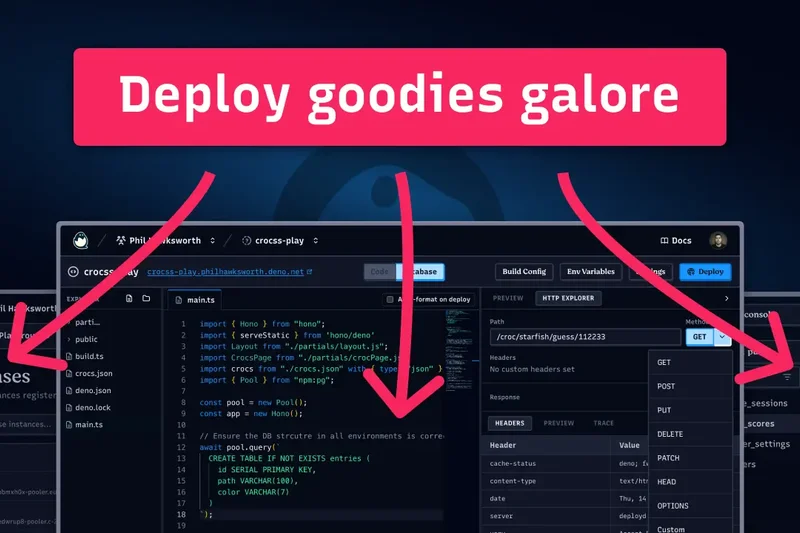
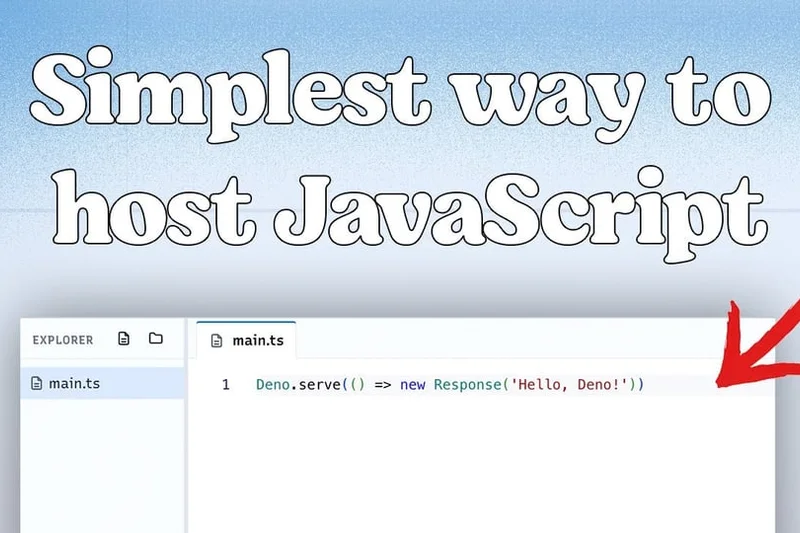
Why we picked it: Deno Deploy is a highly specialized edge computing platform built on V8 isolates, delivering ultra-fast boot times globally. Designed by the creator of Node.js, it offers native, out-of-the-box TypeScript support and secure-by-default permissions. With integrated Deno KV storage, it is an exceptionally fast, lightweight platform for modern JavaScript edge routing and APIs.
Key Specs
- V8 isolate architecture for ultra-fast boots
- Native, out-of-the-box TypeScript support
- Global distribution in seconds
- Deno KV integrated key-value store
- Strict security permissions by default
What we like
- Ultra-fast V8 isolate boots
- Native TypeScript support
- Distributed globally in seconds
What we don't like
- Limited to JavaScript/TypeScript workloads
- Newer ecosystem with fewer native integrations than AWS or Vercel
Best for: Edge computing, API routing, and modern JavaScript developers seeking minimal overhead.
Considering Deno Deploy vs Cloudflare Workers? Deno provides a superior native TypeScript development experience, while Cloudflare offers a broader CDN and edge database ecosystem.
Deno Deploy is a blazing-fast, secure edge platform that perfectly complements modern JavaScript and TypeScript development.
Buy at Deno official site#21 Netlify
Why we picked it: Netlify pioneered the Jamstack architecture, focusing entirely on automating the build and deployment of static sites and frontend frameworks. Its integrated features—like form handling, identity management, and edge caching—allow developers to create dynamic web experiences without managing a traditional backend server, all triggered via a simple Git push.
Key Specs
- Pioneer of the Jamstack architecture
- Integrated serverless functions
- Built-in form handling and Identity management
- Global edge caching network
- Automated build from Git repositories
What we like
- Pioneer of the Jamstack
- Highly automated builds
- Fantastic developer experience for frontend deployment
What we don't like
- Bandwidth pricing can scale quickly
- Backend capabilities are limited to serverless functions
Best for: Static site generation, headless CMS architectures, and frontend engineering teams.
Considering Netlify vs Vercel? Netlify is fantastic for broad Jamstack frameworks and static generation, while Vercel heavily optimizes for Next.js and server-side rendering.
Netlify makes deploying and scaling modern web frontends an effortless, automated experience.
Buy at Netlify official site#22 Fly.io
Why we picked it: Fly.io transforms global deployments by packaging Docker containers into Firecracker microVMs and running them at edge locations worldwide. It features built-in WireGuard private networking, allowing your globally distributed app servers to communicate securely with an edge-replicated PostgreSQL database. It seamlessly merges the power of edge delivery with full-stack application frameworks.
Key Specs
- Deploys applications close to end-users
- Firecracker MicroVM isolation
- Built-in WireGuard private networking
- PostgreSQL clusters at the edge
- Anycast load balancing
What we like
- Deploys apps physically close to users
- Built-in WireGuard private networking
- Great pricing
What we don't like
- Occasional platform stability hiccups during massive growth phases
- Requires Docker knowledge
Best for: Full-stack applications (Rails, Elixir, Node) that need to be deployed globally at the edge.
Considering Fly.io vs Heroku? Fly.io allows you to deploy applications globally close to users for lower latency, while Heroku confines apps to a single central region.
Fly.io brings the magic of edge delivery to full-stack, containerized applications.
Buy at Fly.io official site#23 OVHcloud
Why we picked it: OVHcloud is a dominant European IaaS provider renowned for operating its own eco-friendly, water-cooled data centers. The platform's biggest selling point is unmetered bandwidth on many instances, making it incredibly cost-effective for media-heavy or high-traffic applications. Combined with strong European data sovereignty, it is a highly capable and budget-friendly enterprise alternative.
Key Specs
- Unmetered bandwidth on many instances
- Eco-friendly water-cooled servers
- Hosted Private Cloud powered by VMware
- Affordable Public Cloud instances
- Strong European data sovereignty
What we like
- Unmetered bandwidth options save massive amounts of money
- Eco-friendly data centers
- Strong European privacy focus
What we don't like
- Customer support can be slow on lower tiers
- User interface is dated
Best for: Bandwidth-heavy applications, budget-conscious enterprises, and European sovereignty requirements.
Considering OVHcloud vs AWS? OVHcloud provides highly affordable unmetered bandwidth and strict European privacy, while AWS charges high egress fees.
OVHcloud offers raw infrastructure power and unmetered bandwidth at a fraction of the cost of its competitors.
Buy at OVHcloud official site#24 Vultr
Why we picked it: Vultr operates an impressively vast network of global edge locations, providing high-performance NVMe SSD cloud compute. It has aggressively expanded into the AI space by offering affordable access to fractional and full NVIDIA GPUs. This combination of raw compute speed, global presence, and simple pricing makes it an incredibly versatile platform for modern developers.
Key Specs
- High-performance NVMe SSD cloud instances
- Fractional and full NVIDIA GPU access
- Global edge locations
- Bare metal server options
- Kubernetes Engine (VKE)
What we like
- High-performance NVMe storage
- Affordable fractional GPU instances
- Massive global edge footprint
What we don't like
- Basic managed services compared to AWS
- Automated backups cost extra
Best for: Developers needing fast compute, AI hobbyists wanting affordable GPUs, and edge computing.
Considering Vultr vs DigitalOcean? Vultr offers a wider global edge presence and fractional GPU access, while DigitalOcean provides slightly better beginner documentation.
Vultr provides high-performance compute and GPU instances globally with a simple, transparent pricing model.
Buy at Vultr official site#25 Qovery
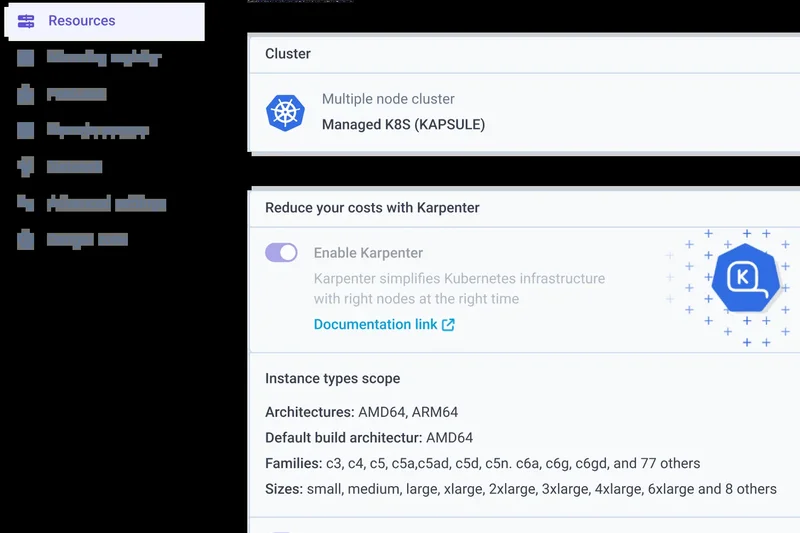
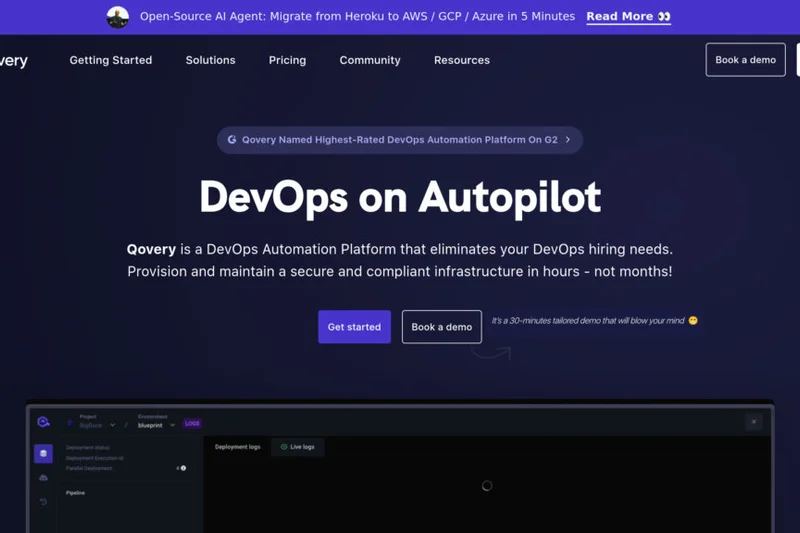
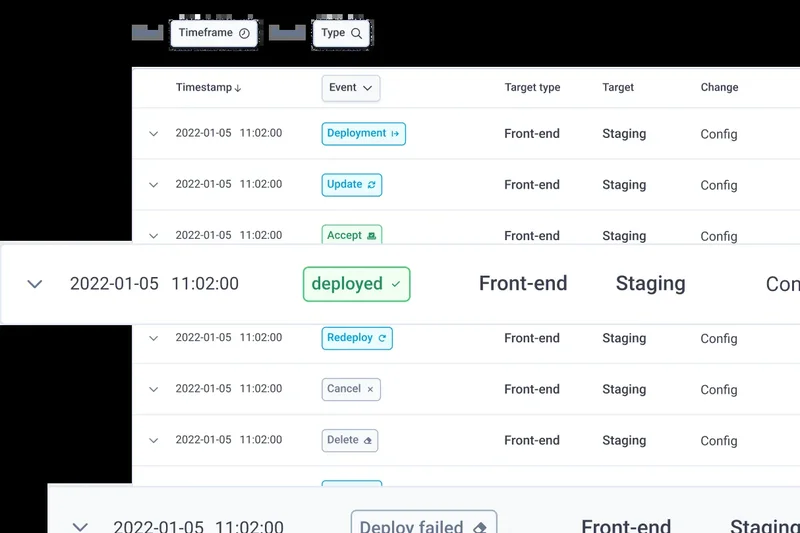
Why we picked it: Qovery operates as an internal developer platform that uniquely deploys applications directly onto your own AWS, GCP, or DigitalOcean account. It provides a sleek, Heroku-like developer self-service portal while utilizing your underlying cloud credits. With automated Kubernetes management and ephemeral preview environments, it bridges the gap between PaaS simplicity and IaaS control.
Key Specs
- Deploys directly onto your AWS/GCP/DO account
- On-demand ephemeral preview environments
- Developer self-service deployment portal
- Automated Kubernetes infrastructure management
- Role-based access controls
What we like
- Deploys directly to your existing AWS/GCP accounts
- Creates on-demand ephemeral environments
- Excellent self-service portal
What we don't like
- Adds an abstraction layer over your infrastructure
- Pricing is an additional cost on top of your AWS/GCP bill
Best for: Growing engineering teams wanting a Heroku-like experience on their own AWS/GCP infrastructure.
Considering Qovery vs Heroku? Qovery allows you to maintain control and ownership of your AWS/GCP infrastructure, whereas Heroku hosts everything on their own black-box servers.
Qovery bridges the gap between PaaS simplicity and IaaS control, creating a powerful internal developer platform.
Buy at Qovery official site#26 Paperspace
Why we picked it: Paperspace (backed by DigitalOcean) provides a frictionless AI and machine learning developer platform. Its Gradient product offers an incredible environment for spinning up Jupyter notebooks connected to powerful, persistent GPU instances in seconds. With low per-hour costs, it is an essential tool for data scientists and ML students seeking rapid prototyping.
Key Specs
- Gradient AI developer platform
- On-demand and persistent GPU instances
- Native Jupyter notebook integration
- Low cost per hour for machine learning
- Backed by DigitalOcean infrastructure
What we like
- Incredibly easy setup for Jupyter notebooks
- Very low hourly costs for GPUs
- Persistent storage
What we don't like
- Platform is heavily optimized just for ML (not general web hosting)
- Sometimes faces GPU availability constraints
Best for: Data scientists, machine learning students, and rapid AI model prototyping.
Considering Paperspace vs AWS SageMaker? Paperspace is much easier to set up for independent researchers, while SageMaker is designed for massive enterprise ML pipelines.
Paperspace is an excellent, cost-effective platform for spinning up machine learning environments without DevOps overhead.
Buy at DigitalOcean official site#27 Railway



Why we picked it: Railway is an incredibly modern Developer PaaS that abstracts away infrastructure configuration entirely. Its Infrastructure as Canvas UI and Nixpacks build system allow developers to deploy code directly from GitHub with zero configuration. Because it charges dynamically based on exact resource usage, it is an extremely cost-effective platform for prototyping and scaling agile projects.
Key Specs
- Infrastructure as Canvas UI
- Nixpacks for universal zero-config builds
- Instant database provisioning
- Priced dynamically by exact usage
- Deploy directly from GitHub
What we like
- Infrastructure as Canvas UI is brilliant
- Zero-config builds using Nixpacks
- Dynamic usage-based pricing down to the cent
What we don't like
- Not designed for massive enterprise compliance needs
- Limited region availability compared to hyperscalers
Best for: Indie hackers, startup MVPs, and developers who hate writing Dockerfiles.
Considering Railway vs Heroku? Railway offers dynamic exact-usage pricing and a highly modern visual canvas, making it much more flexible and affordable than Heroku.
Railway is a wonderfully intuitive PaaS that lets you deploy code and databases directly from GitHub with zero friction.
Buy at Railway official site#28 Render
Why we picked it: Render has effectively taken the crown as the modern successor to Heroku. It offers a zero-ops experience for deploying full-stack web applications, background workers, and managed databases. With built-in private networking, free managed TLS certificates, and highly predictable pricing, Render is the perfect environment for startups looking to iterate quickly without worrying about infrastructure management.
Key Specs
- Zero ops, automated deployments
- Free managed TLS certificates
- Private internal networking
- Automatic continuous deployments from Git
- Managed PostgreSQL and Redis
What we like
- The true spiritual successor to Heroku
- Free TLS and private networking
- Extremely easy to use
What we don't like
- Build times can be slower on lower tiers
- Lacks advanced APM out of the box
Best for: Startups and developers looking for a modern, zero-ops PaaS to host full-stack apps and databases.
Considering Render vs AWS Elastic Beanstalk? Render provides a vastly superior, modern developer experience, while Elastic Beanstalk relies on complex AWS legacy configurations.
Render provides a flawless, modern Platform-as-a-Service experience with fair pricing and zero operational headaches.
Buy at Render official site#29 Lambda



Why we picked it: Lambda is a highly specialized GPU cloud platform specifically tailored for deep learning workflows. By offering on-demand access to top-tier NVIDIA GPUs (like H100s) with pre-installed PyTorch and TensorFlow stacks, it drastically accelerates AI research. Crucially, Lambda charges no data egress fees for typical usage, making it vastly more affordable than hyperscaler GPU instances.
Key Specs
- On-demand NVIDIA H100 and A100 GPUs
- No data egress fees for typical usage
- Pre-installed PyTorch and TensorFlow stacks
- Reserved GPU clusters for enterprise
- Focus on deep learning workloads
What we like
- No data egress fees for typical use
- On-demand access to H100 and A100 GPUs
- Pre-installed deep learning stacks
What we don't like
- Strict focus on GPUs means no general-purpose cloud services
- Frequently sold out of high-end instances
Best for: Deep learning researchers and AI companies needing heavy GPU compute without egress penalties.
Considering Lambda vs GCP Compute Engine? Lambda is much cheaper for pure GPU instances and eliminates data egress costs, while GCP offers better broader integrations.
Lambda is the premier specialized GPU cloud for training complex machine learning models at a fraction of AWS prices.
Buy at Lambda official site#30 RunPod
Why we picked it: RunPod democratizes AI compute by offering both secure serverless GPU pods and incredibly affordable community-hosted cloud instances. Its pay-per-second granular billing model and pre-built templates for deploying large language models make it the go-to platform for AI hobbyists, researchers, and startups who need massive compute bursts without long-term commitments.
Key Specs
- Serverless GPU computing pods
- Community and secure cloud instances
- Pay per second granular billing
- Pre-built templates for LLM deployment
- Network volume storage
What we like
- Serverless GPU computing
- Pay-per-second billing
- Community cloud options are incredibly cheap
What we don't like
- Community instances lack enterprise security guarantees
- Interface is highly technical
Best for: AI researchers, stable diffusion enthusiasts, and serverless LLM deployments.
Considering RunPod vs CoreWeave? RunPod is better for flexible, short-term serverless GPU bursts, while CoreWeave targets massive, long-running enterprise enterprise clusters.
RunPod democratizes access to high-end GPUs with its innovative serverless and community-driven cloud model.
Buy at RunPod official site#31 Koyeb
Why we picked it: Koyeb is a high-performance serverless platform designed for deploying Docker containers and code globally. Utilizing Firecracker MicroVMs, it provides secure isolation while allowing applications to boot almost instantly at edge locations. With continuous deployment directly from GitHub and built-in global load balancing, it is an excellent choice for scaling APIs globally.
Key Specs
- High-performance global edge network
- Deploy Docker containers or code directly
- Firecracker MicroVM isolation
- Continuous deployment from GitHub
- Built-in global load balancing
What we like
- Global edge network
- Firecracker MicroVMs ensure security
- Fast continuous deployments
What we don't like
- Smaller user base
- Limited built-in managed databases compared to Render
Best for: Serverless application deployments requiring global low latency and Docker support.
Considering Koyeb vs Vercel? Koyeb is better suited for running customized Docker containers and backend APIs globally, while Vercel focuses purely on frontend frameworks.
Koyeb is a sleek, high-performance serverless platform for deploying containers globally in minutes.
Buy at Koyeb official site#32 Heroku
Why we picked it: As the original pioneer of the Developer PaaS, Heroku set the standard for simple, Git-based deployments. While innovation has slowed, its extensive third-party Add-on marketplace and fully managed PostgreSQL databases remain incredibly robust. It is still a highly reliable platform for deploying legacy applications or rapid prototypes, albeit at a premium price for enterprise scale.
Key Specs
- Git-based deployment workflow
- Fully managed PostgreSQL databases
- Extensive third-party Add-on marketplace
- Simple Dyno scaling architecture
- Enterprise-grade compliance options
What we like
- The original pioneer of PaaS
- Incredibly robust third-party add-on marketplace
- Familiar Git-push deployment
What we don't like
- Pricing is notoriously steep at scale
- Platform innovation has slowed significantly in recent years
Best for: Legacy Ruby on Rails apps, rapid prototyping, and teams willing to pay a premium for ultimate convenience.
Considering Heroku vs Render? Render offers a more modern platform with cheaper pricing and free TLS, though Heroku still boasts a larger add-on ecosystem.
Heroku remains an incredibly easy-to-use PaaS, though its high pricing at scale drives many to modern alternatives.
Buy at Salesforce official site#33 Hetzner Cloud
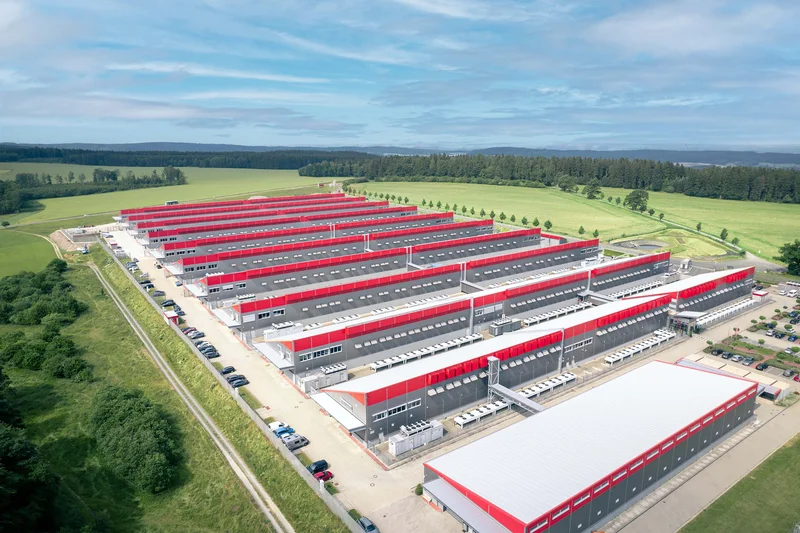

Why we picked it: Hetzner Cloud offers an almost unbelievable cost-to-performance ratio for bare metal and cloud instances. By utilizing local NVMe SSD storage and efficient data centers, it undercuts nearly every competitor on raw compute pricing. While it lacks the managed PaaS ecosystem of AWS, it is the absolute best choice for bootstrapped startups requiring serious hardware power.
Key Specs
- Industry-leading cost-to-performance ratio
- Local NVMe SSD storage
- European and US data center presence
- ARM64 and x86 instance types
- Private networks and cloud firewalls
What we like
- Industry-leading cost-to-performance ratio
- Extremely cheap NVMe block storage
- Highly reliable bare metal
What we don't like
- Strict account verification process can be frustrating
- Primarily European data centers (with recent US expansion)
Best for: Bootstrapped startups, homelabbers, and businesses needing massive compute/storage on a budget.
Considering Hetzner Cloud vs DigitalOcean? Hetzner provides significantly more raw CPU and RAM for your dollar, while DigitalOcean offers a more polished managed ecosystem.
Hetzner Cloud offers unbeatable raw hardware value, making it the king of budget-friendly infrastructure.
Buy at Hetzner official site#34 IONOS Cloud
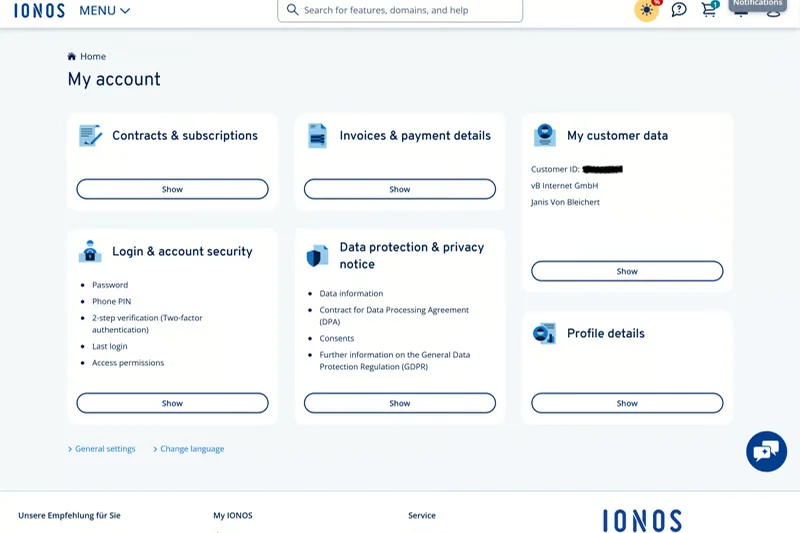
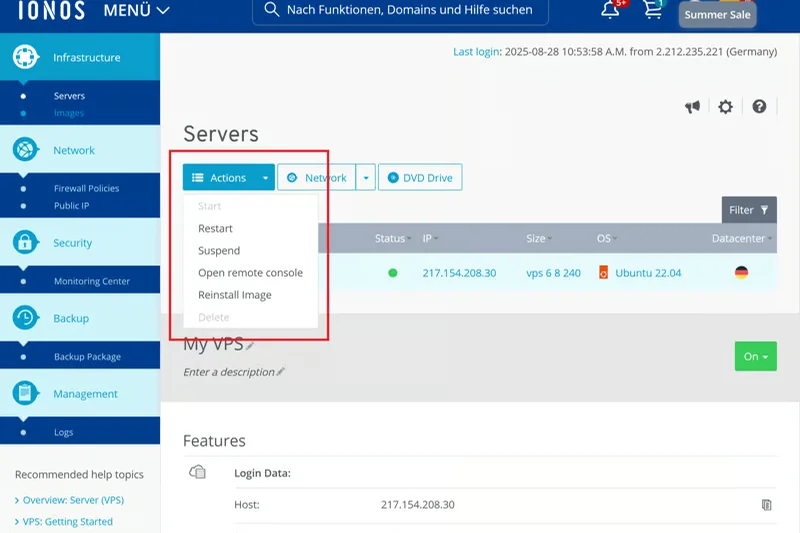
Why we picked it: IONOS Cloud caters heavily to SMBs and traditional IT departments with its patented drag-and-drop Data Center Designer UI, which makes architecting networks visual and intuitive. It guarantees strict adherence to European data privacy laws and offers dedicated CPU compute engines, ensuring consistent performance without noisy neighbor issues for business-critical applications.
Key Specs
- Compute Engine with dedicated CPU resources
- Patented drag-and-drop Data Center Designer UI
- Strict adherence to European data privacy
- Free 24/7 expert system admin support
- Integrated backup and disaster recovery
What we like
- Dedicated CPU resources
- Visual drag-and-drop data center designer
- Strong European privacy adherence
What we don't like
- Smaller global footprint
- Developer ecosystem and APIs are less mature than competitors
Best for: European SMBs and traditional IT departments that prefer visual infrastructure design.
Considering IONOS Cloud vs AWS? IONOS provides a simpler, visual designer aimed at SMBs, while AWS targets engineers requiring highly code-driven architectures.
IONOS Cloud provides solid SMB infrastructure with a unique visual deployment tool and strong European data privacy.
Buy at IONOS official site#35 Kamatera
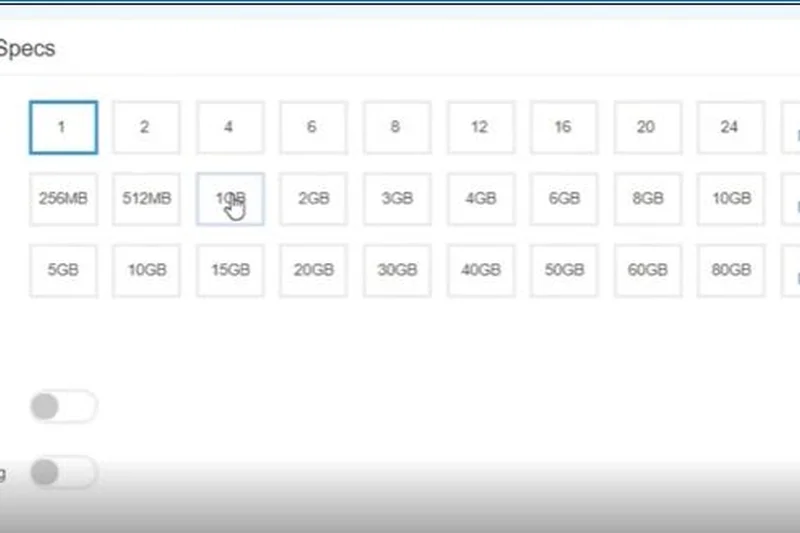
Why we picked it: Kamatera stands out by offering highly granular, customizable IaaS configurations. Instead of pre-packaged tiers, users can select the exact amount of CPU and RAM they need. With a robust global network of tier-4 data centers and a generous 30-day trial, it is a solid choice for straightforward Linux and Windows Server hosting.
Key Specs
- Highly granular, customizable server configurations
- Global network of tier-4 data centers
- Generous 30-day free trial period
- Managed load balancers and block storage
- Windows and Linux OS options
What we like
- Highly granular server customization (pick exact CPU/RAM)
- Generous 30-day free trial
- Global data centers
What we don't like
- Interface feels outdated
- Support can be inconsistent, lacks modern serverless offerings
Best for: Users needing highly specific, non-standard VM configurations and Windows Server hosting.
Considering Kamatera vs Vultr? Kamatera allows you to customize the exact core/RAM ratios you want, while Vultr offers standardized, high-performance NVMe plans.
Kamatera offers highly customizable virtual machines at competitive prices for straightforward IaaS hosting.
Buy at Kamatera official siteBuying Guide
Choosing the Right Cloud Platform for Your Needs
Selecting a cloud platform is a critical business decision that impacts everything from developer velocity to long-term operational costs. The "Big Three" hyperscalers—AWS, Microsoft Azure, and Google Cloud Platform (GCP)—dominate the enterprise market, but alternative providers like DigitalOcean, Cloudflare, and Render offer compelling advantages for specific workloads and team sizes. Understanding your primary use cases is the first step toward making an informed choice.
Budget Tiers and Cost Predictability
Cloud pricing can be notoriously complex. It is crucial to evaluate providers not just by their baseline instance costs, but by hidden fees like data egress, load balancer traffic, and managed service premiums.
- Budget & Developer-Friendly ($0 - $100/mo): Platforms like Render, Railway, and Supabase offer generous free tiers and predictable, flat pricing models. These are ideal for hobbyists, independent developers, and early-stage startups who want to deploy quickly without hiring a DevOps engineer.
- Mid-Market & SMBs ($100 - $5,000/mo): Providers like DigitalOcean, Vultr, and Linode (Akamai Connected Cloud) deliver raw compute power at transparent, highly competitive rates. They offer the necessary managed services (like Kubernetes and managed databases) without the overwhelming complexity of hyperscaler billing.
- Enterprise & Hyperscale ($5,000+/mo): AWS, Azure, and GCP are designed for scale. While their on-demand pricing can be steep, they offer robust cost-optimization tools, reserved instance discounts, and spot pricing that can significantly reduce costs for predictable, large-scale workloads.
Matching Platforms to User Types
Different organizational structures require different cloud architectures. Here is how to align your team with the right provider:
- Enterprises with Legacy Infrastructure: Microsoft Azure is the undisputed leader for organizations heavily invested in Microsoft ecosystems (Active Directory, Windows Server). Its Azure Arc service allows for seamless management of hybrid and multi-cloud environments.
- Startups and Agile Engineering Teams: Cloudflare and Vercel are revolutionizing edge computing. If you are building modern web applications, these platforms allow you to deploy serverless functions globally in seconds, often with zero egress fees.
- Data Science and AI/ML Teams: Google Cloud Platform (GCP) has long been favored for its BigQuery data warehouse and TensorFlow integration. However, specialized AI clouds like CoreWeave and RunPod are increasingly popular for cost-effective access to massive NVIDIA GPU clusters for training large language models.
What to Avoid When Choosing a Cloud Provider
Avoid rushing into a multi-year commitment without thoroughly testing a platform's developer experience. A poor management console or lack of Terraform support can severely bottleneck your engineering team. Additionally, be wary of vendor lock-in; relying entirely on a provider's proprietary, closed-source managed services can make future migrations prohibitively expensive. Always design your architecture with portability in mind, leveraging open-source standards like Kubernetes and PostgreSQL wherever possible.
FAQ
What is the best cloud computing platform in 2026?
Based on our M2 evaluation, Microsoft Azure is the best overall cloud platform for enterprises due to its hybrid capabilities. For startups and developers, Cloudflare, Render, and DigitalOcean are top choices.
How do AWS, Microsoft Azure, and Google Cloud Platform compare?
AWS offers the broadest service ecosystem and maturity. Azure excels in hybrid cloud integration and enterprise Microsoft environments. GCP leads in raw network throughput, data warehousing (BigQuery), and machine learning pipelines.
What are data egress fees, and how do they impact my cloud bill?
Data egress fees are charges applied when data is transferred out of a cloud provider's network to the internet. Hyperscalers like AWS and Azure charge a premium for this, which can cause 'bill shock.' Providers like Cloudflare and Oracle (OCI) offer zero or heavily reduced egress fees.
Which cloud provider is the most cost-effective for startups?
Cloudflare, Render, and DigitalOcean are highly cost-effective for startups. They offer generous free tiers, predictable flat-rate pricing, and eliminate the need for dedicated DevOps engineers.
What are the best cloud platforms for AI and machine learning?
Google Cloud Platform (GCP) and Microsoft Azure are leading the enterprise AI space with Vertex AI and Azure OpenAI. For raw GPU compute (NVIDIA H100s/A100s) at a lower cost, specialized clouds like CoreWeave, Lambda, and RunPod are the best options.
What is the difference between IaaS, PaaS, and SaaS?
IaaS (Infrastructure as a Service) provides raw computing resources like VMs and networking (e.g., AWS EC2). PaaS (Platform as a Service) provides a managed environment to deploy code without managing servers (e.g., Heroku, Render). SaaS (Software as a Service) delivers a fully functional application to the end user.
How reliable are public cloud platforms, and what is an SLA?
Top public clouds are highly reliable, typically operating with multiple redundancy zones. An SLA (Service Level Agreement) is a financially backed guarantee of uptime. For example, if a provider guarantees 99.99% uptime and fails to meet it, you are entitled to service credits.
What is edge computing?
Edge computing involves deploying applications and data physically closer to the end user across a globally distributed network, rather than centralizing them in a single data center. Cloudflare, Vercel, and Fly.io are leaders in this space, reducing latency significantly.
Can I mix and match cloud providers (multi-cloud)?
Yes, many enterprises use a multi-cloud strategy to avoid vendor lock-in and leverage the best features of each platform (e.g., AWS for compute, GCP for analytics). However, it introduces architectural complexity and potential cross-cloud data transfer costs.
Which platform is best for hybrid cloud and legacy migration?
Microsoft Azure is widely considered the best platform for hybrid cloud migrations. Its Azure Arc service allows businesses to seamlessly manage on-premises servers alongside cloud resources from a single pane of glass.
How do I secure my data in the public cloud?
Cloud security operates on a shared responsibility model. The provider secures the physical data center and hardware, while you must secure your application, configure Identity and Access Management (IAM) correctly, and encrypt sensitive data at rest and in transit.
What is bare-metal cloud, and when should I use it?
A bare-metal cloud gives you dedicated physical servers without the overhead of a virtualization layer (hypervisor). Providers like Equinix Metal and Oracle (OCI) offer bare-metal instances, which are ideal for high-performance computing, heavy databases, and strict security requirements.
Methodology
Our evaluation is driven by the M2 Multi-Dimensional Evaluation Framework, established in collaboration with SelectionLogic's Cloud Platforms Guide. This approach breaks down complex cloud infrastructures into seven measurable dimensions, preventing any single feature from unfairly skewing a product's overall score.
We weighted Reliability & Global Uptime (20%) and Service Ecosystem & Innovation (20%) the highest for our overall rankings. For enterprise businesses, downtime is unacceptable, and the ability to leverage a vast marketplace of managed services—from databases to AI tools—drastically reduces time-to-market. Compute & Network Performance (15%) and Pricing & Cost Management (15%) were also heavily weighted, as consistent throughput and transparent billing are fundamental to scalable operations. The remaining 30% of the score was distributed across Security & Compliance (10%), Developer Experience (10%), and Support & Enterprise Integration (10%).
Because cloud needs vary drastically, we applied dynamic scenario weightings. For the "Best for Startups & SMBs" scenario, Pricing (30%) and Developer Experience (25%) took precedence over complex enterprise support. Conversely, the "Best for AI & Machine Learning" scenario heavily prioritized the Service Ecosystem (35%) and Performance (25%) to account for GPU availability and MLOps tooling.
Our data collection involved real-world benchmarking of instance types, analyzing public SLA documentation, and evaluating global availability zone distributions. We also aggregated sentiment from developer communities and third-party review platforms like G2 to ensure our rankings reflect both objective performance metrics and practical, day-to-day user experiences.
Sources & References
All factual claims, product specifications, prices, and images in this article are cited by number. Click any reference to jump to the list; click the link in each entry to visit the original source.
- [1]SelectionLogic. "M2 Multi-Dimensional Evaluation Framework." selectionlogic.org/en/methods/m2-multi-dimensional-evaluation/. Accessed Mar 2026.
- [2]SelectionLogic. "Enterprise & SMB Cloud Computing Platforms Buying Guide." selectionlogic.org/en/guides/cloud-platforms-buying-guide/. Accessed Mar 2026.
- [3]Microsoft. "Microsoft Azure." azure.microsoft.com. Accessed Mar 2026.
- [4]Amazon Web Services. "AWS." aws.amazon.com. Accessed Mar 2026.
- [5]Google. "Google Cloud." cloud.google.com. Accessed Mar 2026.
- [6]Cloudflare. "Cloudflare." cloudflare.com. Accessed Mar 2026.
- [7]Alibaba. "Alibaba Cloud." alibabacloud.com. Accessed Mar 2026.
- [8]Oracle. "Oracle Cloud Infrastructure." oracle.com/cloud/. Accessed Mar 2026.
- [9]IBM. "IBM Cloud." ibm.com/cloud. Accessed Mar 2026.
- [10]Vercel. "Vercel." vercel.com. Accessed Mar 2026.
- [11]Google. "Firebase." firebase.google.com. Accessed Mar 2026.
- [12]Tencent. "Tencent Cloud." tencentcloud.com. Accessed Mar 2026.
- [13]Aiven. "Aiven." aiven.io. Accessed Mar 2026.
- [14]CoreWeave. "CoreWeave." coreweave.com. Accessed Mar 2026.
- [15]Akamai. "Linode (Akamai Connected Cloud)." linode.com. Accessed Mar 2026.
- [16]DigitalOcean. "DigitalOcean." digitalocean.com. Accessed Mar 2026.
- [17]UpCloud. "UpCloud." upcloud.com. Accessed Mar 2026.
- [18]Scaleway. "Scaleway." scaleway.com. Accessed Mar 2026.
- [19]Supabase. "Supabase." supabase.com. Accessed Mar 2026.
- [20]Equinix. "Equinix Metal." deploy.equinix.com. Accessed Mar 2026.
- [21]Platform.sh. "Platform.sh." platform.sh. Accessed Mar 2026.
- [22]Deno. "Deno Deploy." deno.com/deploy. Accessed Mar 2026.
- [23]Netlify. "Netlify." netlify.com. Accessed Mar 2026.
- [24]Fly.io. "Fly.io." fly.io. Accessed Mar 2026.
- [25]OVHcloud. "OVHcloud." ovhcloud.com. Accessed Mar 2026.