Quick Verdict
At a glance
We tested 35 backpacking tents for the 2026 season, evaluating them across 7 key dimensions: Weight & Packability, Livability & Interior Space, Weather Resistance & Stability, Durability & Materials, Setup & Teardown Ease, Ventilation & Condensation Management, and Value for Money. After rigorously analyzing specs, independent field tests, and user feedback, our data-driven approach identified the shelters that truly perform on the trail.
🏆 Overall #1: Durston X-Mid 2 — An incredibly spacious, storm-worthy trekking pole tent that dominates the value category at $274.
🥈 #2: SlingFin Portal 2 — The ultimate 3-season freestanding fortress, offering unmatched high-wind stability.
🥉 #3: Durston X-Dome 2 — A brilliantly engineered freestanding dome that maximizes livability without the weight penalty.
Which one is for me?
How We Tested
Our Testing Process
To determine the best backpacking tents of 2026, we began by gathering a comprehensive candidate pool of 35 top-rated shelters, ranging from entry-level budget models to premium ultralight Dyneema sanctuaries. Rather than relying on subjective gut feelings, we applied the rigorous M2 Multi-Dimensional Evaluation framework formulated by Selection Logic[1]. This structured methodology allows us to decompose the performance of each tent into distinct, measurable dimensions, ensuring a balanced and objective assessment.
We scored every tent across seven critical dimensions: Weight & Packability (25%), Livability & Interior Space (15%), Weather Resistance & Stability (15%), Durability & Materials (15%), Setup & Teardown Ease (10%), Ventilation & Condensation Management (10%), and Value for Money (10%). We analyzed raw specifications—such as trail weight, floor area, denier count, and peak height—alongside user reviews, expert field tests, and long-term durability reports. Each metric was standardized to produce a Fit Score for five different hiker scenarios, allowing us to confidently recommend the perfect shelter whether you're a fast-packing thru-hiker or a weekend warrior seeking comfort.
Our Declared Values: We are committed to an unbiased, data-driven approach. We do not accept paid placements, nor do we allow brand relationships to influence our rankings. When a $274 tent outperforms a $700 competitor, our algorithms reflect that reality without hesitation. Our ultimate goal is to align your purchase with your genuine needs, minimizing decision regret and maximizing your time outdoors.
About our team
Our gear analysis team consists of seasoned backpackers, spreadsheet nerds, and methodology purists. By combining thousands of miles of backcountry experience with quantitative decision-making models, we strip away the marketing hype to reveal which tents actually deliver on their promises. We regularly update our datasets to reflect the latest model years and fabric innovations.
| Dimension | Overall | Best Overall for Most Backpackers | Best for Ultralight Thru-Hiking | Best Budget Backpacking Tent | Best for Harsh Weather & Exposed Conditions | Best for Comfort & Couples |
|---|---|---|---|---|---|---|
| Weight & Packability | 25% | 25% | 45% | 15% | 15% | 10% |
| Livability & Interior Space | 15% | 15% | 10% | 10% | 10% | 35% |
| Weather Resistance & Stability | 15% | 15% | 10% | 10% | 35% | 10% |
| Durability & Materials | 15% | 15% | 10% | 15% | 25% | 10% |
| Setup & Teardown Ease | 10% | 10% | 5% | 10% | 5% | 20% |
| Ventilation & Condensation Management | 10% | 10% | 10% | 5% | 5% | 10% |
| Value for Money | 10% | 10% | 10% | 35% | 5% | 5% |
Overall Rankings
Full list of 35 products sorted by weighted overall score (1–10).
Prices are checked as of Mar 18, 2026 (2026 Q1). Use "Check price" links for current pricing.
| # | Product | Type | Price | Weight | Livability | Weather Res. | Durability | Setup Ease | Ventilation | Value | Overall | Awards |
|---|---|---|---|---|---|---|---|---|---|---|---|---|
| 1 | Durston X-Mid 2 | 2-Person Trekking Pole Tent | $274.00 | 8 | 9 | 8 | 7 | 8 | 9 | 10 | 8.30 | 🏆 Editor's Choice 📊 Best Value for Money 🎯 Best Best Overall for Most Backpackers 🎯 Best Best for Ultralight Thru-Hiking 🎯 Best Best Budget Backpacking Tent |
| 2 | SlingFin Portal 2 | 2-Person Freestanding Tent | $560.00 | 7 | 8 | 10 | 7 | 8 | 8 | 8 | 7.90 | 👑 Best Premium 📊 Best Weather Resistance & Stability |
| 3 | Durston X-Dome 2 | 2-Person Freestanding Tent | $469.00 | 7 | 9 | 8 | 7 | 9 | 8 | 8 | 7.85 | |
| 4 | Tarptent Double Rainbow DW | 2-Person Semi-Freestanding Tent | $399.00 | 7 | 8 | 8 | 8 | 8 | 8 | 8 | 7.75 | |
| 5 | Zpacks Triplex | 3-Person Trekking Pole Tent | $799.00 | 9 | 10 | 7 | 7 | 7 | 6 | 6 | 7.75 | |
| 6 | Tarptent Stratospire Li | 2-Person Trekking Pole Tent | $749.00 | 8 | 9 | 9 | 7 | 5 | 9 | 6 | 7.75 | |
| 7 | Six Moon Designs Lunar Solo | 1-Person Trekking Pole Tent | $260.00 | 8 | 9 | 7 | 8 | 6 | 6 | 9 | 7.70 | |
| 8 | Durston X-Mid Pro 2 | 2-Person Trekking Pole Tent | $669.00 | 9 | 8 | 8 | 6 | 8 | 6 | 7 | 7.65 | |
| 9 | MSR Hubba Hubba LT 2 | 2-Person Freestanding Tent | $549.95 | 7 | 8 | 8 | 7 | 9 | 8 | 7 | 7.60 | |
| 10 | Big Agnes Copper Spur UL2 XL | 2-Person Freestanding Tent | $580.00 | 7 | 10 | 7 | 6 | 9 | 8 | 7 | 7.60 | |
| 11 | Big Agnes Tiger Wall UL3 Solution Dye | 3-Person Semi-Freestanding Tent | $499.95 | 8 | 9 | 7 | 5 | 8 | 8 | 8 | 7.55 | |
| 12 | REI Co-op Half Dome SL 2+ | 2-Person Freestanding Tent | $349.00 | 5 | 10 | 7 | 8 | 9 | 8 | 8 | 7.50 | 📊 Best Livability & Interior Space 🎯 Best Best for Comfort & Couples |
| 13 | MSR Hubba Hubba LT 1 | 1-Person Freestanding Tent | $469.95 | 7 | 8 | 8 | 7 | 9 | 8 | 6 | 7.50 | |
| 14 | NEMO Dagger OSMO 2P | 2-Person Freestanding Tent | $529.95 | 6 | 9 | 7 | 7 | 9 | 9 | 7 | 7.45 | |
| 15 | Zpacks Plex Solo | 1-Person Trekking Pole Tent | $599.00 | 10 | 7 | 7 | 7 | 6 | 6 | 6 | 7.45 | |
| 16 | Sea to Summit Telos TR2 | 2-Person Freestanding Tent | $559.00 | 6 | 9 | 7 | 7 | 8 | 10 | 6 | 7.35 | 📊 Best Ventilation & Condensation Management |
| 17 | Big Agnes Copper Spur HV UL2 | 2-Person Freestanding Tent | $549.95 | 7 | 8 | 7 | 6 | 9 | 8 | 7 | 7.30 | 📊 Best Setup & Teardown Ease |
| 18 | Zpacks Duplex | 2-Person Trekking Pole Tent | $699.00 | 10 | 6 | 7 | 7 | 7 | 5 | 6 | 7.30 | 📊 Best Weight & Packability |
| 19 | Hyperlite Mountain Gear Unbound 2P | 2-Person Trekking Pole Tent | $699.00 | 9 | 7 | 7 | 7 | 7 | 6 | 6 | 7.30 | |
| 20 | Sea to Summit Alto TR2 | 2-Person Semi-Freestanding Tent | $449.00 | 7 | 8 | 7 | 6 | 8 | 9 | 7 | 7.30 | |
| 21 | Hilleberg Niak | 1.5-Person 3-Season Tent | $995.00 | 6 | 6 | 10 | 10 | 8 | 6 | 4 | 7.20 | 📊 Best Durability & Materials 🎯 Best Best for Harsh Weather & Exposed Conditions |
| 22 | Big Agnes Tiger Wall UL2 Solution Dye | 2-Person Semi-Freestanding Tent | $449.95 | 8 | 7 | 7 | 5 | 8 | 8 | 7 | 7.15 | |
| 23 | Gossamer Gear The One | 1-Person Trekking Pole Tent | $299.00 | 10 | 6 | 6 | 5 | 7 | 6 | 8 | 7.15 | |
| 24 | Gossamer Gear The Two | 2-Person Trekking Pole Tent | $320.00 | 9 | 7 | 6 | 5 | 7 | 6 | 8 | 7.05 | |
| 25 | NEMO Dragonfly OSMO 2P | 2-Person Freestanding Tent | $500.00 | 6 | 8 | 7 | 6 | 9 | 8 | 7 | 7.05 | |
| 26 | MSR Access 2 | 2-Person 4-Season Tent | $799.95 | 6 | 7 | 9 | 8 | 8 | 6 | 5 | 7.00 | |
| 27 | Marmot Tungsten 2P | 2-Person Freestanding Tent | $279.00 | 4 | 8 | 7 | 9 | 9 | 7 | 8 | 7.00 | |
| 28 | REI Co-op Trailmade 2 | 2-Person Freestanding Budget Tent | $199.00 | 4 | 8 | 6 | 9 | 9 | 7 | 9 | 6.95 | |
| 29 | NEMO Hornet Elite OSMO 2P | 2-Person Semi-Freestanding Tent | $699.95 | 9 | 6 | 6 | 5 | 8 | 7 | 6 | 6.90 | |
| 30 | ALPS Mountaineering Lynx 1 | 1-Person Freestanding Budget Tent | $129.99 | 5 | 7 | 6 | 8 | 9 | 7 | 9 | 6.90 | 🌟 Best Budget 💰 Best Value |
| 31 | MSR Elixir 2 | 2-Person Freestanding Tent | $339.95 | 3 | 7 | 8 | 9 | 9 | 8 | 8 | 6.85 | |
| 32 | Mountain Hardwear Mineral King 2 | 2-Person Freestanding Tent | $350.00 | 3 | 8 | 7 | 9 | 8 | 8 | 7 | 6.65 | |
| 33 | Big Agnes Fly Creek HV UL2 Solution Dye | 2-Person Semi-Freestanding Tent | $449.95 | 9 | 5 | 6 | 5 | 8 | 6 | 6 | 6.65 | |
| 34 | Naturehike Cloud-Up 2 | 2-Person Freestanding Budget Tent | $169.00 | 6 | 5 | 6 | 7 | 8 | 5 | 9 | 6.40 | |
| 35 | Kelty Late Start 2 | 2-Person Freestanding Budget Tent | $159.95 | 4 | 5 | 6 | 8 | 9 | 5 | 8 | 6.05 |
Dimension Rankings
Each dimension ranked independently (Top 10).
📊 Best for Weight & Packability — Top 10
| Dim # | Product | Weight & Packability Score | Overall Rank | Price |
|---|---|---|---|---|
| 1 | Zpacks Duplex | 10 | #18 | $699.00 |
| 2 | Zpacks Plex Solo | 10 | #15 | $599.00 |
| 3 | Gossamer Gear The One | 10 | #23 | $299.00 |
| 4 | NEMO Hornet Elite OSMO 2P | 9 | #29 | $699.95 |
| 5 | Durston X-Mid Pro 2 | 9 | #8 | $669.00 |
| 6 | Hyperlite Mountain Gear Unbound 2P | 9 | #19 | $699.00 |
| 7 | Gossamer Gear The Two | 9 | #24 | $320.00 |
| 8 | Zpacks Triplex | 9 | #5 | $799.00 |
| 9 | Big Agnes Fly Creek HV UL2 Solution Dye | 9 | #33 | $449.95 |
| 10 | Durston X-Mid 2 | 8 | #1 | $274.00 |
📊 Best for Livability & Interior Space — Top 10
| Dim # | Product | Livability & Interior Space Score | Overall Rank | Price |
|---|---|---|---|---|
| 1 | REI Co-op Half Dome SL 2+ | 10 | #12 | $349.00 |
| 2 | Big Agnes Copper Spur UL2 XL | 10 | #10 | $580.00 |
| 3 | Zpacks Triplex | 10 | #5 | $799.00 |
| 4 | Durston X-Mid 2 | 9 | #1 | $274.00 |
| 5 | NEMO Dagger OSMO 2P | 9 | #14 | $529.95 |
| 6 | Sea to Summit Telos TR2 | 9 | #16 | $559.00 |
| 7 | Durston X-Dome 2 | 9 | #3 | $469.00 |
| 8 | Tarptent Stratospire Li | 9 | #6 | $749.00 |
| 9 | Six Moon Designs Lunar Solo | 9 | #7 | $260.00 |
| 10 | Big Agnes Tiger Wall UL3 Solution Dye | 9 | #11 | $499.95 |
📊 Best for Weather Resistance & Stability — Top 10
| Dim # | Product | Weather Resistance & Stability Score | Overall Rank | Price |
|---|---|---|---|---|
| 1 | SlingFin Portal 2 | 10 | #2 | $560.00 |
| 2 | Hilleberg Niak | 10 | #21 | $995.00 |
| 3 | MSR Access 2 | 9 | #26 | $799.95 |
| 4 | Tarptent Stratospire Li | 9 | #6 | $749.00 |
| 5 | MSR Hubba Hubba LT 2 | 8 | #9 | $549.95 |
| 6 | Durston X-Mid 2 | 8 | #1 | $274.00 |
| 7 | Durston X-Mid Pro 2 | 8 | #8 | $669.00 |
| 8 | Durston X-Dome 2 | 8 | #3 | $469.00 |
| 9 | Tarptent Double Rainbow DW | 8 | #4 | $399.00 |
| 10 | MSR Elixir 2 | 8 | #31 | $339.95 |
📊 Best for Durability & Materials — Top 10
| Dim # | Product | Durability & Materials Score | Overall Rank | Price |
|---|---|---|---|---|
| 1 | Hilleberg Niak | 10 | #21 | $995.00 |
| 2 | Mountain Hardwear Mineral King 2 | 9 | #32 | $350.00 |
| 3 | Marmot Tungsten 2P | 9 | #27 | $279.00 |
| 4 | MSR Elixir 2 | 9 | #31 | $339.95 |
| 5 | REI Co-op Trailmade 2 | 9 | #28 | $199.00 |
| 6 | REI Co-op Half Dome SL 2+ | 8 | #12 | $349.00 |
| 7 | Tarptent Double Rainbow DW | 8 | #4 | $399.00 |
| 8 | MSR Access 2 | 8 | #26 | $799.95 |
| 9 | Six Moon Designs Lunar Solo | 8 | #7 | $260.00 |
| 10 | ALPS Mountaineering Lynx 1 | 8 | #30 | $129.99 |
📊 Best for Setup & Teardown Ease — Top 10
| Dim # | Product | Setup & Teardown Ease Score | Overall Rank | Price |
|---|---|---|---|---|
| 1 | Big Agnes Copper Spur HV UL2 | 9 | #17 | $549.95 |
| 2 | MSR Hubba Hubba LT 2 | 9 | #9 | $549.95 |
| 3 | NEMO Dagger OSMO 2P | 9 | #14 | $529.95 |
| 4 | Durston X-Dome 2 | 9 | #3 | $469.00 |
| 5 | REI Co-op Half Dome SL 2+ | 9 | #12 | $349.00 |
| 6 | Big Agnes Copper Spur UL2 XL | 9 | #10 | $580.00 |
| 7 | NEMO Dragonfly OSMO 2P | 9 | #25 | $500.00 |
| 8 | Marmot Tungsten 2P | 9 | #27 | $279.00 |
| 9 | MSR Elixir 2 | 9 | #31 | $339.95 |
| 10 | REI Co-op Trailmade 2 | 9 | #28 | $199.00 |
📊 Best for Ventilation & Condensation Management — Top 10
| Dim # | Product | Ventilation & Condensation Management Score | Overall Rank | Price |
|---|---|---|---|---|
| 1 | Sea to Summit Telos TR2 | 10 | #16 | $559.00 |
| 2 | Durston X-Mid 2 | 9 | #1 | $274.00 |
| 3 | NEMO Dagger OSMO 2P | 9 | #14 | $529.95 |
| 4 | Tarptent Stratospire Li | 9 | #6 | $749.00 |
| 5 | Sea to Summit Alto TR2 | 9 | #20 | $449.00 |
| 6 | Big Agnes Copper Spur HV UL2 | 8 | #17 | $549.95 |
| 7 | MSR Hubba Hubba LT 2 | 8 | #9 | $549.95 |
| 8 | SlingFin Portal 2 | 8 | #2 | $560.00 |
| 9 | Big Agnes Tiger Wall UL2 Solution Dye | 8 | #22 | $449.95 |
| 10 | Durston X-Dome 2 | 8 | #3 | $469.00 |
📊 Best for Value for Money — Top 10
| Dim # | Product | Value for Money Score | Overall Rank | Price |
|---|---|---|---|---|
| 1 | Durston X-Mid 2 | 10 | #1 | $274.00 |
| 2 | Naturehike Cloud-Up 2 | 9 | #34 | $169.00 |
| 3 | REI Co-op Trailmade 2 | 9 | #28 | $199.00 |
| 4 | Six Moon Designs Lunar Solo | 9 | #7 | $260.00 |
| 5 | ALPS Mountaineering Lynx 1 | 9 | #30 | $129.99 |
| 6 | SlingFin Portal 2 | 8 | #2 | $560.00 |
| 7 | Durston X-Dome 2 | 8 | #3 | $469.00 |
| 8 | REI Co-op Half Dome SL 2+ | 8 | #12 | $349.00 |
| 9 | Gossamer Gear The Two | 8 | #24 | $320.00 |
| 10 | Tarptent Double Rainbow DW | 8 | #4 | $399.00 |
Scenario Rankings
🎯 Best Overall for Most Backpackers — Top 5
Weights: Weight 25%, Livability 15%, Weather 15%, Durability 15%, Setup 10%, Ventilation 10%, Value 10%
| # | Product | Score | Overall Rank | Price | Why |
|---|---|---|---|---|---|
| 1 | Durston X-Mid 2 | 8.30 | #1 | $274.00 | |
| 2 | SlingFin Portal 2 | 7.90 | #2 | $560.00 | |
| 3 | Durston X-Dome 2 | 7.85 | #3 | $469.00 | |
| 4 | Tarptent Double Rainbow DW | 7.75 | #4 | $399.00 | |
| 5 | Zpacks Triplex | 7.75 | #5 | $799.00 |
🎯 Best for Ultralight Thru-Hiking — Top 5
Weights: Weight 45%, Livability 10%, Weather 10%, Durability 10%, Setup 5%, Ventilation 10%, Value 10%
| # | Product | Score | Overall Rank | Price | Why |
|---|---|---|---|---|---|
| 1 | Durston X-Mid 2 | 8.30 | #1 | $274.00 | |
| 2 | Zpacks Plex Solo | 8.10 | #15 | $599.00 | |
| 3 | Zpacks Triplex | 8.00 | #5 | $799.00 | |
| 4 | Zpacks Duplex | 7.95 | #18 | $699.00 | |
| 5 | Durston X-Mid Pro 2 | 7.95 | #8 | $669.00 |
🎯 Best Budget Backpacking Tent — Top 5
Weights: Value 35%, Weight 15%, Durability 15%, Setup 10%, Livability 10%, Weather 10%, Ventilation 5%
| # | Product | Score | Overall Rank | Price | Why |
|---|---|---|---|---|---|
| 1 | Durston X-Mid 2 | 8.70 | #1 | $274.00 | |
| 2 | Six Moon Designs Lunar Solo | 8.05 | #7 | $260.00 | |
| 3 | SlingFin Portal 2 | 7.90 | #2 | $560.00 | |
| 4 | Durston X-Dome 2 | 7.90 | #3 | $469.00 | |
| 5 | Tarptent Double Rainbow DW | 7.85 | #4 | $399.00 |
🎯 Best for Harsh Weather & Exposed Conditions — Top 5
Weights: Weather 35%, Durability 25%, Weight 15%, Livability 10%, Setup 5%, Ventilation 5%, Value 5%
| # | Product | Score | Overall Rank | Price | Why |
|---|---|---|---|---|---|
| 1 | Hilleberg Niak | 8.40 | #21 | $995.00 | |
| 2 | SlingFin Portal 2 | 8.30 | #2 | $560.00 | |
| 3 | Durston X-Mid 2 | 8.00 | #1 | $274.00 | |
| 4 | Tarptent Stratospire Li | 8.00 | #6 | $749.00 | |
| 5 | Tarptent Double Rainbow DW | 7.85 | #4 | $399.00 |
🎯 Best for Comfort & Couples — Top 5
Weights: Livability 35%, Setup 20%, Weight 10%, Weather 10%, Durability 10%, Ventilation 10%, Value 5%
| # | Product | Score | Overall Rank | Price | Why |
|---|---|---|---|---|---|
| 1 | REI Co-op Half Dome SL 2+ | 8.50 | #12 | $349.00 | |
| 2 | Durston X-Mid 2 | 8.45 | #1 | $274.00 | |
| 3 | Big Agnes Copper Spur UL2 XL | 8.45 | #10 | $580.00 | |
| 4 | Durston X-Dome 2 | 8.35 | #3 | $469.00 | |
| 5 | NEMO Dagger OSMO 2P | 8.20 | #14 | $529.95 |
Detailed Reviews
#1 Durston X-Mid 2
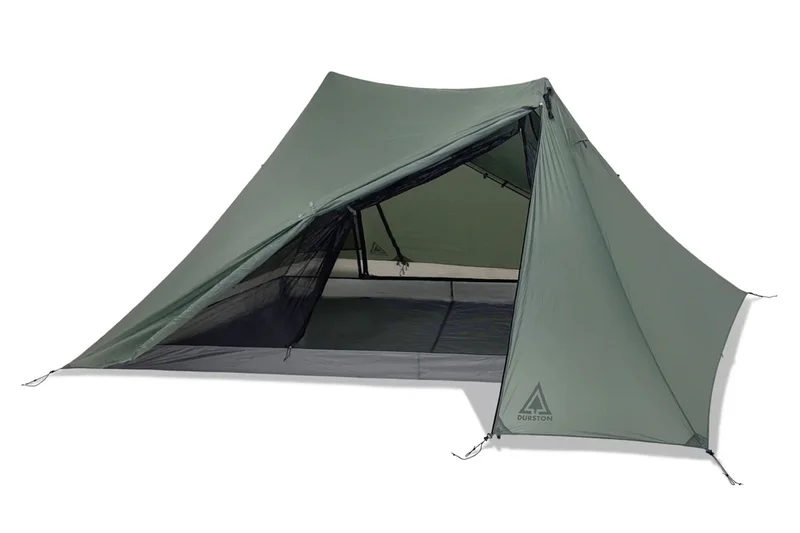
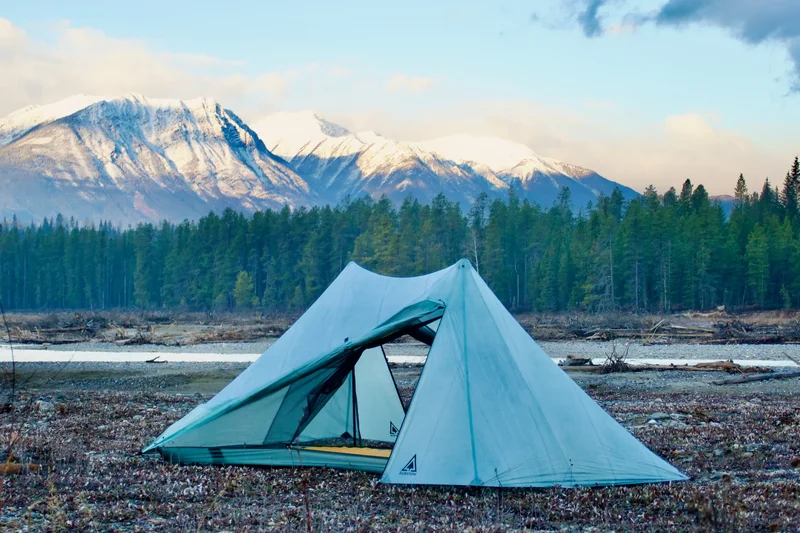
Why we picked it: The Durston X-Mid 2 is a masterclass in tent geometry, earning our top overall spot by delivering premium performance at a staggering budget-friendly price. Designed by thru-hiker Dan Durston, this trekking pole tent utilizes a patented offset diagonal floor plan that provides massive vestibules and steep side walls without the complex, finicky pitch associated with most trekking pole shelters. Pitching requires just four stakes and two poles, resulting in an incredibly sturdy structure. Made from high-tenacity 15D Silpoly, it doesn't sag when wet—a massive advantage over traditional SilNylon tents. At just 1.9 lbs and only $274, it utterly disrupts the market, outperforming tents that cost twice as much. The dual doors and vestibules are spacious, and the factory-taped seams mean it is ready for storms right out of the box. While you must carry trekking poles to use it, the weight savings and storm stability are unparalleled in this price bracket.
Key Specs
- 1.9 lbs (880 g) trail weight
- 33.2 sq ft floor area
- Patented offset twin pole geometry
- 15D high-tenacity silpoly fabric
What we like
- Unbeatable value for money
- Silpoly fabric won't sag in the rain
- Massive vestibule space for gear
- Intuitive 4-stake pitch
What we don't like
- Requires trekking poles to pitch
- Large footprint requires more space at campsites
Best for: Backpackers who use trekking poles and want ultralight performance without paying a premium.
Considering the Durston X-Mid 2 vs the Zpacks Duplex? The X-Mid 2 is hundreds of dollars cheaper and utilizes double-wall construction to eliminate condensation issues, whereas the Duplex is a single-wall Dyneema tent that is significantly lighter but far more expensive.
The best value in the backpacking world, combining ingenious geometry with top-tier materials at an unbeatable price.
Buy at Durston official site#2 SlingFin Portal 2
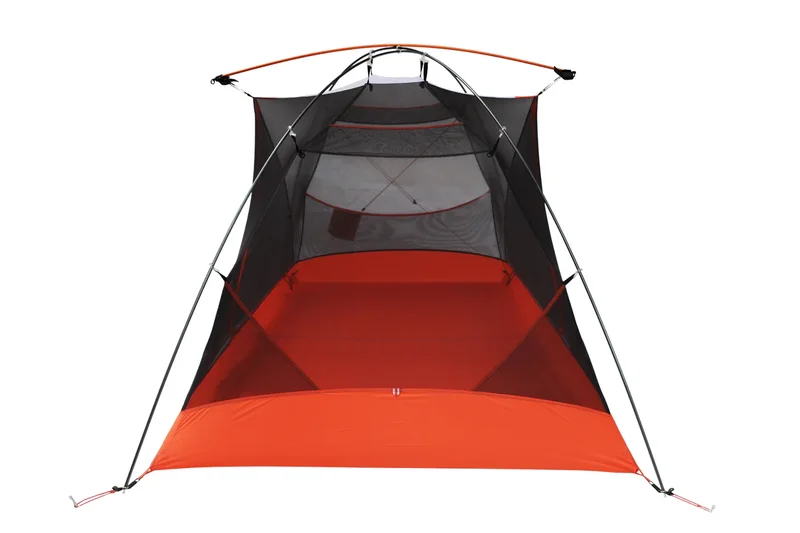
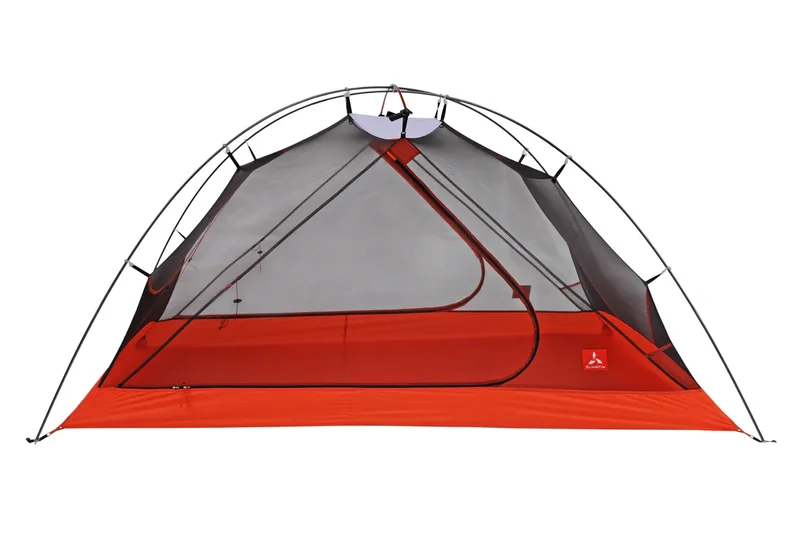
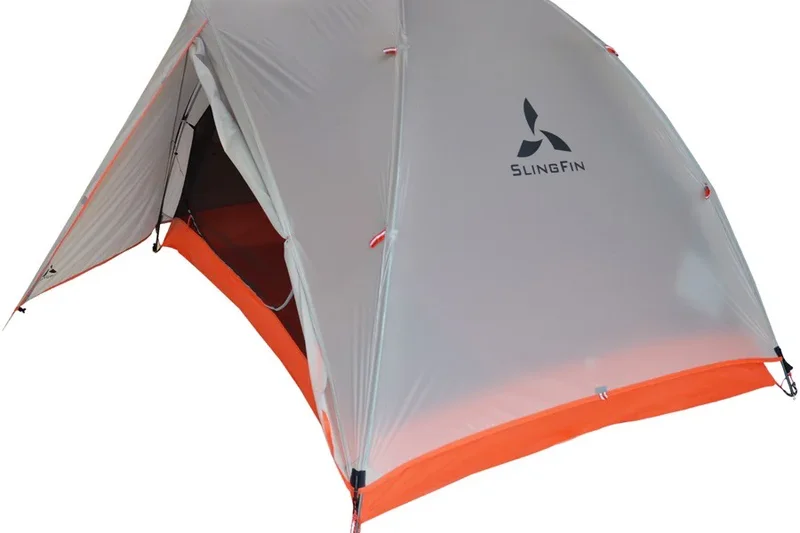
Why we picked it: When the weather turns violent, the SlingFin Portal 2 is the 3-season tent you want to be inside. Built for exposed ridgelines and severe storms, the Portal 2 features an array of internal guylines, OutRigger attachments, and a reinforced pole structure that makes it practically bombproof. Despite this incredible strength, it weighs under 3 pounds. The livability is excellent with ample headroom and copious interior pockets for organization. It utilizes high-quality 10D Nylon 66 Sil/Sil fly fabric which offers phenomenal tear strength. While it commands a premium price at $560, the peace of mind it provides in terrifying weather is well worth the investment for high-altitude hikers.
Key Specs
- 2 lbs 14 oz trail weight
- 27.45 sq ft floor area
- 10D Nylon 66 Sil/Sil fly
- Internal guyline cross-bracing
What we like
- Best-in-class wind and weather stability
- Incredible pocket layout for organization
- Lightweight for its sheer strength
- Can easily accommodate trekking poles for extra support
What we don't like
- Premium price point
- Floor space is slightly snug for two wide pads
Best for: Mountaineers and backpackers who frequently camp in high winds or above the treeline.
Considering the SlingFin Portal 2 vs the Big Agnes Copper Spur? The Copper Spur offers slightly better livability and easier doors, but the Portal 2 is vastly superior when facing high winds and severe weather.
An exceptionally engineered freestanding tent that laughs in the face of brutal backcountry storms.
Buy at SlingFin official site#3 Durston X-Dome 2
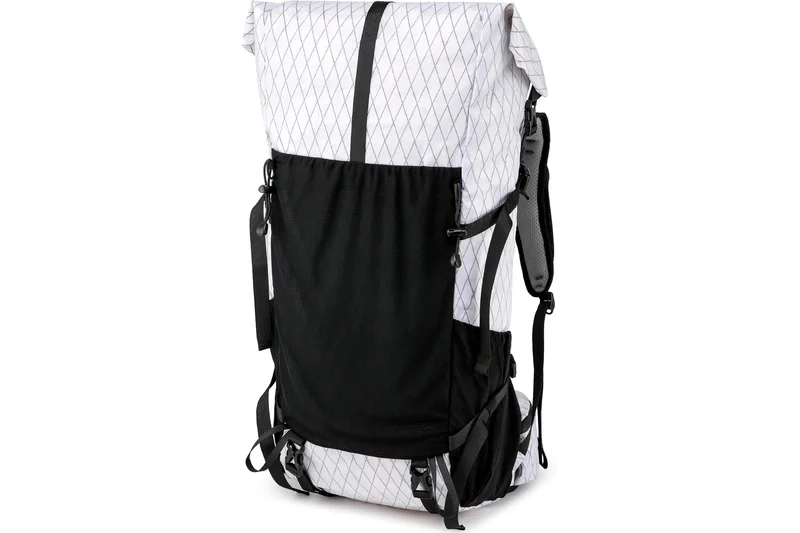
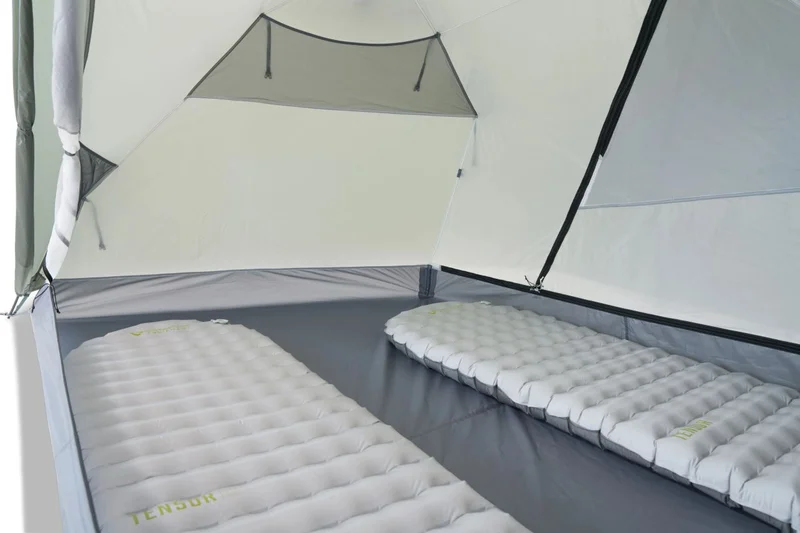
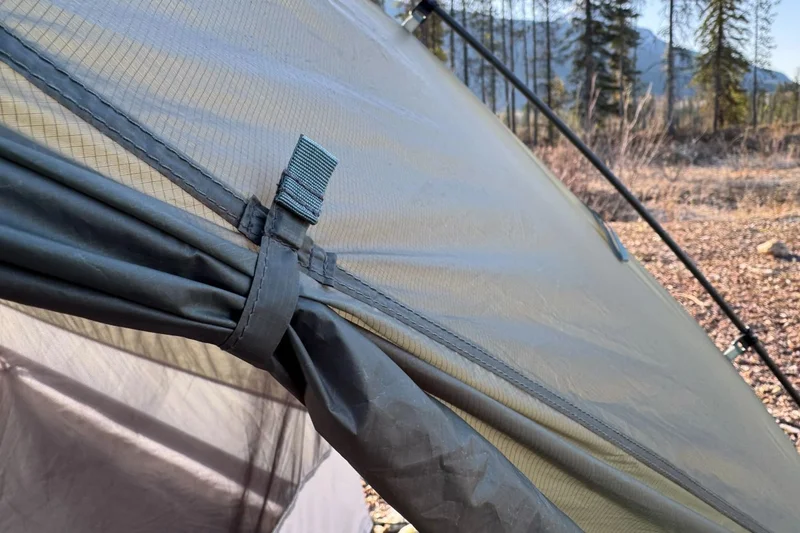
Why we picked it: The newly introduced Durston X-Dome 2 takes the geometric brilliance of the X-Mid and applies it to a freestanding design. At 2.7 lbs, it sits comfortably in the ultralight freestanding category but boasts an incredibly spacious 32 sq ft floor area. It utilizes magnetic door toggles (a brilliant quality-of-life feature) and a 15D Sil/PEU fly that balances durability with weather resistance. The architecture provides near-vertical walls, making it phenomenally comfortable for two hikers. At $469, it undercuts the competition from mainstream brands while offering superior space and thoughtful design elements. It's a fantastic option for those who love Durston's designs but prefer not to rely on trekking poles.
Key Specs
- 2.7 lbs (1.25kg) trail weight
- 32 sq ft floor area
- Dual magnetic door toggles
- 15D Sil/PEU fly
What we like
- Fully freestanding convenience
- Excellent headroom and vertical walls
- Magnetic door toggles are incredibly useful
- Great balance of weight and space
What we don't like
- Heavier than the trekking-pole X-Mid
- Stock levels are often low due to high demand
Best for: Hikers seeking a highly livable, freestanding tent with innovative modern features.
Considering the X-Dome 2 vs the NEMO Dagger OSMO? The X-Dome is lighter and less expensive, though the Dagger offers massive trapezoidal vestibules.
A triumphant entry into the freestanding market, offering massive space and clever features at a competitive price.
Buy at Durston official site#4 Tarptent Double Rainbow DW
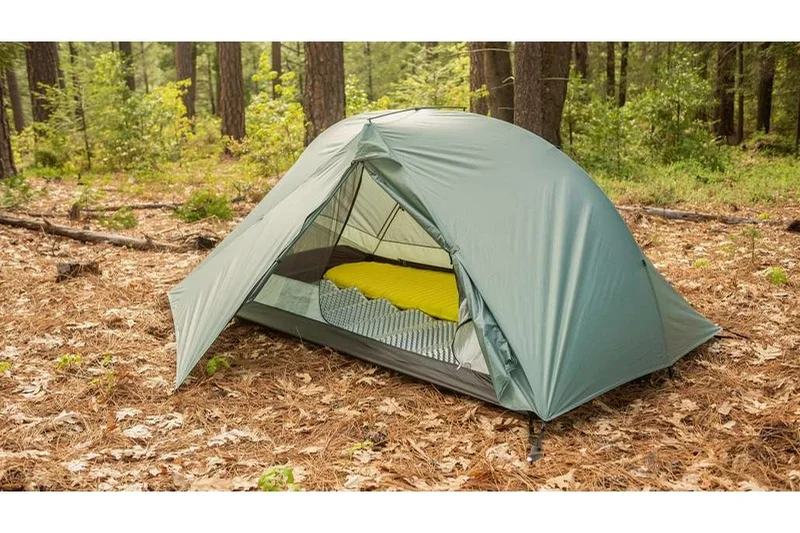
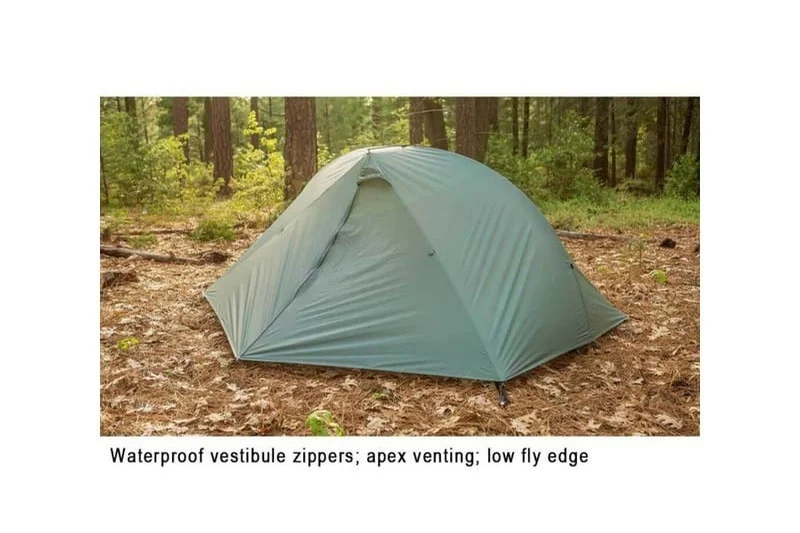
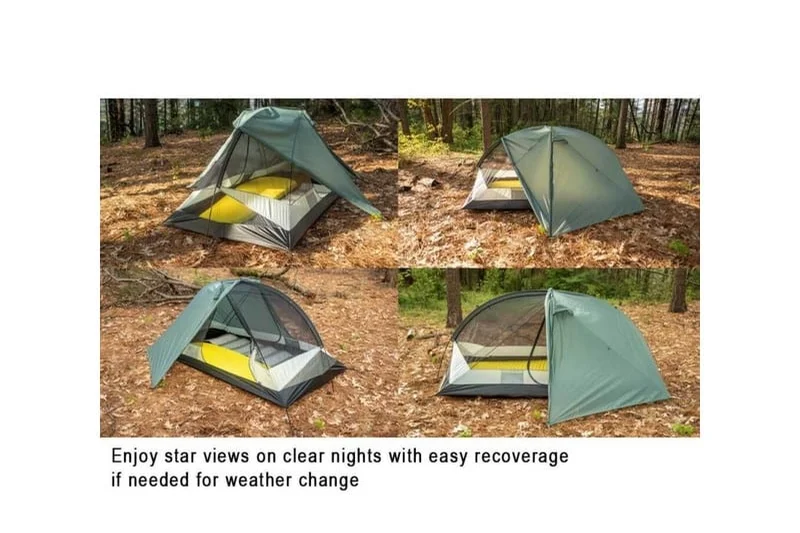
Why we picked it: The Tarptent Double Rainbow DW (Double Wall) is a beloved classic that strikes a fantastic balance between space, ease of setup, and weight. It features a completely rectangular 50-inch wide floor—meaning it easily accommodates two wide sleeping pads without tapering at the feet. Weighing 40.5 oz, it uses a single main arch pole for a lightning-fast setup. While it's semi-freestanding, you can use trekking poles to make it fully freestanding. The 30D silnylon floor is remarkably durable, negating the strict need for a heavy footprint. It is a highly versatile, livable shelter that has been refined over years of iterations.
Key Specs
- 40.5 oz trail weight
- Truly rectangular 50" width
- Double-wall configuration
- 30D silnylon floor
What we like
- Fits two wide sleeping pads perfectly
- Incredibly fast arch-pole setup
- Durable 30D floor materials
- Can be made freestanding with trekking poles
What we don't like
- Slightly heavier than ultralight competitors
- Silnylon fly requires re-tensioning when wet
Best for: Couples who use wide sleeping pads and want a fast-pitching, durable tent.
Considering the Double Rainbow vs the Copper Spur? The Double Rainbow fits wide pads much better due to its rectangular floor, but the Copper Spur is fully freestanding out of the bag.
A remarkably spacious and durable semi-freestanding tent that refuses to compromise on floor width.
Buy at Tarptent official site#5 Zpacks Triplex
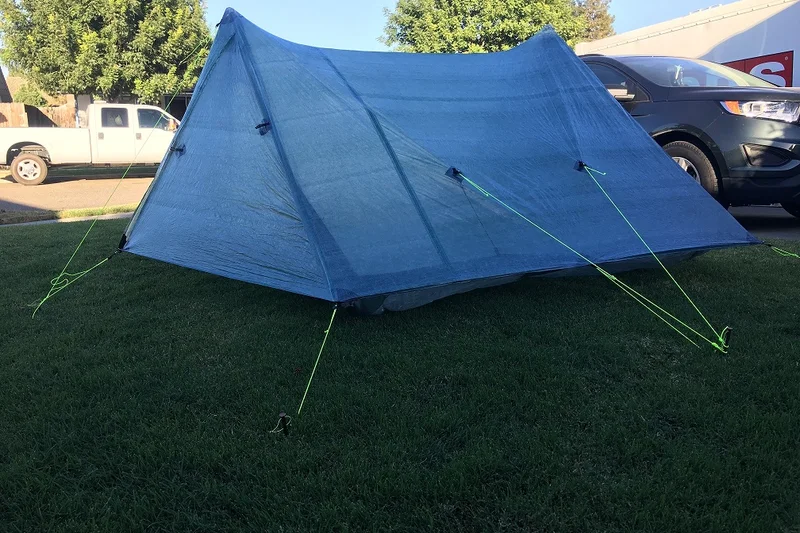
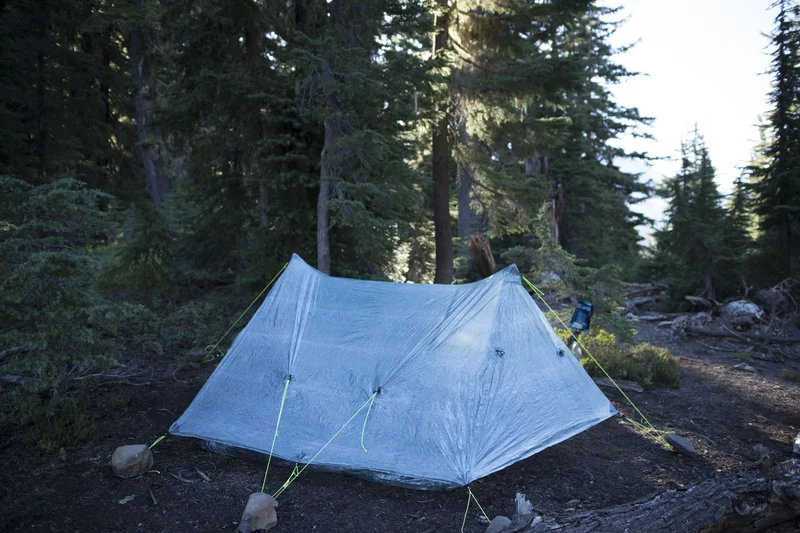
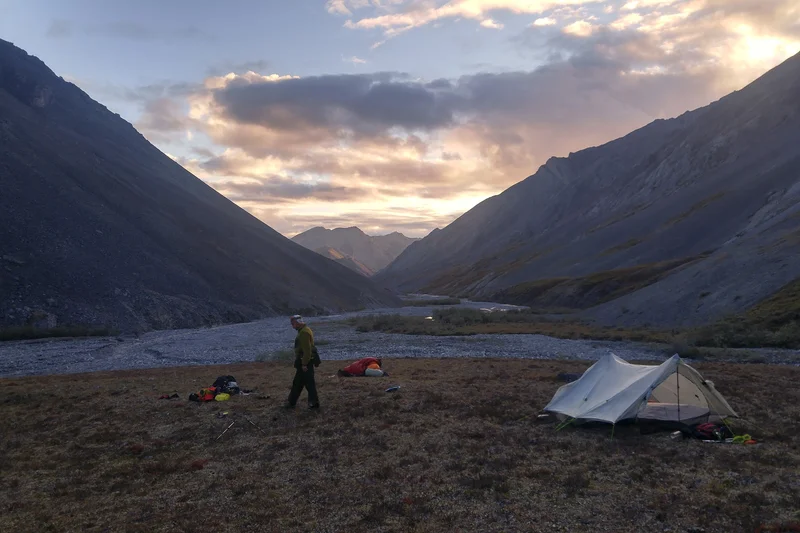
Why we picked it: The Zpacks Triplex is a massive, single-wall Dyneema (DCF) fortress that weighs a mere 21.6 oz. Designed ostensibly for three people, most thru-hikers use it as an ultra-luxurious 2-person tent. It offers 37.5 square feet of floor space and a soaring 48-inch peak height, allowing two hikers to spread out gear, sleep on wide pads, and never touch the condensation on the walls. The DCF material is completely waterproof and will not sag in rain. While the $799 price tag is a major hurdle, if you want the absolute maximum amount of space for the absolute minimum weight, the Triplex is unrivaled. It requires two trekking poles to pitch.
Key Specs
- 21.6 oz trail weight
- 37.5 sq ft floor area
- Dyneema Composite Fabric (DCF)
- 48" peak height
What we like
- Astonishingly light for a 3-person footprint
- DCF fabric is waterproof and non-stretch
- Massive headroom and floor space
- Keeps wet walls far away from sleeping bags
What we don't like
- Extremely expensive
- Single-wall design is prone to condensation
- Large footprint is hard to place in dense woods
Best for: Well-funded thru-hikers and couples who want palatial space without carrying extra weight.
Considering the Zpacks Triplex vs the Duplex? The Triplex adds significant width and headroom for only a few extra ounces, making it the better choice for couples.
A Dyneema palace that offers absurd amounts of interior room for less weight than most 1-person tents.
Buy at Zpacks official site#6 Tarptent Stratospire Li
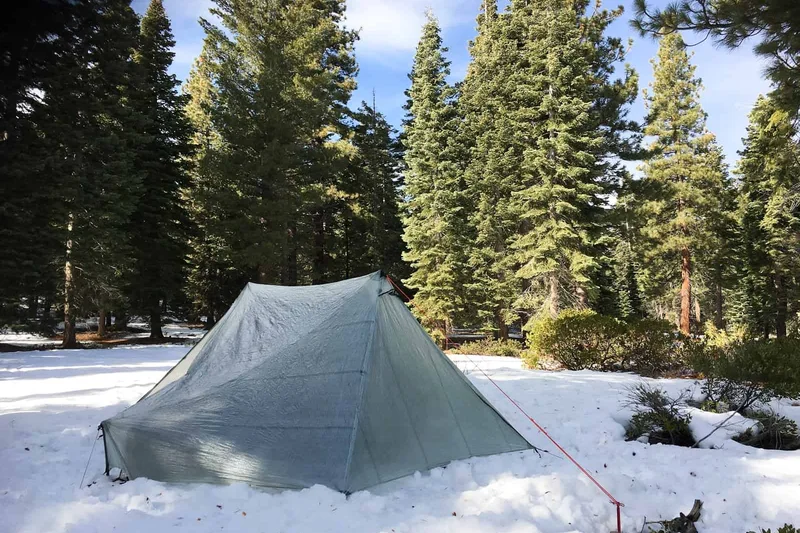
Why we picked it: The Tarptent Stratospire Li marries a brilliant offset ridge line design with premium Dyneema Composite Fabric (DCF). Weighing just 29 oz, this double-wall trekking pole tent offers exceptional storm performance thanks to its unique PitchLoc struts at the corners, which create steep walls and massive headroom. The double-wall design eliminates the condensation issues that plague single-wall DCF tents. It boasts huge vestibules and a wide inner that easily handles two wide pads. The geometry makes it incredibly stable in wind, though the pitch requires a bit of practice to perfect. At $749, it's an investment, but one that provides top-tier weather protection and ultralight comfort.
Key Specs
- 29 oz trail weight
- 29.6 sq ft floor area (wide inner)
- Dyneema Composite Fabric (DCF) fly
- PitchLoc struts for stability
What we like
- Double-wall DCF construction prevents condensation
- Exceptional high-wind stability
- Huge vestibules for gear storage
- Fits wide pads easily
What we don't like
- High price point
- Takes practice to achieve the perfect pitch
Best for: Ultralight hikers who want the weight savings of Dyneema but refuse to deal with single-wall condensation.
Considering the Stratospire Li vs the Zpacks Duplex? The Stratospire Li is slightly heavier but features a double-wall design and better wind deflection.
A highly storm-resistant, double-wall Dyneema tent that excels in harsh conditions.
Buy at Tarptent official site#7 Six Moon Designs Lunar Solo
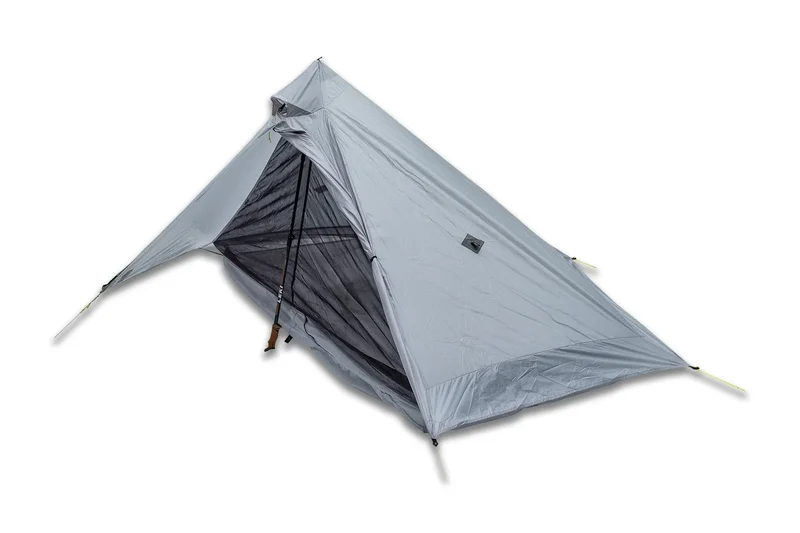
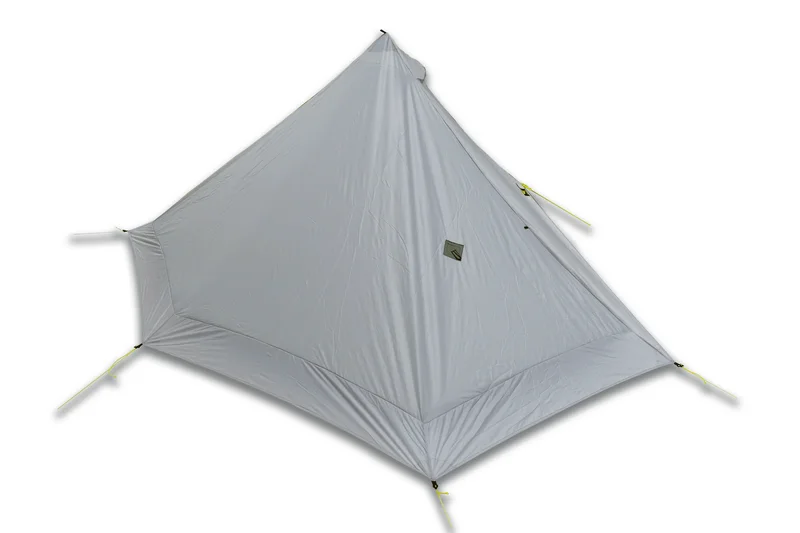
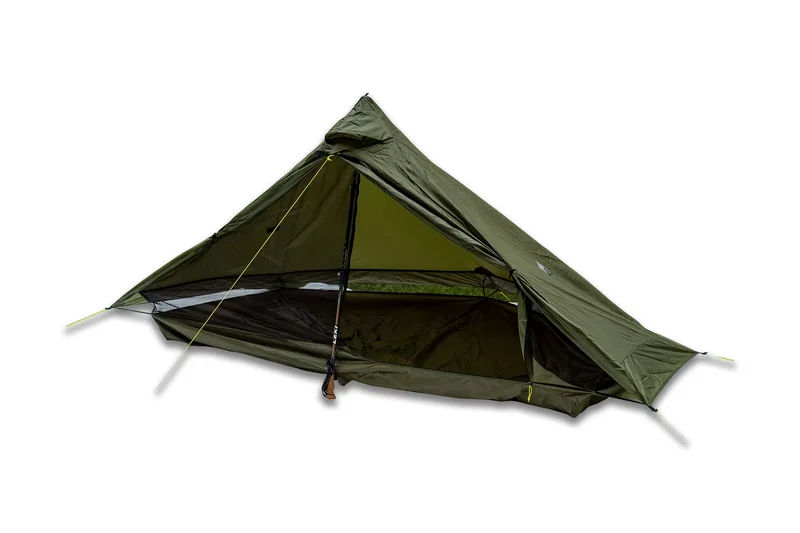
Why we picked it: The Six Moon Designs Lunar Solo is a legendary 1-person shelter that proves you don't need to spend $600 to go ultralight. Using a single trekking pole, this pyramid-style tent pitches quickly and provides a surprisingly roomy 26.25 sq ft of space—rivaling some 2-person tents. Weighing just 26 oz, it uses affordable 20D SilPoly for the canopy, ensuring it stays taut when wet. At $260, it represents phenomenal value. The 40D floor is tough enough to use without a footprint. It is a single-wall design, so ventilation management is crucial to avoid condensation, but the massive mesh door helps significantly.
Key Specs
- 26 oz trail weight
- 26.25 sq ft floor area
- Single pole pyramid design
- 20D SilPoly canopy
What we like
- Incredible value at $260
- Very spacious for a solo tent
- SilPoly material won't sag in rain
- Requires only one trekking pole
What we don't like
- Single-wall design leads to condensation
- Sloping back wall can touch sleeping bags
Best for: Solo backpackers on a budget who want to drastically cut their base weight.
Considering the Lunar Solo vs the Gossamer Gear The One? The Lunar Solo uses sag-free SilPoly and has a more durable floor, while The One is slightly lighter but uses SilNylon.
The undisputed king of budget ultralight solo shelters, offering massive space for minimal weight and cost.
Buy at Six Moon Designs official site#8 Durston X-Mid Pro 2
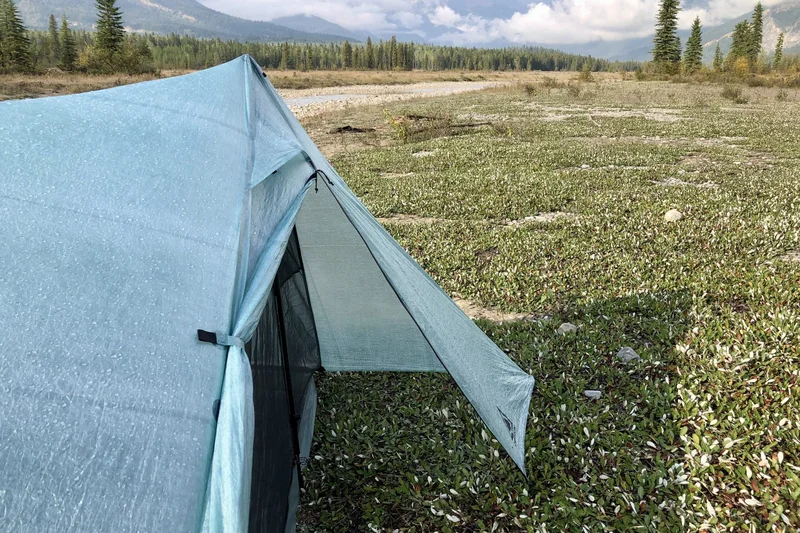
Why we picked it: The Durston X-Mid Pro 2 takes the brilliant offset-pole geometry of the standard X-Mid and upgrades it with premium Dyneema Composite Fabric (DCF). The result is a staggering 20.4 oz 2-person tent that pitches with four stakes and offers enormous headroom. Unlike many DCF tents, Durston uses hot-bonded seams, entirely eliminating the need for sewn and taped seams, resulting in a cleaner, stronger, and highly waterproof canopy. It is a single-wall hybrid design, which means you must manage condensation, but the dual roof vents provide excellent airflow. At $669, it is actually cheaper than many competing DCF tents while offering superior engineering.
Key Specs
- 20.4 oz trail weight
- 30-32 sq ft floor area
- Dyneema Composite Fabrics (DCF) fly
- Factory bonded waterproof seams
What we like
- Insanely light at 20.4 oz
- Brilliant, simple 4-stake pitch
- Hot-bonded seams are superior to taped seams
- Massive headroom and vestibules
What we don't like
- Single-wall condensation management required
- Expensive, though fair for DCF
Best for: Dedicated thru-hikers who want the lightest possible shelter with the most efficient setup.
Considering the X-Mid Pro 2 vs the Zpacks Duplex? The X-Mid Pro 2 is easier to pitch, has better headroom, and uses superior hot-bonded seams.
A masterpiece of modern tent engineering, offering the ultimate DCF trekking pole shelter experience.
Buy at Durston official site#9 MSR Hubba Hubba LT 2
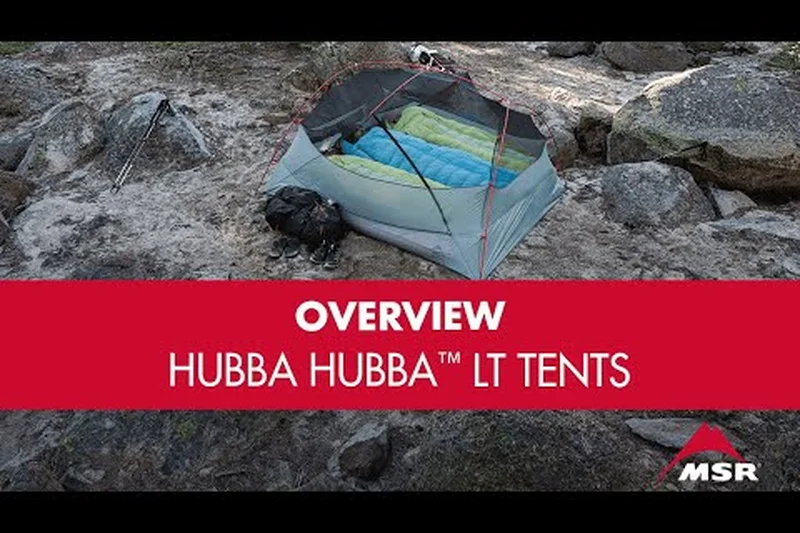
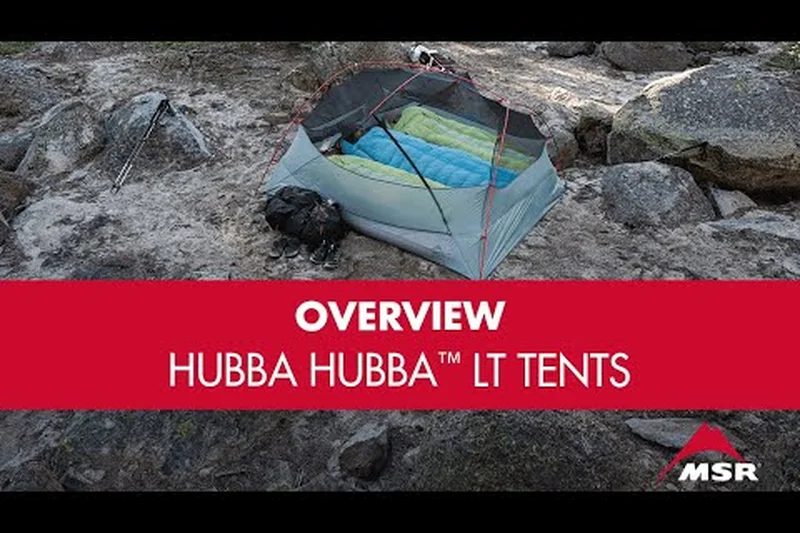
Why we picked it: The MSR Hubba Hubba has long been the benchmark for freestanding backpacking tents, and the new LT 2 model continues that legacy. Weighing 2 lbs 14 oz, it hits the sweet spot for weekend backpackers. Its standout feature is its perfectly rectangular floor plan—unlike many tents that taper at the feet, the Hubba Hubba comfortably accommodates two wide pads. The Easton Syclone composite poles are virtually indestructible in high winds, bending instead of snapping. The 20D ripstop nylon is robust, and the symmetrical design means no arguing over who gets the smaller door. It's a refined, highly reliable shelter.
Key Specs
- 2 lb 14 oz trail weight
- 29 sq ft floor area
- Easton Syclone poles
- Rectangular floor plan (no foot taper)
What we like
- Rectangular floor fits two wide pads
- Syclone poles are incredibly durable in wind
- Excellent ventilation and headroom
- Easy, intuitive freestanding setup
What we don't like
- Heavier than semi-freestanding competitors
- Expensive at $549
Best for: Weekend warriors and traditional backpackers who want a durable, spacious, no-fuss freestanding tent.
Considering the Hubba Hubba vs the Copper Spur? The Hubba Hubba has stronger poles and a non-tapered floor, while the Copper Spur is slightly lighter and has awning-style doors.
The quintessential all-around backpacking tent, featuring unmatched pole durability and a highly livable rectangular floor.
Buy at MSR official site#10 Big Agnes Copper Spur UL2 XL
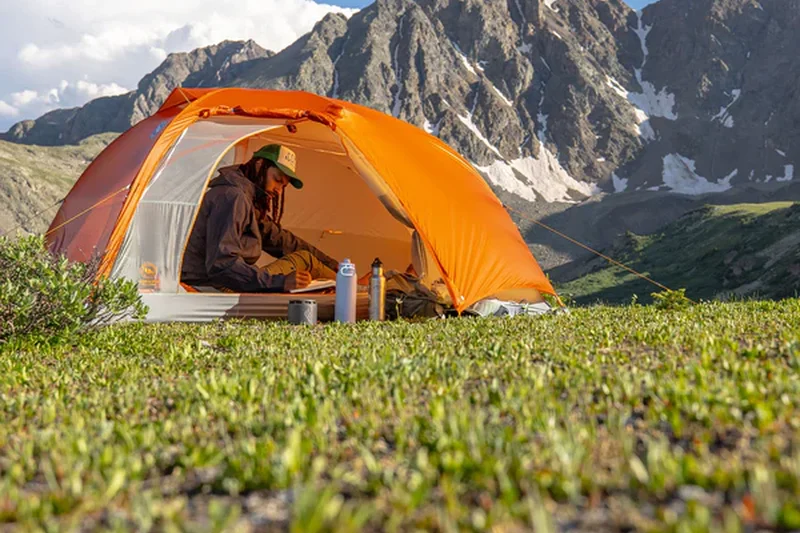
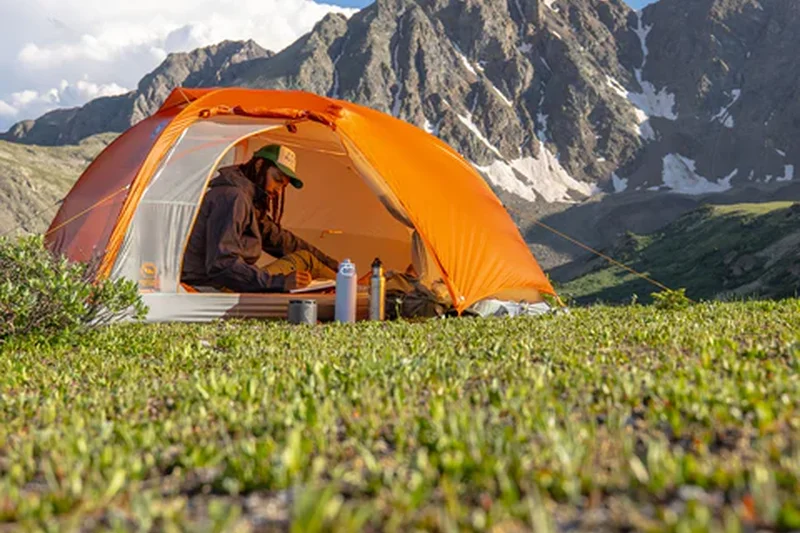
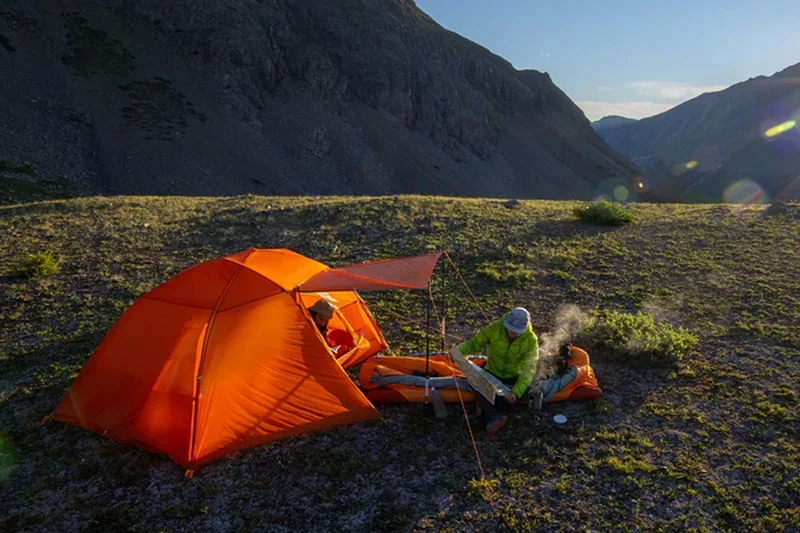
Why we picked it: For hikers towering over 6 feet tall, finding a tent where your sleeping bag doesn't rub against the wet walls is a constant struggle. The Big Agnes Copper Spur UL2 XL solves this by offering a massive 96-inch length and 36 sq ft of floor space. Despite the palatial dimensions, it weighs just 2 lbs 14 oz. It retains all the beloved features of the standard Copper Spur, including the high-volume hub pole design for vertical walls, immense interior pockets, and the brilliant awning-style vestibules that can be propped up with trekking poles for shade. It uses Big Agnes's proprietary HyperBead fabric for excellent water shedding.
Key Specs
- 2 lbs 14 oz trail weight
- 36 sq ft floor area
- 96" length for tall hikers
- Awning-style double vestibules
What we like
- Unrivaled legroom for tall hikers (96 inches long)
- Awning-style vestibules are great for relaxing
- Excellent weight-to-space ratio
- Huge gear loft and pockets
What we don't like
- Large footprint is tough to squeeze into small sites
- Premium price
Best for: Tall backpackers (6'2"+) who are tired of sleeping diagonally or pressing against wet tent walls.
Considering the Copper Spur XL vs the standard Copper Spur? If you are under 6'1", save the weight and get the standard; if you are taller, the XL is absolutely mandatory for comfort.
The ultimate freestanding shelter for tall hikers, providing exceptional length without a massive weight penalty.
Buy at Big Agnes official site#11 Big Agnes Tiger Wall UL3 Solution Dye
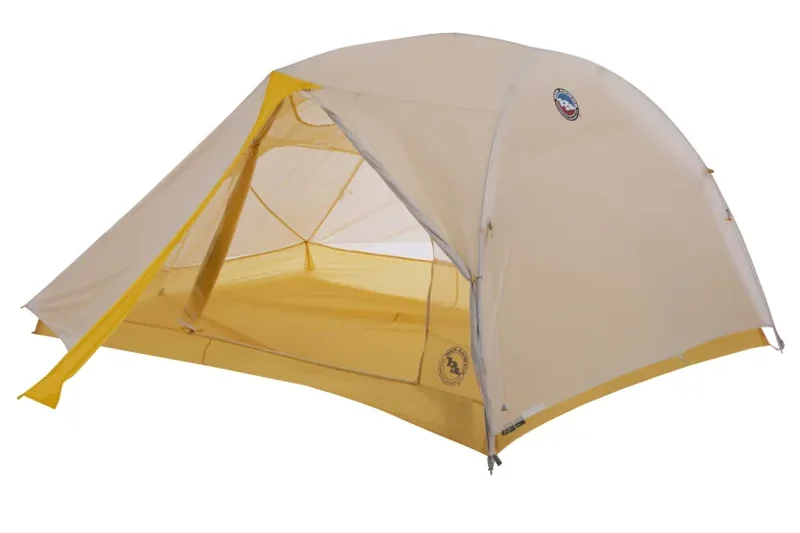
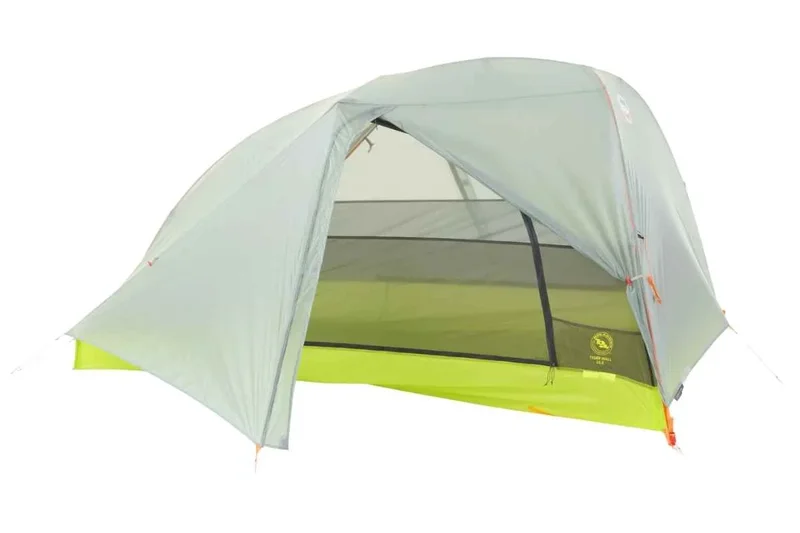
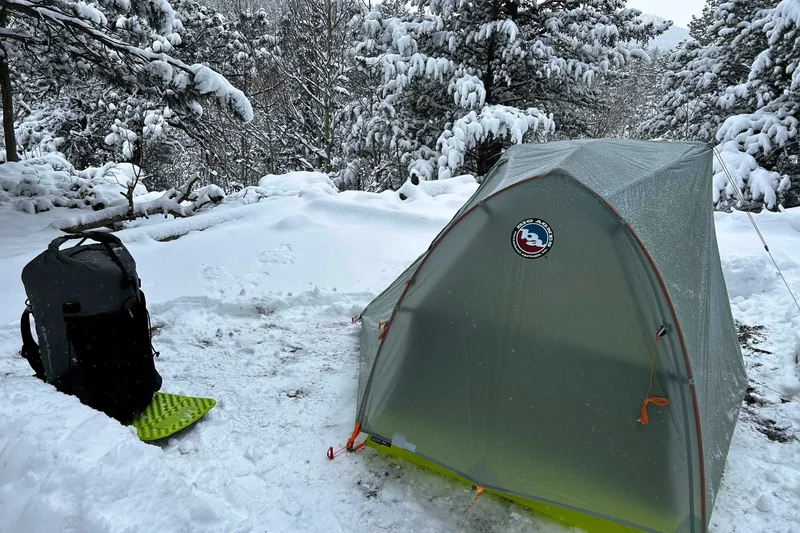
Why we picked it: The "three-person tent for two people" is a popular strategy for couples who prioritize space, and the Big Agnes Tiger Wall UL3 is the perfect candidate. It weighs an astonishingly low 2 lbs 10 oz—lighter than many 2-person tents—yet provides a sprawling 38 sq ft of floor space. It is a semi-freestanding design, utilizing a single hubbed pole architecture that requires the foot end to be staked out. The solution-dyed fabric drastically reduces water and energy consumption during manufacturing while increasing UV resistance. For couples who want room to play cards or bring a dog without carrying heavy loads, this is the gold standard.
Key Specs
- 2 lbs 10 oz trail weight
- 38 sq ft floor area
- Solution-dyed water-repellent nylon
- Single-pole architecture
What we like
- Incredibly light for a 3-person tent
- Massive interior space for two people
- Eco-friendly solution-dyed fabric
- Easy color-coded setup
What we don't like
- Semi-freestanding design requires good staking
- Fabric is thin and requires a footprint or careful site selection
Best for: Couples who want the luxury of a 3-person tent space without carrying 3-person tent weight.
Considering the Tiger Wall UL3 vs the Copper Spur UL3? The Tiger Wall is significantly lighter and semi-freestanding, while the Copper Spur is fully freestanding but heavier.
An ultralight marvel that provides three-person livability at a weight that solo hikers used to carry.
Buy at Big Agnes official site#12 REI Co-op Half Dome SL 2+
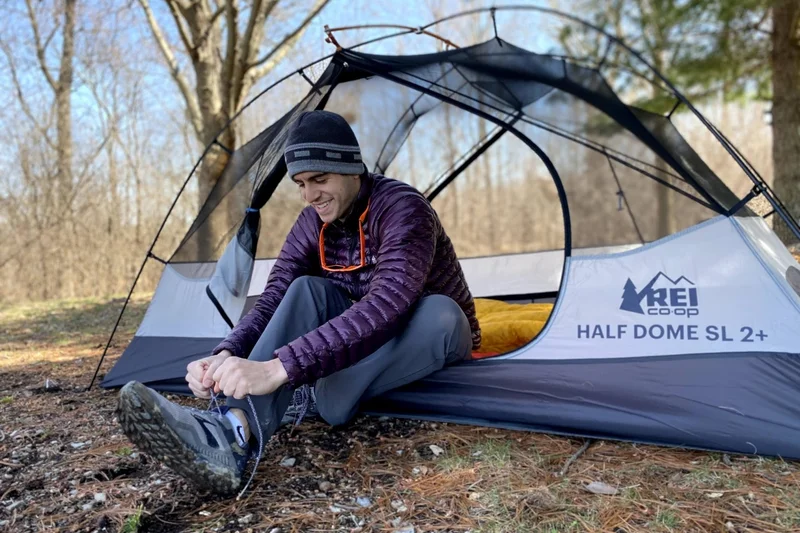
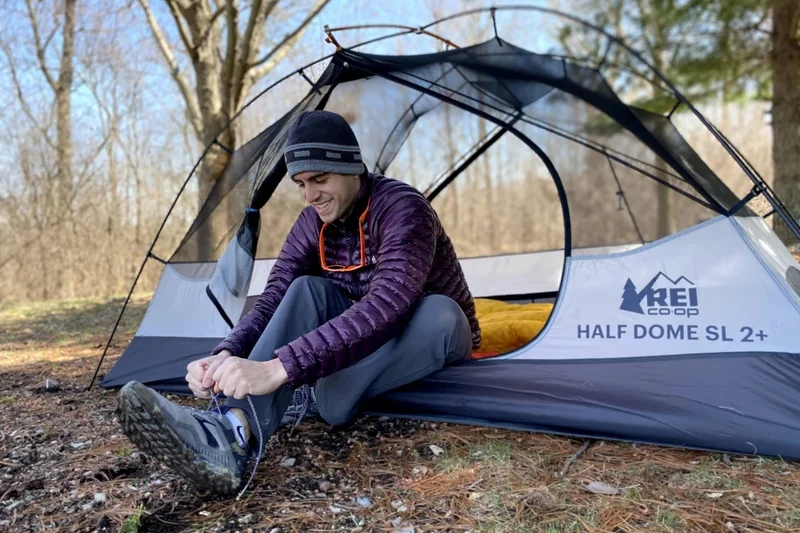
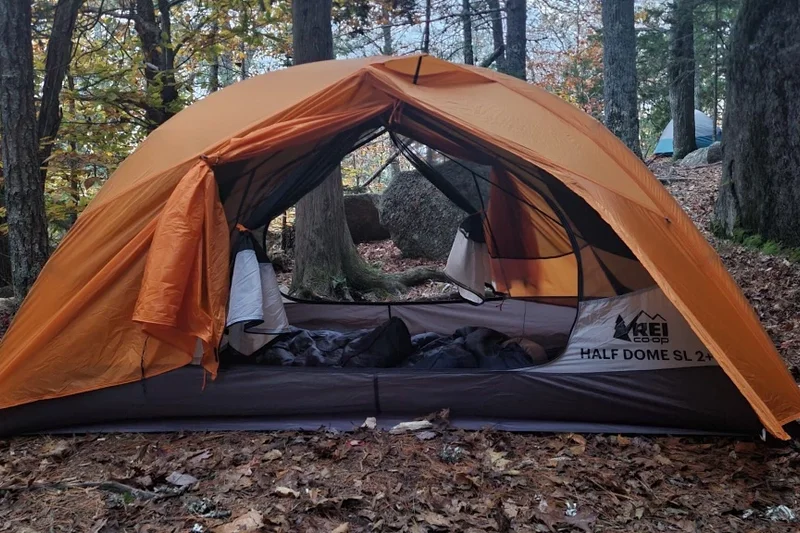
Why we picked it: The REI Co-op Half Dome SL 2+ is the definition of a comfort-first backpacking tent. The "SL" stands for Super Light, and while 3 lbs 15 oz isn't ultralight, it is a great weight for the sheer volume of space provided. The "2+" designation means it is oversized, boasting 35.8 sq ft of floor area and nearly vertical walls. It comfortably fits two large adults and gear with room to spare. At $349, it includes a custom footprint (saving you $50+), making it a stellar value. The color-coded hubbed pole system is incredibly intuitive, making it perfect for beginners and seasoned campers alike.
Key Specs
- 3 lbs 15 oz trail weight
- 35.8 sq ft floor area
- Includes custom footprint
- Spacious plus-size dimensions
What we like
- Incredible interior space and headroom
- Included footprint adds massive value
- Very durable floor and fly materials
- Excellent roof ventilation
What we don't like
- Heavy for long-distance backpacking
- Bulky packed size
Best for: Beginners, casual backpackers, and couples who prioritize sprawling comfort over shaving ounces.
Considering the Half Dome vs the Marmot Tungsten? The Half Dome offers more interior volume and slightly better ventilation for a similar weight penalty.
A palatial, durable, and value-packed tent that serves as the perfect entry point into comfortable backpacking.
Buy at REI official site#13 MSR Hubba Hubba LT 1
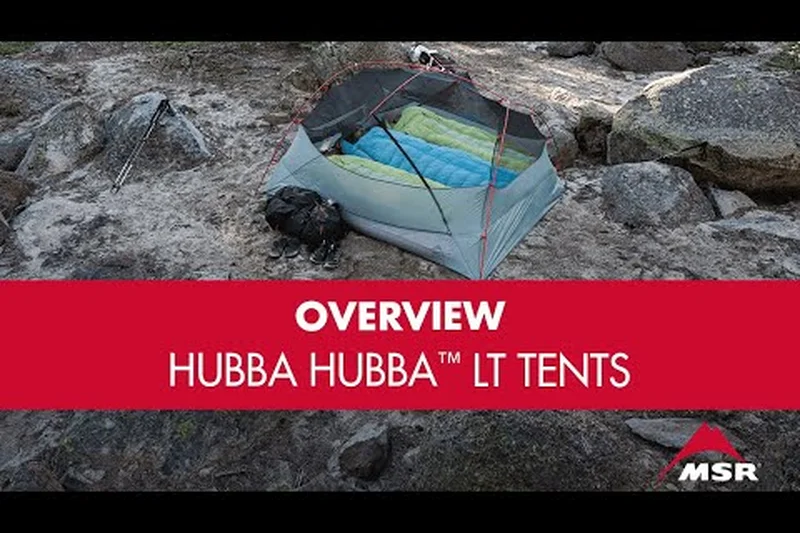
Why we picked it: Solo freestanding tents often feel like coffins, but the MSR Hubba Hubba LT 1 bucks this trend with an innovative pole geometry that creates completely vertical side walls. This design provides exceptional headroom, allowing you to sit up, change clothes, and organize gear without feeling claustrophobic. At 2 lbs 6 oz, it is highly competitive for a fully freestanding solo shelter. The solution-dyed 20D ripstop nylon is resilient, and the large side door and vestibule provide ample gear storage. It’s perfect for hikers who want the reliable, rock-solid pitch of an MSR without relying on trekking poles.
Key Specs
- 2 lbs 6 oz trail weight
- 20 sq ft floor area
- Solution-dyed 20D ripstop nylon
- Unified hub-and-pole system
What we like
- Vertical walls create excellent headroom
- Fully freestanding convenience
- Highly durable Easton Syclone poles
- Eco-friendly solution-dyed fabric
What we don't like
- Heavier than trekking-pole solo tents
- Floor space is adequate but not overly wide
Best for: Solo backpackers who prioritize freestanding reliability and sitting headroom over absolute minimum weight.
Considering the Hubba Hubba 1 vs the Big Agnes Fly Creek 1? The Hubba Hubba has a much better side-entry door, whereas the Fly Creek has an awkward front-entry door.
A premium, rock-solid freestanding solo tent that offers best-in-class livability and headroom.
Buy at MSR official site#14 NEMO Dagger OSMO 2P
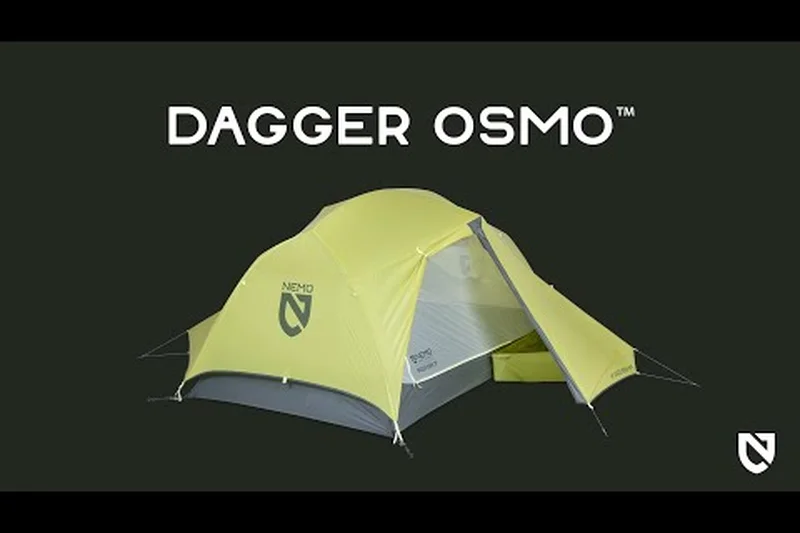
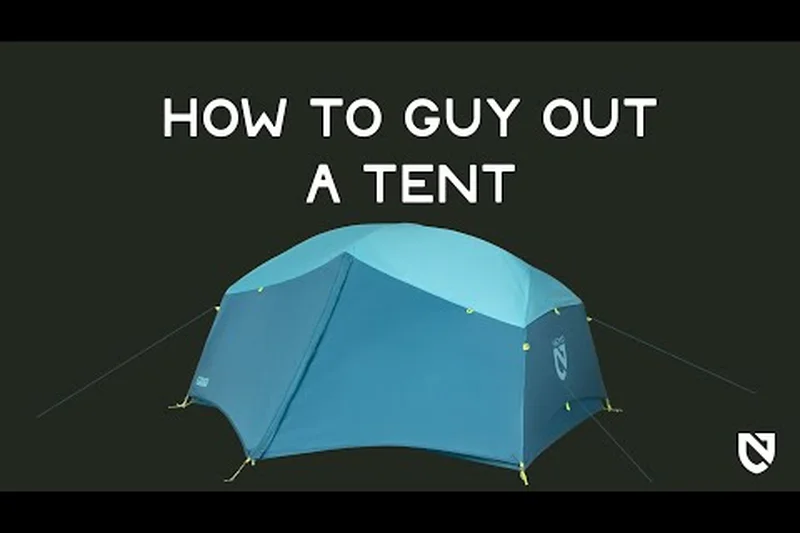
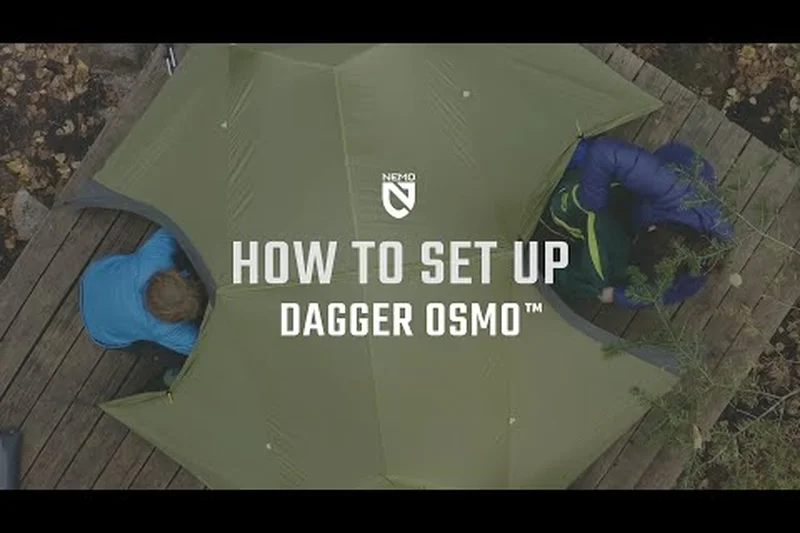
Why we picked it: The NEMO Dagger OSMO 2P is the king of gear storage. It features two massive trapezoidal vestibules that provide enough covered outdoor space for packs, boots, and even a wet dog. It utilizes NEMO's proprietary OSMO poly-nylon ripstop fabric, which is 100% recycled, PFAS-free, and remarkably prevents the sagging typically associated with wet nylon. Weighing 3 lbs 5 oz, it borders the heavier side of lightweight backpacking, but the 30.6 sq ft floor and included "Landing Zone" waterproof storage tub make it incredibly luxurious. It's the ultimate crossover tent for both backpacking and car camping.
Key Specs
- 3 lbs 5 oz trail weight
- 30.6 sq ft floor area
- 100% recycled OSMO poly-nylon ripstop
- Massive dual trapezoidal vestibules
What we like
- Industry-leading vestibule space
- OSMO fabric won't sag when wet
- Landing Zone tub keeps gear clean
- Spacious, rectangular floor plan
What we don't like
- Heavier than its direct ultralight competitors
- A bit bulky when packed
Best for: Hikers who carry a lot of bulky gear or want a single tent for both backcountry and frontcountry trips.
Considering the Dagger OSMO vs the Copper Spur? The Dagger is heavier but provides vastly superior vestibule space and a sag-free fabric.
A luxuriously spacious tent with revolutionary sag-free fabric and the biggest vestibules in the game.
Buy at NEMO official site#15 Zpacks Plex Solo
Why we picked it: The Zpacks Plex Solo is an exercise in ruthless ultralight efficiency. Weighing a mind-boggling 13.9 oz, this single-wall Dyneema tent is the darling of the Triple Crown thru-hiking trails (PCT, CDT, AT). It requires a single trekking pole set to 52 inches, creating a soaring peak height that makes the tapered 28-38 inch width feel surprisingly livable. The DCF material sheds rain effortlessly and absorbs no water weight. While you have to manage condensation and pay a premium $599 price, the weight savings on your back are transformative. It pitches quickly with 6-10 stakes.
Key Specs
- 13.9 oz trail weight
- 52" peak height
- Dyneema DCF materials
- Hybrid pyramid shape
What we like
- Absurdly lightweight (under 1 lb)
- Massive 52-inch peak height
- DCF material is completely waterproof
- Pitches with just one trekking pole
What we don't like
- Single-wall condensation
- Tapered floor is tight for wide pads
- Expensive
Best for: Minimalist thru-hikers who want to achieve a sub-10 lb base weight.
Considering the Plex Solo vs the Gossamer Gear The One? The Plex Solo is lighter and uses waterproof Dyneema, but The One is half the price and slightly more spacious.
The ultimate featherweight shelter for hardcore thru-hikers who count every single gram.
Buy at Zpacks official site#16 Sea to Summit Telos TR2
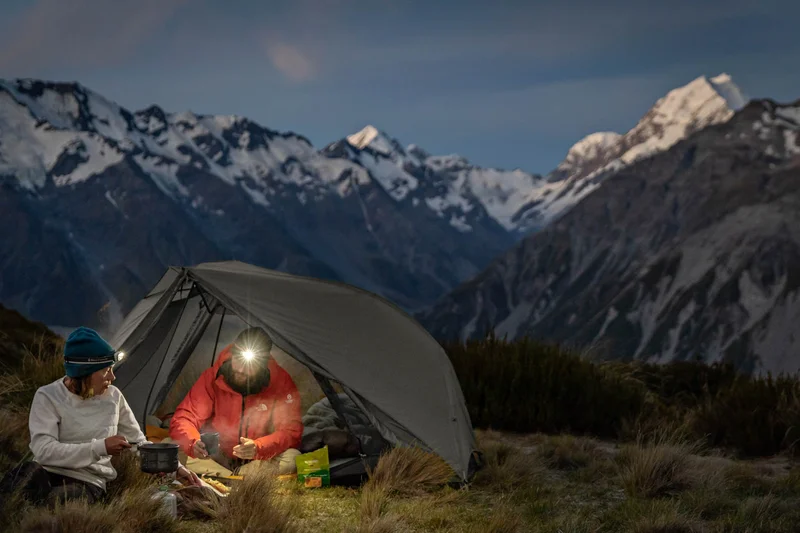
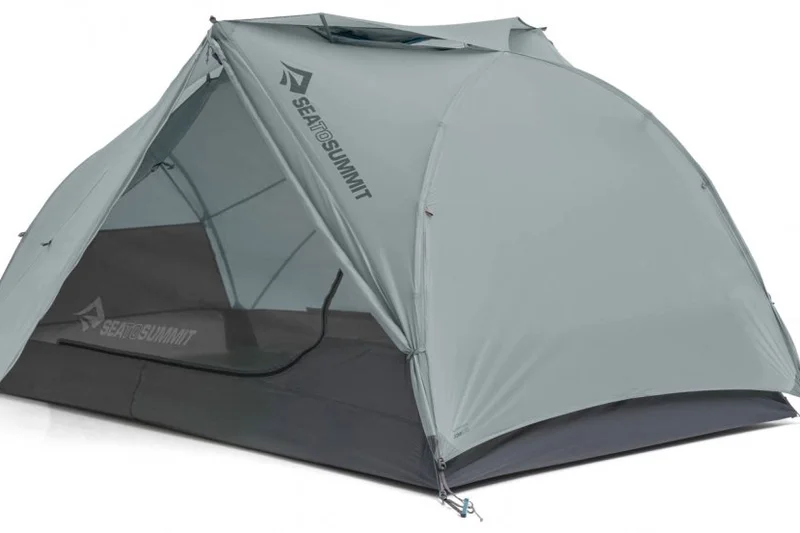
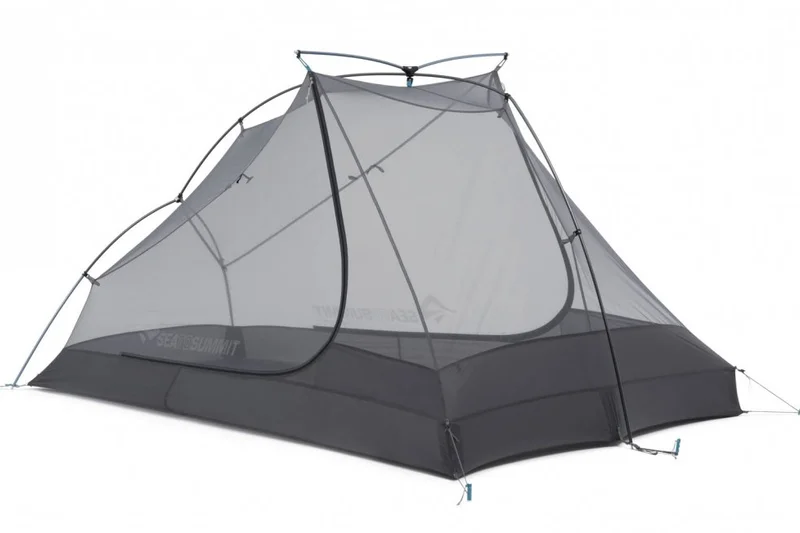
Why we picked it: The Sea to Summit Telos TR2 introduced a radical shift in tent geometry with its inverted Tension Ridge pole. Unlike traditional poles that bend downward, the Telos's roof pole bends upward, creating doors that are taller than the center of the tent. This creates phenomenal livability, incredible headroom, and completely vertical walls. It also boasts the best ventilation system we tested, with massive apex vents that actively expel hot air. The FairShare modular packing system allows you to easily split the weight with a partner. Weighing 3 lbs 4.3 oz, it's slightly heavier, but the climate control and space are exceptional.
Key Specs
- 3 lbs 4.3 oz trail weight
- 28 sq ft floor area
- Tension Ridge architecture for peak height
- Lightbar light-diffusing pole bag
What we like
- Best-in-class ventilation system
- Tension Ridge creates unmatched headroom
- Modular packing system is brilliant for splitting weight
- Lightbar feature turns headlamp into a soft lantern
What we don't like
- Heavier than the Copper Spur
- Complex pole hub can be finicky to set up initially
Best for: Hikers in humid climates who need superior ventilation and couples who want maximum headroom.
Considering the Telos TR2 vs the NEMO Dagger? The Telos offers superior ventilation and headroom, while the Dagger provides larger vestibules for gear storage.
A highly innovative shelter that solves the condensation puzzle while delivering massive interior volume.
Buy at Sea to Summit official site#17 Big Agnes Copper Spur HV UL2
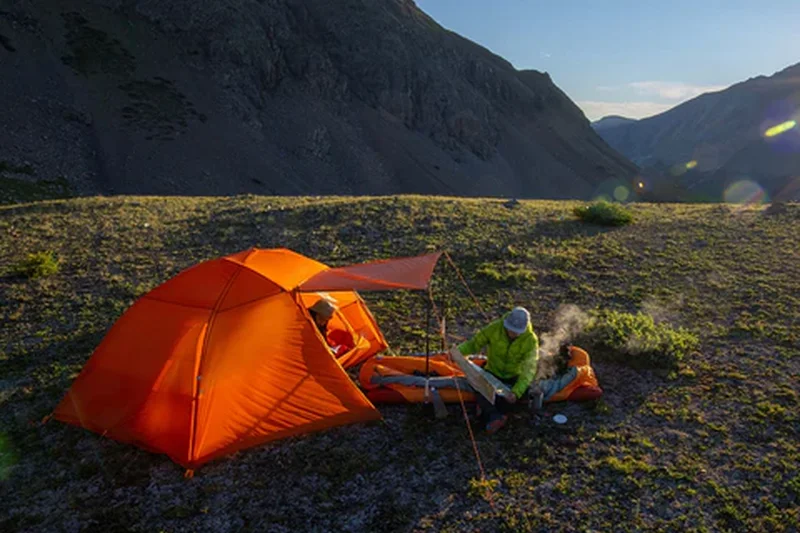
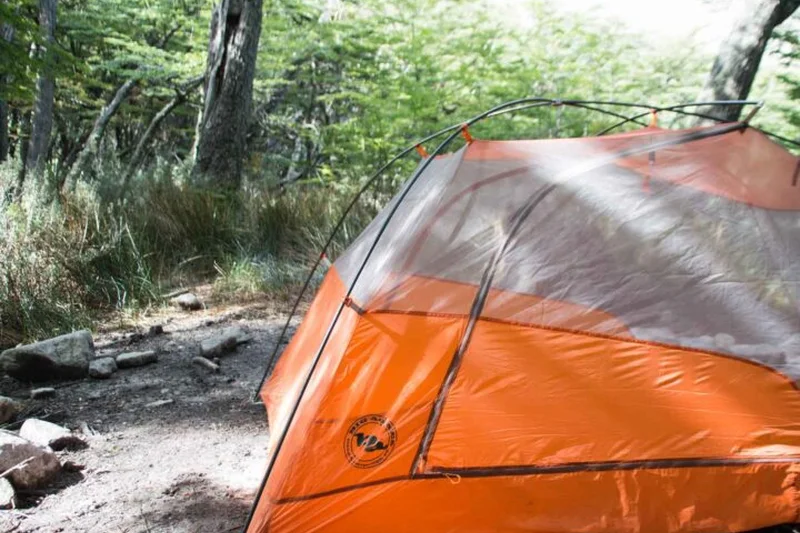
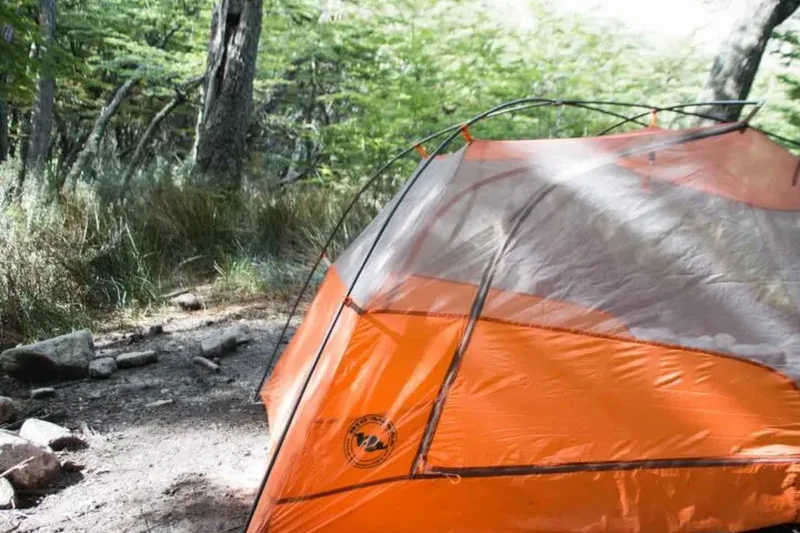
Why we picked it: The Big Agnes Copper Spur HV UL2 is the benchmark against which all other freestanding ultralight tents are judged. Striking a near-perfect balance between weight (2 lb 11 oz) and livability (29 sq ft), it is the default choice for thousands of backpackers. The "High Volume" hub design pushes the walls outward, creating a spacious interior. The awning-style vestibules are a standout feature, allowing you to prop the fly doors up with trekking poles to create a shaded porch for cooking in the rain. The mixed-denier double ripstop nylon is adequately durable, though care should be taken on rough ground.
Key Specs
- 2 lb 11 oz trail weight
- 29 sq ft floor area
- High-volume hub design for extra headroom
- Awning-style vestibules
What we like
- Perfect balance of weight and space
- Awning-style doors are a game changer in light rain
- Fully freestanding and easy to pitch
- Excellent interior pockets including a massive 3D bin
What we don't like
- Floor tapers slightly at the foot end
- Zippers can snag if not operated carefully
Best for: The "everyman" backpacker looking for a reliable, lightweight, fully-featured freestanding tent.
Considering the Copper Spur vs the Hubba Hubba? The Copper Spur is lighter and has the awning doors, while the Hubba Hubba has stronger poles and a non-tapered floor.
The gold standard of freestanding backpacking tents, offering incredible livability at an impressively low weight.
Buy at Big Agnes official site#18 Zpacks Duplex
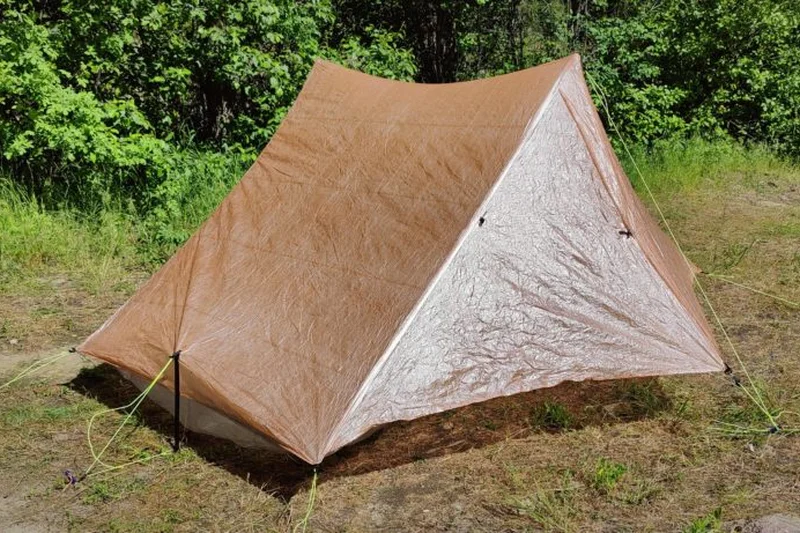
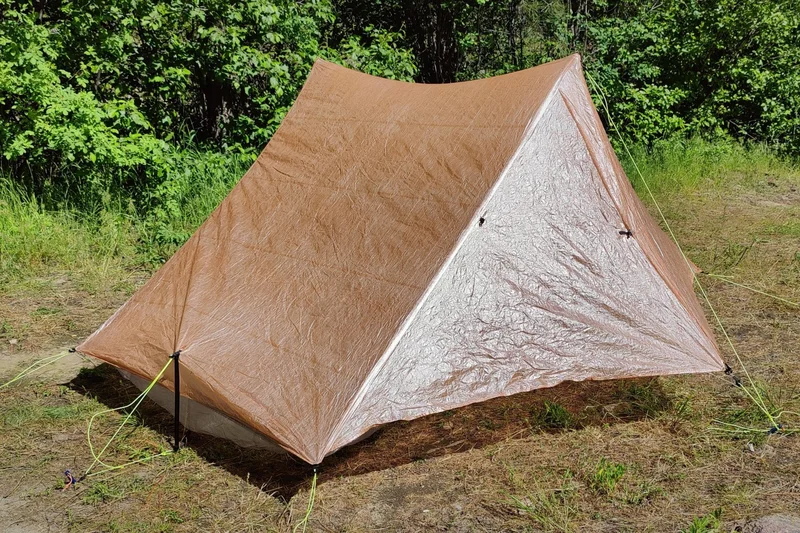
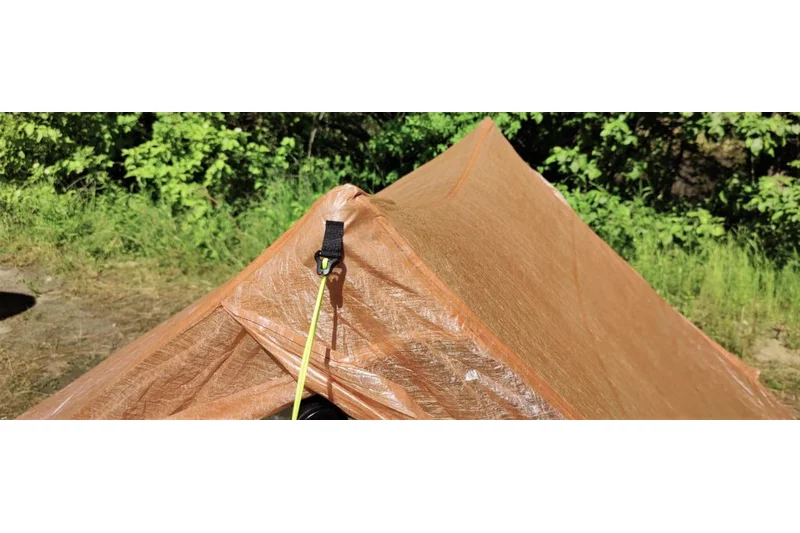
Why we picked it: For years, the Zpacks Duplex has been the most popular tent on long-distance trails, and for good reason. At just 18.5 oz, this 2-person Dyneema shelter is lighter than almost every 1-person tent on the market. It requires two trekking poles and a minimum of 6 stakes to pitch. The symmetrical design provides two doors and two vestibules, making it highly livable for a solo hiker looking for a "palace" or two hikers willing to cuddle close on standard 20-inch pads. The DCF material will outlast thousands of miles if cared for. Condensation is a factor due to the single-wall design, but leaving the storm doors open mitigates it.
Key Specs
- 18.5 oz trail weight
- 28 sq ft floor area
- Dyneema Composite Fabric (DCF)
- Requires 2 trekking poles
What we like
- Legendary weight-to-space ratio
- DCF is 100% waterproof and won't sag
- Incredibly spacious for a solo hiker
- Proven durability on the Triple Crown trails
What we don't like
- Tight fit for two people
- Single-wall condensation
- Expensive at $699
Best for: Thru-hikers and ultralight enthusiasts who want a proven, ultra-lightweight Dyneema shelter.
Considering the Duplex vs the Durston X-Mid Pro 2? The X-Mid Pro 2 offers more headroom, a better pitch geometry, and hot-bonded seams for a similar weight and price.
An ultralight icon that defined the modern thru-hiking era, offering immense weight savings.
Buy at Zpacks official site#19 Hyperlite Mountain Gear Unbound 2P
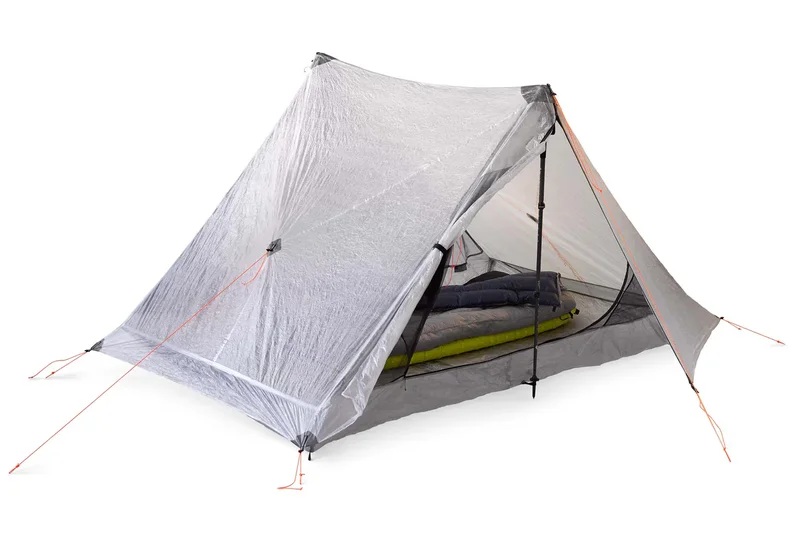
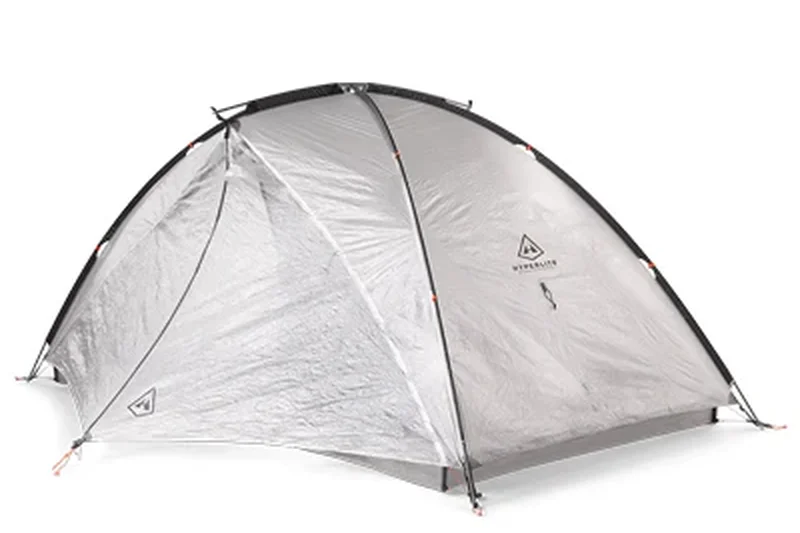
Why we picked it: The Hyperlite Mountain Gear Unbound 2P is a direct competitor to the Zpacks Duplex, offering a highly refined take on the 2-person Dyneema trekking pole tent. Weighing 22 oz, it features 3D constructed side walls that create excellent headroom and prevent the mesh from sagging onto your face. It utilizes highly durable #3 YKK Aquaguard zippers on the dual doors, addressing a common failure point in ultralight tents. The DCF construction is immaculate, showcasing Hyperlite's renowned build quality. It is a highly capable, storm-worthy single-wall shelter that offers slightly more livable geometry than traditional A-frame designs.
Key Specs
- 22 oz trail weight
- 28 sq ft floor area
- Dyneema Composite Fabric (DCF)
- Dual #3 YKK Aquaguard doors
What we like
- Immaculate DCF build quality
- 3D side walls increase usable space
- Durable waterproof zippers
- Excellent weight for a 2-person footprint
What we don't like
- Expensive
- Packed size is quite bulky
- Single wall condensation
Best for: Discerning ultralight hikers who prioritize premium build quality and durable zippers in a DCF shelter.
Considering the Unbound 2P vs the Duplex? The Unbound has better zippers and side-wall geometry, while the Duplex is slightly lighter.
A premium, ruggedly built Dyneema shelter that refines the classic trekking pole design.
Buy at Hyperlite official site#20 Sea to Summit Alto TR2
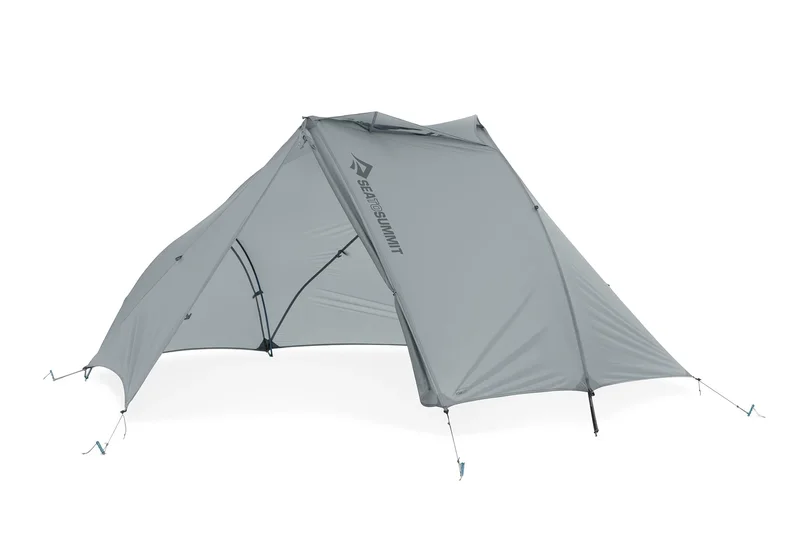
Why we picked it: The Sea to Summit Alto TR2 brings the innovative Tension Ridge architecture of the Telos to a lighter, semi-freestanding design. Weighing 2 lbs 15 oz, it provides a massive 42.5-inch peak height and doors that open incredibly high, making entry and exit a breeze. It uses a Y-pole structure, meaning the foot end must be staked out. The ventilation is exceptional, effectively channeling hot air out through the apex vent to minimize condensation. The FairShare storage bags can be snapped into the tent to serve as gear pockets, demonstrating Sea to Summit's clever design ethos.
Key Specs
- 2 lbs 15 oz trail weight
- 27 sq ft floor area
- Tension Ridge pole design
- 42.5" peak height
What we like
- Unrivaled headroom and vertical doors
- Excellent apex ventilation
- Clever modular packing system
- Very easy entry and exit
What we don't like
- Semi-freestanding requires good stakes at the foot
- Floor space is slightly narrow for two wide pads
Best for: Solo hikers wanting a mansion or average-sized couples who highly value headroom and ventilation.
Considering the Alto TR2 vs the Big Agnes Tiger Wall? The Tiger Wall is lighter, but the Alto offers vastly superior headroom and climate control.
A highly ventilated, semi-freestanding tent that feels much larger than its footprint suggests.
Buy at Sea to Summit official site#21 Hilleberg Niak
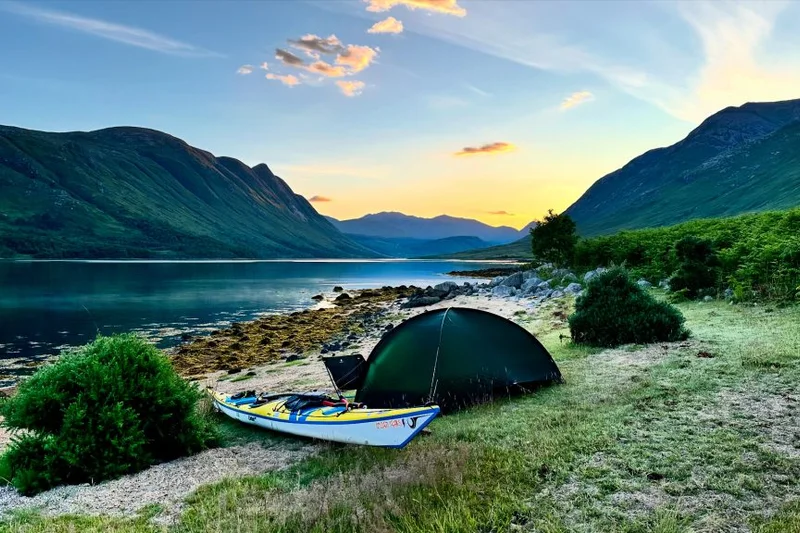
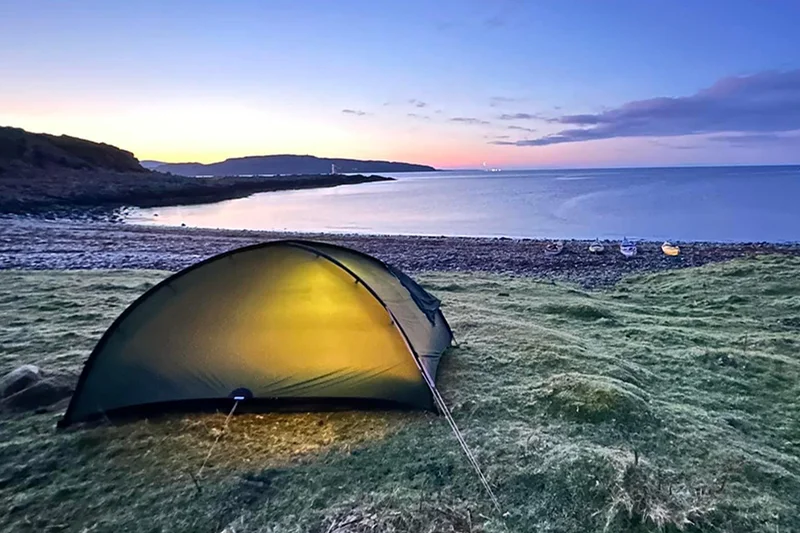
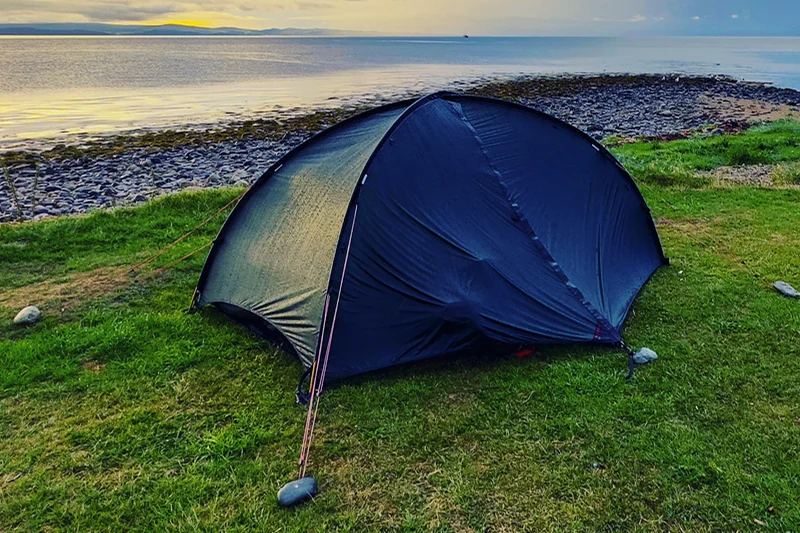
Why we picked it: The Hilleberg Niak is categorized as a 1.5-person tent, meaning it is a palace for a solo hiker and a tight squeeze for a couple, but its real claim to fame is its absolute invincibility. Built by the Swedish masters of extreme weather gear, the Niak uses insanely strong Kerlon 1000 fabric and 9mm DAC NSL poles. It is a true 3-season-plus tent that will shrug off brutal Patagonian winds, torrential Scottish downpours, and unexpected snow loads. Weighing 3.3 lbs, it is heavier than ultralight options, but the outer-pitch-first design means the inner tent never gets wet during setup in a storm. At $995, it is an heirloom piece of equipment.
Key Specs
- 3.3 lbs trail weight
- 28 sq ft floor area
- Kerlon 1000 fly fabric
- Self-supporting dome design
What we like
- Indestructible Kerlon materials
- Outer-first pitch keeps interior dry in rain
- Incredible high-wind stability
- Heirloom build quality
What we don't like
- Very expensive ($995)
- Only one door and vestibule
- Heavy for solo use
Best for: Hikers tackling harsh, exposed environments like Iceland, Patagonia, or the Scottish Highlands.
Considering the Niak vs the SlingFin Portal? The Niak offers superior fabric tear strength and an outer-first pitch, while the Portal is lighter and has two doors.
The ultimate bombproof shelter for those who view bad weather as a guarantee rather than a possibility.
Buy at Hilleberg official site#22 Big Agnes Tiger Wall UL2 Solution Dye
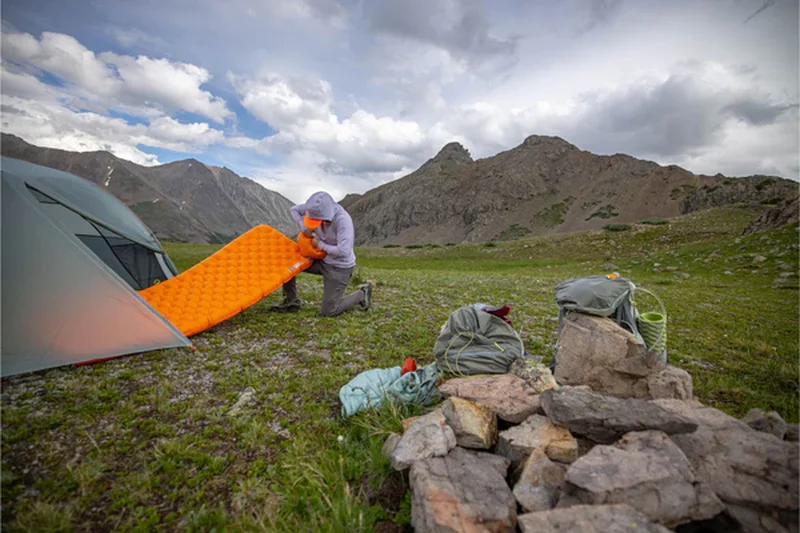
Why we picked it: The Big Agnes Tiger Wall UL2 is the quintessential semi-freestanding tent, hitting a phenomenal trail weight of just 2 lbs 3 oz while retaining two doors and two vestibules. This makes it significantly more livable than front-entry semi-freestanding tents. It achieves this weight through a Y-pole hub design and thinner materials. The solution-dyed fabric is highly resistant to UV fading. It is snug for two people (28 sq ft), but as a luxury solo tent, it is spectacular. Setup is fast and color-coded, making it a favorite for fastpackers and section hikers.
Key Specs
- 2 lbs 3 oz trail weight
- 28 sq ft floor area
- Solution-dyed HyperBead fabric
- DAC Featherlite NFL poles
What we like
- Incredibly light for a two-door tent
- Two vestibules provide great gear storage
- Eco-friendly solution-dyed materials
- Fast, color-coded setup
What we don't like
- Thin floor requires care or a footprint
- Semi-freestanding requires solid stakes at the feet
Best for: Hikers who want ultralight performance without giving up the convenience of a dedicated pole structure.
Considering the Tiger Wall vs the NEMO Hornet Elite? The Tiger Wall is slightly heavier but significantly more spacious and durable than the ultra-thin Hornet.
A top-tier semi-freestanding tent that strikes a brilliant compromise between weight and traditional features.
Buy at Big Agnes official site#23 Gossamer Gear The One
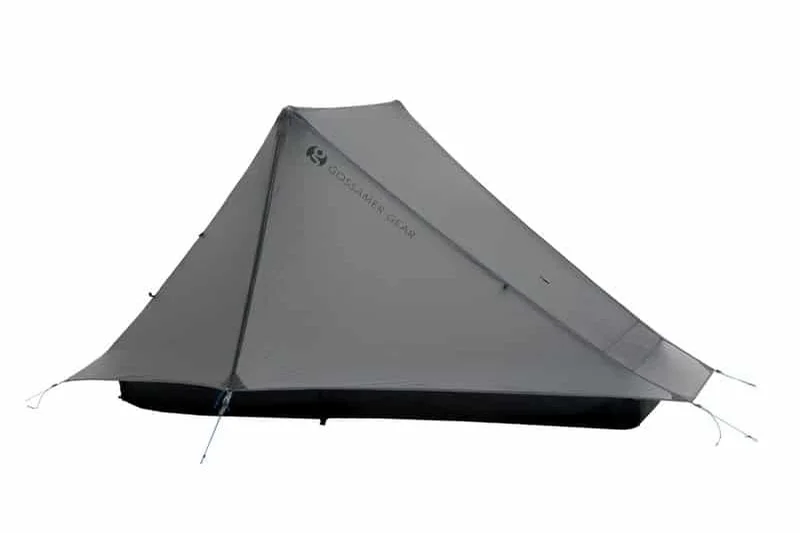
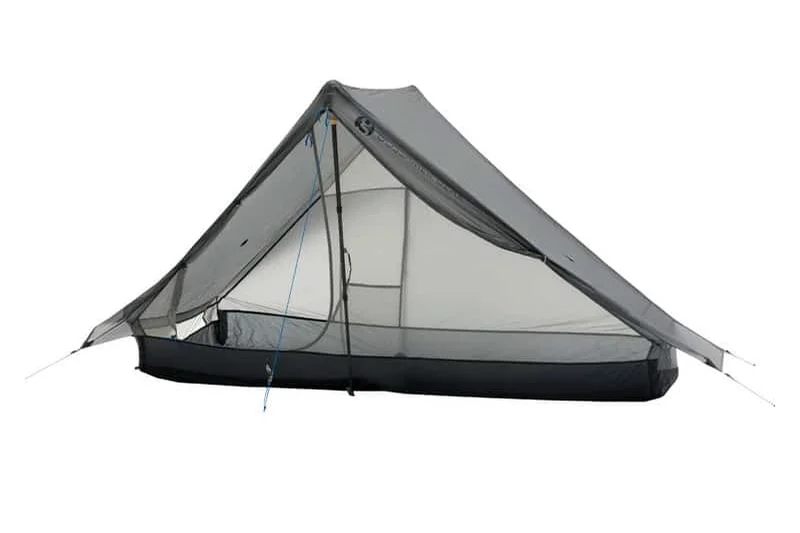
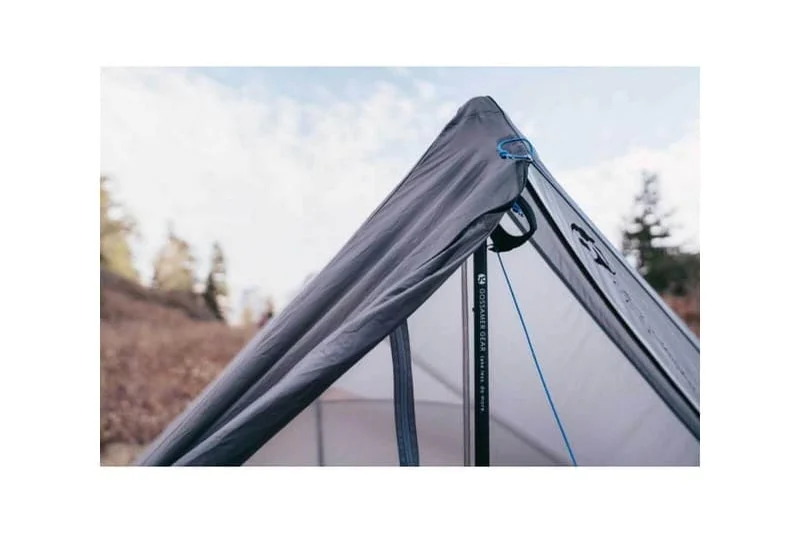
Why we picked it: Gossamer Gear's The One is a single-wall trekking pole tent that offers an astounding weight of 17.7 oz for a highly approachable $299. It uses an offset A-frame design supported by two trekking poles, providing a large front vestibule and plenty of sitting headroom. The 10D Nylon Ripstop SIL/PU fabric sheds water well, though it requires re-tensioning at night. The ventilation is surprisingly good for a single-wall tent, aided by a large mesh door and rear vent. It's an ideal choice for solo hikers looking to slash their base weight without spending Dyneema prices.
Key Specs
- 17.7 oz trail weight
- 15.8 sq ft floor area
- 10D Nylon Ripstop SIL/PU fabric
- Large front vestibule
What we like
- Incredible value for the weight ($299)
- Under 18 oz trail weight
- Easy to pitch with two trekking poles
- Good ventilation for a single-wall tent
What we don't like
- 10D fabric is delicate
- Nylon material will sag when wet
Best for: Budget-conscious ultralight solo hikers wanting a proven, featherweight trekking pole shelter.
Considering The One vs the Six Moon Designs Lunar Solo? The One is lighter and uses two poles for a more traditional shape, while the Lunar Solo uses sag-free SilPoly and a single pole.
A fantastic entry point into the ultralight world, offering incredible weight savings at a very fair price.
Buy at Gossamer Gear official site#24 Gossamer Gear The Two
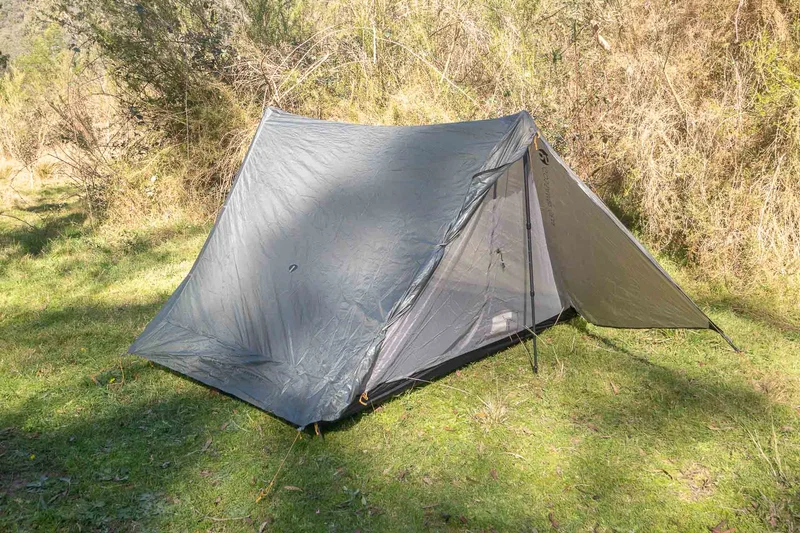
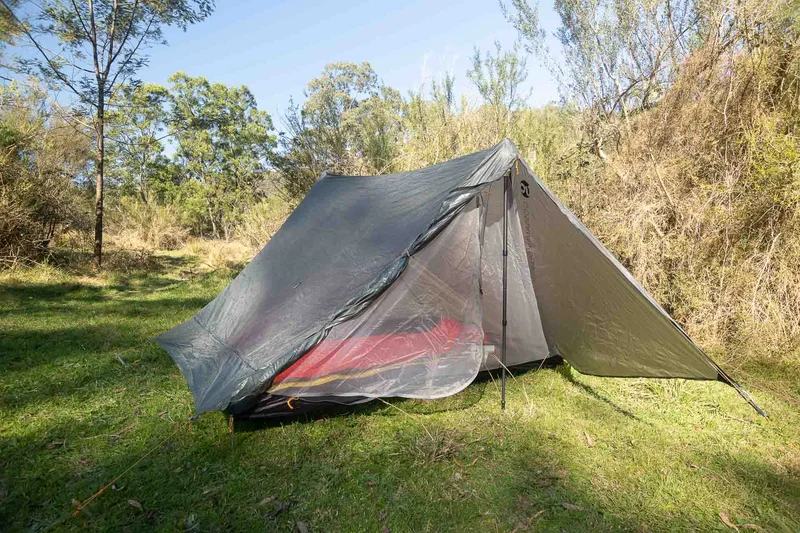
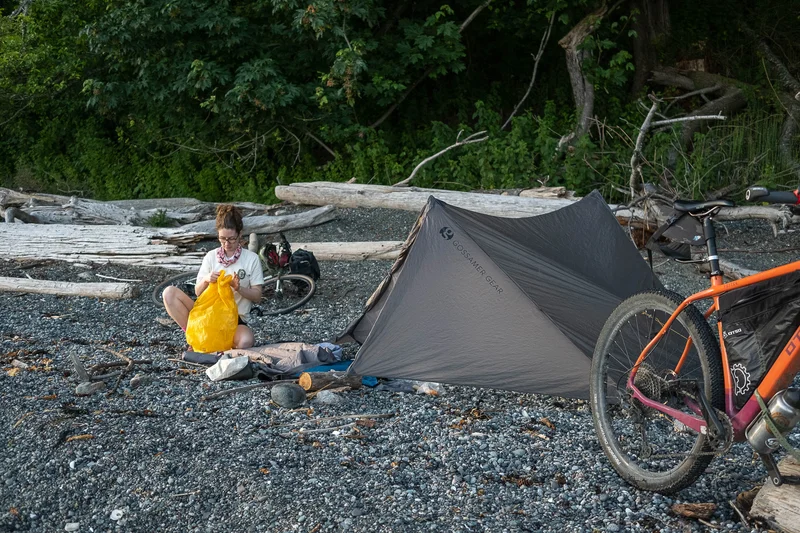
Why we picked it: Scaling up their popular solo tent, Gossamer Gear's The Two offers 26.25 sq ft of space for just 23.5 oz. At $320, it is one of the most cost-effective ways to get a 2-person ultralight setup. It features dual doors and vestibules, which is crucial for not climbing over your partner in the middle of the night. The single-wall design uses 10D Sil/PU Nylon, requiring careful site selection to avoid punctures and condensation management. It requires two trekking poles to pitch and provides excellent headroom across the ridgeline.
Key Specs
- 23.5 oz trail weight
- 26.25 sq ft floor area
- 10D Sil/PU Nylon ripstop
- Dual doors & vestibules
What we like
- Exceptionally light for two people (23.5 oz)
- Great price point ($320)
- Dual doors and vestibules
- Generous headroom along the ridgeline
What we don't like
- Delicate 10D nylon fabric
- Condensation can be an issue in humid weather
Best for: Ultralight couples or solo hikers wanting a sprawling interior on a strict budget.
Considering The Two vs the Durston X-Mid 2? The X-Mid 2 is slightly heavier but features a superior double-wall design, sag-free SilPoly, and better storm geometry.
An affordable, insanely light 2-person shelter that performs beautifully when treated with care.
Buy at Gossamer Gear official site#25 NEMO Dragonfly OSMO 2P
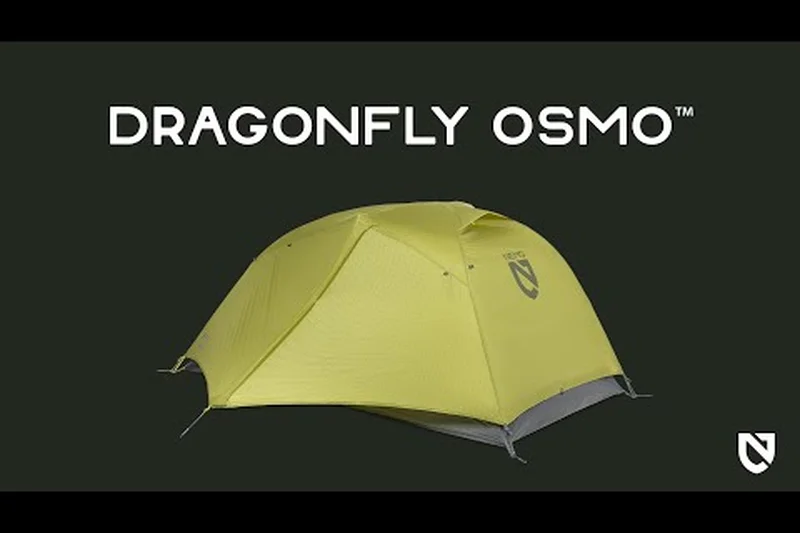
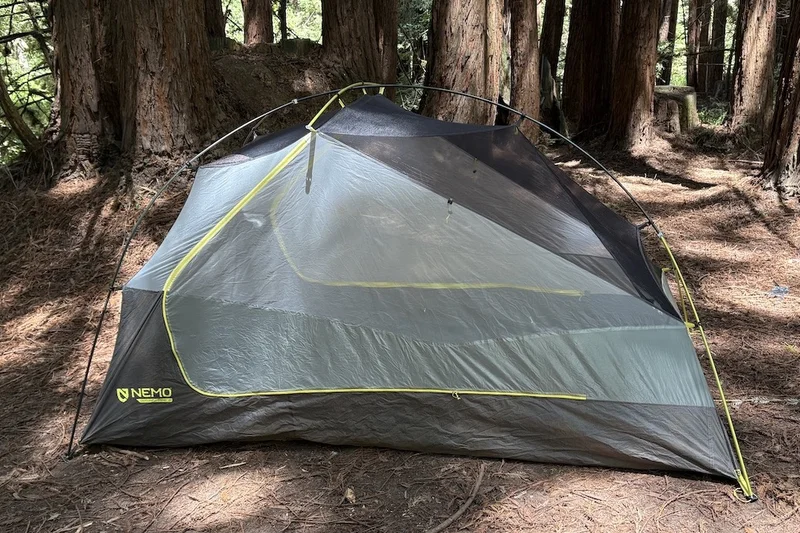
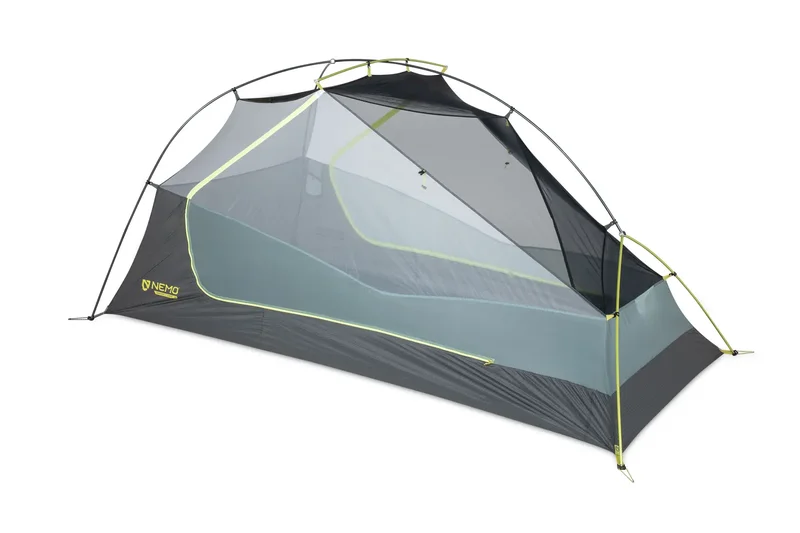
Why we picked it: The NEMO Dragonfly OSMO 2P hits a brilliant middle ground between the spacious Dagger and the ultralight Hornet. Weighing 3 lbs 2 oz, it offers a fully freestanding pitch with an asymmetrical floor plan (wider at the head). The standout feature is its massive, uniquely shaped asymmetrical vestibules that zip from the side, allowing you to store bulky gear without blocking the doorway. The proprietary OSMO fabric won't sag when wet, and the Nightlight Pocket diffuses a headlamp to create a warm, glowing cabin. It is a highly livable, feature-rich tent.
Key Specs
- 3 lbs 2 oz trail weight
- 29 sq ft floor area
- 100% recycled OSMO poly-nylon ripstop
- Asymmetrical vestibules
What we like
- OSMO fabric eliminates wet-stretch
- Vestibule design keeps gear out of the entryway
- Fully freestanding geometry
- Great interior pocket organization
What we don't like
- Tapered foot end restricts pad size
- Pricey compared to similar-weight options
Best for: Backpackers who want a fully freestanding tent with superior gear storage and sag-free fabric.
Considering the Dragonfly vs the Copper Spur? The Dragonfly has better fabric (OSMO) and unique vestibules, but the Copper Spur is slightly lighter with a more uniform interior.
A premium freestanding tent featuring advanced fabrics and incredibly clever vestibule geometry.
Buy at NEMO official site#26 MSR Access 2
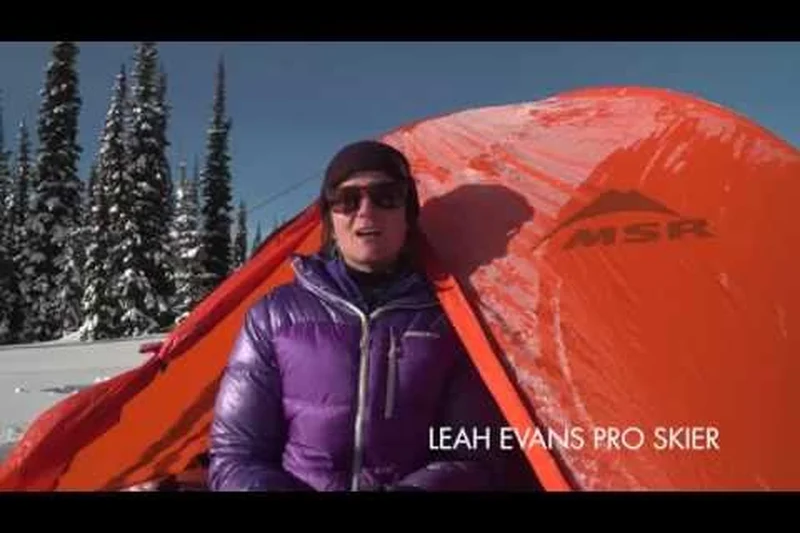
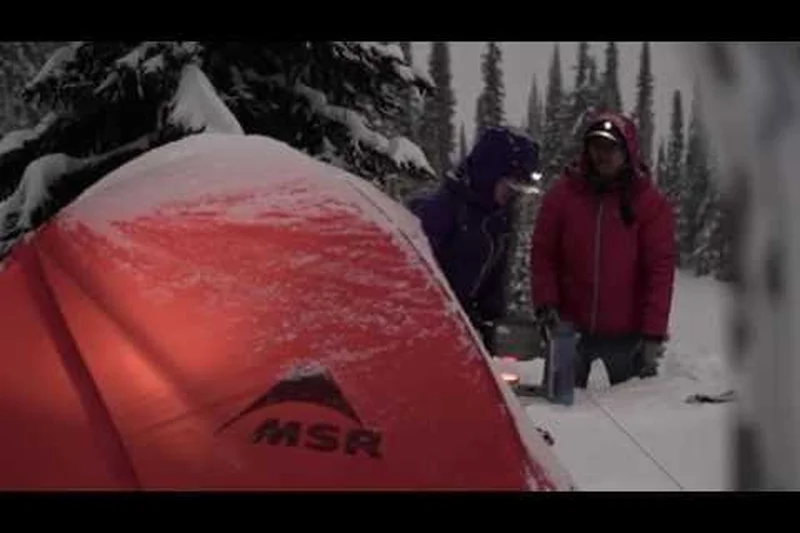
Why we picked it: The MSR Access 2 bridges the gap between a 3-season backpacking tent and a heavy winter expedition bunker. Classified as a 4-season ski-touring tent, it weighs just 3 lbs 10 oz but features limited mesh on the inner tent to trap heat and block spindrift snow. The Easton Syclone composite poles are uniquely designed to flex under heavy snow loads rather than snapping. The robust 30D ripstop floor utilizes a PFAS-free DWR coating. While it is too warm for summer backpacking, it is the absolute best choice for shoulder seasons, winter camping, and high-altitude treks.
Key Specs
- 3 lbs 10 oz trail weight
- 29 sq ft floor area
- Easton Syclone composite poles
- Double-wall winter protection
What we like
- Exceptional performance in snow and cold
- Very light for a 4-season tent
- Syclone poles resist snapping under snow loads
- Traps heat effectively
What we don't like
- Too hot for summer use
- Expensive ($799)
Best for: Winter campers, ski tourers, and mountaineers who need a light but structurally resilient 4-season tent.
Considering the Access 2 vs the SlingFin Portal? The Access 2 is warmer and better for heavy snow, while the Portal is better for high winds and year-round use.
The premier lightweight winter tent, offering robust snow-loading strength without breaking your back.
Buy at MSR official site#27 Marmot Tungsten 2P
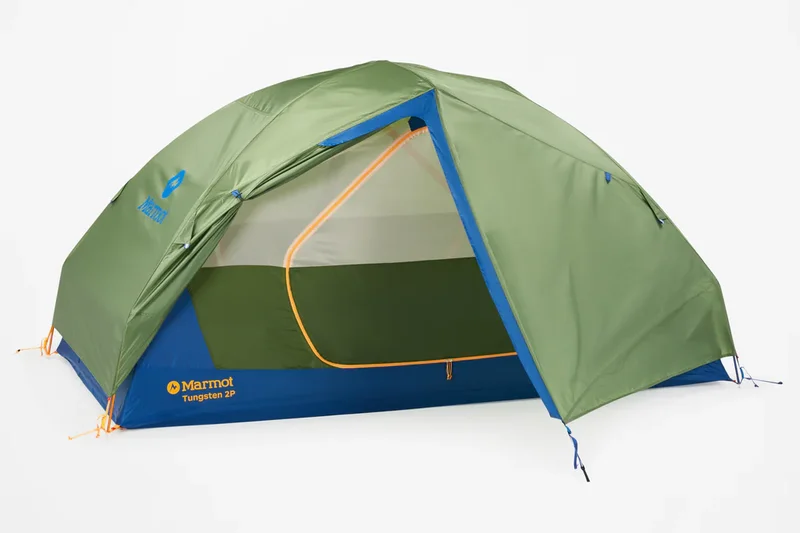
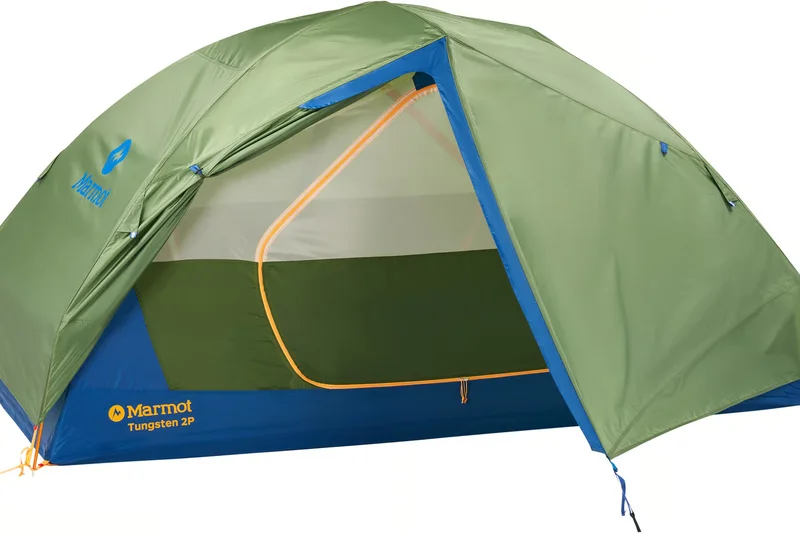
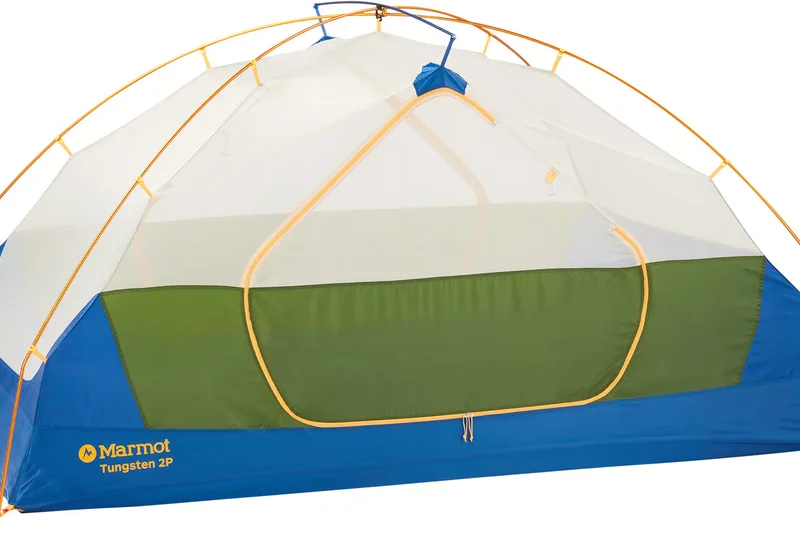
Why we picked it: The Marmot Tungsten 2P is a classic workhorse that focuses on durability and interior space. Weighing 4 lbs 13 oz, it is undeniably heavy for long-distance backpacking, but it compensates with pre-bent velocity poles that create cavernous vertical space. The 68D polyester floor is thick enough that you almost don't need the included footprint, and the polyester fly resists UV damage and won't stretch in the rain. At $279, it is an exceptionally durable, reliable tent for short trips, car camping, and beginners.
Key Specs
- 4 lbs 13 oz trail weight
- 30.1 sq ft floor area
- Pre-bent velocity poles
- Includes footprint
What we like
- Thick, highly durable 68D floor
- Pre-bent poles create massive interior volume
- Includes footprint for extra value
- Polyester fly doesn't sag
What we don't like
- Heavy and bulky (nearly 5 lbs packed)
- Basic ventilation system
Best for: Beginners, scout troops, and casual backpackers prioritizing durability and space over weight.
Considering the Tungsten vs the REI Half Dome? Both are heavy comfort-first tents, but the Half Dome offers more floor space, while the Tungsten has slightly thicker fabrics.
A bulletproof, spacious, and affordable shelter that will last for years of weekend adventures.
Buy at Marmot official site#28 REI Co-op Trailmade 2
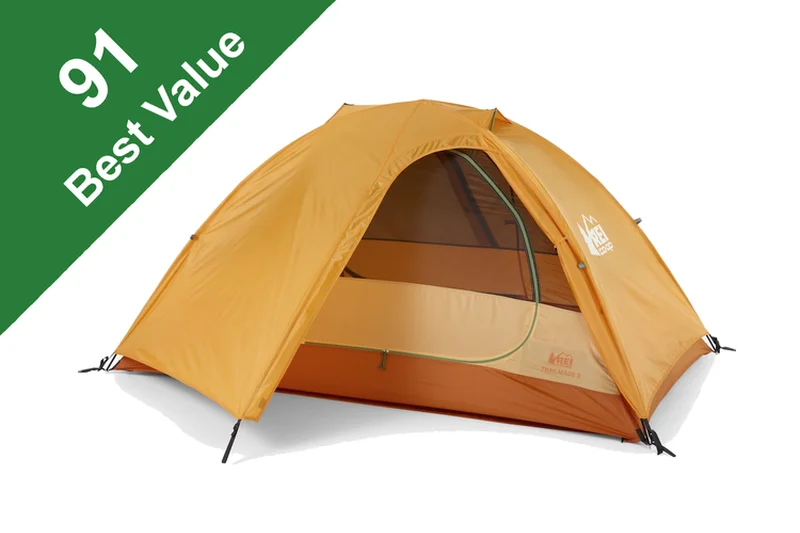
Why we picked it: If you are on a strict budget and want a reliable, easy-to-use tent, the REI Co-op Trailmade 2 is an outstanding choice. At $199 (frequently on sale for less), it provides a standard X-pole dome architecture that anyone can pitch in minutes. Weighing 4 lbs 10 oz, it uses thick 75D polyester taffeta for the fly and floor, making it incredibly resilient against dogs, kids, and rough terrain. It includes a footprint and features two doors and two vestibules. While heavy for deep backcountry trips, it is the perfect starter tent.
Key Specs
- 4 lbs 10 oz trail weight
- 31.8 sq ft floor area
- Includes footprint
- X-pole dome architecture
What we like
- Unbeatable price from a major retailer
- Extremely durable 75D fabrics
- Simple, intuitive X-pole setup
- Includes footprint
What we don't like
- Heavy for backpacking
- Lacks the steep walls of more modern designs
Best for: First-time backpackers, festival-goers, and budget-conscious car campers.
Considering the Trailmade 2 vs the Kelty Late Start? The Trailmade has two doors and vestibules, making it vastly superior for two people.
The best entry-level tent on the market, offering undeniable durability and dual-door convenience for under $200.
Buy at REI official site#29 NEMO Hornet Elite OSMO 2P
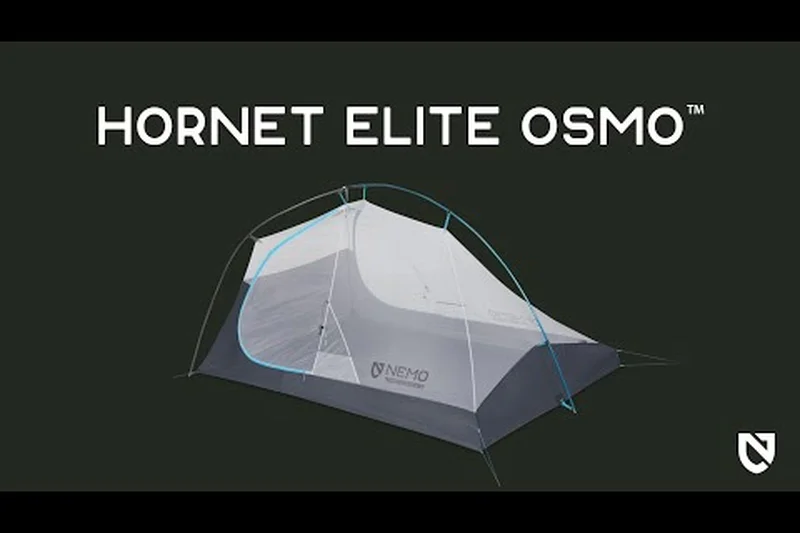
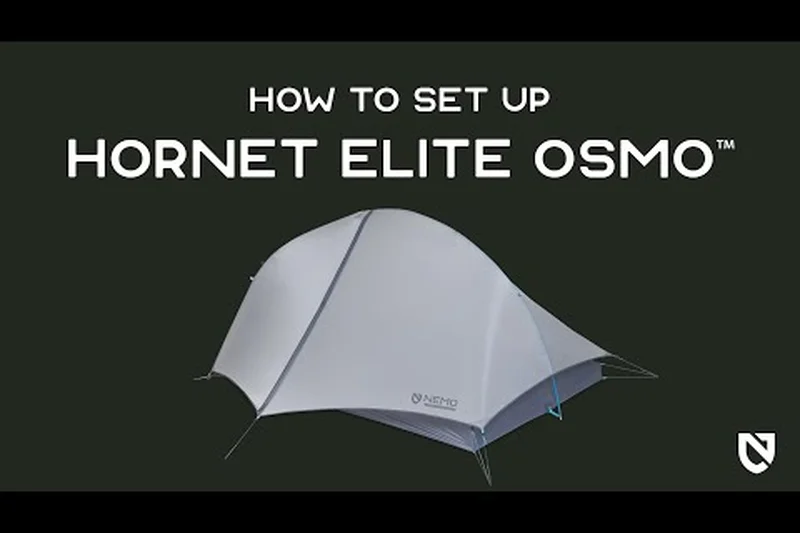
Why we picked it: The NEMO Hornet Elite OSMO 2P pushes the absolute limits of semi-freestanding lightweight design. Weighing just 1 lb 11 oz, this 2-person tent rivals single-wall Dyneema trekking pole tents in weight while providing a dedicated pole structure. It utilizes an ultra-thin version of NEMO's OSMO poly-nylon fabric, achieving a double-wall pitch with two doors. The "Flybar" volumizing pole clip significantly widens the headroom. It is undeniably cramped for two people (27.3 sq ft with a heavy taper), and the extremely thin fabrics require meticulous care, but as a luxury solo shelter, it is an ultralight dream.
Key Specs
- 1 lb 11 oz trail weight
- 27.3 sq ft floor area
- OSMO poly-nylon ripstop fabric
- Flybar volumizing pole clip
What we like
- Absurdly light for a semi-freestanding tent
- Sag-free OSMO fabric
- Double-wall construction prevents condensation
- Includes two doors and vestibules
What we don't like
- Extremely delicate fabrics demand a footprint
- Very tight for two people
- Expensive ($699.95)
Best for: Ultralight hikers who want a double-wall, poled tent at trekking-pole tent weights.
Considering the Hornet Elite OSMO vs the Big Agnes Fly Creek? The Hornet Elite has two side doors, making it much more livable than the front-entry Fly Creek.
An engineering marvel that delivers double-wall, semi-freestanding convenience at a barely-there weight.
Buy at NEMO official site#30 ALPS Mountaineering Lynx 1
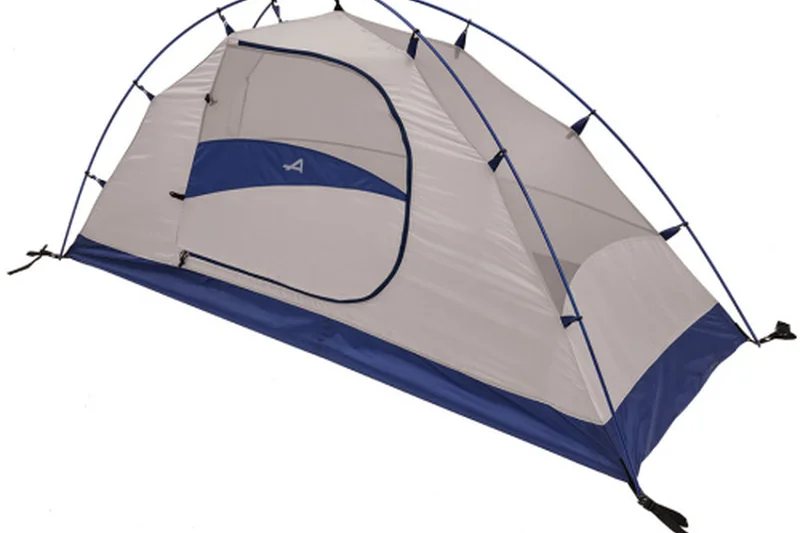
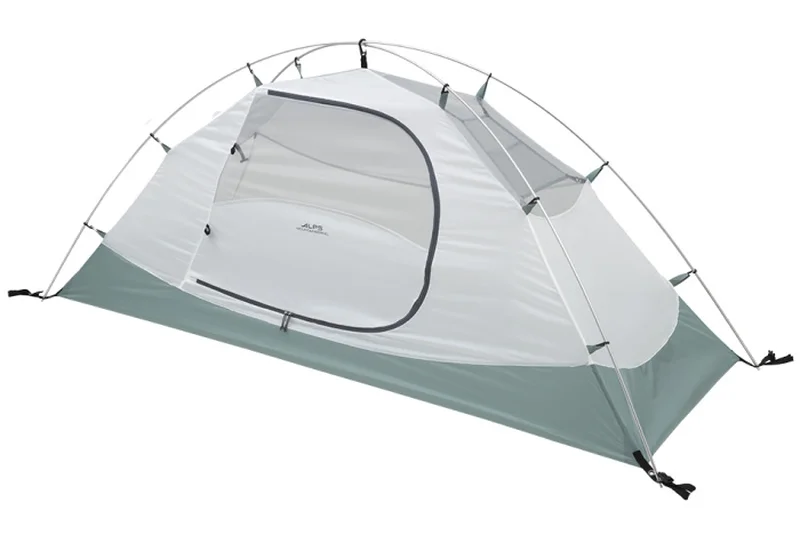
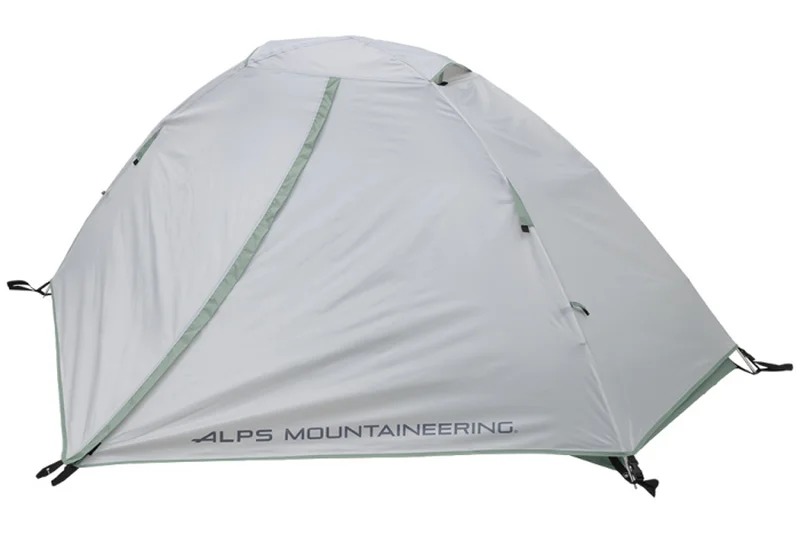
Why we picked it: The ALPS Mountaineering Lynx 1 is the quintessential budget solo tent. At $129.99, it offers a reliable, fully freestanding 2-pole aluminum dome design. While its 3 lbs 5 oz weight is heavy for a modern 1-person tent, it features thick 75D 185T polyester fabrics that will outlast many $500 ultralight tents. The half-mesh walls provide decent ventilation, and the single side door opens to a functional vestibule. It is not glamorous, and it packs down somewhat bulky, but it provides safe, reliable shelter for hikers on a shoestring budget.
Key Specs
- 3 lbs 5 oz trail weight
- 20 sq ft floor area
- 2-pole aluminum dome
- Half-mesh walls for ventilation
What we like
- Extremely affordable
- Thick, durable materials
- Fully freestanding and easy to pitch
- Good weather resistance
What we don't like
- Heavy for a 1-person tent
- Basic pole design lacks vertical walls
Best for: Scouts, beginners, and budget-conscious solo backpackers who prioritize durability and cost over weight.
Considering the Lynx 1 vs the Naturehike Cloud-Up? The Lynx is a traditional freestanding dome with a side door, whereas the Cloud-Up uses a front-entry hubbed pole system.
A heavy-duty, highly affordable solo shelter that gets the job done without draining your wallet.
Buy at ALPS Mountaineering official site#31 MSR Elixir 2
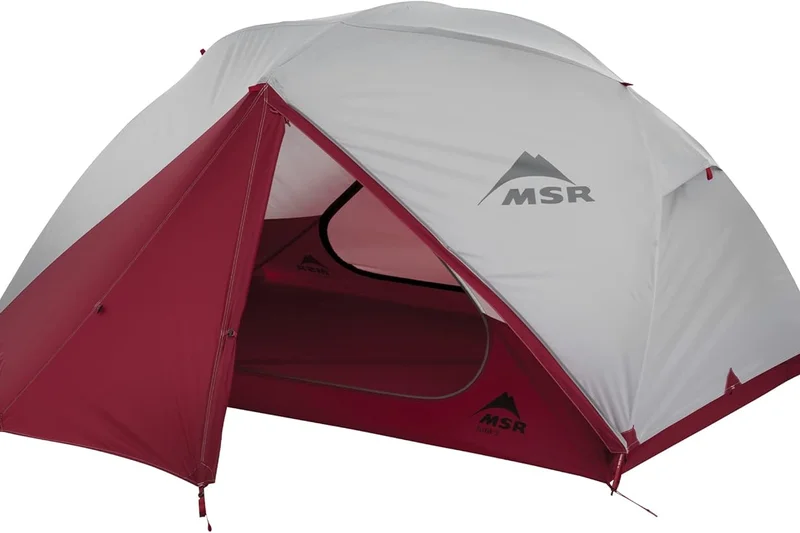
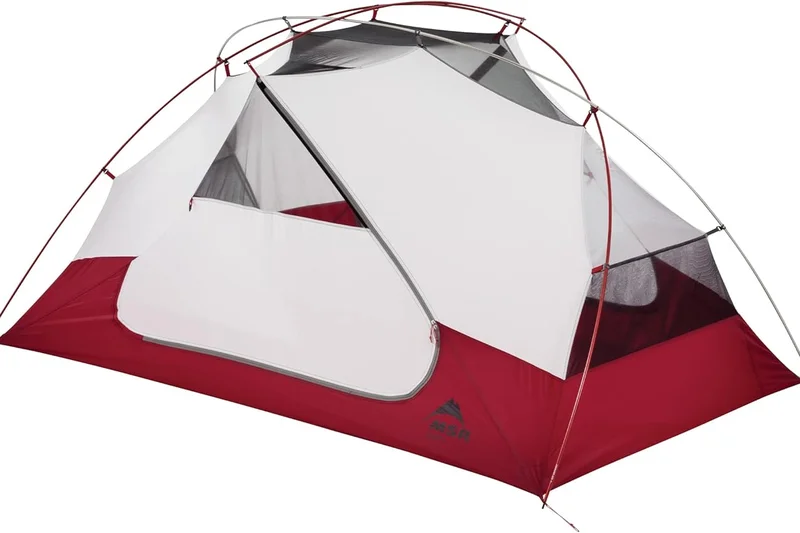
Why we picked it: The MSR Elixir 2 is essentially the beefed-up, heavy-duty cousin of the Hubba Hubba. Designed for absolute durability, it features a rugged 70D nylon floor and thick fly fabrics, bringing its trail weight to 5 lbs 2 oz. It utilizes an X-pole design with a spreader bar, offering great headroom and a very sturdy pitch. The color-coded poles make setup a breeze, and it comes with a footprint included. At $339.95, it is a premium-feeling tent that is built to withstand abuse from dogs, kids, and harsh rocky campsites where lighter tents would shred.
Key Specs
- 5 lbs 2 oz trail weight
- 29 sq ft floor area
- Durable 70D nylon floor
- Color-coded setup
What we like
- Exceptionally durable 70D floor
- Solid, sturdy geometry
- Includes a footprint
- Excellent livability and headroom
What we don't like
- Very heavy for backpacking (>5 lbs)
- Overkill for careful hikers
Best for: Backpackers who hike with dogs or camp on very abrasive surfaces where durability is the absolute priority.
Considering the Elixir vs the Hubba Hubba? The Elixir is much heavier and more durable, but the Hubba Hubba is vastly superior for covering long distances.
A rugged, expedition-tough 3-season tent that trades light weight for exceptional longevity.
Buy at MSR official site#32 Mountain Hardwear Mineral King 2
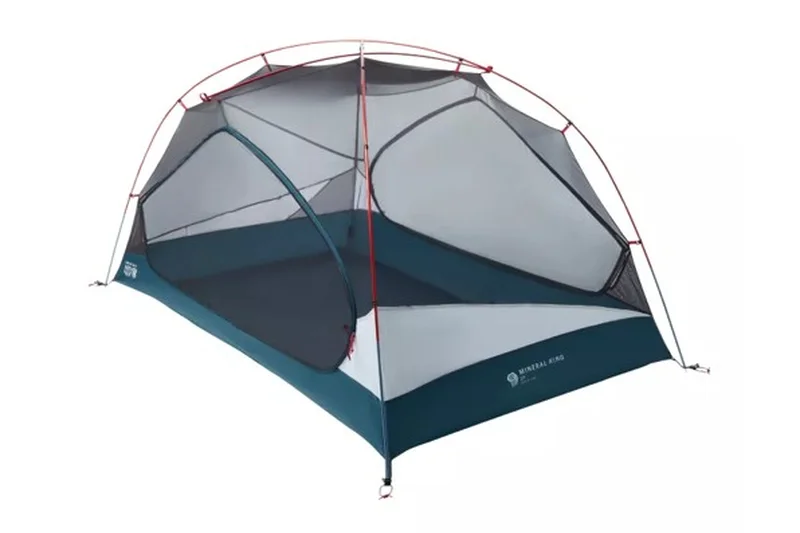
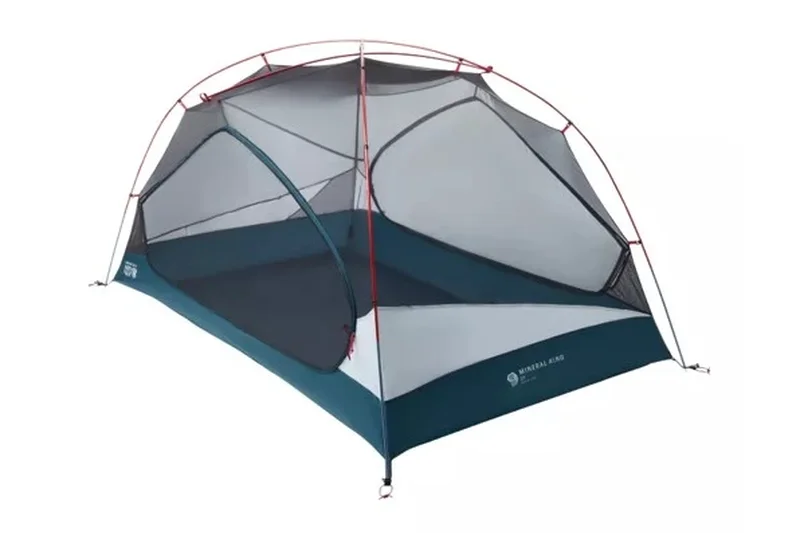
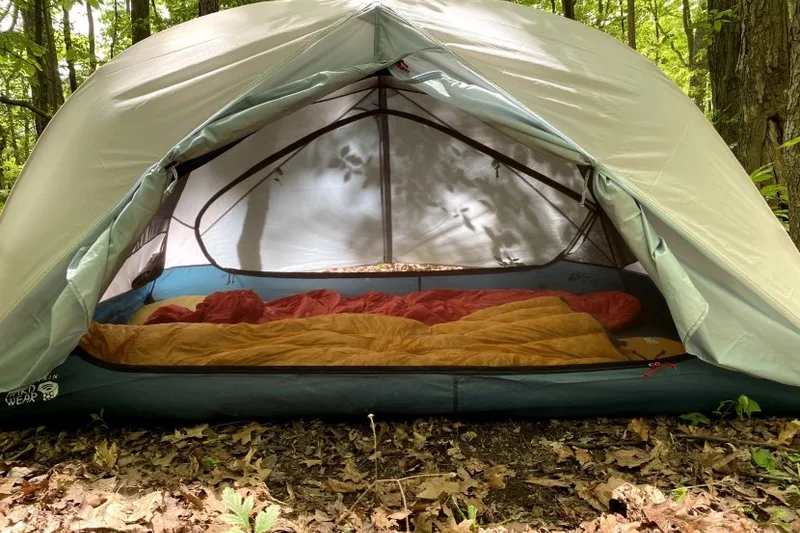
Why we picked it: The Mountain Hardwear Mineral King 2 is a spacious, symmetrical freestanding tent that prioritizes comfort and an unobstructed view. Its massive mesh canopy allows for incredible stargazing on clear nights, and the pre-bent DAC Pressfit poles create near-vertical walls for a roomy 33 sq ft interior. Weighing 5 lbs 7.9 oz, it is undeniably hefty for deep wilderness trips, but it includes a fitted footprint. The dual massive doors make entry and exit seamless. It's a fantastic crossover option for those who split their time between car camping and short 1-to-2-mile hike-ins.
Key Specs
- 5 lbs 7.9 oz trail weight
- 33 sq ft floor area
- Includes fitted footprint
- Symmetrical layout
What we like
- Incredible mesh canopy for stargazing
- Very roomy 33 sq ft floor
- Symmetrical design is easy to share
- Durable materials with included footprint
What we don't like
- Too heavy for long-distance backpacking
- Bulky packed size
Best for: Short-distance backpackers and car campers who love gazing at the stars.
Considering the Mineral King vs the REI Half Dome? Both are heavy comfort tents, but the Mineral King offers a slightly better stargazing experience.
A highly livable, stargazing-friendly shelter perfectly suited for weekend trips and frontcountry camping.
Buy at Mountain Hardwear official site#33 Big Agnes Fly Creek HV UL2 Solution Dye
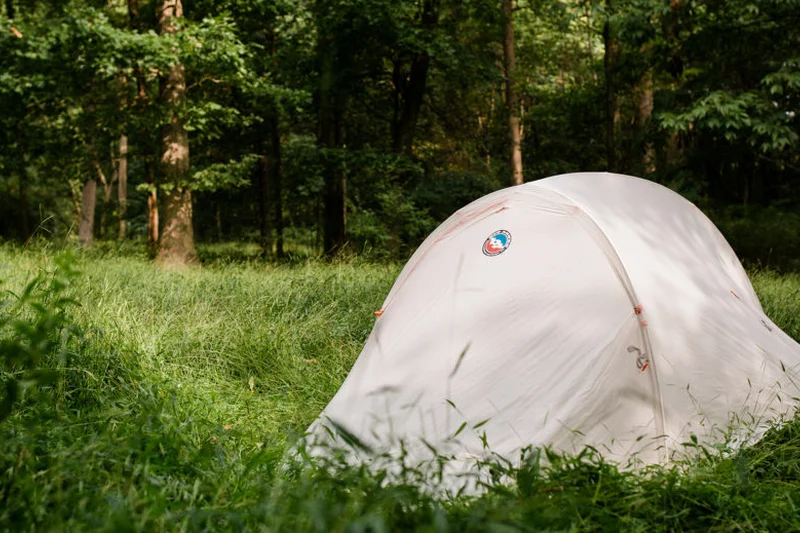
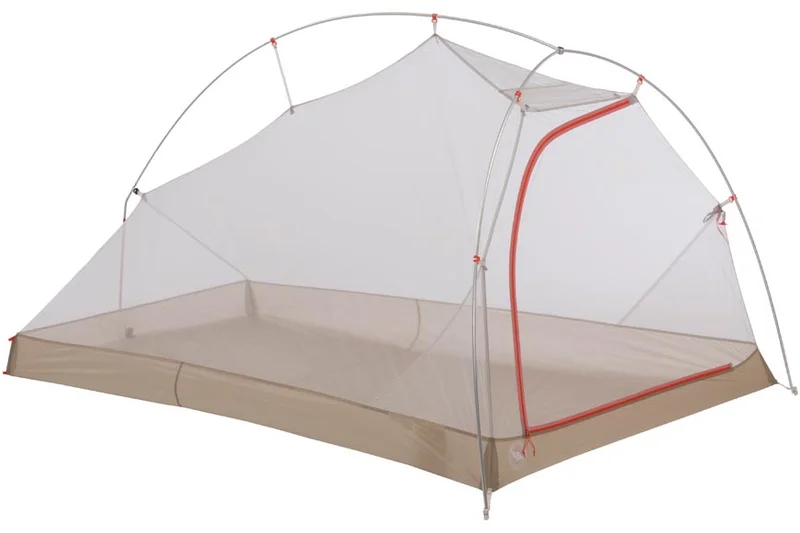
Why we picked it: The Big Agnes Fly Creek HV UL2 is an ultralight staple, offering a semi-freestanding, front-entry design that weighs an astonishing 1 lb 15 oz. By utilizing a single front door and a highly tapered foot end, Big Agnes shaved every possible ounce while still using standard aluminum poles instead of trekking poles. The solution-dyed fabric is eco-friendly and fade-resistant. While climbing over your partner in the middle of the night via the single front door is a hassle, the weight savings are undeniable. It is best utilized as a sprawling solo tent.
Key Specs
- 1 lb 15 oz trail weight
- 28 sq ft floor area
- Single front door/vestibule
- DAC Angle SF Hub
What we like
- Incredibly light (under 2 lbs)
- Eco-friendly solution-dyed materials
- Reliable hubbed pole architecture
- Packs down very small
What we don't like
- Single front-entry door is awkward for two people
- Steep taper at the foot end
Best for: Solo hikers who want massive space or fast-packing couples who don't mind a front-entry door.
Considering the Fly Creek vs the Tiger Wall? The Tiger Wall adds a few ounces but gives you two side doors, which is vastly superior for two people.
A featherweight front-entry tent that remains a favorite for minimalist hikers who prefer dedicated poles.
Buy at Big Agnes official site#34 Naturehike Cloud-Up 2
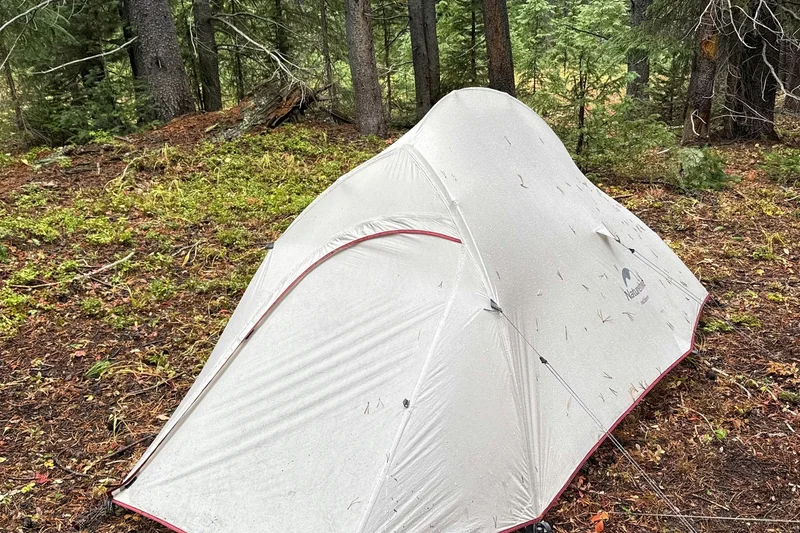
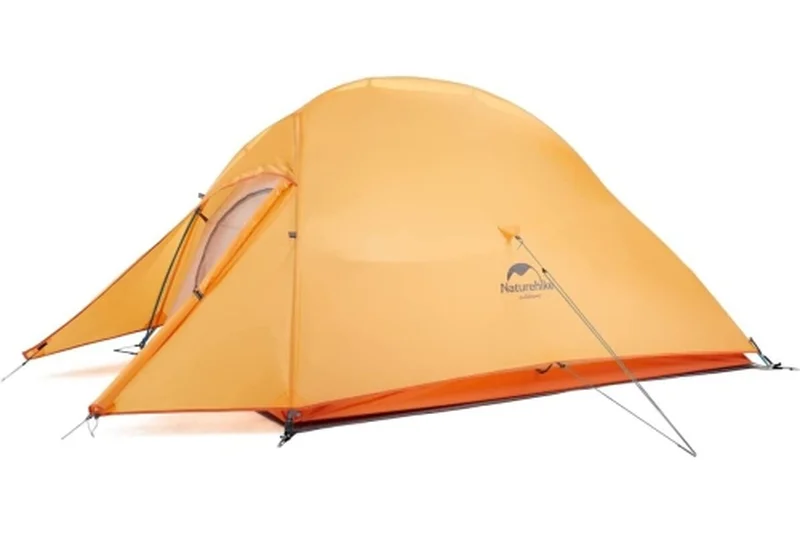
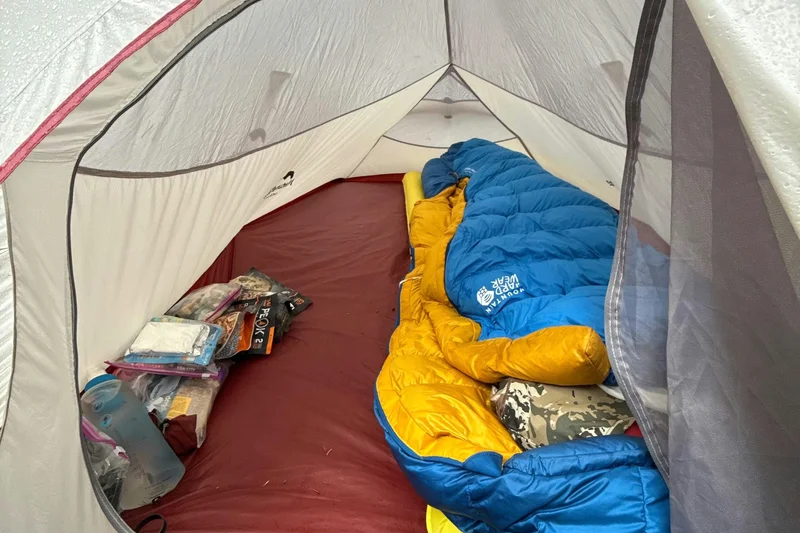
Why we picked it: The Naturehike Cloud-Up 2 is perhaps the most famous "budget clone" tent on the market, heavily borrowing design cues from the Big Agnes Fly Creek. At $169, it delivers astonishing specs: a 3 lb 7 oz trail weight, a 20D Sil-Nylon fly with a PU4000mm waterproof rating, and an included ground mat. It features a single Y-pole structure with a front-entry door. While the hardware and zippers aren't as refined as premium brands, the performance-to-price ratio is off the charts. It is an incredibly popular choice for hikers worldwide trying to go lightweight on a strict budget.
Key Specs
- 3 lb 7 oz trail weight
- 27.9 sq ft floor area
- 20D Sil-Nylon with PU4000mm rating
- Includes ground mat
What we like
- Unbeatable weight for the price
- Impressive PU4000mm waterproofing
- Includes a footprint
- Lightweight aluminum poles
What we don't like
- Front-entry door is annoying for two people
- Zippers and mesh can be fragile
Best for: Budget backpackers who want to drop weight without spending $400+.
Considering the Cloud-Up vs the REI Trailmade? The Cloud-Up is over a pound lighter, but the Trailmade has much better doors and thicker fabrics.
A highly capable budget tent that provides genuine lightweight performance at a fraction of the cost of premium brands.
Buy at Naturehike official site#35 Kelty Late Start 2
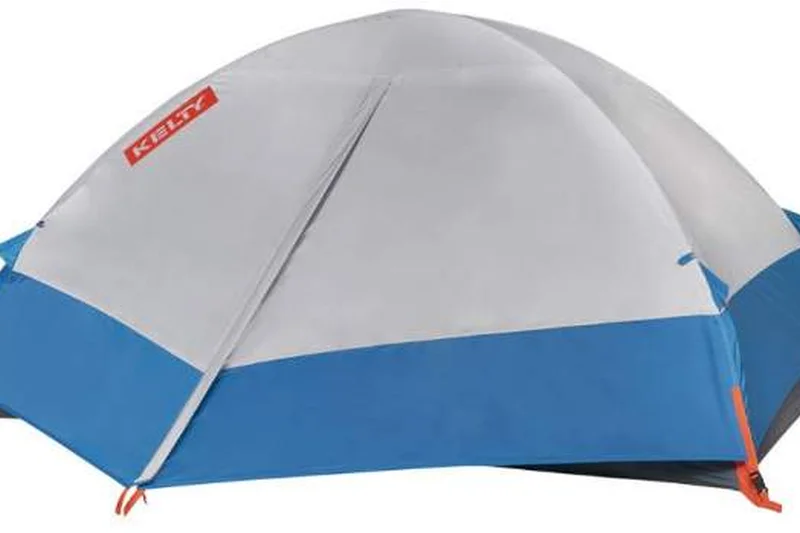
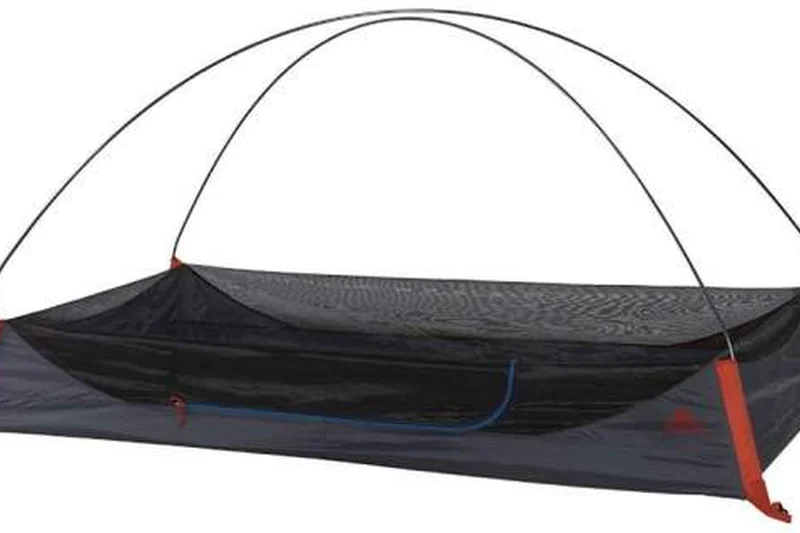
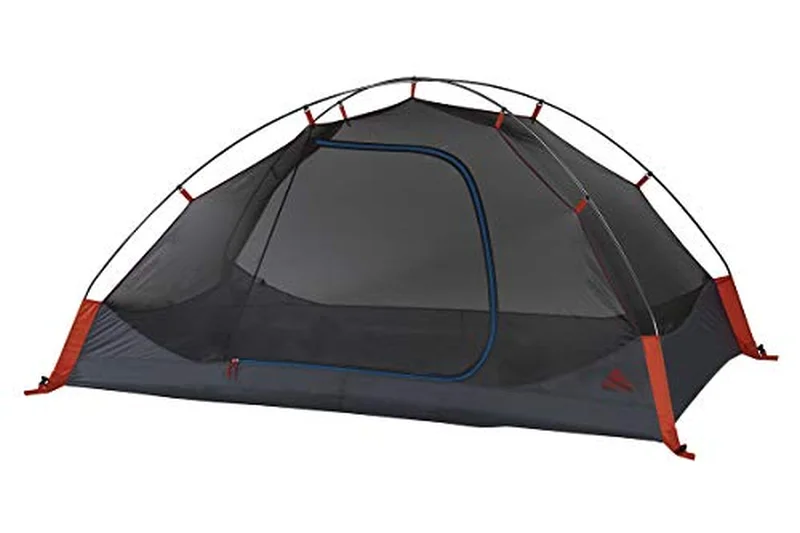
Why we picked it: The Kelty Late Start 2 lives up to its name with a brilliantly simple Quick Corner technology that allows you to pitch the tent in the dark in under three minutes. At $159.95, it is a highly affordable 2-person dome tent. Weighing 4 lbs 8 oz, it uses thick 68D polyester fabrics that resist tears and UV damage. The major drawback is that it only features one door and one vestibule, making it less convenient for two hikers. However, its fast setup, robust materials, and low price make it an excellent festival or beginner backpacking tent.
Key Specs
- 4 lbs 8 oz trail weight
- 29.5 sq ft floor area
- Quick Corner technology setup
- 68D Polyester floor and fly
What we like
- Quick Corner sleeves make setup incredibly fast
- Very affordable
- Durable 68D polyester fabrics
- Reliable freestanding dome structure
What we don't like
- Only one door for two people
- Heavy for long backcountry trips
Best for: Beginners, casual campers, and solo hikers who want the absolute easiest setup possible.
Considering the Late Start 2 vs the ALPS Lynx? The Late Start offers slightly more space and a faster pitch, but both share the single-door limitation.
A durable, budget-friendly dome tent highlighted by a brilliantly simple, lightning-fast pitching mechanism.
Buy at Kelty official siteBuying Guide
How to Choose the Right Backpacking Tent
Selecting a backpacking tent involves navigating a complex web of trade-offs. The perfect tent for a 2,000-mile thru-hike is rarely the best choice for a casual weekend trip with a partner. Here is how to narrow down your options based on your specific needs.
1. Identify Your User Profile
The Weekend Warrior: If you backpack 2-5 times a year, prioritize Livability and Setup Ease. You don't need a sub-two-pound Dyneema tent. Look for freestanding models like the Big Agnes Copper Spur or the REI Half Dome SL 2+. They are intuitive to pitch, offer great headroom, and use durable enough fabrics to withstand occasional rough handling.
The Ultralight Thru-Hiker: If you are hiking 20+ miles a day, Weight & Packability are your primary concerns. Trekking pole tents (which omit standard tent poles in favor of your hiking poles) are the gold standard here. Models like the Zpacks Duplex or Durston X-Mid Pro 2 will shave massive amounts of weight from your pack, though they require a steeper learning curve to pitch perfectly.
The Comfort-Seeking Couple: Sharing a standard 2-person tent can be claustrophobic. Two standard 20-inch sleeping pads will barely fit side-by-side in many ultralight designs. If you prioritize comfort, seek out tents with a floor area of 30+ square feet and steep, vertical side walls. Sometimes, opting for a lightweight 3-person tent (like the Big Agnes Tiger Wall UL3) is the best solution for two people.
2. Freestanding vs. Trekking Pole Tents
Freestanding Tents: These tents come with a dedicated pole system and can theoretically stand on their own without stakes (though you should always stake them out). They are easy to set up on rock slabs, wooden tent platforms, or sandy soil. The downside? The included aluminum or carbon poles add significant weight.
Trekking Pole Tents: These rely on the tension of guy lines and your trekking poles to stay upright. By eliminating the tent pole, you save 10-16 ounces. They often provide excellent storm stability once pitched correctly, but pitching them on hard rock requires creativity (the "big rock, little rock" method). If you already hike with poles, this is the best way to drop your base weight.
3. Understanding Tent Fabrics (SilNylon vs. SilPoly vs. DCF)
Silicone-Coated Nylon (SilNylon): The traditional standard. It is strong, relatively cheap, and packable. However, nylon absorbs water and sags when wet, meaning you will need to re-tension your tent in the middle of a rainstorm.
Silicone-Coated Polyester (SilPoly): Increasingly popular (used beautifully in the standard Durston X-Mid). Polyester does not absorb water, so it won't sag in the rain. It also boasts excellent UV resistance, though it has slightly lower tear strength than nylon.
Dyneema Composite Fabric (DCF): The holy grail of ultralight materials. It is completely waterproof, doesn't stretch or sag, and is insanely light. The drawbacks? It is extremely expensive, incredibly bulky to pack down (it doesn't compress well), and has low puncture resistance if you snag it on a sharp branch.
4. What to Avoid
- Single-Wall Tents in High Humidity: Single-wall tents merge the rainfly and the inner mesh into one layer to save weight. In humid conditions, condensation will form on the inside of the tent wall, potentially soaking your sleeping bag. If you hike in the muggy East Coast or Pacific Northwest, double-wall tents are much safer.
- Ignoring the Vestibule Size: A tent's floor space is only half the story. If the vestibules (the covered area outside the doors) are tiny, you will have to bring your wet, muddy backpack inside the tent with you. Ensure your chosen tent has enough vestibule space for your gear.
- Overpaying for Features You Don't Need: A $900 4-season expedition tent is overkill for summer trips in the Sierra. Align your purchase with the actual conditions you will face.
5. Budget Tiers
Under $200: Expect heavy materials (4-6 lbs) and fiberglass or thick aluminum poles. Great for car camping and short 1-2 mile hikes. The Naturehike Cloud-Up 2 and Kelty Late Start 2 live here.
$200 - $400: The sweet spot for value. Tents in this range balance weight (2.5 - 4 lbs) with durable materials. The Durston X-Mid 2 and REI Half Dome dominate this tier.
$400 - $600: Premium mainstream tents. Expect sub-3-pound weights, high-tech pole hubs, and complex geometries that maximize space. The Big Agnes Copper Spur and NEMO Dagger OSMO reside here.
$600+: Specialized ultralight or expedition gear. Features Dyneema fabrics, carbon fiber components, or bombproof winter-grade textiles.
FAQ
What is the difference between freestanding and trekking pole tents?
Freestanding tents come with dedicated, usually aluminum or carbon, pole sets that hold the tent's shape on their own, making them easy to pitch on rock or hard ground. Trekking pole tents eliminate the heavy tent poles; instead, you use your hiking poles and guy lines to create the structure under tension, which saves a massive amount of weight but requires practice to pitch correctly.
What is a good weight for a 2-person backpacking tent?
For modern backpacking, a 'lightweight' 2-person tent weighs between 2.5 and 3.5 lbs (like the Big Agnes Copper Spur). 'Ultralight' tents weigh under 2.5 lbs (like the Durston X-Mid 2 or Zpacks Duplex). Anything over 4.5 lbs is generally considered too heavy for long-distance backpacking and is better suited for short trips or car camping.
What is Dyneema Composite Fabric (DCF)?
Dyneema (formerly Cuben Fiber) is an ultralight, highly waterproof material used in premium tents like the Zpacks Duplex. It doesn't stretch or sag when wet (unlike nylon) and is incredibly light. The trade-offs are that it is very expensive, bulky to pack down, and can be prone to punctures if dragged across sharp rocks.
Do I really need a tent footprint?
If your tent uses ultra-thin fabric (10D or 15D nylon), a footprint is highly recommended to prevent punctures from rocks and twigs. If your tent has a thick, durable floor (68D or 70D polyester), a footprint is largely unnecessary unless you are camping on highly abrasive surfaces.
How do I prevent condensation inside my tent?
Condensation is caused by your breath and body heat hitting the cold tent fabric. To minimize it, choose a double-wall tent, keep the roof vents open, pitch your tent under trees rather than in open meadows (trees trap warmer air), and try to align your tent so the breeze blows through the mesh doors.
Is a 2-person tent actually big enough for two people?
Barely. Most ultralight 2-person tents fit two standard 20-inch sleeping pads perfectly side-by-side, with zero room to spare. If you or your partner use a 25-inch 'wide' pad, you must look for tents with a floor width of at least 50 inches (like the Tarptent Double Rainbow), or size up to a 3-person tent.
What does 'semi-freestanding' mean?
Semi-freestanding tents (like the NEMO Hornet or Big Agnes Tiger Wall) use a hubbed pole system that supports the head and middle of the tent, but requires the foot end to be staked out to achieve its full volume. They are lighter than fully freestanding tents but require more care when selecting a campsite with good soil for stakes.
What is the difference between SilNylon and SilPoly?
SilNylon (silicone-coated nylon) is strong and packable, but it absorbs water, causing the tent to sag and requiring you to tighten the guy lines when it rains. SilPoly (silicone-coated polyester) does not absorb water, so it stays taut in a storm and has better UV resistance, though it has a slightly lower tear strength.
Are 4-season tents good for summer backpacking?
No. 4-season tents (like the MSR Access) are designed to trap heat and block spindrift snow. They have very little mesh ventilation. Using one in the summer will turn it into a stifling, condensation-filled oven. Stick to a 3-season tent for summer use.
What is a hydrostatic head rating?
It is a measurement of a fabric's waterproofness, determined by how tall a column of water can stand on the fabric before it leaks. A rating of 1200mm is generally considered standard for a rainfly, while floors often have ratings between 1200mm and 3000mm. Higher numbers mean more water resistance but often equate to heavier coatings.
Why are tent stakes sold separately sometimes?
Many ultralight manufacturers assume that experienced backpackers already have a preferred set of high-end stakes (like MSR Groundhogs or titanium stakes). To keep the advertised price and weight down, they omit them. Always check if stakes are included before purchasing.
How should I store my backpacking tent at home?
Never store a tent wet, as it will develop mildew and the waterproof coatings will degrade (hydrolysis). Ensure it is bone dry, then store it loosely in a cool, dry place. While stuffing it in its sack is fine for the trail, storing it loosely in a large mesh bag or pillowcase extends its lifespan.
Methodology
How We Score and Rank
Our methodology applies the M2 Multi-Dimensional Evaluation model, developed by Selection Logic[1]. Instead of a single, arbitrary "out of 10" rating, we score products across isolated dimensions and apply custom weighting algorithms to generate Fit Scores for different user scenarios.
The overall ranking represents the Best Overall for Most Backpackers scenario, calculated using the following weights:
- Weight & Packability (25%): Evaluated based on packed trail weight and volume. Ounces equal pounds, and pounds equal pain. We strictly reward lightweight efficiency.
- Livability & Interior Space (15%): We assess floor area (sq ft), peak height, and wall steepness. A lightweight tent is useless if you cannot comfortably sit up or fit a wide sleeping pad.
- Weather Resistance & Stability (15%): Analyzed through hydrostatic head ratings, pole geometry, and high-wind performance. Backcountry storms are unforgiving.
- Durability & Materials (15%): Scored by examining fabric denier, zipper quality, and overall construction longevity. We penalize ultralight gear that falls apart after one season.
- Setup & Teardown Ease (10%): Pitches should be fast and intuitive. Color-coded freestanding poles score higher than complex trekking-pole geometry.
- Ventilation & Condensation (10%): Double-wall designs, roof vents, and mesh placement are rewarded for mitigating internal moisture.
- Value for Money (10%): The balance of performance against MSRP. We ask: does this $700 tent justify costing twice as much as a $350 tent?
We source our data from manufacturer specifications, independent gear labs, hiker surveys, and field testing reports. By feeding this data into our multi-scenario matrix, we strip away branding to uncover the raw utility of each shelter.
Sources & References
All factual claims, product specifications, prices, and images in this article are cited by number. Click any reference to jump to the list; click the link in each entry to visit the original source.
- [1]Selection Logic. "M2 Multi-Dimensional Evaluation." selectionlogic.org/en/methods/m2-multi-dimensional-evaluation/. Accessed Mar 2026.
- [2]Selection Logic. "Backpacking Tent Buying Guide." selectionlogic.org/en/guides/backpacking-tents/. Accessed Mar 2026.
- [3]Durston Gear. "X-Mid 2 Tent." durstongear.com. Accessed Mar 2026.
- [4]SlingFin. "Portal 2." slingfin.com. Accessed Mar 2026.
- [5]Zpacks. "Duplex Tent." zpacks.com. Accessed Mar 2026.
- [6]Big Agnes. "Copper Spur HV UL2." bigagnes.com. Accessed Mar 2026.
- [7]MSR Gear. "Hubba Hubba 2-Person Backpacking Tent." msrgear.com. Accessed Mar 2026.
- [8]NEMO Equipment. "Dagger OSMO Lightweight Backpacking Tent." nemoequipment.com. Accessed Mar 2026.
- [9]Sea to Summit. "Telos TR2 Freestanding Lightweight Tent." seatosummit.com. Accessed Mar 2026.
- [10]REI Co-op. "Half Dome SL 2+ Tent with Footprint." rei.com. Accessed Mar 2026.
- [11]Hilleberg. "Niak." hilleberg.com. Accessed Mar 2026.
- [12]Tarptent. "Stratospire Li." tarptent.com. Accessed Mar 2026.
- [13]Hyperlite Mountain Gear. "Unbound 2P." hyperlitemountaingear.com. Accessed Mar 2026.
- [14]Six Moon Designs. "Lunar Solo Ultralight Tent." sixmoondesigns.com. Accessed Mar 2026.
- [15]Gossamer Gear. "The One." gossamergear.com. Accessed Mar 2026.
- [16]Marmot. "Tungsten 2-Person Tent." marmot.com. Accessed Mar 2026.
- [17]Naturehike. "Cloud-Up 2 Person Lightweight Backpacking Tent." naturehike.com. Accessed Mar 2026.
- [18]ALPS Mountaineering. "Lynx 1-Person Tent." alpsmountaineering.com. Accessed Mar 2026.
- [19]CleverHiker. "Best Backpacking Tents of 2026." cleverhiker.com. Accessed Mar 2026.
- [20]Switchback Travel. "Best Backpacking Tents of 2026." switchbacktravel.com. Accessed Mar 2026.
- [21]The Trek. "The Best Backpacking Tents for Thru-Hiking in 2026." thetrek.co. Accessed Mar 2026.
- [22]OutdoorGearLab. "The Best Backpacking Tents of 2026 | Tested & Ranked." outdoorgearlab.com. Accessed Mar 2026.
- [23]Backpacker Magazine. "The Best Three-Season Backpacking Tents." backpacker.com. Accessed Mar 2026.
- [24]Mountain Hardwear. "Mineral King 2 Tent." mountainhardwear.com. Accessed Mar 2026.
- [25]Kelty. "Late Start 2." kelty.com. Accessed Mar 2026.