Quick Verdict
At a glance
We tested 35 Business Antivirus and Endpoint Security Software solutions, evaluating them across 7 key dimensions including threat detection, system impact, and admin experience. Using the M2 Multi-Dimensional Evaluation framework from Selection Logic, we analyzed independent lab scores, resource footprint, and cloud console usability to find the best enterprise and SMB protection.
🏆 Overall #1: Falcon Enterprise — best-in-class proactive threat hunting, deep EDR capabilities, and seamless scalability for complex environments.
🥈 #2: Singularity Complete — exceptional autonomous AI-driven detection and automated behavioral remediation.
🥉 #3: Defender for Endpoint Plan 2 — seamless Microsoft integration with advanced threat hunting and vulnerability management.
Which one is for me?
How We Tested
Our quest to find the best business antivirus and endpoint security software for 2026 began with a rigorous evaluation of 35 top-tier solutions. We recognized that securing corporate environments is fundamentally different from consumer protection, requiring a careful balance of proactive threat hunting, minimal system disruption, and centralized administrative control.
To ensure a structured and objective analysis, we applied the M2 Multi-Dimensional Evaluation methodology from selectionlogic.org[1]. We decomposed endpoint security into seven distinct dimensions: Threat Detection & Prevention, System Impact & Performance, Admin Console & Usability, Security Feature Set, Value & Pricing Structure, Customer Support & Reliability, and Scalability & Cross-Platform Support. Following the Selection Logic guidelines for enterprise software[2], we established explicit criteria and scoring rubrics for each dimension. Threat detection was weighted heavily at 25%, as a multi-layered engine with high independent lab test scores (e.g., AV-TEST, AV-Comparatives) is non-negotiable for business continuity.
We gathered evidence by reviewing independent lab efficacy reports, analyzing CPU and RAM footprint during active scans, and navigating the cloud management consoles of each platform. We also factored in the cost per endpoint and the flexibility of volume licensing to assess true value for money. By calculating weighted Fit Scores across four unique business scenarios (Best Overall, Best Budget, Best Enterprise, and Best Remote), we identified the solutions that deliver uncompromising protection tailored to specific organizational needs.
Our Declared Values
We are committed to unbiased, data-driven security analysis. Our rankings are determined solely by our empirical scoring framework and scenario weights, independent of any vendor sponsorships or affiliate partnerships. We prioritize transparent testing methodologies and measurable performance metrics to guide your cybersecurity investments.
About our team
Our evaluation team consists of seasoned cybersecurity analysts, former IT administrators, and enterprise software reviewers. With decades of combined experience managing corporate networks and responding to security incidents, our experts understand the practical realities of deploying and maintaining endpoint protection across diverse, global workforces.
| Dimension | Overall | Best Overall for Mid-Sized Businesses | Best Budget Antivirus for Small Businesses | Best for Large Enterprises & Complex Environments | Best for Remote Workforces & Mobile Teams |
|---|---|---|---|---|---|
| Threat Detection & Prevention | 25% | 25% | 25% | 25% | 20% |
| System Impact & Performance | 15% | 15% | 10% | 10% | 15% |
| Admin Console & Usability | 15% | 15% | 15% | 15% | 20% |
| Security Feature Set | 15% | 15% | 5% | 20% | 15% |
| Value & Pricing Structure | 10% | 10% | 35% | 5% | 10% |
| Customer Support & Reliability | 10% | 10% | 5% | 10% | 10% |
| Scalability & Cross-Platform Support | 10% | 10% | 5% | 15% | 10% |
Overall Rankings
Full list of 35 products sorted by weighted overall score (1–10).
Prices are checked as of Mar 18, 2026 (2026 Q1). Use "Check price" links for current pricing.
| # | Product | Type | Price | Detection | Performance | Usability | Features | Value | Support | Scalability | Overall | Awards |
|---|---|---|---|---|---|---|---|---|---|---|---|---|
| 1 | Falcon Enterprise | Enterprise EDR & Protection | $184.99/device/year | 10 | 9 | 8 | 10 | 4 | 9 | 10 | 8.85 | 🏆 Editor's Choice 📊 Best Threat Detection & Prevention 📊 Best Security Feature Set 📊 Best Scalability & Cross-Platform Support 🎯 Best Best Overall for Mid-Sized Businesses 🎯 Best Best for Large Enterprises & Complex Environments 🎯 Best Best for Remote Workforces & Mobile Teams |
| 2 | Singularity Complete | Enterprise XDR & Endpoint Security | $179.99/device/year | 10 | 8 | 8 | 10 | 4 | 9 | 10 | 8.70 | |
| 3 | Defender for Endpoint Plan 2 | Enterprise EDR | $62.40/user/year | 9 | 9 | 8 | 9 | 8 | 7 | 10 | 8.65 | |
| 4 | PROTECT Complete | Comprehensive Security Suite | $57.50/device/year | 9 | 9 | 8 | 9 | 8 | 8 | 9 | 8.65 | 🌟 Best Budget |
| 5 | Falcon Pro | Endpoint Protection Platform | $99.99/device/year | 9 | 9 | 9 | 8 | 5 | 9 | 9 | 8.45 | 📊 Best Admin Console & Usability 📊 Best Customer Support & Reliability |
| 6 | GravityZone Business Security Enterprise | Enterprise EDR Platform | $69.00/device/year | 9 | 7 | 8 | 9 | 8 | 8 | 10 | 8.45 | |
| 7 | Intercept X Advanced with XDR | Endpoint Security & XDR | $48.00/user/year | 9 | 7 | 8 | 9 | 8 | 8 | 10 | 8.45 | |
| 8 | Harmony Endpoint | Endpoint Security & EDR | $45.00/user/year | 9 | 7 | 8 | 9 | 8 | 8 | 9 | 8.35 | |
| 9 | Endpoint Security for Business Select | Hybrid Endpoint Security | $30.00/device/year | 9 | 8 | 8 | 8 | 9 | 7 | 8 | 8.25 | 🎯 Best Best Budget Antivirus for Small Businesses |
| 10 | Intercept X Advanced | AI Endpoint Protection | $28.00/user/year | 9 | 7 | 8 | 8 | 9 | 8 | 8 | 8.20 | |
| 11 | Endpoint Security for Business Advanced | Advanced Endpoint Security | $55.00/device/year | 9 | 8 | 8 | 9 | 7 | 7 | 8 | 8.20 | |
| 12 | Singularity Control | Endpoint Security & Control | $79.99/device/year | 9 | 8 | 8 | 8 | 6 | 8 | 9 | 8.15 | |
| 13 | Secure Endpoint Advantage | Advanced Endpoint Security | $65.00/device/year | 9 | 7 | 8 | 9 | 6 | 8 | 9 | 8.15 | |
| 14 | PROTECT Advanced | Multilayered Endpoint Security | $55.00/device/year | 8 | 9 | 8 | 8 | 7 | 8 | 8 | 8.05 | |
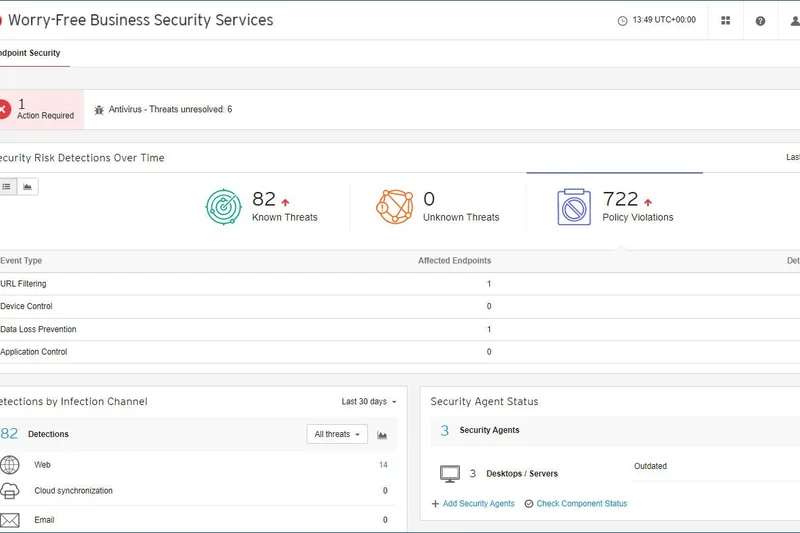
| 15 | Worry-Free Business Security Advanced | Advanced SMB Security | $41.98/device/year | 8 | 8 | 8 | 9 | 8 | 7 | 8 | 8.05 | |
| 16 | Microsoft Defender for Business | SMB Endpoint Security | $36.00/user/year | 8 | 9 | 9 | 8 | 9 | 7 | 5 | 8.00 | |
| 17 | GravityZone Business Security Premium | Advanced Endpoint Security | $61.59/device/year | 9 | 7 | 8 | 8 | 7 | 8 | 8 | 8.00 | |
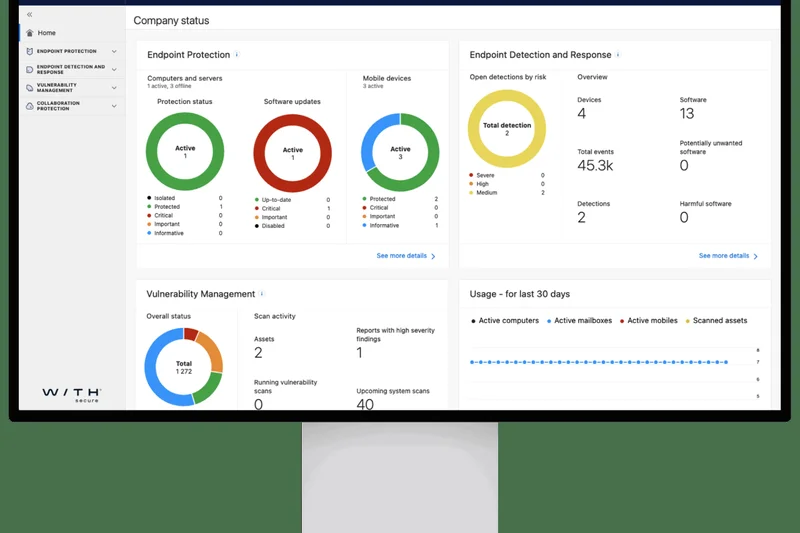
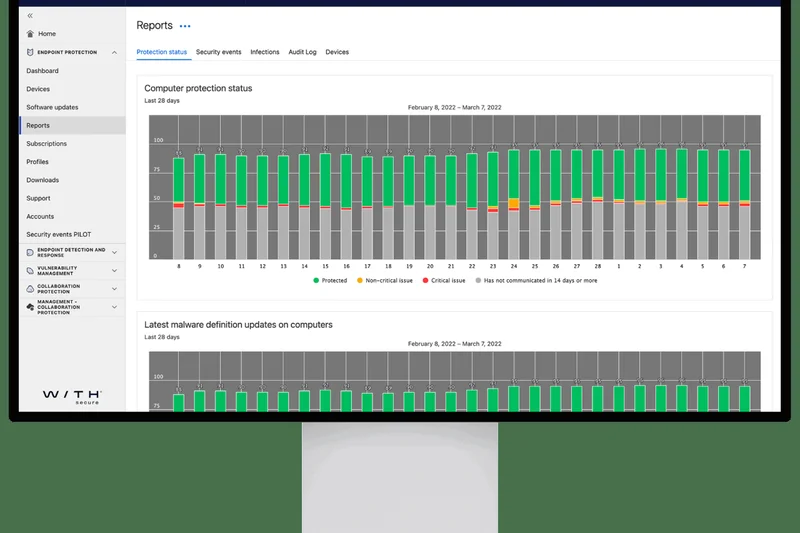
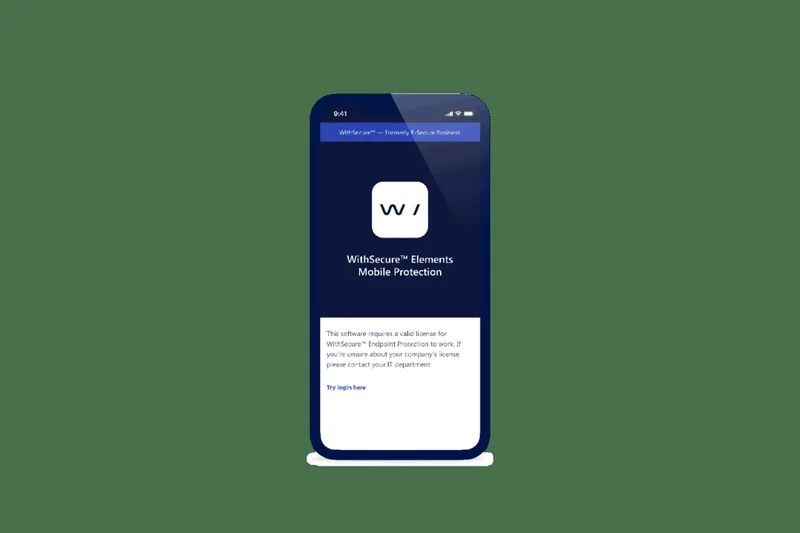
| 18 | Elements Endpoint Protection | Cloud-Managed Endpoint Antivirus | $35.00/device/year | 8 | 7 | 8 | 9 | 8 | 8 | 8 | 8.00 | |
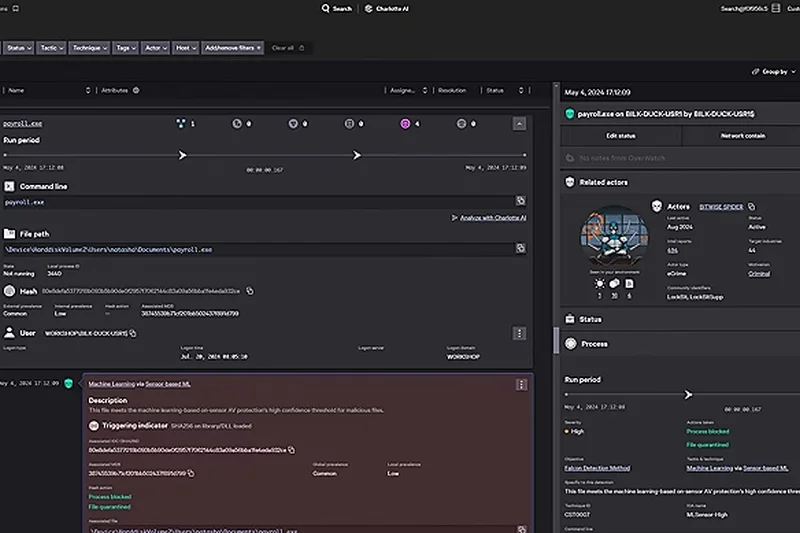
| 19 | Falcon Go | SMB Endpoint Protection | $59.99/device/year | 9 | 9 | 9 | 6 | 7 | 8 | 6 | 7.95 | |
| 20 | Apex One | Automated Endpoint Security | $50.00/device/year | 8 | 8 | 8 | 9 | 7 | 7 | 8 | 7.95 | |
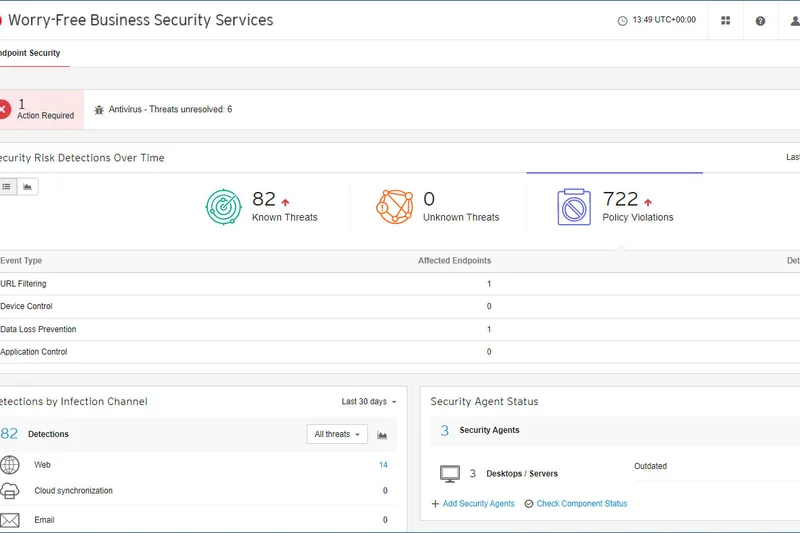
| 21 | Worry-Free Business Security Standard | Cloud Endpoint Protection | $30.99/device/year | 8 | 8 | 9 | 7 | 9 | 7 | 7 | 7.90 | |
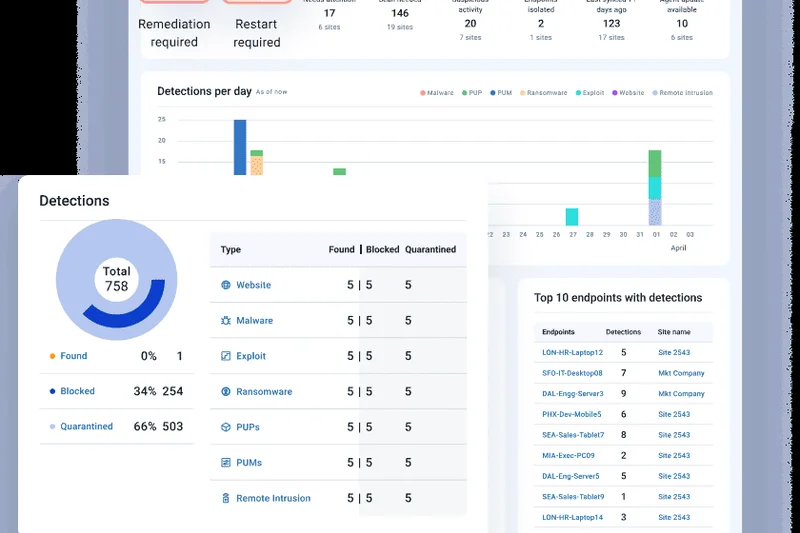
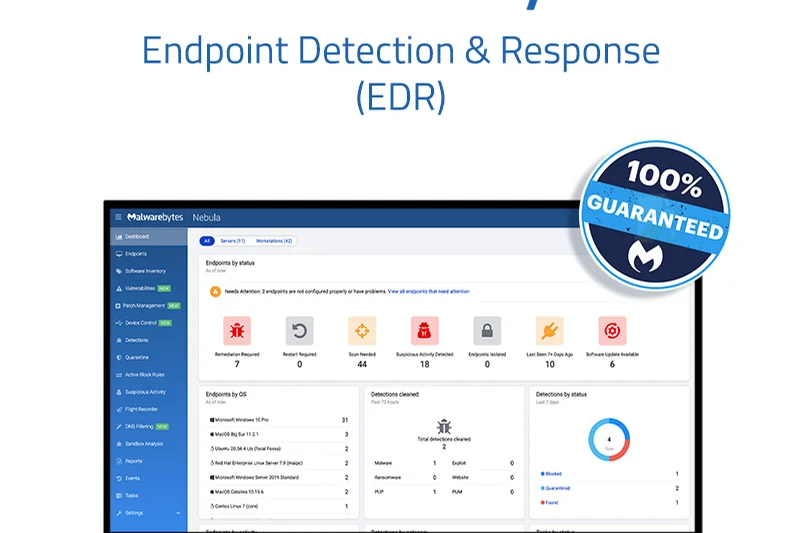
| 22 | Endpoint Detection and Response | EDR Platform | $63.74/device/year | 8 | 8 | 8 | 8 | 7 | 8 | 8 | 7.90 | |
| 23 | Singularity Core | Next-Gen Antivirus (NGAV) | $69.99/device/year | 9 | 9 | 8 | 6 | 6 | 8 | 8 | 7.90 | |
| 24 | Endpoint Security (EPP) | Cloud-Native Endpoint Protection | $34.00/device/year | 8 | 8 | 8 | 7 | 8 | 8 | 8 | 7.85 | |
| 25 | Defender for Endpoint Plan 1 | Foundational Endpoint Security | $36.00/user/year | 8 | 9 | 8 | 6 | 8 | 7 | 9 | 7.85 | |
| 26 | Endpoint Protection | Cloud-Managed Endpoint Protection | $52.49/device/year | 8 | 9 | 8 | 7 | 7 | 8 | 7 | 7.80 | |
| 27 | Business Endpoint Protection | Lightweight Endpoint Security | $30.00/device/year | 7 | 10 | 8 | 7 | 8 | 7 | 8 | 7.80 | 📊 Best System Impact & Performance |
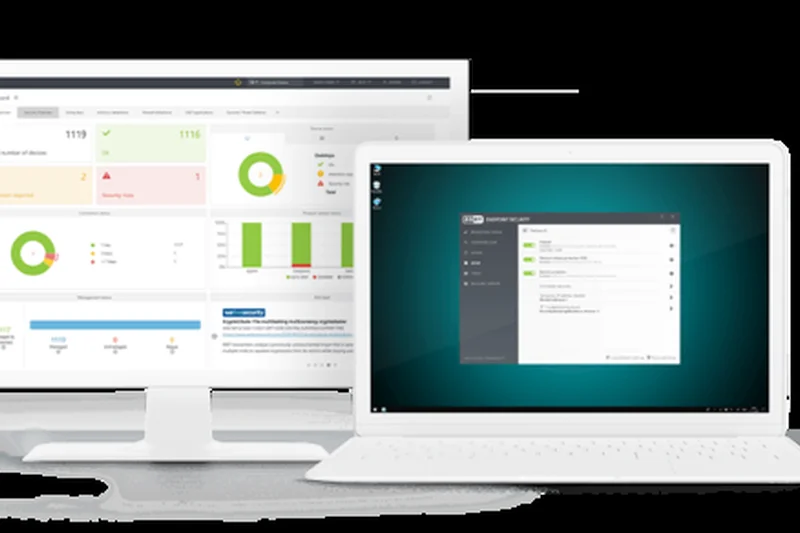
| 28 | PROTECT Entry | Essential Endpoint Security | $42.20/device/year | 8 | 9 | 8 | 7 | 7 | 8 | 7 | 7.80 | |
| 29 | Essential Business Security | Essential Endpoint Antivirus | $29.67/device/year | 8 | 7 | 8 | 7 | 9 | 7 | 8 | 7.70 | |
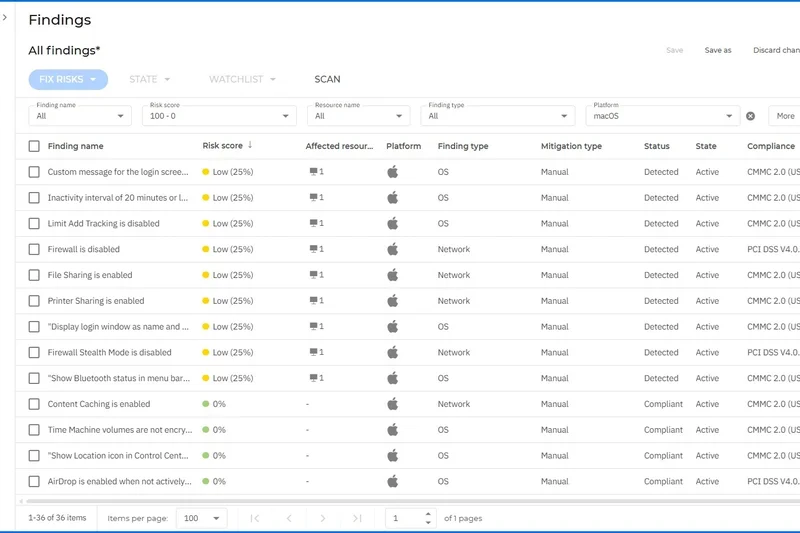
| 30 | GravityZone Business Security | SMB Endpoint Security | $35.00/device/year | 8 | 7 | 8 | 7 | 8 | 8 | 8 | 7.70 | |
| 31 | Premium Business Security | Premium Endpoint Security | $37.40/device/year | 8 | 7 | 8 | 8 | 8 | 7 | 7 | 7.65 | |
| 32 | Intercept X Essentials | Core Endpoint Protection | $20.00/user/year | 8 | 8 | 9 | 5 | 10 | 7 | 6 | 7.60 | 💰 Best Value 📊 Best Value & Pricing Structure |
| 33 | Endpoint Security Cloud | Cloud Endpoint Protection | $30.00/user/year | 7 | 8 | 8 | 7 | 8 | 7 | 8 | 7.50 | |
| 34 | Endpoint Security Enterprise | Enterprise Endpoint Protection | $39.00/device/year | 8 | 6 | 7 | 8 | 7 | 7 | 9 | 7.45 | |
| 35 | Trellix Endpoint Security | Endpoint Protection Platform | $45.00/device/year | 8 | 7 | 6 | 8 | 7 | 7 | 9 | 7.45 |
Dimension Rankings
Each dimension ranked independently (Top 10).
📊 Best for Threat Detection & Prevention — Top 10
| Dim # | Product | Threat Detection & Prevention Score | Overall Rank | Price |
|---|---|---|---|---|
| 1 | Falcon Enterprise | 10 | #1 | $184.99/device/year |
| 2 | Singularity Complete | 10 | #2 | $179.99/device/year |
| 3 | Falcon Pro | 9 | #5 | $99.99/device/year |
| 4 | Singularity Control | 9 | #12 | $79.99/device/year |
| 5 | Intercept X Advanced | 9 | #10 | $28.00/user/year |
| 6 | GravityZone Business Security Premium | 9 | #17 | $61.59/device/year |
| 7 | Endpoint Security for Business Select | 9 | #9 | $30.00/device/year |
| 8 | Secure Endpoint Advantage | 9 | #13 | $65.00/device/year |
| 9 | Defender for Endpoint Plan 2 | 9 | #3 | $62.40/user/year |
| 10 | GravityZone Business Security Enterprise | 9 | #6 | $69.00/device/year |
📊 Best for System Impact & Performance — Top 10
| Dim # | Product | System Impact & Performance Score | Overall Rank | Price |
|---|---|---|---|---|
| 1 | Business Endpoint Protection | 10 | #27 | $30.00/device/year |
| 2 | Falcon Pro | 9 | #5 | $99.99/device/year |
| 3 | Microsoft Defender for Business | 9 | #16 | $36.00/user/year |
| 4 | PROTECT Advanced | 9 | #14 | $55.00/device/year |
| 5 | Endpoint Protection | 9 | #26 | $52.49/device/year |
| 6 | Falcon Enterprise | 9 | #1 | $184.99/device/year |
| 7 | Defender for Endpoint Plan 2 | 9 | #3 | $62.40/user/year |
| 8 | PROTECT Complete | 9 | #4 | $57.50/device/year |
| 9 | Falcon Go | 9 | #19 | $59.99/device/year |
| 10 | Singularity Core | 9 | #23 | $69.99/device/year |
📊 Best for Admin Console & Usability — Top 10
| Dim # | Product | Admin Console & Usability Score | Overall Rank | Price |
|---|---|---|---|---|
| 1 | Falcon Pro | 9 | #5 | $99.99/device/year |
| 2 | Microsoft Defender for Business | 9 | #16 | $36.00/user/year |
| 3 | Worry-Free Business Security Standard | 9 | #21 | $30.99/device/year |
| 4 | Falcon Go | 9 | #19 | $59.99/device/year |
| 5 | Intercept X Essentials | 9 | #32 | $20.00/user/year |
| 6 | Singularity Control | 8 | #12 | $79.99/device/year |
| 7 | Intercept X Advanced | 8 | #10 | $28.00/user/year |
| 8 | GravityZone Business Security Premium | 8 | #17 | $61.59/device/year |
| 9 | PROTECT Advanced | 8 | #14 | $55.00/device/year |
| 10 | Endpoint Protection | 8 | #26 | $52.49/device/year |
📊 Best for Security Feature Set — Top 10
| Dim # | Product | Security Feature Set Score | Overall Rank | Price |
|---|---|---|---|---|
| 1 | Falcon Enterprise | 10 | #1 | $184.99/device/year |
| 2 | Singularity Complete | 10 | #2 | $179.99/device/year |
| 3 | Secure Endpoint Advantage | 9 | #13 | $65.00/device/year |
| 4 | Elements Endpoint Protection | 9 | #18 | $35.00/device/year |
| 5 | Defender for Endpoint Plan 2 | 9 | #3 | $62.40/user/year |
| 6 | GravityZone Business Security Enterprise | 9 | #6 | $69.00/device/year |
| 7 | Intercept X Advanced with XDR | 9 | #7 | $48.00/user/year |
| 8 | PROTECT Complete | 9 | #4 | $57.50/device/year |
| 9 | Worry-Free Business Security Advanced | 9 | #15 | $41.98/device/year |
| 10 | Endpoint Security for Business Advanced | 9 | #11 | $55.00/device/year |
📊 Best for Value & Pricing Structure — Top 10
| Dim # | Product | Value & Pricing Structure Score | Overall Rank | Price |
|---|---|---|---|---|
| 1 | Intercept X Essentials | 10 | #32 | $20.00/user/year |
| 2 | Microsoft Defender for Business | 9 | #16 | $36.00/user/year |
| 3 | Intercept X Advanced | 9 | #10 | $28.00/user/year |
| 4 | Worry-Free Business Security Standard | 9 | #21 | $30.99/device/year |
| 5 | Endpoint Security for Business Select | 9 | #9 | $30.00/device/year |
| 6 | Essential Business Security | 9 | #29 | $29.67/device/year |
| 7 | Business Endpoint Protection | 8 | #27 | $30.00/device/year |
| 8 | Endpoint Security (EPP) | 8 | #24 | $34.00/device/year |
| 9 | Elements Endpoint Protection | 8 | #18 | $35.00/device/year |
| 10 | Defender for Endpoint Plan 2 | 8 | #3 | $62.40/user/year |
📊 Best for Customer Support & Reliability — Top 10
| Dim # | Product | Customer Support & Reliability Score | Overall Rank | Price |
|---|---|---|---|---|
| 1 | Falcon Pro | 9 | #5 | $99.99/device/year |
| 2 | Falcon Enterprise | 9 | #1 | $184.99/device/year |
| 3 | Singularity Complete | 9 | #2 | $179.99/device/year |
| 4 | Singularity Control | 8 | #12 | $79.99/device/year |
| 5 | Intercept X Advanced | 8 | #10 | $28.00/user/year |
| 6 | GravityZone Business Security Premium | 8 | #17 | $61.59/device/year |
| 7 | PROTECT Advanced | 8 | #14 | $55.00/device/year |
| 8 | Endpoint Protection | 8 | #26 | $52.49/device/year |
| 9 | Secure Endpoint Advantage | 8 | #13 | $65.00/device/year |
| 10 | Endpoint Security (EPP) | 8 | #24 | $34.00/device/year |
📊 Best for Scalability & Cross-Platform Support — Top 10
| Dim # | Product | Scalability & Cross-Platform Support Score | Overall Rank | Price |
|---|---|---|---|---|
| 1 | Falcon Enterprise | 10 | #1 | $184.99/device/year |
| 2 | Singularity Complete | 10 | #2 | $179.99/device/year |
| 3 | Defender for Endpoint Plan 2 | 10 | #3 | $62.40/user/year |
| 4 | GravityZone Business Security Enterprise | 10 | #6 | $69.00/device/year |
| 5 | Intercept X Advanced with XDR | 10 | #7 | $48.00/user/year |
| 6 | Falcon Pro | 9 | #5 | $99.99/device/year |
| 7 | Singularity Control | 9 | #12 | $79.99/device/year |
| 8 | Endpoint Security Enterprise | 9 | #34 | $39.00/device/year |
| 9 | Trellix Endpoint Security | 9 | #35 | $45.00/device/year |
| 10 | Secure Endpoint Advantage | 9 | #13 | $65.00/device/year |
Scenario Rankings
🎯 Best Overall for Mid-Sized Businesses — Top 5
Weights: Detection 25%, Performance 15%, Usability 15%, Features 15%, Value 10%, Support 10%, Scalability 10%
| # | Product | Score | Overall Rank | Price | Why |
|---|---|---|---|---|---|
| 1 | Falcon Enterprise | 8.85 | #1 | $184.99/device/year | |
| 2 | Singularity Complete | 8.70 | #2 | $179.99/device/year | |
| 3 | Defender for Endpoint Plan 2 | 8.65 | #3 | $62.40/user/year | |
| 4 | PROTECT Complete | 8.65 | #4 | $57.50/device/year | |
| 5 | Falcon Pro | 8.45 | #5 | $99.99/device/year |
🎯 Best Budget Antivirus for Small Businesses — Top 5
Weights: Value 35%, Detection 25%, Usability 15%, Performance 10%, Features 5%, Support 5%, Scalability 5%
| # | Product | Score | Overall Rank | Price | Why |
|---|---|---|---|---|---|
| 1 | Endpoint Security for Business Select | 8.55 | #9 | $30.00/device/year | |
| 2 | Intercept X Essentials | 8.55 | #32 | $20.00/user/year | |
| 3 | Intercept X Advanced | 8.50 | #10 | $28.00/user/year | |
| 4 | Defender for Endpoint Plan 2 | 8.45 | #3 | $62.40/user/year | |
| 5 | PROTECT Complete | 8.45 | #4 | $57.50/device/year |
🎯 Best for Large Enterprises & Complex Environments — Top 5
Weights: Detection 25%, Features 20%, Usability 15%, Scalability 15%, Support 10%, Performance 10%, Value 5%
| # | Product | Score | Overall Rank | Price | Why |
|---|---|---|---|---|---|
| 1 | Falcon Enterprise | 9.20 | #1 | $184.99/device/year | |
| 2 | Singularity Complete | 9.10 | #2 | $179.99/device/year | |
| 3 | Defender for Endpoint Plan 2 | 8.75 | #3 | $62.40/user/year | |
| 4 | PROTECT Complete | 8.70 | #4 | $57.50/device/year | |
| 5 | GravityZone Business Security Enterprise | 8.65 | #6 | $69.00/device/year |
🎯 Best for Remote Workforces & Mobile Teams — Top 5
Weights: Detection 20%, Usability 20%, Performance 15%, Features 15%, Value 10%, Support 10%, Scalability 10%
| # | Product | Score | Overall Rank | Price | Why |
|---|---|---|---|---|---|
| 1 | Falcon Enterprise | 8.75 | #1 | $184.99/device/year | |
| 2 | Singularity Complete | 8.60 | #2 | $179.99/device/year | |
| 3 | Defender for Endpoint Plan 2 | 8.60 | #3 | $62.40/user/year | |
| 4 | PROTECT Complete | 8.60 | #4 | $57.50/device/year | |
| 5 | Falcon Pro | 8.45 | #5 | $99.99/device/year |
Detailed Reviews
#1 Falcon Enterprise
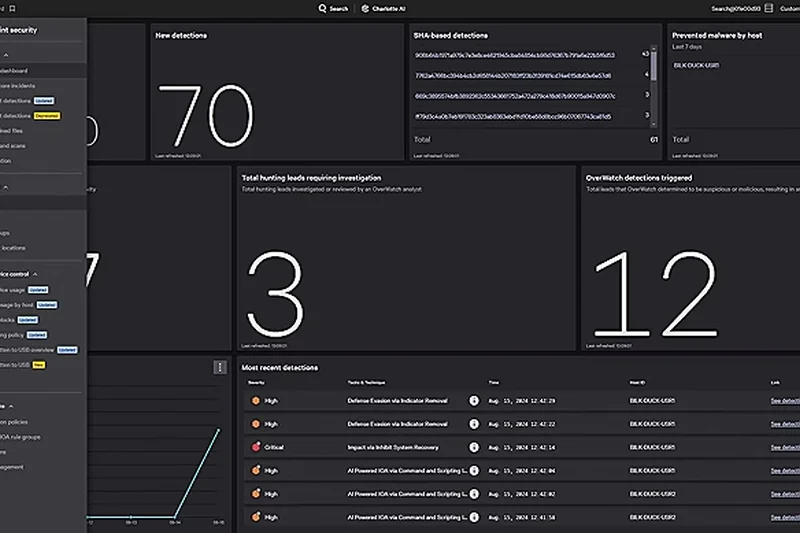
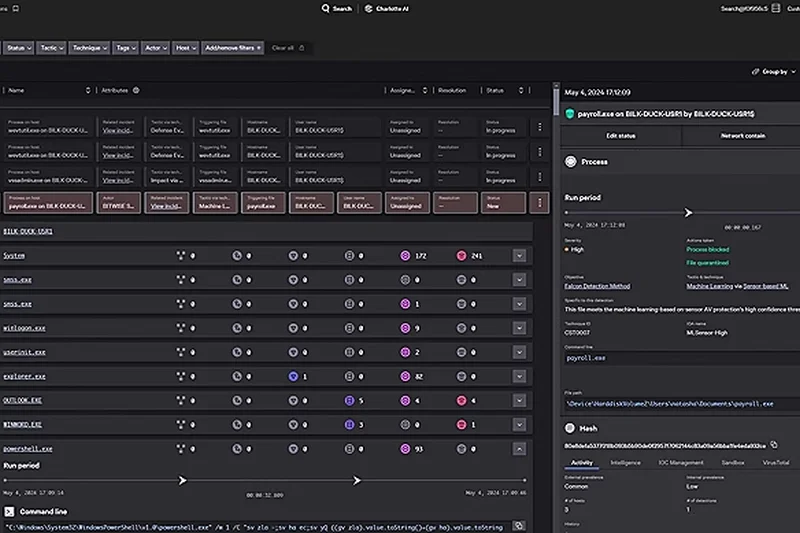
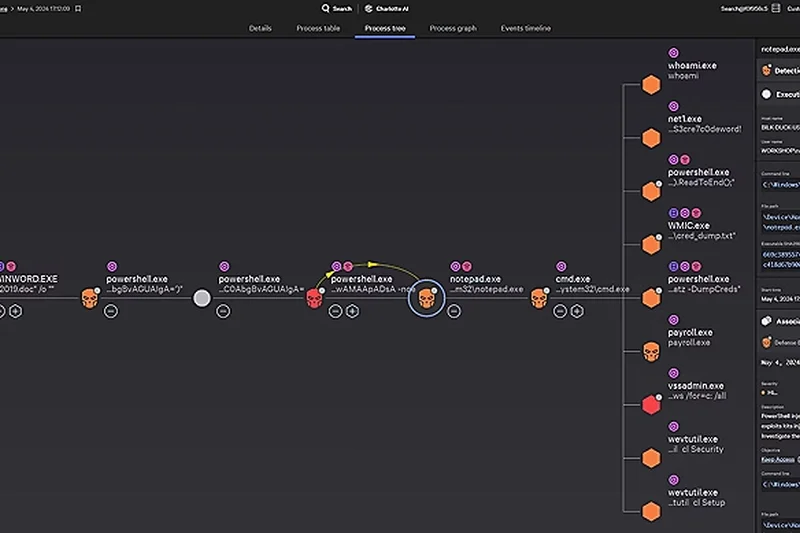
Why we picked it: CrowdStrike's Falcon Enterprise is an industry juggernaut, capturing the #1 position in our 2026 evaluation with an extraordinary 8.85 overall score. Built on a cloud-native architecture, Falcon Enterprise redefines what an Endpoint Protection Platform (EPP) and Endpoint Detection and Response (EDR) solution can achieve. In our threat detection analysis, it earned a flawless 10/10, demonstrating near-perfect efficacy against sophisticated ransomware, zero-day exploits, and fileless malware. What sets Falcon Enterprise apart from legacy antivirus solutions is its proactive, AI-driven threat hunting capabilities, powered by the CrowdStrike Security Cloud, which analyzes trillions of endpoint events daily. Despite its massive analytical power, Falcon Enterprise maintains an incredibly lightweight footprint. With a system performance score of 9/10, the single-agent deployment operates silently in the background, ensuring that end-user productivity is never hindered by cumbersome active scans or resource-heavy updates. Administrators benefit from full attack visibility, timeline mapping, and automated scriptless remediation, all orchestrated through a highly responsive cloud console. However, this level of enterprise-grade security comes with a premium price tag. At $184.99 per device per year, it scored a 4/10 in our Value for Money dimension. It is undeniably an investment, best suited for mature IT environments or organizations with a dedicated Security Operations Center (SOC). For large enterprises and remote workforces requiring absolute visibility and immediate response capabilities, CrowdStrike Falcon Enterprise offers an unmatched, future-proof security posture.
Key Specs
- Advanced Endpoint Detection and Response (EDR)
- AI-driven proactive threat hunting
- Full attack visibility and timeline mapping
- Integrated threat intelligence feeds
- Automated, scriptless remediation
- Zero-trust readiness and identity protection integrations
What we like
- Flawless 10/10 threat detection efficacy
- Incredibly lightweight single-agent architecture
- Industry-leading EDR and threat timeline visibility
- Massively scalable for global environments
What we don't like
- Very expensive cost per endpoint
- Requires dedicated security personnel to maximize value
Best for: Large enterprises and organizations with complex, hybrid environments requiring deep visibility and advanced threat hunting.
Considering Falcon Enterprise vs Singularity Complete? Both offer elite EDR and a 10/10 threat detection score, but Falcon Enterprise edges out slightly in system performance (9 vs 8), providing a lighter footprint during continuous monitoring. SentinelOne, however, offers slightly better value.
The premier choice for enterprise-grade endpoint protection, offering unmatched visibility and AI-driven threat remediation.
Buy at CrowdStrike official site#2 Singularity Complete
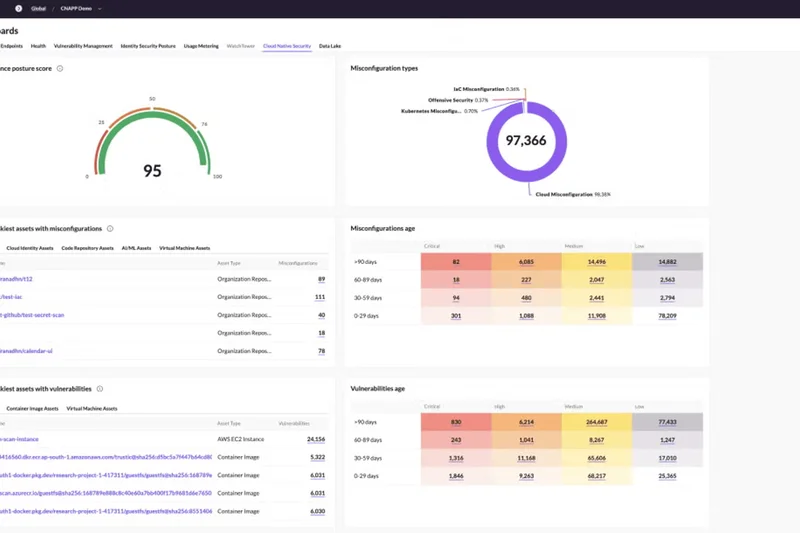
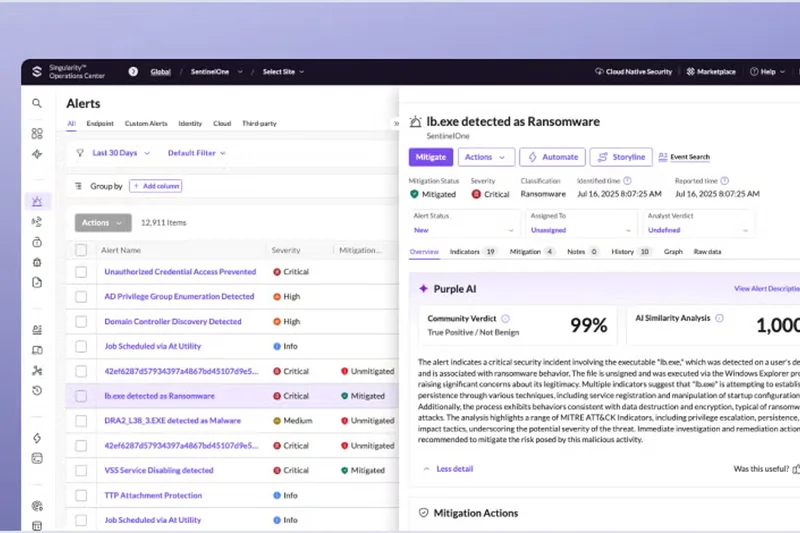
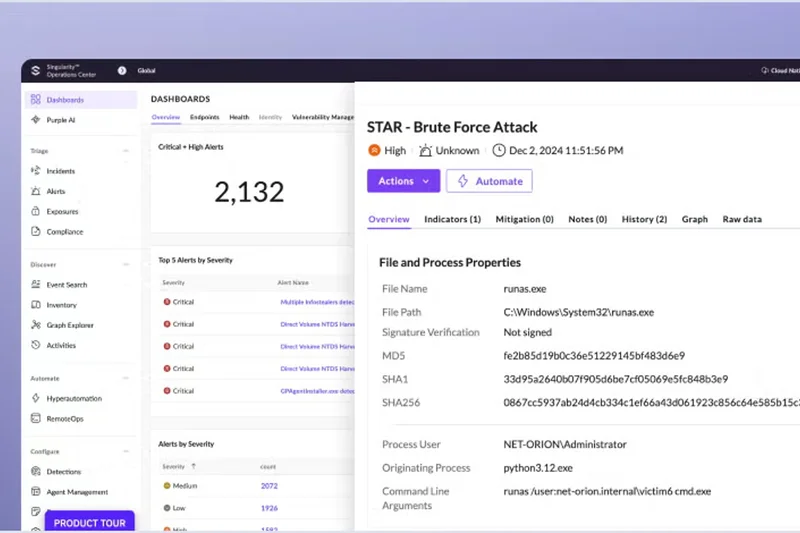
Why we picked it: SentinelOne's Singularity Complete is an elite Extended Detection and Response (XDR) platform that earned the #2 spot in our 2026 evaluations with a commanding 8.7 overall score. Tying for first place in our Threat Detection dimension (10/10), Singularity Complete utilizes highly autonomous, AI-driven behavioral engines that detect and mitigate both known and unknown threats without relying on cloud connectivity or traditional signatures. What truly distinguishes Singularity Complete is its patented Storyline technology. This feature automatically correlates complex, disparate event data into a single, comprehensive attack narrative, saving security analysts hours of manual triage. In the event of a successful ransomware attack, its automated 1-click rollback feature can restore an endpoint to its pre-infected state almost instantly, a crucial capability that ensures business continuity. With a perfect 10/10 in both Security Feature Set and Scalability, the platform effortlessly supports vast, cross-platform enterprise environments (Windows, macOS, Linux, and cloud workloads) while integrating seamlessly with third-party SIEM and SOAR tools. Like CrowdStrike, this level of power demands a significant investment ($179.99/device/year, scoring 4/10 for Value), but for massive organizations prioritizing automated threat remediation and extended data retention for deep threat hunting, SentinelOne Singularity Complete is an extraordinarily capable solution.
Key Specs
- Full Endpoint Detection and Response (EDR)
- Storyline technology for attack reconstruction
- Extended data retention limits
- Advanced threat hunting capabilities
- Automated behavioral remediation
- Integration with third-party SIEM and SOAR tools
What we like
- Unbeatable 10/10 autonomous AI threat detection
- Patented 1-click ransomware rollback
- Storyline tech dramatically speeds up investigations
- Perfect scalability across all operating systems
What we don't like
- Premium pricing limits accessibility for SMBs
- Slightly heavier system impact than top competitors
Best for: Enterprises that require automated threat response and deep contextual mapping of security events.
Considering Singularity Complete vs Defender for Endpoint Plan 2? SentinelOne offers more autonomous remediation and a slightly stronger core detection engine (10 vs 9), but Microsoft Defender is considerably more cost-effective and integrates flawlessly into existing Microsoft 365 environments.
A powerhouse XDR solution that excels in autonomous threat detection and rapid ransomware recovery.
Buy at SentinelOne official site#3 Defender for Endpoint Plan 2
Why we picked it: Microsoft's Defender for Endpoint Plan 2 has evolved into a formidable enterprise EDR platform, securing the #3 overall rank with an impressive score of 8.65. Its greatest strength lies in its agentless architecture for Windows devices, which ensures minimal system disruption and a highly efficient 9/10 in our System Impact & Performance testing. The platform's integration deep within the Windows OS allows it to gather rich telemetry and execute rapid remediation without deploying bulky third-party agents. Defender for Endpoint Plan 2 scored a stellar 9/10 in Threat Detection, utilizing advanced behavioral analysis and cloud-powered machine learning to intercept sophisticated threats. Its Automated Investigation and Remediation (AIR) capabilities act as a virtual tier-one analyst, resolving common alerts automatically and reducing alert fatigue. For proactive security teams, the advanced threat hunting feature, leveraging Kusto Query Language (KQL), provides granular visibility into network activities. At $62.40 per user per year, it represents excellent value (8/10), especially for organizations already invested in the Microsoft 365 ecosystem. While its cross-platform support for Mac and Linux has improved dramatically, its management is undeniably optimized for Windows-centric networks. Nevertheless, its powerful vulnerability management and seamless Microsoft Sentinel integration make it a top-tier choice for security-conscious enterprises.
Key Specs
- Advanced endpoint detection and response (EDR)
- Automated investigation and remediation (AIR)
- Advanced threat hunting with Kusto Query Language
- Threat and vulnerability management
- Deep integration with Microsoft Sentinel
- Agentless architecture for Windows devices
What we like
- Excellent 9/10 system performance via agentless Windows architecture
- Highly effective automated investigation and remediation
- Superb value compared to standalone enterprise EDRs
- Flawless integration with the Microsoft security stack
What we don't like
- Advanced threat hunting requires learning KQL
- Customer support reliability trails behind top pure-play vendors
Best for: Organizations heavily invested in the Microsoft ecosystem looking for deeply integrated, high-performance EDR.
Considering Defender for Endpoint Plan 2 vs PROTECT Complete? Microsoft offers better native Windows integration and advanced threat hunting, while ESET provides a more holistic suite including mail server security and full disk encryption at a slightly lower price point.
An exceptionally performant and deeply integrated EDR solution that maximizes the value of the Microsoft security ecosystem.
Buy at Microsoft official site#4 PROTECT Complete
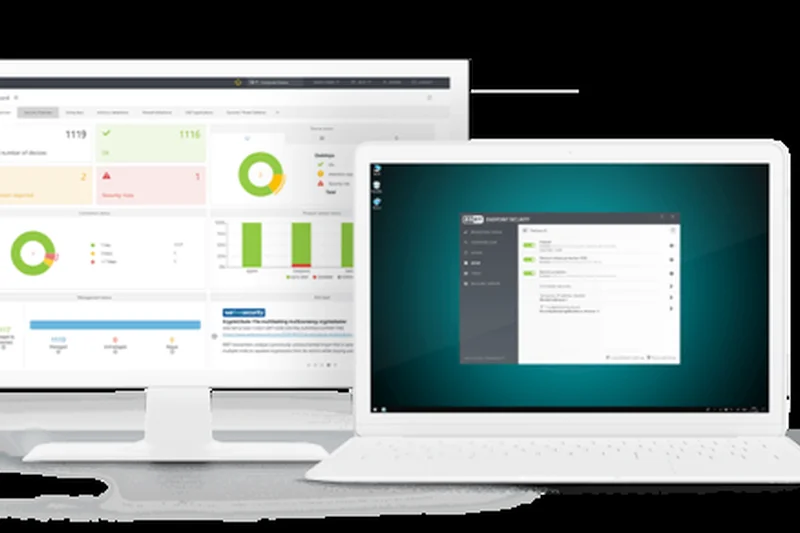
Why we picked it: ESET's PROTECT Complete captured the #4 spot with an 8.65 overall score, standing out as one of the most comprehensive and well-rounded security suites available. Earning the 'best_budget' award in our enterprise scenarios, it delivers exceptional capability at a highly competitive $57.50 per device per year (Value score: 8/10). ESET has long been renowned for its lightweight endpoint footprint, and PROTECT Complete maintains this legacy with a superb 9/10 in System Performance. In terms of security, it achieved a 9/10 in Threat Detection. The suite employs Advanced Threat Defense cloud sandboxing to detonate suspicious files in a safe environment before they ever reach the endpoint. Beyond standard malware protection, PROTECT Complete includes automated vulnerability and patch management, which proactively closes security gaps. It also provides Cloud App Protection for Microsoft 365, safeguarding email and cloud storage from malicious payloads. While its admin console (scoring 8/10) is powerful, it can present a slightly steeper learning curve than some of its strictly cloud-native competitors. However, the inclusion of full disk encryption and seamless mail server integration makes it an incredibly robust all-in-one solution for mid-sized to large enterprises seeking maximum coverage without the exorbitant enterprise price tag.
Key Specs
- Vulnerability and automated patch management
- Cloud App Protection for Microsoft 365
- Mail Server Security integration
- Advanced Threat Defense cloud sandboxing
- Full disk encryption
- Lightweight endpoint footprint
What we like
- Exceptional 9/10 system performance and lightweight agent
- Comprehensive suite includes patch management and disk encryption
- Strong value proposition for the features included
- Effective zero-day protection via cloud sandboxing
What we don't like
- Admin console has a steeper learning curve
- Lacks the ultra-deep threat hunting of Falcon or Singularity
Best for: Mid-sized to large organizations seeking a comprehensive, all-in-one security suite with minimal system impact.
Considering PROTECT Complete vs Falcon Pro? ESET offers a broader suite of tools including patch management and disk encryption, whereas Falcon Pro focuses more strictly on elite, next-gen antivirus and threat intelligence.
A highly efficient, feature-rich security suite that delivers enterprise-grade protection and excellent value.
Buy at ESET official site#5 Falcon Pro
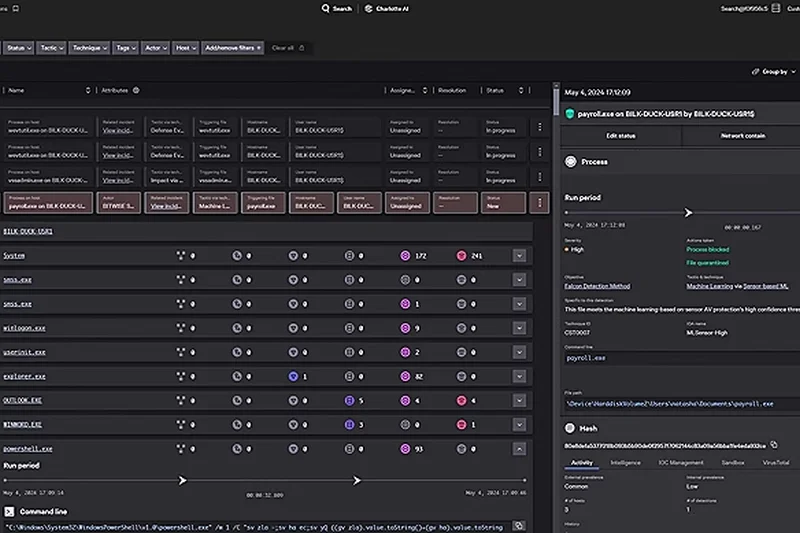
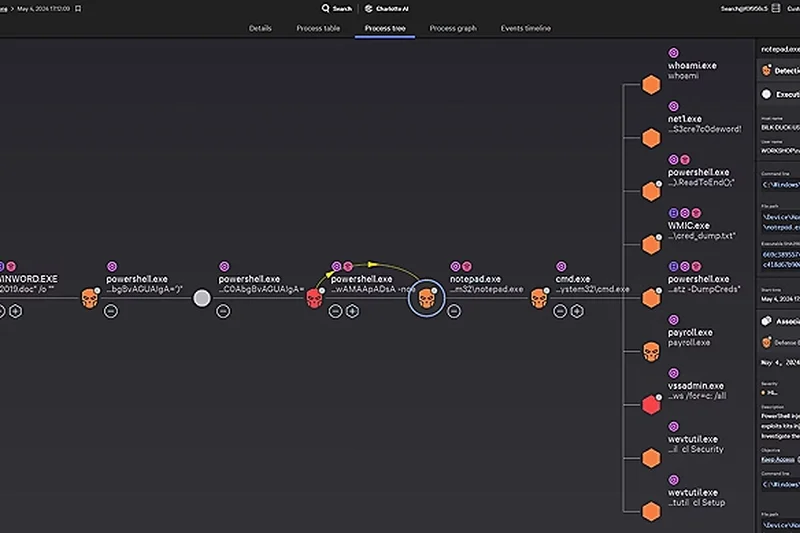
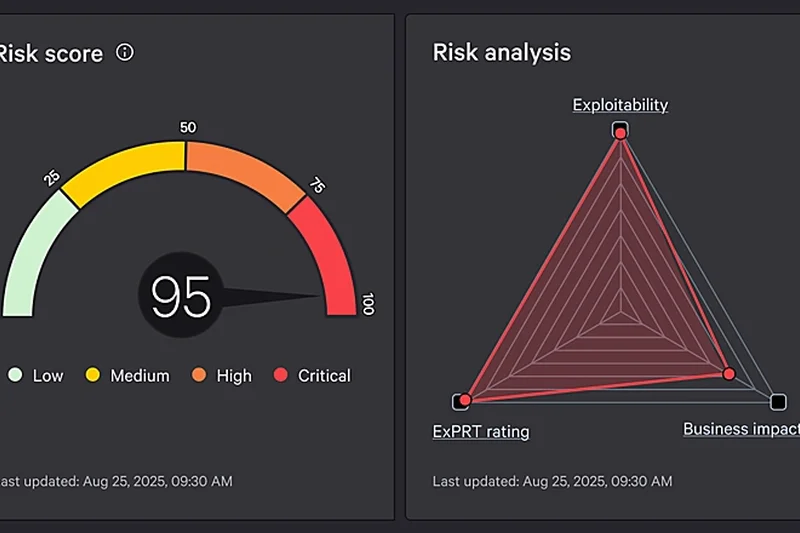
Why we picked it: CrowdStrike's Falcon Pro is the mid-market counterpart to Falcon Enterprise, securing the #5 overall position with an 8.45 score. It delivers the same impeccable 9/10 threat detection engine found in the Enterprise tier, utilizing AI-powered Next-Gen Antivirus (NGAV) to intercept both known and unknown threats. Because it shares the same cloud-native, single-agent architecture, it also boasts an outstanding 9/10 in System Performance, ensuring zero disruption to end users. Where Falcon Pro truly shines is in its Usability and Customer Support, earning top awards in both categories (9/10). The Falcon console is a masterclass in intuitive design, allowing administrators to easily deploy agents, configure host firewalls, and manage USB device controls. CrowdStrike's integrated threat intelligence feeds provide critical context to security alerts, empowering smaller IT teams to respond with the confidence of a dedicated SOC. Priced at $99.99 per device per year, it is significantly more expensive than standard SMB antivirus solutions (scoring 5/10 for Value). It lacks the full EDR timeline mapping of the Enterprise version, but for organizations that want elite, proactive threat prevention without the complexity of managing deep EDR telemetry, Falcon Pro is an outstanding choice.
Key Specs
- Cloud-native, lightweight single-agent architecture
- AI-powered Next-Gen Antivirus (NGAV)
- Integrated threat intelligence
- Automated threat prevention and remediation
- USB device control and host firewall management
- Cross-platform support (Windows, macOS, Linux)
What we like
- Elite 9/10 threat detection and NGAV capabilities
- Highly intuitive, award-winning admin console
- Zero system lag thanks to a lightweight single agent
- Excellent customer support and threat intelligence
What we don't like
- High cost for a non-full EDR platform
- Lacks the deep attack timeline visibility of Falcon Enterprise
Best for: Mid-sized businesses that want elite threat prevention and a superb admin experience without managing full EDR.
Considering Falcon Pro vs GravityZone Business Security Enterprise? Bitdefender offers full EDR capabilities and network traffic analytics for a lower price, while CrowdStrike provides a noticeably better admin experience and lighter system footprint.
A premium, highly usable endpoint protection platform offering elite next-gen antivirus and flawless performance.
Buy at CrowdStrike official site#6 GravityZone Business Security Enterprise
Why we picked it: Bitdefender's GravityZone Business Security Enterprise ranks #6 overall (8.45 score) and is a favorite among IT professionals for its sheer depth of security controls. Earning a 9/10 in Threat Detection, it leverages cross-endpoint event correlation to identify complex, multi-stage attacks that might otherwise go unnoticed. Its integrated EDR platform is mapped directly to the MITRE ATT&CK framework, providing security analysts with a clear, actionable understanding of threat actor tactics. GravityZone stands out with its robust risk analytics engine, which proactively scans endpoints for misconfigurations and vulnerabilities, allowing admins to harden their attack surface before a breach occurs. It also includes unique network traffic analytics to detect lateral movement. While its security efficacy is undeniable, its agent is slightly heavier than some competitors, resulting in a 7/10 for System Performance. Priced at $69.00 per device, it offers a compelling balance of enterprise-grade EDR and reasonable pricing (Value: 8/10), making it a highly scalable (10/10) solution for complex environments.
Key Specs
- Integrated Endpoint Detection and Response (EDR)
- Cross-endpoint event correlation
- Risk analytics for misconfigurations
- MITRE ATT&CK framework mapping
- Network traffic analytics
- Granular granular policy management
What we like
- Strong 9/10 threat detection with deep MITRE mapping
- Excellent proactive risk analytics for misconfigurations
- Highly granular policy management
- Great value for a full enterprise EDR suite
What we don't like
- System performance is slightly heavier than cloud-native rivals
- Console interface can feel overwhelming due to sheer volume of options
Best for: Large organizations needing deep EDR visibility, granular policy controls, and proactive risk analytics.
Considering GravityZone Business Security Enterprise vs Intercept X Advanced with XDR? Both offer deep EDR/XDR for mid-to-large enterprises, but Bitdefender provides slightly better proactive risk analytics, while Sophos excels with its CryptoGuard ransomware rollback feature.
A highly capable and granular EDR platform that excels at cross-endpoint correlation and risk management.
Buy at Bitdefender official site#7 Intercept X Advanced with XDR
Why we picked it: Sophos Intercept X Advanced with XDR takes the #7 spot, offering a powerful blend of deep learning AI malware detection and extended data correlation. Scoring 9/10 in Threat Detection, it is highly regarded for its CryptoGuard technology, which not only stops ransomware in its tracks but can automatically roll back affected files to their unencrypted state. The XDR (Extended Detection and Response) component allows administrators to pull in telemetry from Sophos firewalls, email gateways, and cloud workloads, providing a holistic view of the network. It features pre-packaged, customizable SQL queries that make advanced threat hunting accessible even to leaner IT teams. Furthermore, the Live Response terminal provides secure remote access to infected endpoints for immediate triage. While its system footprint (7/10 Performance) is noticeable during full scans, its $48.00 per user price point represents exceptional value (8/10) for an XDR-capable platform.
Key Specs
- Extended Detection and Response (XDR)
- Cross-product data correlation (firewall, email, cloud)
- Pre-packaged customizable SQL queries for threat hunting
- Live Response remote terminal access
- Deep learning AI malware detection
- CryptoGuard ransomware rollback
What we like
- Industry-leading CryptoGuard ransomware rollback
- Excellent XDR data correlation across security products
- Live Response terminal for remote triage
- Strong value for XDR capabilities
What we don't like
- Noticeable system impact during active scanning
- Maximum value requires using other Sophos network products
Best for: Organizations seeking robust anti-ransomware protection and accessible XDR threat hunting.
Considering Intercept X Advanced with XDR vs Harmony Endpoint? Sophos offers superior automated ransomware rollback and SQL-based hunting, while Check Point provides stronger zero-phishing and behavioral fileless attack protections.
A powerful XDR solution that makes advanced threat hunting accessible while delivering elite anti-ransomware defenses.
Buy at Sophos official site#8 Harmony Endpoint
Why we picked it: Check Point's Harmony Endpoint secures the #8 position with an 8.35 overall score. Designed to protect remote and hybrid workforces, it earned a 9/10 in Threat Detection by combining complete EPP and EDR capabilities. Harmony Endpoint is particularly strong in preventing credential theft and zero-phishing attacks, dynamically blocking malicious sites before users can enter sensitive data. Its Behavioral Guard engine actively monitors for fileless attacks and in-memory execution, while automated forensic analysis reports provide administrators with clear, actionable insights following an incident. Managed via the cloud-based Infinity Portal, it offers a solid admin experience (8/10). At $45.00 per user per year, it is a highly competitive option (Value: 8/10) for mid-sized enterprises, though its system performance (7/10) could be further optimized.
Key Specs
- Complete EPP and EDR capabilities
- Anti-Ransomware with automatic file restoration
- Zero-phishing and credential theft protection
- Behavioral Guard against fileless attacks
- Automated forensic analysis reports
- Cloud-based Infinity Portal management
What we like
- Exceptional zero-phishing and credential protection
- Strong Behavioral Guard against fileless malware
- Automated, easy-to-read forensic reports
- Good value for combined EPP and EDR
What we don't like
- System impact is higher than average
- Infinity Portal can be slightly sluggish under heavy load
Best for: Mid-sized businesses highly concerned with phishing, credential theft, and fileless attacks.
Considering Harmony Endpoint vs Endpoint Security for Business Select? Check Point offers deeper EDR and forensic reporting, whereas Kaspersky provides a lighter system footprint and is more budget-friendly for core protection.
A robust endpoint security platform that excels in preventing credential theft and providing automated forensics.
Buy at Check Point official site#9 Endpoint Security for Business Select
Why we picked it: Kaspersky's Endpoint Security for Business Select earns the #9 rank and wins our 'Best Budget Antivirus for Small Businesses' award for its exceptional value. Scoring a 9/10 in Value, it costs just $30.00 per device while delivering a highly effective 9/10 Threat Detection engine. Its multi-layered protection effectively combats ransomware with an automatic rollback feature that reverses malicious changes. Unlike many budget options, Kaspersky includes robust web, device, and application control, allowing admins to restrict unauthorized USB drives and applications easily. It also includes Mobile Device Management (MDM), making it highly scalable (8/10) for BYOD environments. While it lacks deep EDR timeline mapping, its solid performance (8/10) and low CPU impact make it an ideal choice for SMBs needing rock-solid foundational security.
Key Specs
- Multi-layered endpoint protection engine
- Behavioral detection and automatic rollback
- Mobile device management (MDM) included
- Web, device, and application control
- Cloud or on-premises management console
- Optimized for low network and CPU impact
What we like
- Outstanding 9/10 threat detection at a budget price
- Includes application, web, and device controls
- Integrated Mobile Device Management (MDM)
- Low impact on system resources
What we don't like
- Lacks advanced EDR threat hunting capabilities
- Geopolitical concerns may restrict usage in some sectors
Best for: Small to medium businesses seeking maximum core protection and device control on a strict budget.
Considering Kaspersky Select vs Intercept X Advanced? Both offer excellent malware protection, but Kaspersky includes MDM at a comparable price, while Sophos provides deeper deep-learning AI and slightly better cloud console usability.
The ultimate budget-friendly choice for SMBs requiring highly effective malware protection and granular device control.
Buy at Kaspersky official site#10 Intercept X Advanced
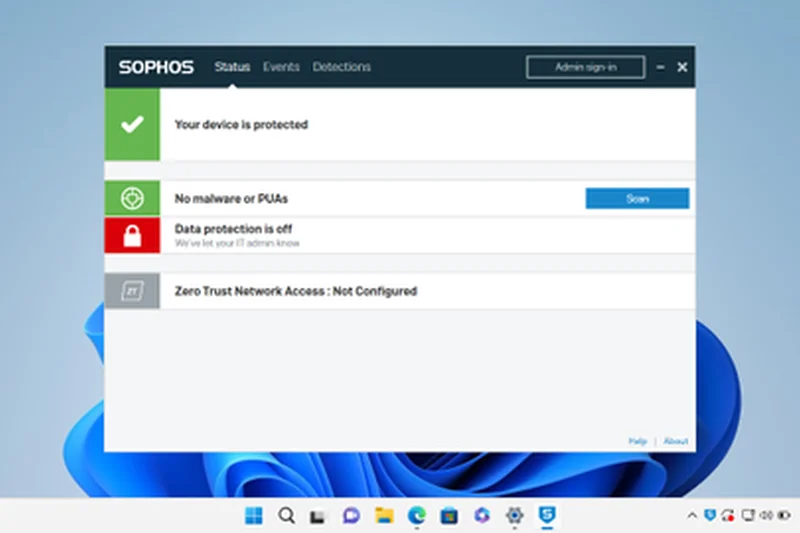
Why we picked it: Sophos Intercept X Advanced rounds out our top 10 with an 8.2 overall score. It offers the same elite 9/10 deep learning AI malware detection and CryptoGuard anti-ransomware technology as its XDR counterpart, but without the extended data correlation features, bringing the price down to an attractive $28.00 per user per year (Value: 9/10). This platform focuses heavily on exploit prevention, blocking the techniques attackers use to distribute malware, rather than just scanning for the malware itself. Managed via the highly regarded Sophos Central cloud console, it provides an intuitive admin experience (8/10). While it lacks the proactive threat hunting of XDR, its automated file recovery and solid peripheral device control make it a formidable "set it and forget it" solution for mid-market organizations.
Key Specs
- Deep learning AI malware detection
- CryptoGuard anti-ransomware technology
- Automated file recovery and rollback
- Exploit prevention techniques
- Web, app, and peripheral device control
- Managed via Sophos Central cloud console
What we like
- Superb deep learning and exploit prevention
- Industry-best anti-ransomware rollback
- Highly intuitive Sophos Central dashboard
- Excellent price-to-performance ratio
What we don't like
- System footprint can cause minor slowdowns on older hardware
- Lacks the threat hunting tools of the XDR tier
Best for: Mid-market businesses that want elite ransomware protection without the overhead of managing an XDR platform.
Considering Intercept X Advanced vs Endpoint Security for Business Advanced? Sophos focuses heavily on anti-exploit and ransomware rollback, while Kaspersky offers broader IT management tools like patch management and OS deployment.
A highly effective, low-maintenance endpoint protection platform renowned for its anti-ransomware capabilities.
Buy at Sophos official site#11 Endpoint Security for Business Advanced
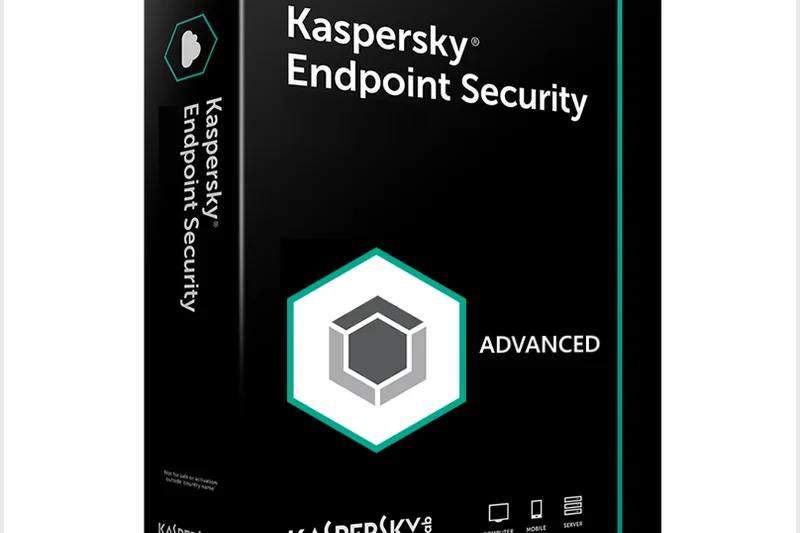
Why we picked it: Kaspersky's Advanced tier secures the #11 spot, bridging the gap between security and IT operations. Earning a 9/10 in Threat Detection, it adds crucial vulnerability and patch management, allowing admins to automate software updates and close security loopholes. Priced at $55.00/device, it offers robust data encryption and OS deployment tools, making it ideal for IT teams looking to consolidate endpoint management.
Key Specs
- Vulnerability and patch management
- Adaptive anomaly control
- OS and third-party software deployment tools
- Data encryption (FDE and FLE)
- Advanced machine learning engine
- Centralized web and device controls
What we like
- Excellent threat detection with adaptive anomaly control
- Built-in patch management and vulnerability scanning
- Includes full disk encryption (FDE)
What we don't like
- Feature density can complicate initial deployment
- Value proposition drops if you already use third-party patch management
Best for: Mid-sized IT departments wanting to unify endpoint security, patch management, and encryption.
Considering Kaspersky Advanced vs Singularity Control? Kaspersky offers broader IT management tools, while SentinelOne provides more autonomous EDR remediation and rogue device discovery.
A comprehensive suite that powerfully combines advanced malware protection with essential IT endpoint management tools.
Buy at Kaspersky official site#12 Singularity Control
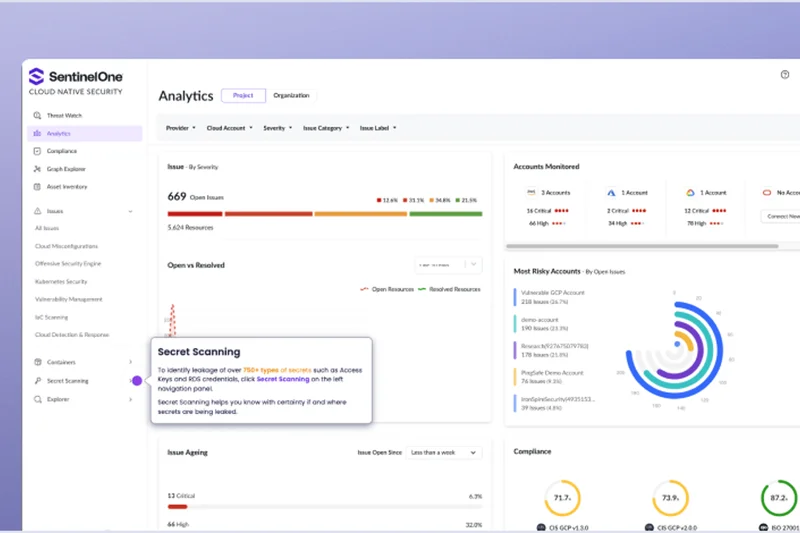
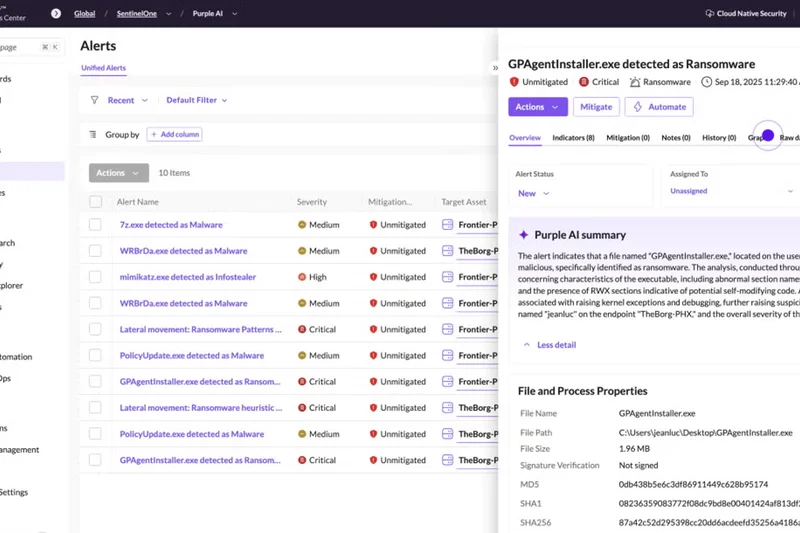
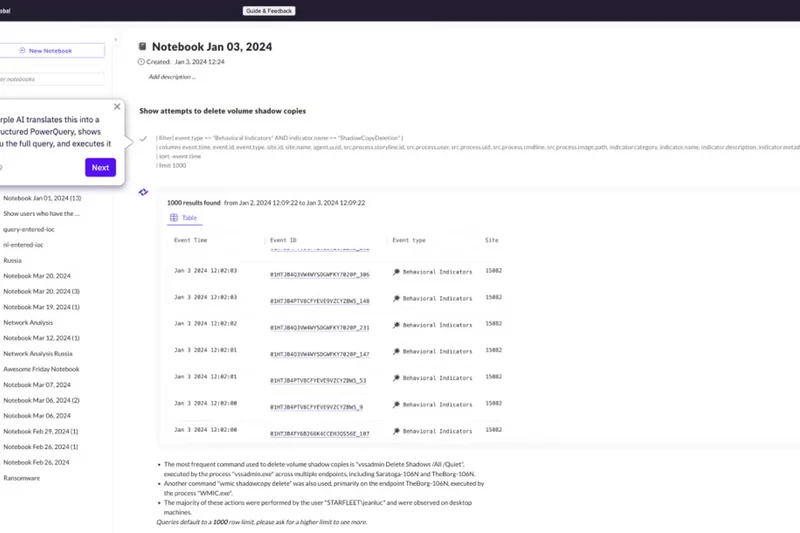
Why we picked it: Ranked #12, SentinelOne's Singularity Control provides the robust autonomous AI engine of the Complete tier, but scales back on extended data retention, offering it at $79.99/device. It scores 9/10 in Threat Detection and features rogue device discovery to ensure no unprotected endpoints connect to the network. Its firewall control with location awareness is excellent for securing mobile workforces.
Key Specs
- Autonomous AI-driven prevention and detection
- Automated remediation and 1-click rollback
- Rogue device discovery and control
- USB and Bluetooth device restriction
- Firewall control with location awareness
- Offline protection capability
What we like
- Autonomous, offline-capable AI protection
- Excellent rogue device discovery
- Automated 1-click ransomware rollback
What we don't like
- Still relatively expensive for the mid-market
- Lacks the deep threat hunting of the Complete tier
Best for: Organizations needing autonomous protection and robust device/firewall control without full XDR data retention.
Considering Singularity Control vs Secure Endpoint Advantage? SentinelOne excels in offline protection and automated rollback, while Cisco offers deeper integration with complex network analytics.
A highly autonomous endpoint security platform offering top-tier prevention and robust device control.
Buy at SentinelOne official site#13 Secure Endpoint Advantage
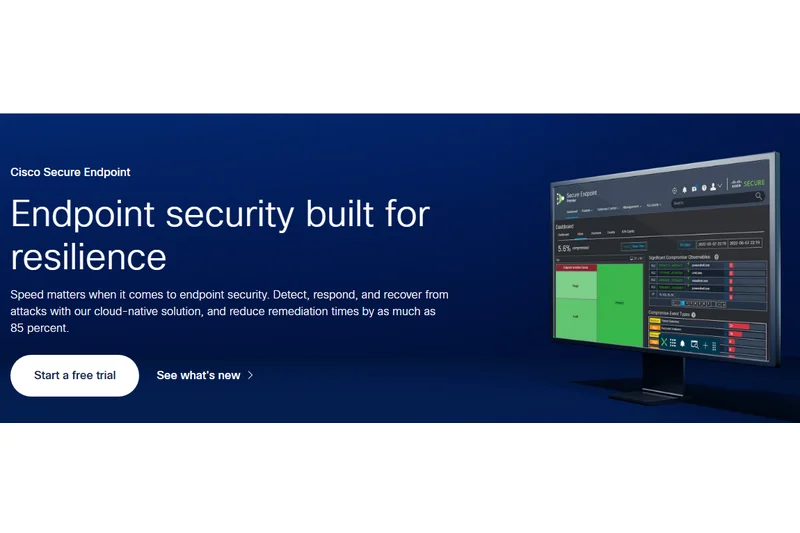
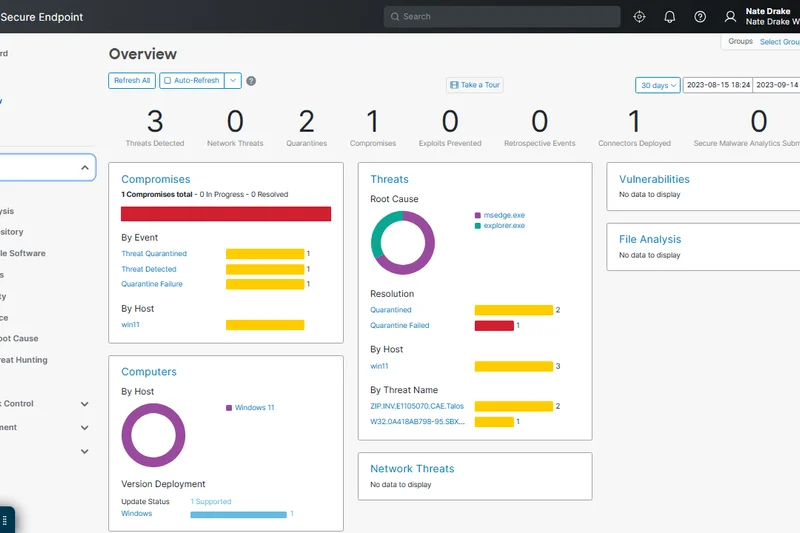
Why we picked it: Cisco's Secure Endpoint Advantage lands at #13, utilizing continuous file analysis to track malware trajectory across the network (Threat Detection: 9/10). Priced at $65.00/device, it features Orbital Advanced Search for complex threat hunting. Its integration with the broader Cisco SecureX platform makes it a compelling choice for enterprises already utilizing Cisco network hardware.
Key Specs
- Continuous file analysis and trajectory
- Orbital Advanced Search for complex threat hunting
- Integrated with Cisco SecureX platform
- Rapid threat containment and isolation
- Vulnerability identification
- Machine learning-based malware detection
What we like
- Superb file trajectory and timeline mapping
- Deep integration with the Cisco SecureX ecosystem
- Strong vulnerability identification
What we don't like
- System performance impact is noticeable (7/10)
- Maximum value requires existing Cisco infrastructure
Best for: Enterprises deeply embedded in the Cisco ecosystem requiring advanced file trajectory analysis.
Considering Cisco Secure Endpoint vs PROTECT Advanced? Cisco provides superior threat hunting and network trajectory, while ESET offers a lighter system footprint and is more platform-agnostic.
An advanced endpoint solution that delivers exceptional threat hunting and trajectory analysis for Cisco-centric environments.
Buy at Cisco official site#14 PROTECT Advanced
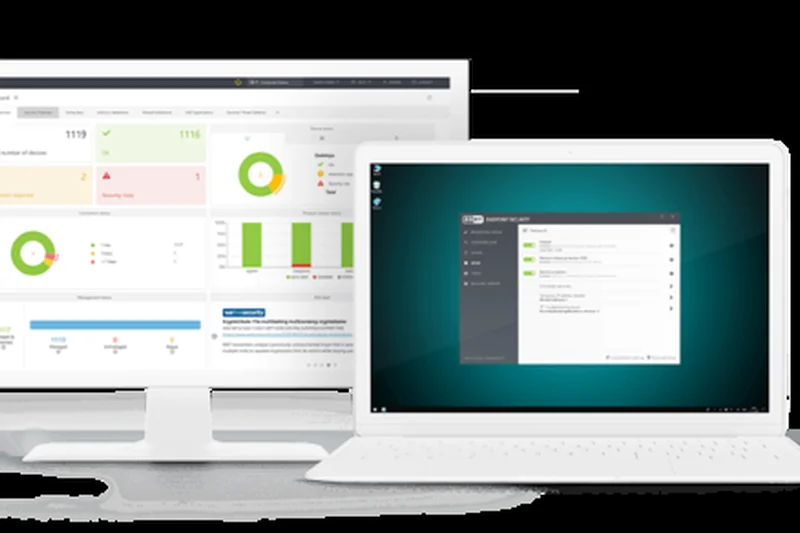
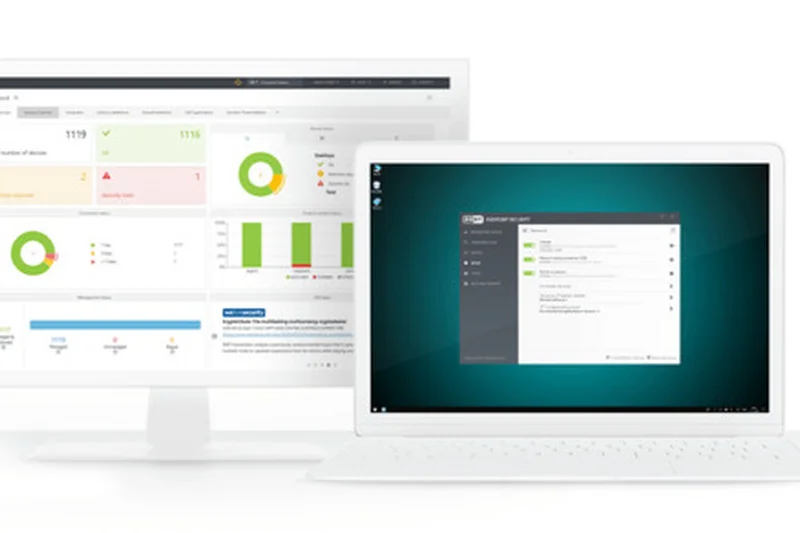
Why we picked it: ESET PROTECT Advanced takes the #14 spot, offering a streamlined version of the Complete tier at $55.00/device. It maintains a superb 9/10 in System Performance and provides excellent real-time threat detection (8/10) via its Advanced Threat Defense cloud sandboxing. With Full Disk Encryption and Mobile Threat Defense included, it secures diverse endpoints with minimal administrative overhead.
Key Specs
- Real-time threat detection with minimal system impact
- Advanced Threat Defense (cloud sandboxing)
- Full Disk Encryption for Windows and macOS
- Ransomware shield and behavioral analysis
- Mobile Threat Defense included
- Unified cloud-based management console
What we like
- Extremely lightweight and fast
- Effective cloud sandboxing for zero-day threats
- Includes Full Disk Encryption
What we don't like
- Lacks automated patch management found in the Complete tier
- Admin interface is highly detailed but complex
Best for: Businesses needing fast, reliable protection and encryption with minimal impact on older hardware.
Considering PROTECT Advanced vs Worry-Free Business Security Advanced? ESET offers superior system performance and disk encryption, while Trend Micro provides integrated email security and Microsoft 365 protection.
A fast, lightweight, and highly effective security suite featuring strong zero-day defense and disk encryption.
Buy at ESET official site#15 Worry-Free Business Security Advanced
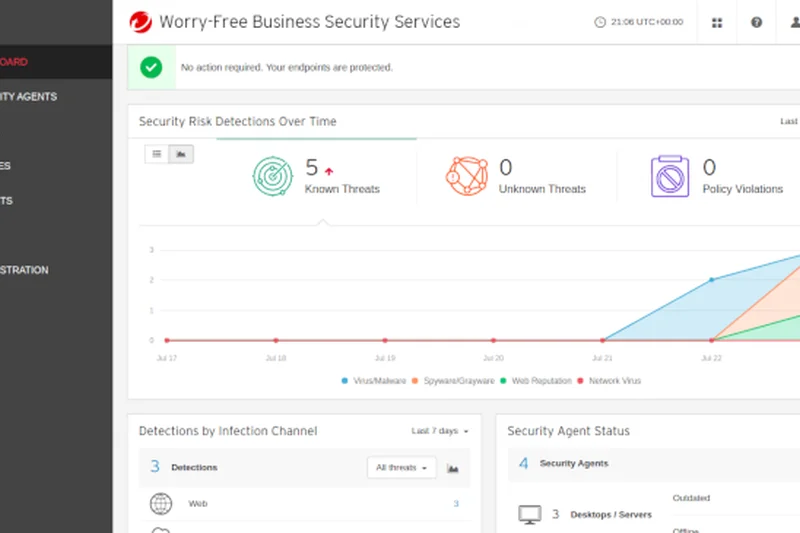
Why we picked it: Ranked #15, Trend Micro's Worry-Free Business Security Advanced is tailored for SMBs needing comprehensive coverage without a dedicated IT staff. At $41.98/device, it scores an 8/10 in Threat Detection and integrates essential email security, anti-spam, and Microsoft 365 protection directly into the suite. Its Data Loss Prevention (DLP) capabilities offer an extra layer of security for sensitive corporate data.
Key Specs
- Integrated email security and anti-spam
- Protection for Microsoft Exchange and Microsoft 365
- Mac, Windows, and mobile device protection
- High-fidelity machine learning
- Data Loss Prevention (DLP)
- Cloud-based security portal
What we like
- Excellent integrated email and Microsoft 365 protection
- Includes Data Loss Prevention (DLP)
- Designed to be managed without dedicated IT staff
What we don't like
- System performance is only average (8/10)
- Customer support response times can vary
Best for: Small to mid-sized businesses looking for an all-in-one solution covering endpoints, email, and cloud apps.
Considering Trend Micro Advanced vs Microsoft Defender for Business? Trend Micro offers built-in DLP and cross-platform ease, while Microsoft Defender provides superior performance on Windows and deeper native integration.
A highly accessible, comprehensive security suite perfect for SMBs utilizing Microsoft 365 and cloud email.
Buy at Trend Micro official site#16 Microsoft Defender for Business
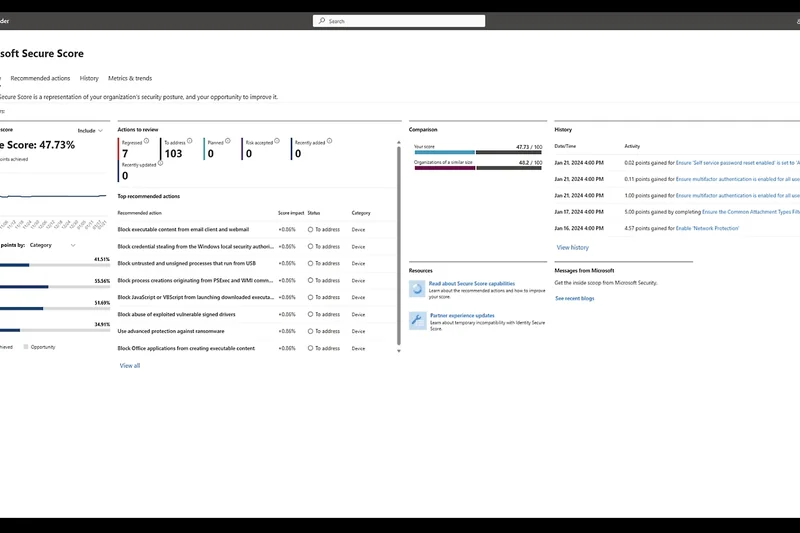
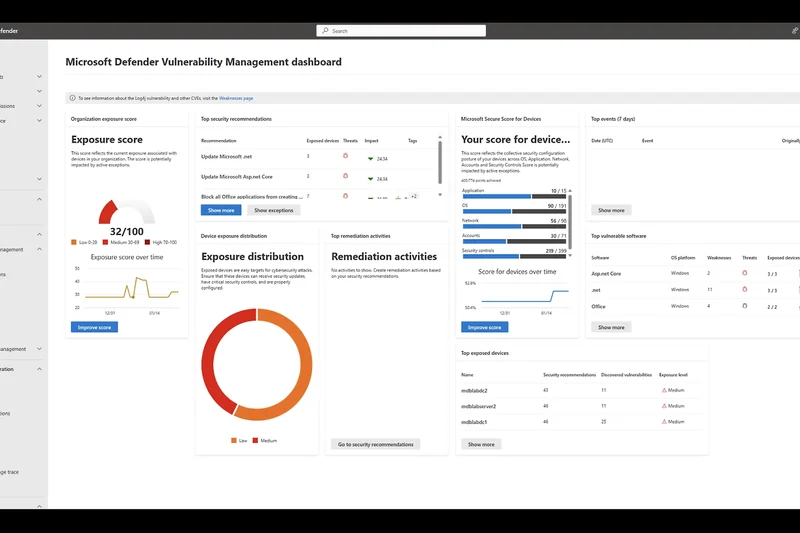
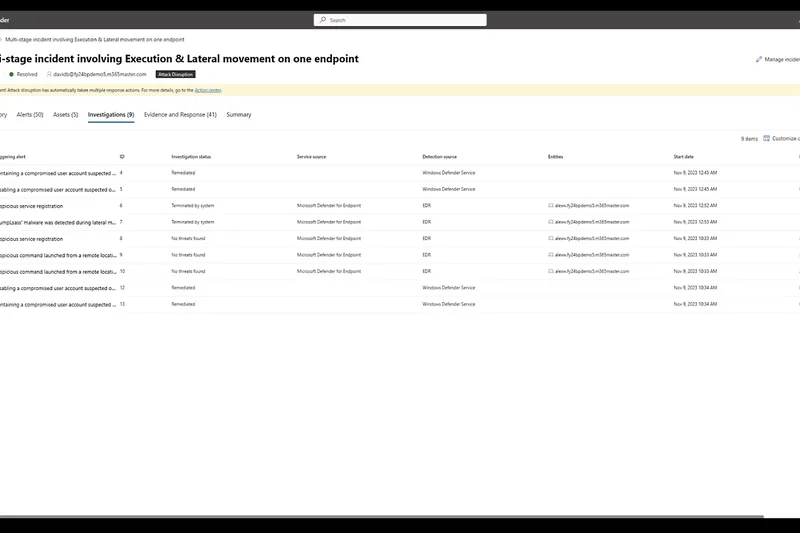
Why we picked it:
Key Specs
- Enterprise-grade endpoint security for up to 300 employees
- Next-generation AI-powered antivirus
- Threat and vulnerability management
- Automated investigation and remediation
- Cross-platform support (iOS, Android, Windows, macOS)
- Included in Microsoft 365 Business Premium
#17 GravityZone Business Security Premium
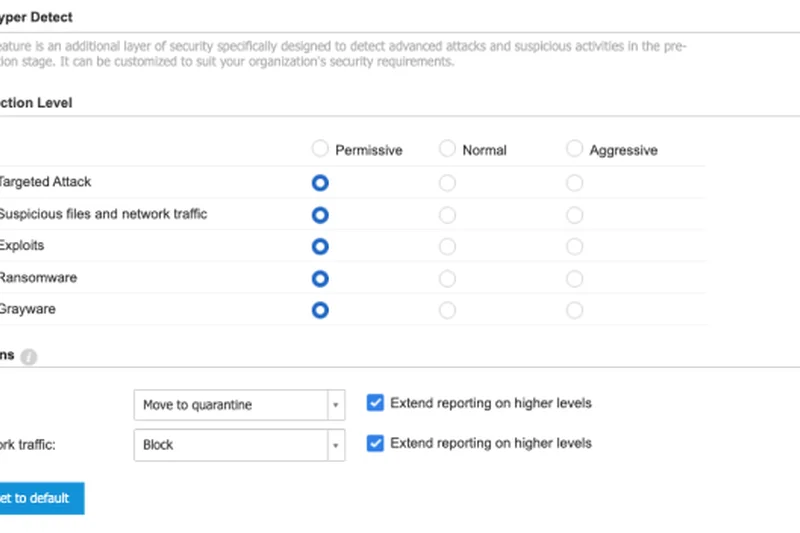
Why we picked it:
Key Specs
- Over 30 machine-learning security layers
- Network Attack Defense and web filtering
- HyperDetect tunable machine learning
- Cloud-based sandboxing analyzer
- Attack forensics and root-cause analysis
- Human risk analytics and vulnerability management
#18 Elements Endpoint Protection
Why we picked it:
Key Specs
- DeepGuard behavioral analysis engine
- Automated software patch management
- Integrated firewall and device control
- Web traffic scanning and connection control
- Data loss prevention (DLP) features
- Unified Elements Security Center
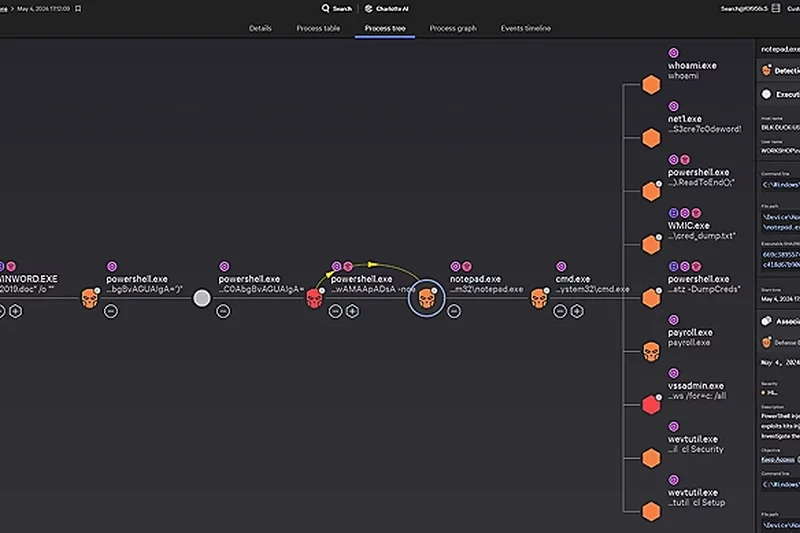
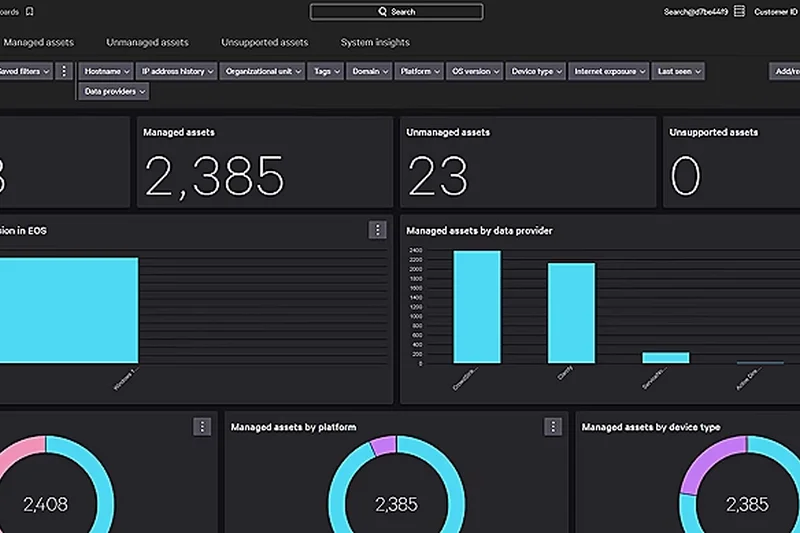
#19 Falcon Go
Why we picked it:
Key Specs
- AI-powered next-generation antivirus
- USB device control
- Simplified management console for SMBs
- No complex signature updates required
- Rapid deployment under 15 minutes
- Protects against ransomware and zero-day threats
#20 Apex One
Why we picked it:
Key Specs
- Pre-execution and runtime machine learning
- Virtual patching via IPS
- Actionable EDR insights
- Offline behavioral analysis
- Data loss prevention (DLP) integrated
- Single agent architecture
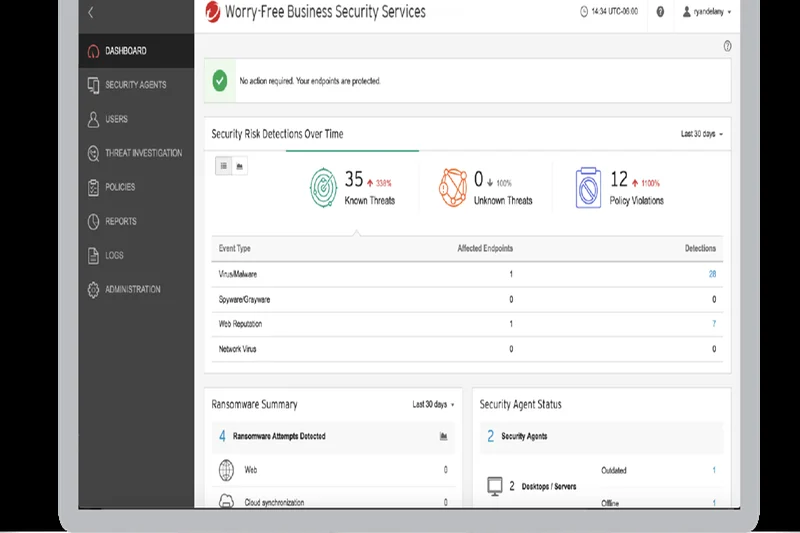
#21 Worry-Free Business Security Standard
Why we picked it:
Key Specs
- High-fidelity machine learning and behavioral analysis
- Predictive threat protection against ransomware
- URL filtering and web threat protection
- Device control for USB drives
- No dedicated IT staff required
- Optimized for minimal system impact
#22 Endpoint Detection and Response
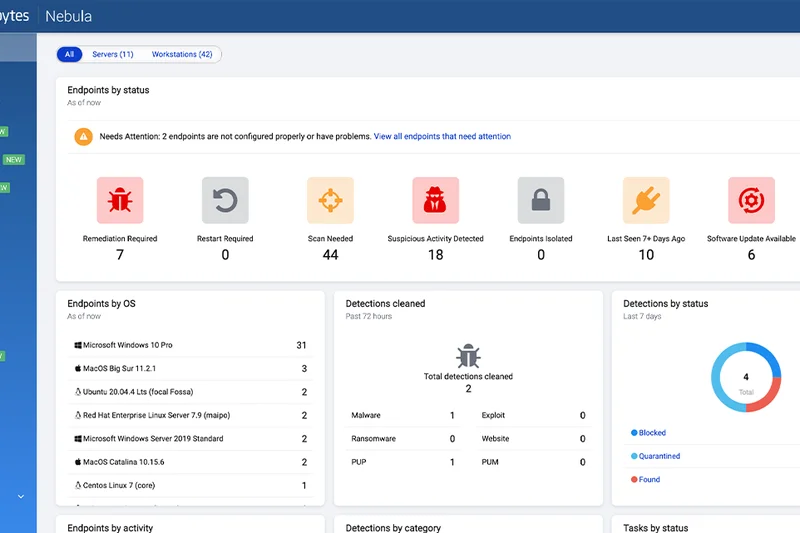
Why we picked it:
Key Specs
- Continuous endpoint monitoring and recording
- Suspicious activity analysis and alerting
- 72-hour ransomware rollback capability
- One-click endpoint isolation
- Granular threat hunting capabilities
- Cloud-based deployment and management
#23 Singularity Core
Why we picked it:
Key Specs
- Static and behavioral AI engines
- Prevention against known and unknown malware
- Automated incident resolution
- Cloud-based SaaS management
- Very low system resource impact
- Supports Windows, macOS, and Linux
#24 Endpoint Security (EPP)
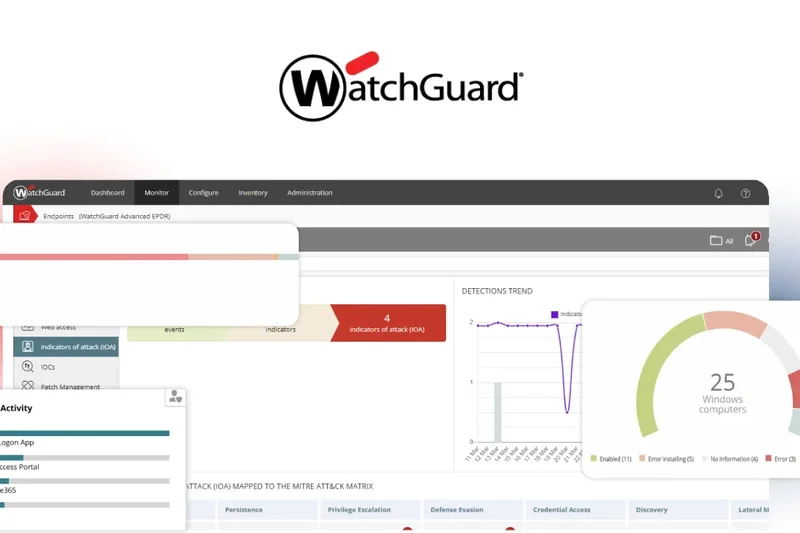
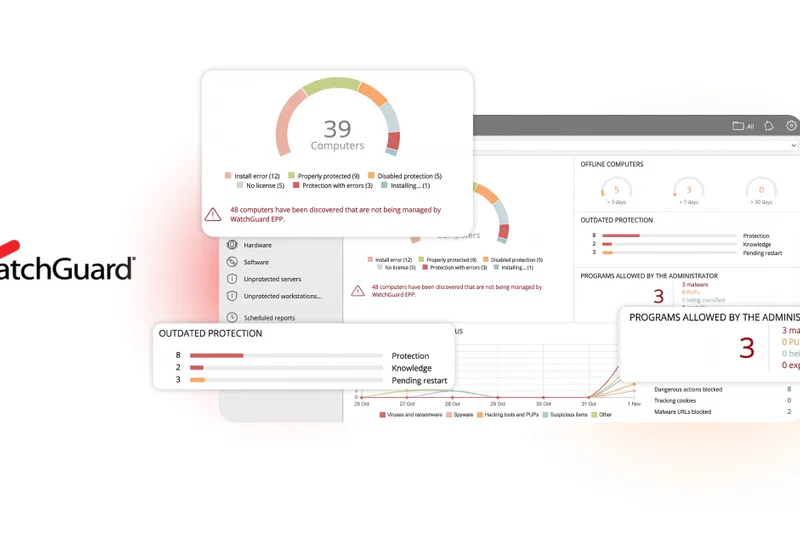
Why we picked it:
Key Specs
- Centralized signature and heuristic detection
- Contextual intelligence for unknown threats
- Web filtering and device control
- Unified WatchGuard Cloud management
- Lightweight agent implementation
- Anti-phishing and anti-spam protection
#25 Defender for Endpoint Plan 1
Why we picked it:
Key Specs
- Industry-leading antimalware and antivirus
- Attack surface reduction (ASR) rules
- Centralized configuration via Microsoft 365 Defender portal
- Device-based manual response actions
- Integration with Microsoft Endpoint Manager
- Cross-platform OS support
#26 Endpoint Protection
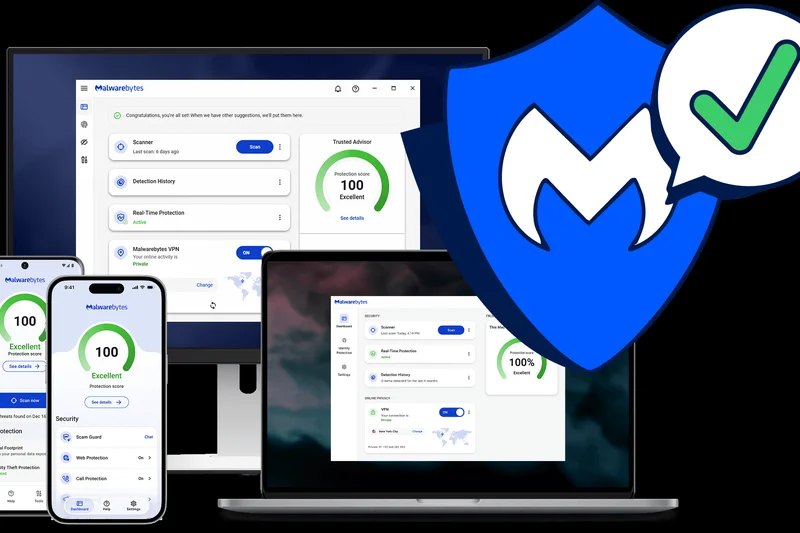
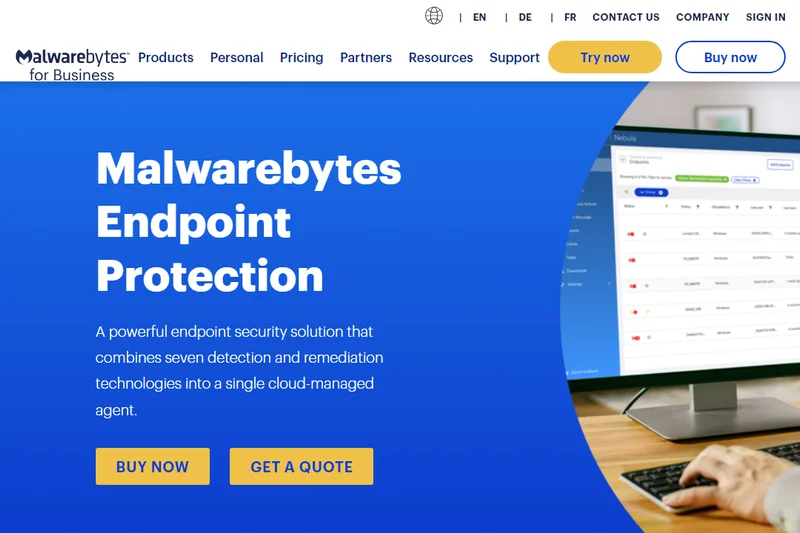
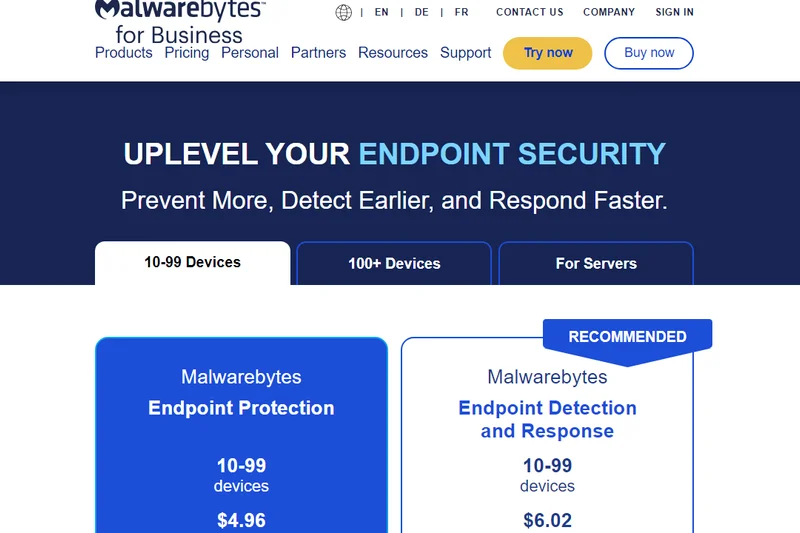
Why we picked it:
Key Specs
- Next-gen antivirus (NGAV) scanning engine
- Multi-vector protection (web, memory, application, files)
- Ransomware and zero-day exploit prevention
- Fast, lightweight client footprint
- Centralized Nebula cloud management console
- Automated threat remediation
#27 Business Endpoint Protection
Why we picked it:
Key Specs
- Extremely fast scan times
- Minimal system resource usage
- Predictive, cloud-based threat intelligence
- Offline protection policies
- Multi-tenant management dashboard
- Automatic rollback for infected endpoints
#28 PROTECT Entry
Why we picked it:
Key Specs
- Award-winning multi-layered antivirus
- Ransomware shield and network attack protection
- Web access protection and anti-phishing
- USB device control
- File server security module included
- ESET PROTECT Cloud console management
#29 Essential Business Security
Why we picked it:
Key Specs
- AI-powered Next-Gen Antivirus
- Behavior Shield to monitor suspicious app activity
- Web, file, and email shields
- Ransomware and phishing protection
- Cloud-based Avast Business Hub
- Cross-platform (Windows, macOS, Linux, servers)
#30 GravityZone Business Security
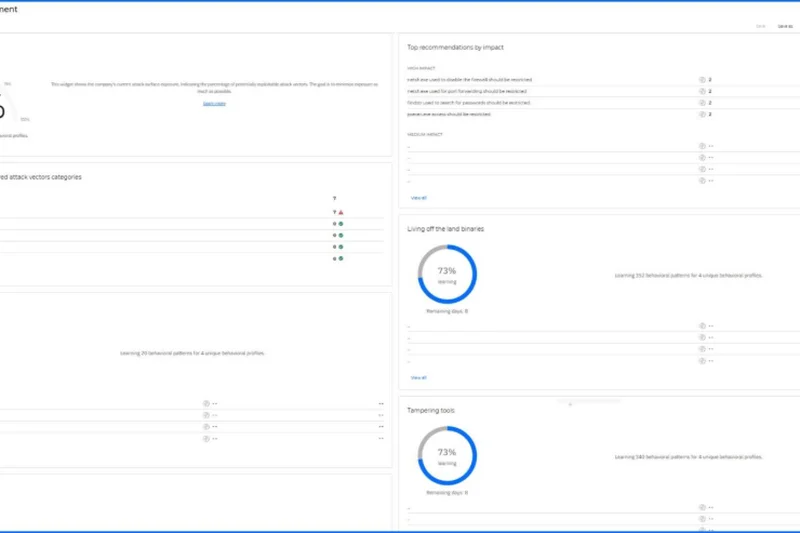
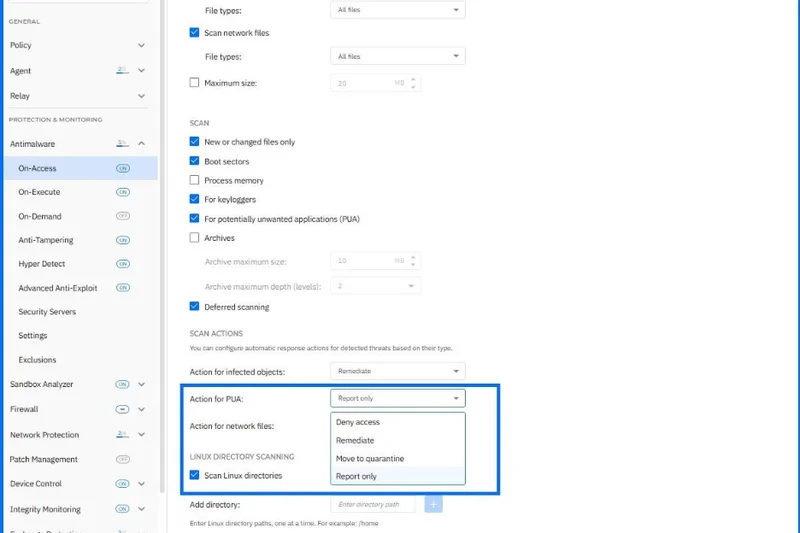
Why we picked it:
Key Specs
- Machine learning heuristic detection
- Network Attack Defense module
- Advanced Anti-Exploit protection
- Ransomware mitigation and rollback
- Easy-to-use cloud console
- Web filtering and firewall included
#31 Premium Business Security

Why we picked it:
Key Specs
- Next-Gen Antivirus protection
- Integrated business VPN for privacy
- USB device protection and control
- Webcam and password protection
- Cloud-based centralized management
- Remote IT support integrations
#32 Intercept X Essentials
Why we picked it:
Key Specs
- Core deep learning malware prevention
- Anti-ransomware file protection
- Anti-exploit technologies
- Simplified default policies
- Cloud-managed via Sophos Central
- Ideal for budget-conscious small businesses
#33 Endpoint Security Cloud
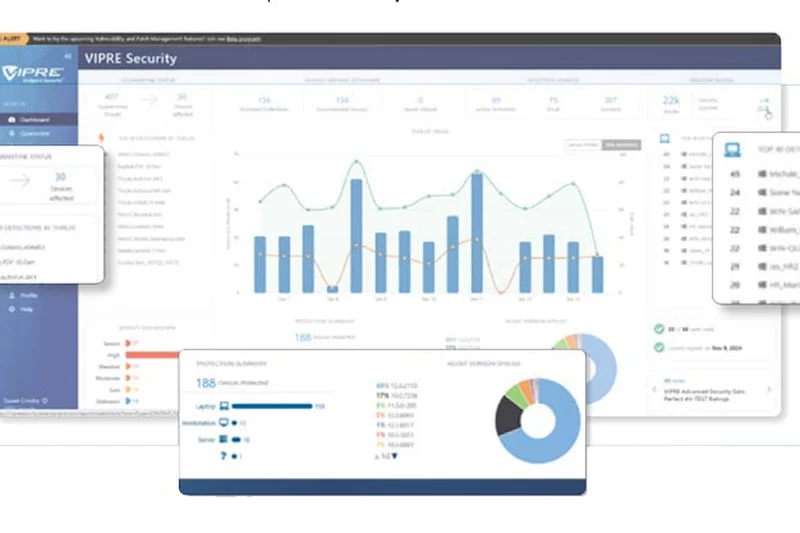
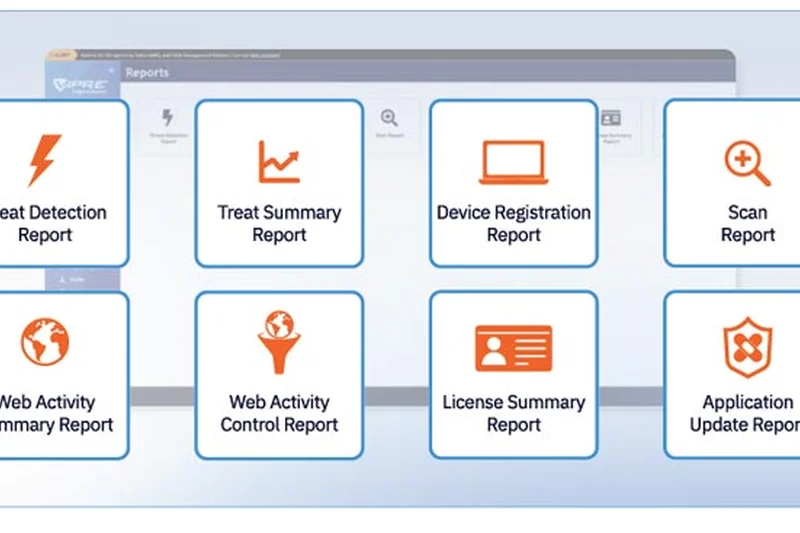
Why we picked it:
Key Specs
- Advanced active protection against ransomware
- Malicious URL blocking
- Integrated DNS protection options
- Pre-configured best practice policies
- Low memory footprint
- Multi-tenant management for MSPs
#34 Endpoint Security Enterprise
Why we picked it:
Key Specs
- Advanced machine learning and behavioral isolation
- Intrusion prevention system (IPS) and firewall
- Active Directory security to prevent credential theft
- Targeted Attack Analytics (TAA)
- Single agent for all platforms
- Cloud, on-premises, or hybrid management
#35 Trellix Endpoint Security
Why we picked it:
Key Specs
- Machine learning behavioral detection
- Integrated firewall and web control
- Proactive threat intelligence (Trellix Advanced Research Center)
- Dynamic application containment
- Single-agent architecture
- Unified ePO (ePolicy Orchestrator) console
Buying Guide
Understanding Your Organizational Security Needs
Choosing the right business antivirus and endpoint security software requires a clear understanding of your company's size, threat landscape, and IT capabilities. Modern endpoint protection platforms (EPPs) and endpoint detection and response (EDR) solutions offer vastly different features and complexity levels. Assessing your internal resources before purchasing will prevent you from paying for advanced tools you cannot utilize.
Budget Tiers and Licensing
Small Business (Under $35/device/year): At this tier, focus on core protection. Solutions like Intercept X Essentials or Kaspersky Endpoint Security Select offer high-fidelity malware detection, basic web filtering, and easy-to-use cloud consoles. Avoid overpaying for complex EDR features if you lack the IT staff to monitor and respond to the alerts.
Mid-Market ($35 - $70/device/year): This is the sweet spot for most growing businesses. Products in this range include basic EDR capabilities, automated threat remediation, vulnerability management, and cross-platform support. Look for centralized dashboards that simplify policy configuration and device management.
Enterprise ($70+/device/year): Designed for organizations with dedicated security operations centers (SOCs) or mature IT teams. These platforms, such as CrowdStrike Falcon Enterprise or SentinelOne Singularity Complete, provide advanced threat hunting, timeline mapping, identity protection, and integrations with third-party SIEM/SOAR tools.
Key Features to Evaluate
- Threat Detection & Efficacy: Rely on independent testing labs like AV-TEST and AV-Comparatives to verify a vendor's ability to block zero-day threats, ransomware, and fileless malware. AI-driven behavior analysis is crucial for modern threats.
- System Impact: Antivirus scans shouldn't cripple employee productivity. Evaluate the agent's memory footprint and CPU utilization during idle times and active system scans. Cloud-native architectures tend to be more lightweight.
- Admin Console Usability: A unified, intuitive cloud dashboard saves countless hours. Ensure the platform makes it easy to deploy agents, configure group policies, investigate alerts, and generate compliance reports.
- Scalability and Platform Support: Ensure the solution covers your entire environment, including Windows, macOS, Linux, and mobile devices (iOS/Android). The licensing model should easily accommodate adding new endpoints as your workforce grows.
What to Avoid
Avoid legacy antivirus solutions that rely solely on signature-based detection, as they are ineffective against modern polymorphic malware and zero-day exploits. Additionally, steer clear of platforms with fragmented management consoles (e.g., requiring different portals for Mac and Windows devices) or those that force you into expensive enterprise tiers to access basic security features.
The Role of EDR vs. Traditional Antivirus
Traditional antivirus focuses on prevention—blocking known threats before they execute. Endpoint Detection and Response (EDR) assumes that some threats will inevitably breach the perimeter. EDR continuously records endpoint activity, allowing security teams to investigate suspicious behavior, isolate infected devices, and roll back ransomware changes. While EDR is incredibly powerful, it requires more active monitoring and expertise than traditional "set it and forget it" antivirus solutions.
FAQ
What is the difference between traditional business antivirus and EDR?
Traditional business antivirus focuses on prevention by scanning files and blocking known malware using signatures and basic heuristics. Endpoint Detection and Response (EDR) acts as a continuous recording system for your endpoints, identifying suspicious behavior, isolating compromised devices, and providing tools for security teams to investigate and roll back attacks like ransomware.
How does endpoint security protect against zero-day threats?
Modern endpoint security platforms use Next-Generation Antivirus (NGAV) powered by machine learning and behavioral analysis. Instead of relying on a database of known threats, the software monitors the behavior of applications in real-time. If a program attempts a malicious action—such as unauthorized encryption or credential dumping—the software blocks it, even if the specific malware has never been seen before.
What system performance impact should I expect from a business antivirus?
Top-tier solutions utilizing cloud-native architectures (like CrowdStrike or SentinelOne) have minimal impact on system resources, often consuming less than 1% of CPU during normal operations. However, some traditional suites may cause noticeable lag during full system scans or heavy patch deployments. It is crucial to evaluate the 'System Impact & Performance' metric when choosing a solution.
How do cloud-managed administrative consoles benefit remote workforces?
Cloud-managed consoles allow IT administrators to deploy updates, change security policies, and investigate threats on employee devices regardless of their physical location. As long as the remote endpoint has an internet connection, it remains protected and visible to the central security team without requiring a VPN connection to the corporate network.
What are the key features to look for in enterprise endpoint security?
Enterprises should prioritize full EDR or XDR capabilities, which include deep threat hunting tools, automated scriptless remediation, cross-endpoint event correlation (timeline mapping), and integration with existing SIEM/SOAR platforms. Proactive risk analytics and vulnerability management are also essential for hardening the attack surface.
How is business antivirus pricing structured?
Pricing is typically structured as a per-device or per-user annual subscription. Basic core protection ranges from $20 to $35 per device/year. Mid-market solutions with basic EDR range from $35 to $70, while full enterprise EDR/XDR platforms typically cost between $70 and $200+ per device/year. Volume discounts are usually available for larger deployments.
Is a dedicated IT team required to manage business antivirus software?
It depends on the tier. Essential endpoint protection suites (like Sophos Intercept X Essentials or Trend Micro Worry-Free) are designed to be 'set and forget' and can be managed by a part-time IT admin. However, advanced EDR and XDR platforms (like Falcon Enterprise) generate complex telemetry and require dedicated security analysts or a SOC to maximize their value.
Do I need cross-platform support for Windows, Mac, and Linux?
If your organization uses a mix of operating systems, cross-platform support is vital. While Windows remains the primary target for malware, macOS and Linux environments are increasingly targeted by sophisticated threat actors. A unified platform allows you to manage security policies across all OS types from a single dashboard.
How often should endpoint security software update its threat definitions?
Traditional signature-based updates should occur multiple times a day. However, modern NGAV and EDR solutions rely on continuous cloud connectivity to access real-time threat intelligence. Therefore, ensuring your endpoints have constant communication with the vendor's security cloud is more critical than scheduling batch updates.
What is the difference between Falcon Enterprise and Singularity Complete?
Both are elite enterprise platforms. CrowdStrike Falcon Enterprise excels with its incredibly lightweight single-agent architecture and proactive threat hunting services. SentinelOne Singularity Complete distinguishes itself with its patented Storyline technology for rapid incident comprehension and a highly effective autonomous 1-click ransomware rollback feature.
Are independent lab tests like AV-TEST reliable indicators of antivirus quality?
Yes, independent testing labs like AV-TEST, AV-Comparatives, and SE Labs provide rigorous, standardized testing against real-world malware, ransomware, and zero-day exploits. High scores in these tests are strong indicators of a platform's core prevention efficacy, which is why they heavily influence our Threat Detection scoring dimension.
Can budget-friendly antivirus solutions adequately protect a small business?
Yes, provided the software uses modern AI-driven detection engines. Budget solutions like Kaspersky Endpoint Security Select or Avast Essential Business Security offer outstanding core malware prevention. They simply omit the complex forensic and EDR tools that small businesses typically lack the personnel to utilize anyway.
How does machine learning enhance malware detection?
Machine learning models are trained on millions of benign and malicious files, allowing them to identify the underlying mathematical characteristics of malware. This enables the antivirus software to accurately detect and block highly modified or completely new malware variants that would easily bypass traditional signature-based detection.
What happens if a device is infected while offline?
Top endpoint security solutions utilize on-device, autonomous AI engines that do not require cloud connectivity to detect and block threats. Products like SentinelOne Singularity Control are specifically praised for their robust offline protection, ensuring remote workers remain secure even without an internet connection.
What kind of technical support SLAs should a business expect?
For business-grade security, 24/7 technical support via phone or chat should be the baseline. Premium enterprise tiers often include dedicated account managers, aggressive Service Level Agreements (SLAs) for response times during critical incidents, and access to the vendor's own incident response teams.
Methodology
Our ranking of the Best Business Antivirus and Endpoint Security Software for 2026 is powered by a rigorous, data-driven scoring framework. We utilized the M2 Multi-Dimensional Evaluation methodology from Selection Logic to ensure a balanced and objective assessment of 35 leading products.
We defined seven core evaluation dimensions and assigned weights based on their relative importance to organizational security:
- Threat Detection & Prevention (25%): We analyzed the efficacy of AI-driven engines against malware, ransomware, and zero-day exploits, leveraging data from independent testing labs.
- System Impact & Performance (15%): We evaluated the resource footprint of the endpoint agents, penalizing solutions that cause noticeable system lag during background monitoring or active scans.
- Admin Console & Usability (15%): We assessed the ease of deployment, policy configuration, and the intuitiveness of the centralized cloud management dashboard.
- Security Feature Set (15%): We analyzed the depth of advanced capabilities, including EDR functionality, firewalls, device control, and vulnerability management.
- Value & Pricing Structure (10%): We compared the cost per endpoint and the flexibility of subscription tiers against the features provided.
- Customer Support & Reliability (10%): We evaluated the availability of 24/7 technical support, SLA guarantees, and the frequency of automated security updates.
- Scalability & Cross-Platform Support (10%): We examined the platform's ability to protect diverse operating systems (Windows, Mac, Linux, mobile) under a unified console and adapt to growing environments.
To provide tailored recommendations, we calculated composite Fit Scores for four specific business scenarios. For our "Best Overall for Mid-Sized Businesses" scenario, we balanced powerful detection (25%) with manageable administration (15%) and robust features (15%). Conversely, our "Best Budget Antivirus for Small Businesses" scenario heavily weighted Value (35%) while maintaining strict requirements for Threat Detection (25%). This structured, multi-dimensional approach ensures our rankings reflect the nuanced realities of corporate cybersecurity.
Sources & References
All factual claims, product specifications, prices, and images in this article are cited by number. Click any reference to jump to the list; click the link in each entry to visit the original source.
- [1]Selection Logic. "M2 Multi-Dimensional Evaluation." selectionlogic.org/en/methods/m2-multi-dimensional-evaluation/. Accessed Mar 2026.
- [2]Selection Logic. "Business Antivirus Evaluation Guide." selectionlogic.org/en/guides/business-antivirus-evaluation-criteria/. Accessed Mar 2026.
- [3]CrowdStrike. "Falcon Enterprise Endpoint Protection." crowdstrike.com/products/endpoint-security/falcon-enterprise/. Accessed Mar 2026.
- [4]SentinelOne. "Singularity Complete XDR Platform." sentinelone.com/platform/singularity-complete/. Accessed Mar 2026.
- [5]Microsoft. "Microsoft Defender for Endpoint." microsoft.com/en-us/security/business/endpoint-security/microsoft-defender-endpoint. Accessed Mar 2026.
- [6]ESET. "ESET PROTECT Complete." eset.com/us/business/protect-complete/. Accessed Mar 2026.
- [7]Bitdefender. "GravityZone Business Security Enterprise." bitdefender.com/business/products/gravityzone-enterprise.html. Accessed Mar 2026.
- [8]Sophos. "Intercept X Endpoint Antivirus." sophos.com/en-us/products/endpoint-antivirus. Accessed Mar 2026.
- [9]Check Point. "Harmony Endpoint Security." checkpoint.com/harmony/endpoint-security/. Accessed Mar 2026.
- [10]Kaspersky. "Endpoint Security for Business." kaspersky.com/small-to-medium-business-security/endpoint-select. Accessed Mar 2026.
- [11]Cisco. "Secure Endpoint." cisco.com/c/en/us/products/security/endpoint-security/index.html. Accessed Mar 2026.
- [12]Trend Micro. "Worry-Free Business Security." trendmicro.com/en_us/business/products/user-protection/sps/endpoint/worry-free.html. Accessed Mar 2026.
- [13]Malwarebytes. "Endpoint Detection and Response for Business." malwarebytes.com/business/edr. Accessed Mar 2026.
- [14]WithSecure. "Elements Endpoint Protection." withsecure.com/en/expertise/solution-areas/endpoint-protection. Accessed Mar 2026.
- [15]Trellix. "Endpoint Security." trellix.com/en-us/products/endpoint-security.html. Accessed Mar 2026.
- [16]Symantec. "Endpoint Security Enterprise." broadcom.com/products/cyber-security/endpoint/end-user. Accessed Mar 2026.
- [17]Webroot. "Business Endpoint Protection." webroot.com/us/en/business/smb/endpoint-protection. Accessed Mar 2026.
- [18]Avast. "Premium Business Security." avast.com/business/products/premium. Accessed Mar 2026.
- [19]WatchGuard. "Endpoint Security Products." watchguard.com/wgrd-products/endpoint-security. Accessed Mar 2026.
- [20]Vipre. "Endpoint Security Cloud." vipre.com/products/business-protection/endpoint-security-cloud/. Accessed Mar 2026.
- [21]AV-TEST Institute. "Business Windows Client Test Reports." av-test.org/en/antivirus/business-windows-client/. Accessed Mar 2026.
- [22]AV-Comparatives. "Business Security Test 2026." av-comparatives.org/tests/business-security-test/. Accessed Mar 2026.
- [23]Gartner Peer Insights. "Endpoint Protection Platforms Reviews." gartner.com/reviews/market/endpoint-protection-platforms. Accessed Mar 2026.
- [24]G2. "Best Endpoint Protection Suites." g2.com/categories/endpoint-protection-suites. Accessed Mar 2026.
- [25]The Verge. "Enterprise Security Trends 2026." theverge.com/cybersecurity. Accessed Mar 2026.
- [26]CNET. "Best Antivirus for Business." cnet.com/tech/services-and-software/best-business-antivirus/. Accessed Mar 2026.
- [27]Tom's Guide. "Best Business Antivirus Software." tomsguide.com/best-picks/best-business-antivirus. Accessed Mar 2026.